

The rapid integration of generative artificial intelligence into the global economy has created a profound disconnect between the academic preparation of young professionals and the immediate requirements of the modern labor market. As 2026 unfolds, a significant skills gap has emerged, characterized by a paradox where entry-level candidates possess general degrees but lack the specific AI-fluency required to navigate automated workflows. According to recent polling from Pearson, more than 50 percent of global employers report significant difficulty in finding new graduates with the appropriate AI skill sets, while only 25 percent believe that traditional higher education institutions are evolving quickly enough to meet these technological shifts. This misalignment is forcing a radical reimagining of career readiness, spearheaded by a coalition of nonprofit organizations, corporate foundations, and forward-thinking educators who argue that AI should be viewed not as a threat to entry-level roles, but as a prerequisite for them.
The Evolution of the Entry-Level Job Market
The narrative surrounding AI in the workplace has shifted from one of pure displacement to one of transformation. In the early 2020s, the primary concern was that automation would eliminate the very "junior" tasks—such as data entry, basic coding, and initial research—that served as the traditional training ground for new hires. However, as of 2026, the reality is more nuanced. A report from the Strada Education Foundation indicates that companies that have successfully integrated AI are actually more likely to increase their entry-level hiring. The logic is rooted in scalability; as smaller and mid-sized firms gain access to enterprise-level automation tools that were previously cost-prohibitive, they require a new tier of "automation managers"—employees capable of overseeing, auditing, and refining the output of AI systems.
Ruthe Farmer, CEO of the Last Mile Education Fund, notes that the democratization of technology through AI allows smaller businesses to achieve efficiencies previously reserved for multinational corporations. This shift necessitates a workforce that can leverage technology to create further automations. Yet, the credentials required for these roles are shifting. While some industry giants like IBM have expanded their entry-level pipelines to include those with diverse certifications, other sectors have retreated, focusing hiring efforts exclusively on advanced degree holders, such as PhD students, to lead their AI research and development arms. This divergence creates a precarious environment for the "missing middle" of graduates who possess standard degrees but lack specialized technical training.

A Chronology of Response: From Banning to Embracing AI
The educational response to AI has undergone several distinct phases since the technology "burst onto the scene" in late 2022. Initially, the reaction from many major school districts and universities was defensive. In cities like New York, the immediate instinct was to ban AI tools in classrooms to prevent academic dishonesty. This "prohibition era" of AI education focused heavily on the risks of cheating rather than the potential for enhanced learning.
By 2024 and 2025, however, the limitations of this approach became evident as the private sector began demanding AI proficiency. The timeline shifted toward integration. Progressive education systems, most notably in Denmark, began pioneering models where the use of AI is not only permitted but expected, provided it is accompanied by human accountability. In the Danish model, students are often required to orally defend essays or projects developed with AI assistance. This approach shifts the focus from the final product to the process of critical evaluation, requiring students to demonstrate that they understand and can justify the AI-generated conclusions.
Dwana Franklin-Davis, CEO of Reboot Representation, emphasizes that the initial fear-based response was a missed opportunity. She argues that the current mandate for educators is to teach young people to be responsible users of the technology—leveraging it to enhance their efforts rather than replace their critical thinking. This sentiment is echoed by Robert Vaughn, Chief Innovation Officer at NPower, who advocates for a curriculum where students provide "evidence of learning" through prompting and critical interrogation of AI outputs.
Supporting Data: The Impact of Targeted Workforce Development
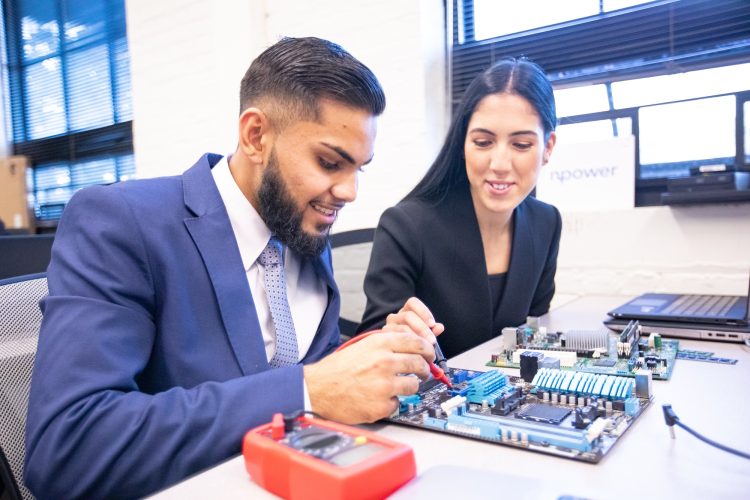
In the face of institutional lag, nonprofit organizations have stepped in to fill the void. NPower, a leading workforce development nonprofit, has provided free technical career training to more than 12,000 young people, focusing on bridging the gap between underserved communities and high-growth tech sectors. Their model relies on blurring the lines between the classroom and the corporate environment, often using real-world problems provided by industry partners as the basis for student projects.
The financial support for these initiatives often comes from the corporate sector, which has a vested interest in a stable talent pipeline. The Everpure Foundation, the philanthropic arm of the data management firm Everpure, has been a key benefactor for organizations like NPower. Everpure’s leadership views the current technological shift as a catalyst for inclusion rather than exclusion. Niki Armstrong, Chief Administrative and Legal Officer for Everpure, argues that the perceived threat of AI to entry-level jobs is a misconception. Instead, she posits that the complexity of AI-driven systems is exactly why a fresh influx of tech-savvy talent is needed.
Data from these nonprofit interventions suggest high success rates. Organizations like Rewriting the Code, which supports over 50,000 women in tech, and the Last Mile Education Fund, which has assisted 15,000 low-income students, report that targeted financial and technical support significantly increases the likelihood of degree completion and successful job placement. These organizations provide the "gap funding" and specialized training that traditional financial aid often misses, ensuring that economic status does not become a barrier to entering the AI-enabled workforce.
The Rise of Human "Durable Skills" in an Automated World
Perhaps the most significant implication of the AI era is the renewed value placed on "human durable skills"—qualities that machines cannot yet replicate. While technical proficiency in AI is a baseline requirement, employers are increasingly prioritizing analytical reasoning, emotional intelligence, communication, and ethical judgment.
Sue Harnett, CEO of Rewriting the Code, points out that the move toward hybrid and remote learning during the early 2020s led to a decline in behavioral talents among some graduates. Recruiting partners now emphasize the need for junior employees who understand how to function within a team, manage their career trajectories, and build relationships with mentors.

At Everpure, the focus for new hires has shifted toward "discernment." Armstrong explains that while AI can provide answers, it cannot provide the judgment necessary to determine when an answer is flawed or ethically questionable. The corporate mandate is now to teach new hires when to trust an algorithm and when to interrogate it. This "human-in-the-loop" philosophy is becoming the gold standard for professional services, from law to medicine, where the consequences of an unverified AI output can be catastrophic.
Broader Impact and the Risk of a Digital Divide
As AI continues to reshape the economic landscape, there is an acute risk of a widening digital and economic divide. If access to AI training and advanced technical education remains concentrated among those who can afford elite institutions, the technology could exacerbate existing social inequalities.
The leaders of Reboot Representation and Rewriting the Code argue that intentionality is required to ensure that women, people of color, and low-income students are not left behind. This involves not only providing access to tools but also creating networks of support that help underrepresented youth navigate corporate environments that have historically been exclusionary.
The broader impact of this transition suggests a fundamental change in the social contract between employers and employees. As entry-level roles become more complex, the responsibility for training is shifting. Companies can no longer rely solely on universities to produce "plug-and-play" employees. Instead, the most successful firms are those that partner with workforce development organizations to create "pipelines" that begin well before a student graduates.

Conclusion: A Collaborative Path Forward
The successful integration of AI into early career pathways requires a multi-stakeholder approach involving government policy, educational reform, and corporate investment. The consensus among workforce development leaders is that the "village" must collaborate to move the needle. This includes government support for nontraditional educational pathways, university curricula that prioritize AI ethics and oral defense, and corporate commitments to internships and on-the-job training.
The AI revolution is not merely a technical update; it is a pedagogical and economic shift that demands a new definition of "readiness." By moving away from a culture of fear and toward a culture of responsible experimentation and critical judgment, the next generation of workers can position themselves not as victims of automation, but as the essential architects of an AI-augmented future. The goal, as stated by industry experts, is to produce a workforce that knows how to "poke holes in the seemingly perfect answer" and challenge the assumptions that lie beneath the surface of the machine.
