

The Canadian government’s release of the Changing Climate Report 2026 (CCCR) has unveiled a stark portrait of a nation undergoing rapid and, in many cases, permanent environmental transformation. Prepared by Environment and Climate Change Canada (ECCC), the comprehensive 1,500-page document represents three years of collaborative research by nearly 100 of the country’s leading atmospheric scientists, ecologists, and hydrologists. The report’s central conclusion is as definitive as it is sobering: the warming of the Canadian climate and the subsequent alterations to the natural landscape are now effectively irreversible. While the report provides a rigorous scientific roadmap of the challenges ahead, its release has been marked by a notable lack of traditional political fanfare, raising questions about the intersection of climate science and national policy in an era of increasing economic and geopolitical volatility.
The 2026 report serves as a critical update to the initial assessment published in 2019. However, unlike the 2019 debut, which was accompanied by high-profile press conferences and extensive media briefings, the 2026 iteration was issued quietly via a press release on the eve of a long holiday weekend. This shift in communication strategy has been characterized by some observers as "climate hushing," a phenomenon where governments acknowledge scientific realities in print while downplaying them in public discourse to avoid political friction or economic alarm. Despite the low-key release, the data contained within the CCCR 2026 paints a picture of a country at a geographic and environmental crossroads.
The Transformation of Iconic Landscapes
One of the most significant findings of the CCCR 2026 is summarized in what the authors call Headline 12, which focuses on the disappearance of snow and ice. The report confirms that iconic Canadian landscapes are undergoing a fundamental metamorphosis. Glaciers in Western Canada, which serve as essential "water towers" for the region, are projected to largely disappear by the end of the 21st century. This retreat is not merely an aesthetic loss but a systemic threat to the water security of the Prairie provinces.
Chris Derksen, the director of modeling for the ECCC, emphasized that the loss of these glaciers will disrupt the seasonal flow of water that travels from west to east across the continent. This water is vital for agriculture, municipal consumption, and hydroelectric power generation. The shortening of the snow cover season and the reduction of sea ice cover—across all types of ice—are further compounding these changes. In Northern Canada, the thawing of permafrost is actively transforming the topography, causing "thermokarst" activity where the ground collapses, destroying infrastructure and releasing long-sequestered carbon into the atmosphere.
The report highlights that these changes are particularly acute in the Arctic. The northernmost regions of Canada are warming at a rate nearly three to four times faster than the global average. This phenomenon, known as Arctic amplification, is already having tangible effects on human settlements. The report draws parallels to the Norwegian settlement of Longyearbyen, where melting permafrost has compromised building foundations and increased the risk of landslides. In Canada’s North, similar structural failures are being reported in communities that were built on ground once thought to be permanently frozen.
A Chronology of Climate Assessment and Policy Shifts
To understand the weight of the 2026 report, it is necessary to view it within the timeline of Canadian climate policy over the last decade. In 2015, Canada committed to the Paris Agreement, aiming to limit global warming to well below 2 degrees Celsius. The first Changing Climate Report in 2019 provided the scientific justification for aggressive carbon pricing and emissions reduction targets.
However, the intervening years have seen a complex shift in the political landscape. By mid-2026, the Canadian government, under the leadership of Prime Minister Mark Carney, signaled a pivot in its environmental timeline. In June 2026, the administration admitted that Canada would not meet its previously established 2030 greenhouse-gas emissions targets. Consequently, the deadline for significant reduction milestones was extended to 2050.
This extension has created a perceived disconnect between the "urgency" cited by federal ministers and the actual policy implementation. Julie Dabrusin, the federal minister for Environment, Climate Change, and Nature, stated that the government is moving to build "strategic autonomy" and "industrial capacity" alongside its climate goals. Critics argue that this suggests a prioritization of short-term economic stability and energy security over the immediate mitigation efforts required to avert the most severe scenarios outlined in the CCCR.
Quantitative Projections: The Cost of Inaction
The CCCR 2026 utilizes various climate modeling scenarios to project the future of the Canadian environment. The report contrasts a "net-zero strategy" with a "high-emissions scenario" to illustrate the stakes of global policy decisions:
- The 3.8°C Scenario: If global emissions continue on their current trajectory without significant intervention, Canada could see an average temperature increase of 3.8°C by the end of the century. Under this scenario, the area of the country at risk of catastrophic forest fires would triple. The report warns that such conditions would be "intolerable" for many native plant and animal species and would pose severe health risks to human populations due to heat stress and smoke inhalation.
- The 1.95°C Scenario: If a global net-zero strategy is successfully implemented and maintained, warming in Canada could stabilize after 2050 at approximately 1.95°C. While this still represents a significant change from historical norms, it would allow for more manageable adaptation strategies and preserve a greater portion of the country’s biodiversity and ice cover.
The report also provides data on "atmospheric rivers"—long, narrow regions in the atmosphere that transport most of the water vapor outside of the tropics. The CCCR 2026 predicts that the frequency and intensity of these events will increase. For British Columbia and the Atlantic provinces, this translates to a heightened risk of extreme rainfall and flash flooding. Conversely, central and southern Canada are projected to face longer, more intense summer droughts, creating a "see-saw" effect of weather extremes that will challenge the resilience of the nation’s infrastructure.
Professional and Scientific Reactions
The scientific community has expressed concern not only about the report’s findings but also about the manner in which it was presented to the public. Damon Matthews, a climate scientist at Concordia University and a co-author of the report, noted that current global and domestic policies are inconsistent with the temperature targets necessary to avoid the worst outcomes. Matthews emphasized that without a more direct alignment between scientific warnings and policy actions, Canada will face increasingly damaging storms and "intense climate events" on the near horizon.

The reluctance of government officials to engage in extensive media interviews following the report’s release has been noted by major Canadian outlets. When CTV News requested an interview with Minister Dabrusin, the request was declined, with her office providing a written statement focused on "energy security" and "industrial capacity." This suggests a strategic shift toward framing climate change as an economic and security issue rather than a purely environmental one, likely in response to internal political pressures and the volatile political climate in the United States.
The North American Context and Broader Implications
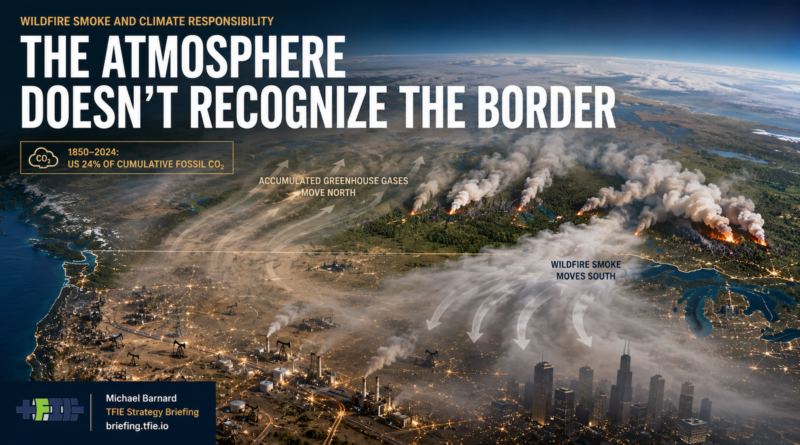
The findings of the CCCR 2026 do not exist in a vacuum. The report notes that greenhouse gases are globally mixed, meaning that emissions from the United States and other industrial powers contribute directly to the warming observed in the Canadian Arctic. The report arrives at a time of significant friction between Canadian climate objectives and the policies of its southern neighbor.
While Canada continues to fund and publish detailed scientific assessments, certain regions in the United States have moved in the opposite direction. The report implicitly contrasts Canada’s commitment to scientific transparency with legislative moves in states like Florida, where officials have restricted the use of the term "climate change" in state agency communications. The CCCR 2026 serves as a rebuttal to such "climate denialism," asserting that ignoring the terminology does nothing to prevent the physical reality of rising sea levels or intensifying hurricanes.
The implications for Canada are multifaceted. Beyond the environmental toll, there is a significant economic burden associated with the report’s projections. The destruction of Western glaciers will necessitate a complete overhaul of water management systems for the agricultural sector, which is a cornerstone of the Canadian economy. The tripling of forest fire risk implies astronomical costs for emergency services and insurance providers, as well as long-term health costs associated with air quality degradation.
Conclusion: A Blueprint for Adaptation
The Canada’s Changing Climate Report 2026 is a definitive document that underscores the permanence of the shifts occurring in the northern hemisphere. By labeling these changes as "irreversible," the ECCC scientists are signaling a move from a strategy of pure mitigation to one of necessary and urgent adaptation.
The report makes it clear that while some warming is already "baked in" due to historical emissions, the severity of the future remains a matter of choice. The difference between a 1.95°C and a 3.8°C increase is the difference between a country that can adapt its infrastructure and one that faces systemic ecological collapse. As Canada moves toward 2050, the CCCR 2026 will likely stand as the primary scientific benchmark against which all future environmental and economic policies are measured, regardless of the political sensitivity surrounding its initial release. The data confirms that the "iconic landscapes" of the North are no longer static features of the map, but dynamic, receding elements of a rapidly changing world.
