

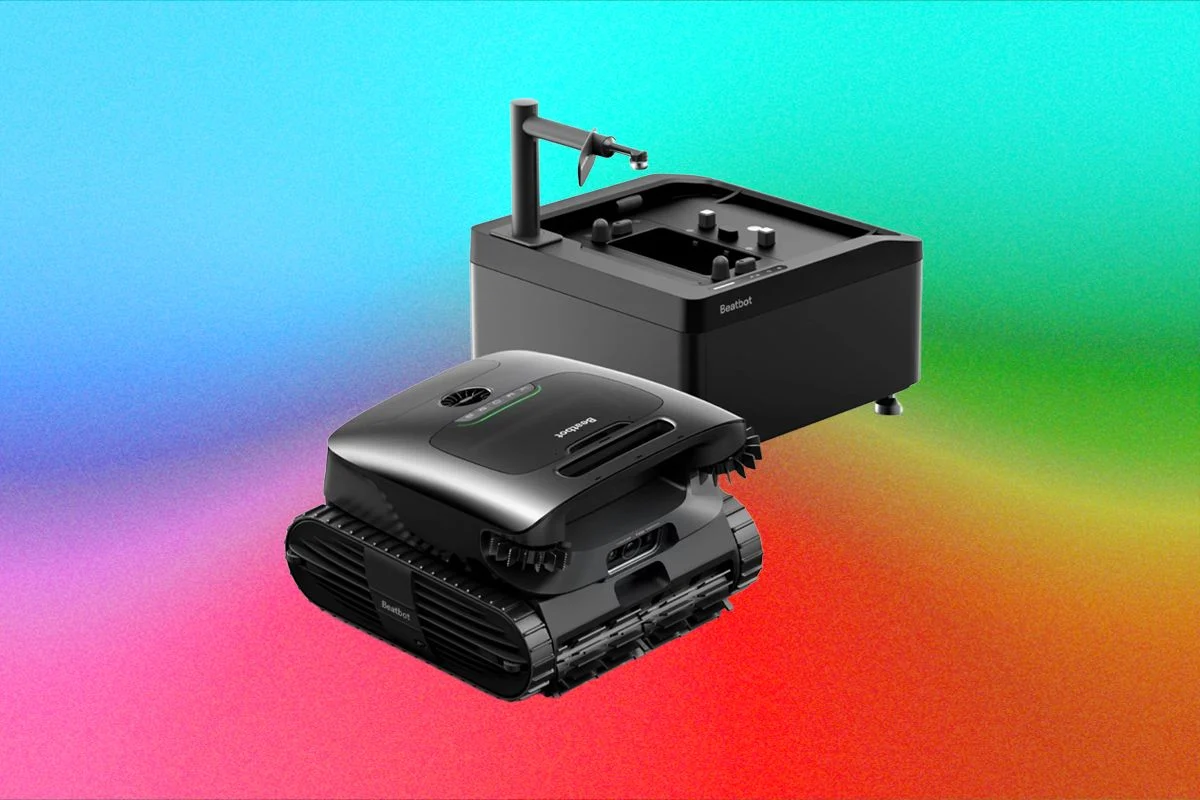
The landscape of residential pool maintenance is undergoing a significant technological shift as manufacturers transition from simple autonomous scrubbers to comprehensive, integrated maintenance ecosystems. At the forefront of this evolution is the Beatbot AquaSense X, a high-performance robotic pool cleaner paired with the AstroRinse, a specialized docking station designed to automate the two most tedious aspects of pool ownership: charging and filter cleaning. This new system represents a push toward a "set and forget" philosophy in backyard management, though it introduces a new set of logistical requirements for the average homeowner.
For years, the primary limitation of cordless robotic pool cleaners was the necessity for manual intervention. While these devices could navigate a pool floor with impressive precision, users were still required to retrieve the unit, plug it into a charger, and manually spray out the debris-filled filter baskets. The Beatbot AquaSense X and its AstroRinse companion attempt to bridge this gap by offering a high-pressure rinsing system and an automated charging interface, effectively creating a home base for the robot that handles the dirty work of maintenance.
Engineering and Infrastructure Requirements
The AstroRinse station is not merely a plastic cradle; it is a complex piece of machinery that requires careful site planning. Unlike traditional chargers that can be tucked away in a garage or shed, the AstroRinse demands a permanent or semi-permanent installation near the pool perimeter. The station requires three distinct utility connections to function: a standard electrical power supply, a pressurized water source via a garden hose, and a viable drainage path for the effluent generated during the cleaning cycle.
To ensure the system operates at peak efficiency, Beatbot has engineered the AstroRinse with adjustable feet and a built-in spirit level. This focus on a level installation is critical, as the robotic arm that performs the rinsing must align perfectly with the AquaSense X’s intake ports. If the unit is tilted, the high-pressure water stream may fail to clear the filter basket effectively, or the robot may fail to seat correctly on the charging pins.

The logistical challenge for many users lies in the convergence of these requirements. Backyard layouts often lack a hose spigot, a GFCI-protected outlet, and a drainage area in a single localized spot. During field testing, it was noted that the weight of the AquaSense X—approximately 29 pounds when dry and significantly more when saturated with water—makes the distance between the pool and the station a vital consideration. Homeowners must balance the proximity to the water with the availability of power and water lines, often necessitating the use of heavy-duty extension cords or additional plumbing.
Technical Specifications and Performance Benchmarks
The AquaSense X shares much of its DNA with the Beatbot AquaSense 2 Ultra, maintaining a robust build quality and a sophisticated internal sensor suite. The unit is powered by a 13,400 mAh lithium-ion battery, providing a maximum runtime of approximately 4.5 hours on a single charge. This capacity is sufficient to cover most large residential pools, including deep ends and complex architectural features.
In performance evaluations, the AquaSense X demonstrated exceptional proficiency in floor and wall cleaning. When subjected to a mix of organic debris, such as leaves and acorns, and synthetic test materials, the robot successfully removed an average of 97 percent of the material from the pool floor. Its ability to navigate steps and shallow tanning ledges—areas where many competitors struggle—remains a standout feature of the Beatbot platform.
However, the device’s performance as a surface skimmer remains a point of contention. While it features dual spinning side brushes designed to funnel floating debris into its intake, the robot’s slow surface speed often results in a "push" effect, where floating leaves are nudged away from the unit rather than captured. Testing indicated that the AquaSense X collected less than 50 percent of surface debris, with a significant portion of the remaining material sinking to the floor as the robot passed by. While the robot eventually captures this sunken material during its floor cycle, its efficiency as a dedicated surface skimmer is notably lower than its floor-cleaning capabilities.
The AstroRinse Cleaning Cycle: A Chronological Overview
The true innovation of this system lies in the post-cleaning workflow. Once the AquaSense X completes its cleaning cycle, it utilizes its internal buoyancy system to park itself at the waterline for easy retrieval. The user then moves the robot to the AstroRinse station to begin the maintenance phase.

- Docking and Pairing: Upon placing the robot onto the station, the two devices communicate via a wireless link. Initial setup involves a pairing process through the Beatbot mobile app, which supports both 2.4 GHz and 5 GHz Wi-Fi frequencies. This connection allows the station to recognize the robot’s presence and initiate the cleaning sequence.
- The Rinsing Sequence: Once seated, a motorized arm on the AstroRinse swings into position, aligning with the robot’s surface-skimming mouth. The station then activates a high-pressure water blast. This stream is directed downward through the internal filter basket, dislodging trapped dirt, sand, and organic matter.
- Duration and Modes: The standard cleaning cycle lasts for three minutes and is characterized by a significant acoustic output, reflecting the power of the water stream. For lighter maintenance, users can select a one-minute "Quick Mode" via the app.
- Debris Collection and Drainage: As the water flushes the robot’s filters, the debris is captured in a secondary, net-covered basket located in the base of the AstroRinse station. The wastewater then exits through a mesh screen at the bottom of the unit, emphasizing the need for proper drainage to prevent puddling or erosion around the station.
Software Integration and AI Capabilities
The Beatbot app serves as the command center for the AquaSense X, offering a suite of customizable cleaning modes. Users can define specific zones, such as "Floor Only," "Wall and Waterline," or "Full Clean." The app also provides real-time status updates, battery levels, and firmware management.
A key software feature is the "AI Quick Mode." By utilizing an onboard camera and machine learning algorithms, the robot can actively scan the pool floor for concentrated areas of debris. Rather than following a randomized or pre-programmed path, the AI allows the unit to target specific "hotspots," significantly reducing the time required for a spot clean. While this feature is highly effective for localized messes, it relies on clear water conditions and adequate lighting to function at peak performance.
Despite the sophistication of the software, the system is not immune to the complexities of modern connectivity. Early users have reported that firmware updates—while necessary for performance improvements—can occasionally disrupt the pairing between the robot and the station. Fortunately, re-establishing this connection is a straightforward process, though it highlights the ongoing challenges of maintaining a multi-device IoT (Internet of Things) ecosystem in an outdoor environment.
Market Implications and the Future of Pool Maintenance
The introduction of the AquaSense X and AstroRinse system signals a move toward the premiumization of the pool cleaner market. With a design that emphasizes labor reduction, Beatbot is targeting a demographic of homeowners who value time and convenience over lower entry costs.
Industry analysts suggest that this "docking station" model will likely become the standard for high-end robotic cleaners over the next decade. By solving the "filter problem," Beatbot has addressed one of the most significant barriers to consistent robotic cleaner usage. However, the success of this category will depend on how well manufacturers can simplify the infrastructure requirements. Future iterations may look toward solar-powered stations or integrated plumbing solutions built directly into new pool constructions.

The environmental impact of such systems is also a point of discussion among sustainability experts. While the AstroRinse uses a pressurized stream of water, the total volume used in a three-minute cycle is relatively low compared to manual filter cleaning with a high-flow garden hose. Furthermore, by maintaining a cleaner pool floor and waterline, the AquaSense X can help reduce the overall chemical load required to keep pool water sanitized, potentially leading to a more eco-friendly maintenance routine in the long run.
Final Analysis of the Beatbot Ecosystem
The Beatbot AquaSense X, when paired with the AstroRinse station, represents a formidable advancement in aquatic robotics. Its floor-cleaning efficiency is near the top of its class, and the automation of the filter-cleaning process is a genuine "quality of life" improvement for pool owners.
The system is not without its hurdles. The lackluster surface skimming performance suggests that while the "all-in-one" approach is ambitious, there is still room for mechanical refinement. Additionally, the requirement for a level, triple-serviced installation site means that this is not a "plug-and-play" solution for every backyard.
For the consumer with the appropriate infrastructure and a desire to minimize manual labor, the Beatbot AquaSense X offers a glimpse into a future where pool maintenance is almost entirely autonomous. As the technology matures and the logistics of docking stations become more streamlined, the era of the "manual spray-down" may finally be coming to a close.
