

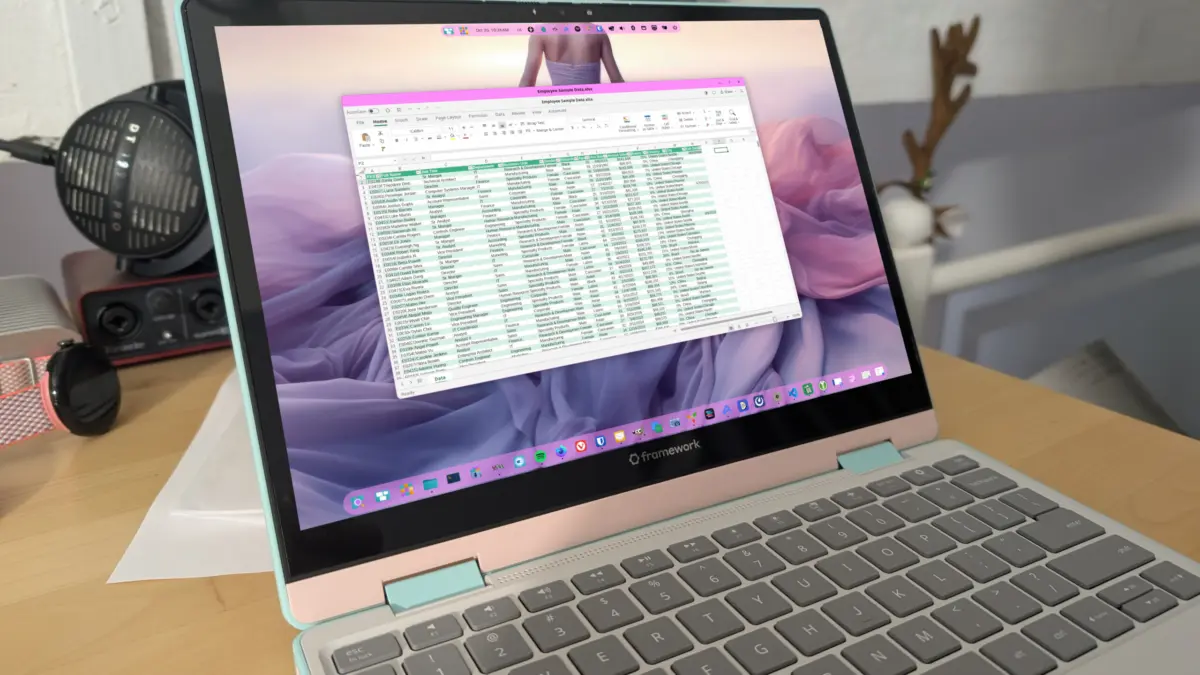
The software development landscape has witnessed a significant shift with the introduction of GridCraft, a new spreadsheet application developed by the ArtCraft team. Designed as a high-performance, open-source alternative to Microsoft Excel, GridCraft represents the latest entry in ArtCraft’s growing suite of productivity tools aimed at providing native, high-speed replacements for industry-standard proprietary software. By leveraging the Rust programming language, ArtCraft has positioned GridCraft not merely as a clone, but as a technically superior alternative in terms of execution speed and memory safety, particularly for users within the Linux and open-source communities.
The release of GridCraft follows a strategic pattern established by ArtCraft, which has previously launched applications such as PhotoCraft (an alternative to Adobe Photoshop), WordCraft (Microsoft Word), DeckCraft (PowerPoint), and PDFCraft (Adobe Acrobat). This systematic reverse-engineering of de facto standard applications addresses a long-standing challenge in the tech industry: the "application gap" that has historically hindered the widespread adoption of the Linux operating system in professional and corporate environments. By providing native tools that mirror the workflows of the Microsoft Office and Adobe Creative suites, ArtCraft is effectively removing the primary friction points for users considering a transition away from proprietary ecosystems.
Technical Architecture and the Rust Advantage
At the core of GridCraft’s performance is its foundation in Rust, a systems programming language renowned for its memory safety and performance characteristics comparable to C and C++. Unlike many modern cross-platform applications that rely on resource-heavy frameworks such as Electron or interpretation layers like WINE, GridCraft is compiled to run natively on Linux, FreeBSD, macOS, and Windows. This architectural choice results in a significantly reduced memory footprint and near-instantaneous launch times.
Initial performance benchmarks and stress tests indicate that GridCraft handles large-scale datasets with remarkable stability. In practical applications, the software has demonstrated the ability to manage workbooks exceeding 1,000 rows and complex multi-sheet configurations without the latency or "UI lag" often associated with Microsoft Excel when dealing with heavy calculation loads. This efficiency is attributed to GridCraft’s virtualized grid system, which only renders the visible portion of the spreadsheet, and its incremental recalculation engine, which updates only the cells affected by a change rather than the entire workbook.

Furthermore, GridCraft introduces a "copy-on-write" workbook architecture. This feature allows for instant undo snapshots, providing a robust safety net for data entry and complex modeling. Because the system tracks changes at a granular level, users can revert to previous states of a massive spreadsheet almost instantaneously, a process that can often cause traditional spreadsheet software to hang or crash.
Feature Set and Industry Compatibility
For an alternative productivity tool to be viable in a professional setting, it must maintain strict compatibility with existing file standards. GridCraft offers native support for the .xlsx file format, ensuring that users can open, edit, and save documents that are fully interchangeable with Microsoft Excel. This interoperability extends to more than 500 calculation functions, covering the vast majority of financial, statistical, and mathematical formulas utilized in modern business.
Beyond basic calculations, GridCraft includes advanced data analysis tools such as pivot tables and dynamic charts. In testing scenarios, pivot tables generated in Microsoft Excel and subsequently opened in GridCraft retained their structural integrity and functional capacity. The inclusion of "agent-native automation" also suggests a forward-looking approach to spreadsheet management, potentially allowing for integration with AI-driven workflows and automated data processing scripts that are becoming increasingly common in data science and enterprise resource planning (ERP).
Despite its robust feature set, GridCraft currently faces a minor limitation regarding template management. While the software provides three initial templates—a Household Budget, a Quarterly Sales Dashboard, and a Gradebook—it lacks a native mechanism to save files in the .xltx (Excel Template) format. Current users have adopted a workaround by saving spreadsheets as CSV files or standard XLSX files within dedicated "template" folders. While functional, the development team has indicated that a more comprehensive template system is a priority for future updates.
The Strategic Importance of the ArtCraft Suite
The emergence of the "Craft" suite of applications marks a pivotal moment for the open-source movement. For decades, the dominance of Microsoft Office and Adobe Creative Cloud has created a "vendor lock-in" effect. Businesses and educational institutions have often remained on Windows or macOS solely because the professional-grade tools required for their daily operations were unavailable or underperformed on Linux.

The chronology of ArtCraft’s releases demonstrates a clear intent to dismantle these barriers:
- PhotoCraft: Provided a familiar interface for graphic designers used to the Photoshop layout.
- WordCraft and DeckCraft: Addressed the core needs of administrative and presentation workflows.
- FilmCraft: Targeted the video editing market, offering a competitive alternative to Adobe Premiere.
- GridCraft: Targeted the most critical component of business infrastructure—the spreadsheet.
By offering these tools under an open-source license, ArtCraft allows for community-driven audits of the code, which is essential for security-conscious organizations. It also permits developers to redistribute and modify the software, fostering a decentralized ecosystem that is not beholden to a single corporate entity’s subscription model.
Comparative Analysis: GridCraft vs. Traditional Solutions
When compared to established open-source alternatives like LibreOffice Calc or Gnumeric, GridCraft distinguishes itself through its UI modernization and its focus on mimicking the specific user experience of Microsoft Excel. While LibreOffice has long been the standard-bearer for open-source productivity, some users find its interface dated or its compatibility with complex Excel macros inconsistent. GridCraft’s approach of "reverse-engineering the standard" aims to provide a zero-learning-curve experience for those migrating from the Microsoft ecosystem.
In terms of performance, the use of Rust gives GridCraft a distinct edge over web-based solutions like Google Sheets. While Google Sheets offers excellent collaboration features, it struggles with extremely large datasets and requires a constant internet connection for full functionality. GridCraft provides the power of a local, native application with the speed of modern systems programming, making it a more suitable choice for heavy data processing and offline professional use.
Economic and Market Implications
The availability of a free, high-performance Excel alternative has significant implications for the Total Cost of Ownership (TCO) in IT environments. For small to medium-sized enterprises (SMEs), the cumulative cost of Microsoft 365 subscriptions can be a substantial annual expense. GridCraft provides an opportunity to reduce these costs without sacrificing the ability to interact with the global standard of XLSX files.

Furthermore, the rise of GridCraft and its sibling applications may accelerate the adoption of Linux in the enterprise desktop market. If the "application gap" is bridged, the primary argument against Linux—that it cannot run the software businesses need—evaporates. This could lead to a more competitive OS market, encouraging innovation from all players, including Microsoft and Apple.
Future Outlook and Community Response
While GridCraft is already functional for a wide range of tasks, the ArtCraft team and early adopters emphasize that the software is in a continuous state of evolution. Users are encouraged to maintain backups of critical data when working in GridCraft, as is standard practice with any relatively new software entering a production environment.
The developer community has reacted positively to the use of Rust for these tools, noting that it brings a level of modernization to the open-source office suite category that has been lacking for years. As the project matures, the integration of more robust template support, enhanced macro compatibility, and perhaps collaborative editing features will be the next milestones to watch.
In conclusion, GridCraft is more than just a spreadsheet tool; it is a component of a larger movement to democratize professional-grade software. By combining the performance of Rust with the accessibility of open-source licensing, ArtCraft is providing a viable path forward for users seeking independence from proprietary software giants. Whether GridCraft can fully unseat Excel in the professional sphere remains to be seen, but its current trajectory suggests it is the most formidable native open-source competitor to emerge in recent memory.
