

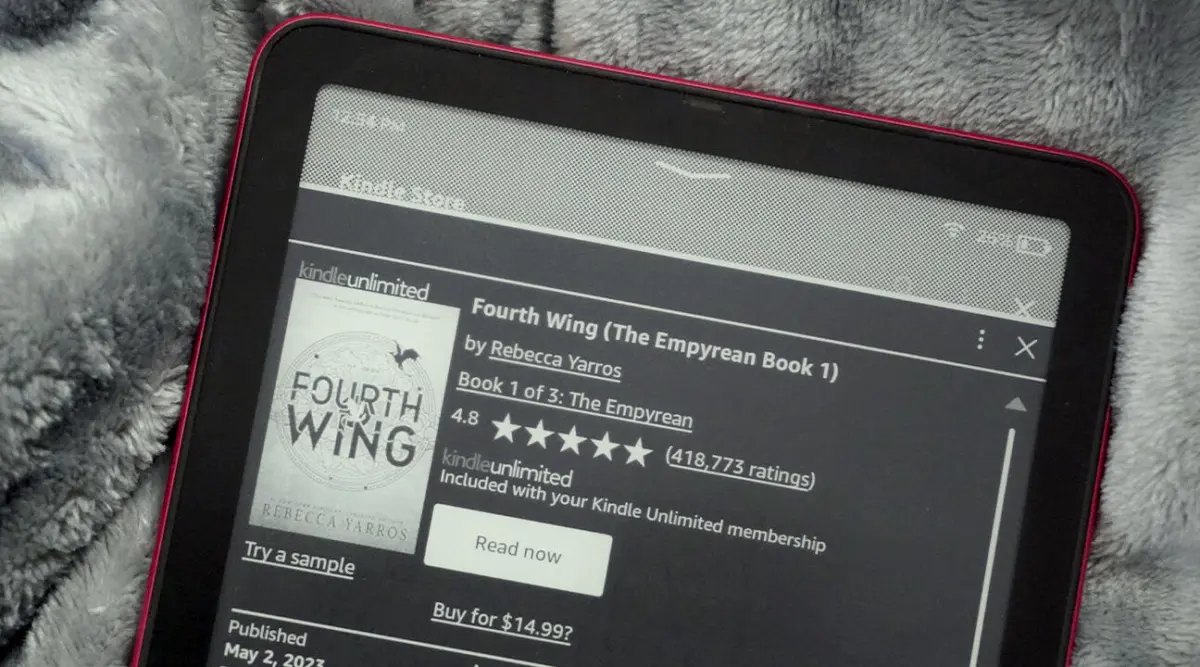
Amazon has officially announced the rebranding of its long-standing digital reading subscription, Kindle Unlimited, which will henceforth be known as Kindle+. The transition marks a strategic pivot for the e-commerce giant as it seeks to further integrate its vast e-book ecosystem with its expanding audio offerings. While the core value proposition of the service remains largely intact—providing subscribers with access to a massive library of digital titles for a monthly fee of $11.99—the rebrand introduces a significant expansion in audiobook availability. Central to this expansion is the controversial inclusion of titles narrated by artificial intelligence, a move Amazon positions as a benefit to independent authors and budget-conscious readers, but one that has sparked debate within the professional narration community.
The Kindle+ service will continue to operate on the same foundational model as its predecessor, offering unlimited access to a curated catalog of millions of e-books, digital magazines, and comics. The rebranding comes at a time when the digital publishing landscape is increasingly leaning toward multi-modal consumption, where readers often switch between visual reading on a device and auditory listening while commuting or performing other tasks. By streamlining the name to Kindle+, Amazon aligns the service with modern subscription naming conventions seen in the streaming industry, signaling a more comprehensive "plus" experience that transcends simple text.
The Role of Virtual Voice and AI Narration
A cornerstone of the Kindle+ launch is the wider implementation of Amazon’s "Virtual Voice" technology. This service, which has been in beta testing for several months, is now being offered as a standard, free tool for authors participating in the Kindle Direct Publishing (KDP) program. Virtual Voice utilizes sophisticated text-to-speech algorithms to create synthetic narrations that are significantly more advanced than the robotic voices of previous decades. These AI-generated audiobooks are designed to bridge the gap between traditional e-books and high-production audiobooks, which can cost independent authors thousands of dollars to produce using professional human talent.
Amazon’s rationale for the push into AI narration is rooted in accessibility and volume. According to company statements, the goal is to provide authors with a low-barrier entry into the audiobook market. By selecting a "virtual narrator," an author can convert their written manuscript into an audio format in a matter of minutes at no additional cost. For the Kindle+ subscriber, this means a rapid influx of new audio content that was previously unavailable. The service allows for a seamless transition between the e-book and the audio version, utilizing Amazon’s Whispersync technology to ensure that a reader’s progress is saved across both formats.
Historical Context and the Evolution of Kindle Services
To understand the significance of the Kindle+ rebrand, it is necessary to look at the decade-long trajectory of Amazon’s digital reading initiatives. Kindle Unlimited was first launched in July 2014, positioned as the "Netflix for books." At its inception, the service offered approximately 600,000 titles. Over the subsequent ten years, that number swelled to over 4 million titles, driven largely by the success of the KDP program, which allowed self-published authors to bypass traditional publishing houses.
The integration of audio has always been a secondary feature of Kindle Unlimited. Historically, a small percentage of titles included "Kindle Unlimited with Narration," which provided access to professionally produced audiobooks, often through Amazon’s subsidiary, Audible. However, the production of these audiobooks remained a bottleneck. Professional narration requires studio time, sound engineering, and significant financial investment. By introducing AI narration under the Kindle+ banner, Amazon is effectively removing the financial hurdle for millions of self-published titles to enter the audio space, marking the most significant shift in the platform’s history since its 2014 debut.
The Economic Model for Authors and the KDP Program
The transition to Kindle+ does not fundamentally alter the compensation structure for authors enrolled in the KDP Select program, though it does introduce new variables regarding audio consumption. Authors who opt into Kindle+ agree to make their titles exclusive to Amazon’s platform in exchange for a share of the KDP Select Global Fund. This fund is a monthly pool of money distributed based on the number of "Kindle Edition Normalized Pages" (KENP) read by subscribers.
Under the new Kindle+ framework, the inclusion of AI-narrated audiobooks raises questions about how "pages read" are calculated. Amazon has clarified that authors will continue to earn royalties based on the equivalent pages "consumed" during audio playback. This model ensures that even if a user never opens the digital text but listens to the entire AI-narrated version, the author is compensated for the full length of the book.
In 2023, the KDP Select Global Fund frequently exceeded $45 million per month, highlighting the scale of the economy Amazon has built around independent publishing. By adding more audiobooks to Kindle+, Amazon expects to increase the total time spent within the app, potentially growing the global fund as more subscribers join the service to take advantage of the expanded library.

Market Data and Industry Impact
The move to expand audiobook offerings is backed by robust market trends. According to the Audio Publishers Association (APA), the audiobook industry has seen double-digit revenue growth for eleven consecutive years. In 2022, U.S. audiobook sales reached approximately $1.8 billion, a 10% increase over the previous year. Furthermore, data suggests that the "multitasking" reader is the fastest-growing demographic in publishing.
However, the introduction of AI narrators into a premium subscription service has not been without controversy. Professional voice actors and narrators have expressed concern that the proliferation of "free" AI alternatives will devalue human labor and lead to a decline in quality. Industry analysts point out that while AI can replicate the sound of a human voice, it often struggles with emotional nuance, complex character voices, and the pacing required for dramatized storytelling.
From a competitive standpoint, Kindle+ places Amazon in a stronger position against rivals like Spotify, which recently integrated 15 hours of monthly audiobook listening into its Premium tier, and Everand (formerly Scribd), which offers a similar "unlimited" model. By leveraging its own AI technology, Amazon can scale its library faster and more cheaply than competitors who rely solely on licensed, human-narrated content.
Technical Limitations and User Experience
While the expansion of the catalog is a quantitative improvement, the qualitative experience of AI narration remains a point of contention. Amazon’s Virtual Voice technology allows authors to choose from various voice profiles—categorized by gender, age, and tone—but the output is still recognizable as synthetic. For non-fiction, instructional manuals, or technical guides, AI narration is often cited as being highly effective. For literary fiction or high-fantasy novels with diverse casts of characters, the technology still faces hurdles in delivering a performance that matches a professional human narrator.
Kindle+ users will be able to distinguish between human-narrated and AI-narrated titles via labels in the Kindle Store. This transparency is intended to manage consumer expectations. For those who prioritize the artistry of narration, Amazon continues to direct users toward Audible, which remains the company’s flagship platform for premium, high-production audio content, including celebrity-read memoirs and full-cast dramatizations.
Broader Implications for the Future of Publishing
The rebranding to Kindle+ and the embrace of AI narration represents a broader trend of "platformization" in the creative arts. As AI tools become more accessible, the barrier between "author" and "producer" is blurring. An independent writer can now be their own typesetter, cover designer, and—with Virtual Voice—their own narrator.
This democratization of production has significant implications for the labor market within the publishing industry. As AI narrators become more lifelike, the mid-tier market for professional narration may see a contraction, forcing human narrators to specialize in high-end, complex performances that AI cannot yet replicate. Additionally, the move signals Amazon’s intent to keep users within its "walled garden." By offering e-books and audiobooks under a single $12 subscription, Amazon reduces the likelihood of users seeking content from public libraries (via apps like Libby) or other retailers.
Summary of Key Changes and Continuity
Despite the new name and the influx of AI content, Kindle+ retains much of what made Kindle Unlimited a staple for digital readers. The price remains locked at $11.99 per month, avoiding the "subscription fatigue" price hikes seen recently in the video streaming sector. The borrowing limit, which allows users to have up to 20 titles downloaded simultaneously, also remains in effect.
For the average consumer, the most noticeable change will be the "Listen" button appearing on a significantly larger portion of the Kindle library. For the publishing industry, however, the shift to Kindle+ is a clear indicator that the future of reading is not just digital, but increasingly synthetic. As Amazon continues to refine its Virtual Voice algorithms, the line between human and machine narration will likely continue to thin, challenging traditional notions of storytelling and creative labor in the digital age.
The rebrand is effective immediately, with existing Kindle Unlimited subscriptions transitioning to Kindle+ automatically. As the program matures, industry observers will be watching closely to see how the inclusion of AI affects subscriber retention and whether the increased volume of content offsets the potential concerns regarding the loss of the "human touch" in literature.
