

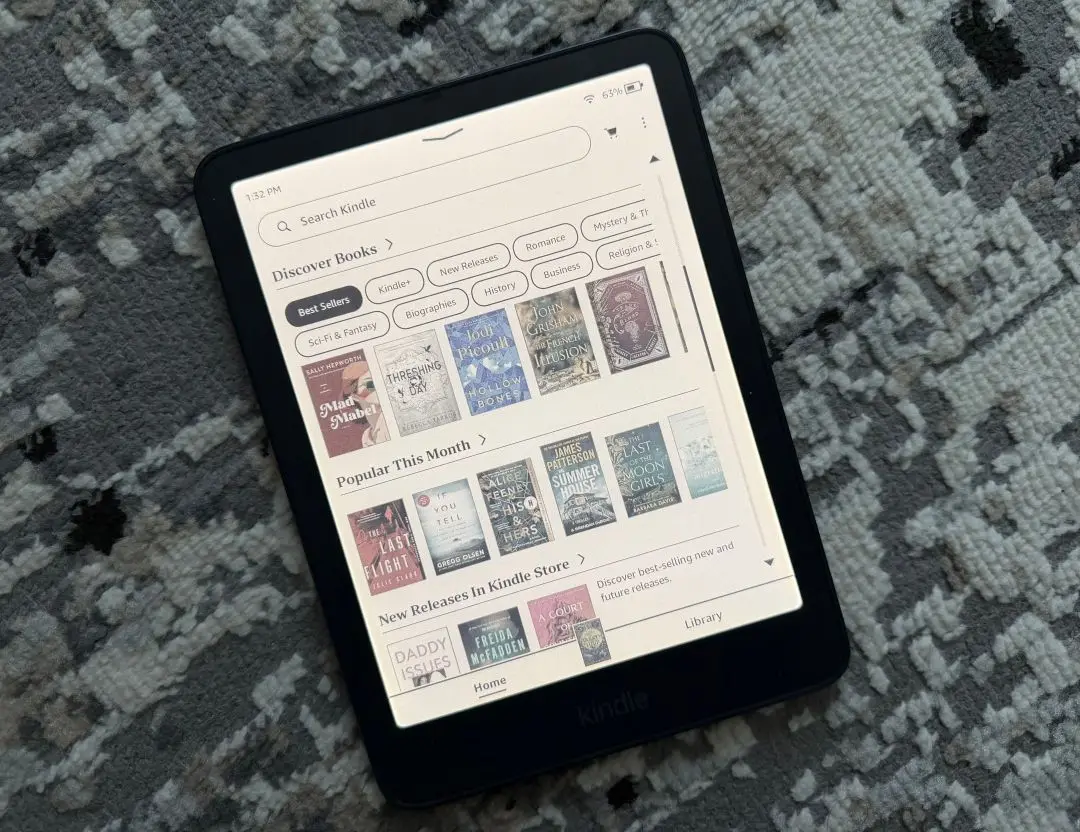
Amazon has officially expanded its hardware ecosystem with a significant update to its Kindle lineup, headlined by the introduction of the Kindle Colorsoft and its high-end Signature Edition. This release represents a pivotal moment for the brand as it integrates color technology into its flagship reading devices, catering to a growing demographic of graphic novel, comic, and non-fiction enthusiasts. The standard Kindle Colorsoft enters the market with a starting price of $290, while the more robust Signature Edition, featuring premium materials and expanded storage, is positioned at $320. These devices are part of a broader refreshed lineup that also includes an updated basic Kindle and a refined Kindle Paperwhite, marking Amazon’s most comprehensive e-reader overhaul in several years.
The Kindle Colorsoft Signature Edition is distinguished by its 32GB of internal storage—double the 16GB found in the base model—and a sophisticated aesthetic. It is available in a classic Graphite finish or a new, deep maroon-toned "Fig" color. Notably, the Signature Edition features an aluminum back, providing a more tactile, premium feel compared to the plastic-heavy designs of entry-level models. This strategic move into color E-Ink technology follows the initial 2024 launch of the Colorsoft line, with the latest iterations focusing on streamlining the physical footprint through a thinner, lighter chassis and an edge-to-edge display that minimizes the bezel.
A Chronology of Innovation: The Path to Color E-Ink
The journey toward the Kindle Colorsoft began nearly two decades ago. To understand the significance of this release, one must look at the evolution of the Kindle platform:
- 2007: Amazon launches the original Kindle, featuring a keyboard and a 6-inch E-Ink display, selling out in five and a half hours.
- 2011: The introduction of the Kindle Touch marks the transition away from physical keyboards toward gesture-based navigation.
- 2012: The Kindle Paperwhite debuts, introducing the built-in front light, which allowed for reading in the dark without external lamps.
- 2014-2016: The Kindle Voyage and Kindle Oasis push the boundaries of "premium" e-readers with glass screens and ergonomic physical page-turn buttons.
- 2022: The Kindle Scribe is released, introducing note-taking and stylus support to the E-Ink ecosystem.
- 2024: Amazon breaks the monochrome barrier with the Colorsoft, responding to years of competition from manufacturers like Boox and Kobo who had already experimented with color E-Ink.
The latest Colorsoft models represent the refinement phase of this timeline. While the first-generation color devices focused on the novelty of the palette, the 2024/2025 refresh focuses on performance, reducing the latency of page turns and improving the contrast ratios that often plague color E-Ink displays.
Technical Specifications and Display Performance
The core of the Kindle Colorsoft experience is its 7-inch display. Utilizing advanced E-Ink technology, the screen maintains the industry-standard 300 pixels per inch (ppi) for black-and-white text, ensuring that traditional novels remain as sharp and readable as they are on the monochrome Paperwhite. However, when displaying color content, the resolution shifts to 150 ppi.

While 150 ppi is significantly lower than the pixel density of modern tablets like the iPad Pro or Samsung Galaxy Tab, it is optimized for the reflective nature of E-Ink. Testing indicates that while colors are more muted than the vibrant saturation found on LCD or OLED screens, they are more than sufficient for identifying different highlighting colors, viewing cookbook photography, and following the narrative flow of comic books. The display also features an auto-adjusting front light and a customizable color temperature setting. This allows users to shift from a cool white light during the day to a warm, amber-toned display at night, which is scientifically linked to reduced eye strain and better sleep hygiene.
Ergonomic Refinements and Design Philosophy
One of the most praised changes in the new Kindle Colorsoft is a seemingly minor adjustment to the hardware layout: the repositioning of the power button. In previous generations of the Paperwhite and the original Colorsoft, the power button was located on the bottom edge of the device, adjacent to the USB-C charging port. This design was frequently criticized by the user community, as readers often accidentally triggered the button with their pinky finger while supporting the device from the bottom.
The new models have moved the power button to the top-right edge. This change, according to hardware analysts, reflects Amazon’s shift toward a more "user-centric" design philosophy. The Signature Edition’s aluminum back also serves a dual purpose; beyond the aesthetic appeal, it provides structural rigidity that allows the device to be thinner without sacrificing durability. Furthermore, the device maintains an IPX8 waterproof rating, ensuring it can withstand immersion in up to two meters of fresh water for 60 minutes—a critical feature for "bath readers" and travelers.
Battery Life and Ecosystem Integration
Battery longevity remains the primary advantage of the Kindle ecosystem over multi-purpose tablets. Amazon claims the Kindle Colorsoft can provide up to eight weeks of usage on a single charge, based on a half-hour of reading per day with wireless off and the light setting at 13. While this is shorter than the 12-week lifespan of the latest Paperwhite—largely due to the power required to refresh color layers—it remains vastly superior to the 10-to-15-hour battery life typical of high-end tablets.
The Signature Edition further enhances the charging experience by supporting wireless charging. It is compatible with any Qi-certified charging pad, though Amazon markets a specific dock designed to hold the Kindle upright. Additionally, the Signature Edition includes pogo pins on the back, allowing it to connect to a specialized magnetic cover that features built-in physical page-turn buttons, bridging the gap for users who miss the tactile feel of the now-discontinued Kindle Oasis.
Market Context and Competitive Landscape
The release of the Kindle Colorsoft comes at a time when the e-reader market is diversifying. Competitors like the Kobo Libra Colour have gained traction by offering color displays at a lower price point, often including stylus support for annotation. Amazon’s strategy with the Colorsoft appears to be focused on the strength of its Kindle Store—the world’s largest digital bookstore—and the seamless integration of Audible.

Market data suggests that the demand for color e-readers is driven largely by the "Manga" and "Graphic Novel" sectors, which have seen double-digit growth in digital sales over the last three years. By providing a device that can accurately render the art of these mediums without the eye-searing brightness of a traditional tablet, Amazon is looking to lock in these high-value consumers.
Broader Impact and Industry Implications
The transition to color is not without its trade-offs. The "ghosting" effect—where remnants of a previous image are visible on the new page—is a common technical hurdle for color E-Ink. However, Amazon has implemented a new refresh controller in the Colorsoft that significantly mitigates this issue. During intensive testing, the screen refresh was found to be less intrusive than on the larger Kindle Scribe Colorsoft, making it a more focused tool for pure consumption.
For the broader tech industry, the Kindle Colorsoft signifies that color E-Ink has finally reached "mainstream" readiness. It is no longer a niche experimental feature but a core component of a flagship product line. This may prompt other manufacturers to accelerate their own color R&D, potentially leading to more affordable color e-readers in the $150–$200 range within the next few years.
Conclusion and Purchasing Considerations
While the Kindle Colorsoft and its Signature Edition are undoubtedly the most capable e-readers Amazon has ever produced, their high price points ($290 and $320) place them in a luxury category. For the average reader who consumes strictly text-based fiction, the updated basic Kindle ($169.99) or the Paperwhite ($199.99) remains a more economical choice.
However, for the dedicated "power reader" who values the premium feel of aluminum, requires large storage for image-heavy files, or simply wants their digital library to reflect the vibrant covers of their physical counterparts, the Colorsoft Signature Edition stands as the current gold standard. As digital reading habits continue to evolve toward more visual media, the Colorsoft is positioned not just as a tool for the present, but as a future-proof investment for the next decade of digital literacy.
