

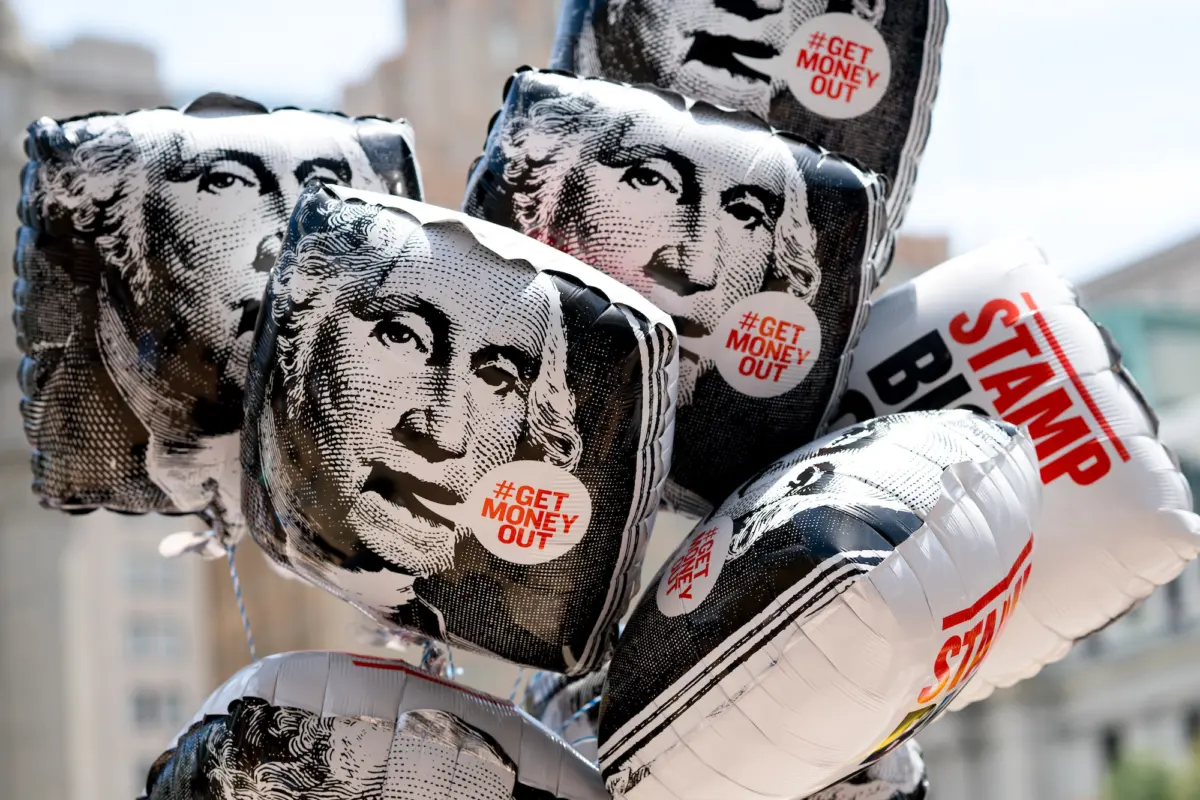
The 2026 midterm elections, which saw a significant shift in the balance of power within the United States Congress, also served as a historic battleground for the future of campaign finance. As a "blue wave" facilitated Democratic gains in both the House of Representatives and the Senate, a secondary, non-partisan movement emerged at the state level. Voters in several key states issued a decisive rebuke to the 2010 Supreme Court ruling in Citizens United v. Federal Election Commission, passing or debating ballot initiatives designed to curb the influence of corporate spending and wealthy "megadonors" in the democratic process. This push for reform comes at a time when political spending has reached unprecedented heights, with the 2026 cycle officially designated as the most expensive election in American history.
In the Western United States, Montana emerged as the vanguard of this movement. Voters in the "Big Sky Country" overwhelmingly approved Initiative-194, commonly referred to as The Montana Plan. The measure passed by a staggering margin of nearly 2 to 1, signaling a broad consensus among the electorate that the current role of money in politics is untenable. Initiative-194 seeks to fundamentally alter the legal landscape of campaign contributions by targeting "artificial persons." Under the new law, corporations, trade associations, labor unions, and nonprofits—including those that serve as conduits for "dark money"—are prohibited from making direct or indirect contributions to political campaigns, parties, or ballot measure committees.
The Montana initiative is built upon a specific legal strategy intended to navigate the constraints of federal law while challenging the supremacy of corporate political speech. Rather than attempting to directly overturn the First Amendment protections established by the Supreme Court, the law creates a state-level classification for non-human entities. It limits their activities to those deemed "necessary or convenient" for their operational existence, explicitly excluding political influence from that definition. Proponents of the measure, including the Transparent Election Initiative, believe this distinction provides a robust legal foundation that can withstand scrutiny, even as the Montana Republican State Central Committee has already filed a lawsuit to block the law’s implementation.
The Legal and Economic Context of the 2026 Spending Surge
To understand the momentum behind these state-level initiatives, one must look at the trajectory of American election spending over the last decade and a half. The 2010 Citizens United decision, followed closely by SpeechNow.org v. FEC, fundamentally reordered the priorities of the American electoral system. By granting corporations and unions the same First Amendment rights as individuals regarding independent expenditures, the Court paved the way for the rise of Super PACs. These entities can accept unlimited sums from various sources, and while they are legally required to disclose their donors, the system is frequently circumvented through "dark money" groups—501(c)(4) nonprofits that do not have to name their contributors before passing funds to Super PACs.
The financial impact of these rulings reached a fever pitch in 2026. Data indicates that nearly $12 billion was spent on political advertisements during the midterm cycle, a figure that eclipsed the spending seen in the 2024 presidential election. This flood of capital has created an environment where candidates often spend a majority of their time fundraising rather than legislating. However, the 2026 results suggest a potential disconnect between massive spending and electoral success. Analysis of the midterms shows that several of the highest-spending megadonors failed to secure victories for their preferred candidates, and many political strategists are questioning the diminishing returns of saturation-level television and digital advertising.
Furthermore, a growing "no-PAC" movement among candidates is gaining traction. The 120th Congress is set to include at least 100 members who have pledged to refuse corporate PAC money, a record-breaking figure that suggests a shift in how lawmakers view political legitimacy. More than half of the Democratic candidates who successfully flipped Republican-held House seats in 2026 ran on platforms that explicitly rejected corporate contributions, signaling to voters that their interests would not be secondary to those of wealthy special interests.
Michigan and the Push for Industry-Specific Restrictions
While Montana’s approach was broad, Michigan voters targeted specific sectors known for high-stakes lobbying and government interaction. Proposition 2, also known as the "Money out of Politics" proposal, received an overwhelming 82 percent of the vote. This measure takes a two-pronged approach: it bans all campaign contributions from utility and electric companies, and it prohibits any corporation that receives more than $250,000 in government contracts from donating to state-level campaigns.

The Michigan initiative reflects a growing public concern regarding "pay-to-play" dynamics, where companies with significant financial interests in state regulatory decisions use campaign donations to influence policy. By targeting government contractors, Michigan voters sought to ensure that public funds are not recycled back into the political system to secure further contracts. Like the Montana initiative, Prop 2 faced immediate legal pushback. The Mackinac Center for Public Policy, supported by the Institute for Free Speech, filed a lawsuit shortly after the election, arguing that the restrictions infringe upon the constitutional rights of businesses to engage in the political process.
A National Trend: From Hawaii to the West Coast
The legal framework utilized by Montana and Michigan was not developed in a vacuum. Hawaii actually preceded Montana in enacting similar legislation. In June 2026, the Hawaii state legislature passed a law that prohibits campaign spending by "artificial persons." This bipartisan effort was championed by legislators who argued that the sanctity of the voting process was being eroded by unlimited corporate funds. The Hawaii law is currently being contested in court by the U.S. Chamber of Commerce and the Grassroot Institute of Hawaii, with legal experts suggesting these cases may eventually force the U.S. Supreme Court to revisit its stance on state-level campaign finance regulation.
In other parts of the country, the results were more nuanced. In Alaska, voters were tasked with deciding the fate of a 2020 disclosure law. The existing law requires any group spending more than $2,000 in an election to make its donor list public. A 2026 ballot measure sought to repeal this requirement and simultaneously roll back the state’s ranked-choice voting system. As of the latest ballot counts, the repeal effort was narrowly trailing, with 52 percent of voters opting to keep the transparency requirements in place.
California also saw a close contest regarding Proposition 4, which aimed to move the state toward a public campaign financing model for state and local elections. Public financing is often viewed as the ultimate antidote to corporate influence, as it provides candidates with public funds to run their campaigns, thereby reducing their reliance on private donors. With two-thirds of the ballots counted, the measure was in a statistical dead heat, trailing by a mere two percentage points. The outcome in California is seen as a bellwether for whether the public is ready to invest taxpayer dollars into the electoral process to safeguard it from private interests.
Chronology of the Campaign Finance Reform Movement (2010–2026)
- January 2010: The U.S. Supreme Court issues its ruling in Citizens United v. FEC, striking down bans on independent corporate and union expenditures.
- March 2010: SpeechNow.org v. FEC is decided by the D.C. Circuit Court, leading to the creation of Super PACs.
- 2012–2024: Election spending increases exponentially every cycle, with "dark money" becoming a primary tool for anonymous political influence.
- November 2020: Alaska voters pass Measure 2, establishing ranked-choice voting and strict donor disclosure requirements.
- June 2026: Hawaii becomes the first state to pass a ban on campaign spending by "artificial persons," utilizing a new legal strategy to bypass Citizens United.
- November 3, 2026: Midterm elections take place. Montana (I-194) and Michigan (Prop 2) pass major campaign finance reforms.
- November 5, 2026: Legal challenges are filed in Montana and Michigan by conservative think tanks and interest groups.
- January 1, 2027: The scheduled date for Montana’s Initiative-194 to take effect, pending judicial stays.
Implications and the Future of State Sovereignty
The surge of state-level ballot initiatives represents a new phase in the struggle over American campaign finance. For years, advocates for reform looked to federal legislation—such as the "For the People Act"—which faced consistent gridlock in Washington D.C. The 2026 midterms demonstrate that voters are increasingly willing to bypass the federal government and use the "laboratory of the states" to test new legal theories.
The primary legal question moving forward is whether the Supreme Court will view these state-level classifications of "artificial persons" as a legitimate exercise of state power or as a thinly veiled attempt to circumvent federal constitutional protections. If these laws are upheld, it could create a patchwork of campaign finance regulations across the country, significantly complicating the strategies of national corporations and Super PACs.
Furthermore, the 2026 elections suggest that the narrative of corporate political speech is losing its appeal among the general public. Across the political spectrum, from the Republican supporters of Hawaii’s ban to the Democratic "blue wave" in the Rust Belt, there is a shared sentiment that the influence of money has reached a breaking point. While the legal battles in Montana, Michigan, and Hawaii may take years to resolve, the 2026 midterms have already succeeded in placing the issue of democratic integrity at the forefront of the national conversation. As these cases move toward the higher courts, they will likely force a re-examination of the role of the corporation in a society ostensibly governed by "one person, one vote."
