

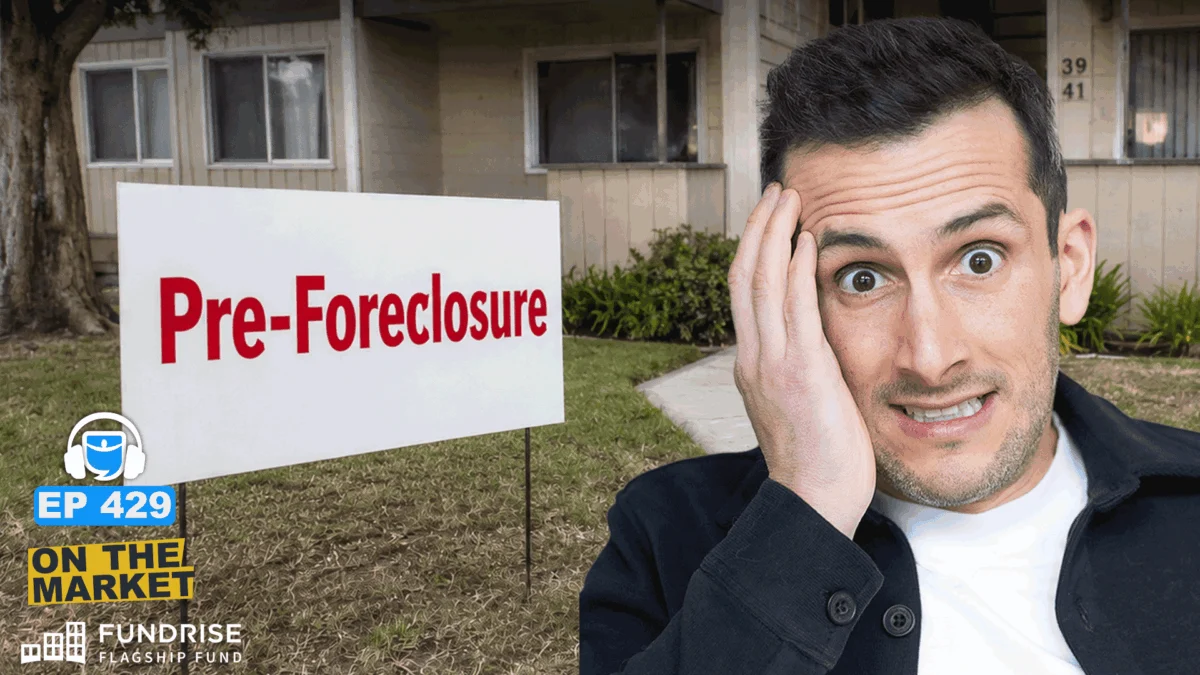
The stability of the United States economy is frequently measured by the health of its real estate sector, a market that has historically provided both the foundation for American wealth and the catalyst for its most significant financial crises. As market participants look toward the latter half of the decade, the primary concern remains whether current economic "stress tests" signal a period of sustained growth, a minor correction, or a more systemic collapse reminiscent of the 2008 Great Financial Crisis. Central to this analysis is the concept of credit stress—a metric that serves as the "canary in the coal mine" for forced selling and market volatility.
The Mechanics of Credit Stress and Forced Selling
In a healthy economic cycle, property owners maintain the autonomy to choose when to sell their assets. However, market downturns are often precipitated by "forced selling," a scenario where debt obligations outpace income, compelling owners to liquidate assets regardless of market conditions. This phenomenon creates a "race to the bottom" as a sudden influx of distressed inventory overwhelms demand, driving prices downward in a self-reinforcing cycle.
Economists and analysts utilize credit stress data to identify these risks before they manifest as market-wide crashes. By examining mortgage delinquencies, credit card debt, auto loan performance, and private credit health, analysts can determine the resilience of the average American household and the stability of commercial enterprises. Current data suggests a complex, bifurcated landscape where the residential sector remains remarkably stable while the commercial and consumer sectors show burgeoning signs of distress.
A Comparative Chronology: 2008 vs. The Modern Era
To understand the current risk profile, it is essential to contextualize today’s figures within the historical timeline of the last two decades. The peak of the housing market collapse in 2009 saw national mortgage delinquency rates reach a record 9.25%. Serious delinquencies—defined as payments 90 days or more overdue—peaked at approximately 5% in 2010, leading to nearly 2.9 million foreclosure filings that year. This represented 22 out of every 1,000 households, a level of distress that took nearly five years to normalize.
By 2019, which serves as the most recent "normal" benchmark prior to the COVID-19 pandemic, the national delinquency rate had stabilized at just under 4%, with annual foreclosures dropping to approximately 400,000. During the pandemic years (2020–2022), government intervention in the form of foreclosure moratoriums and eviction bans artificially suppressed distress signals, leading to historic lows in delinquency.
As of early 2024, the national first-lien delinquency rate stands at approximately 3.35%. While this is a slight increase from the pandemic lows, it remains significantly below the 2019 benchmark. Current data indicates that while "new" delinquencies are actually declining—falling by 23% in recent reporting periods—serious delinquencies are rising. This suggests a "pipeline effect" where the backlog of foreclosures delayed by pandemic-era policies is finally moving through the legal system, rather than a new wave of defaults triggered by current economic conditions.
The Residential Sector: Pockets of Vulnerability
Despite the overall health of the residential mortgage market, specific demographics and regions are exhibiting heightened stress. The Federal Housing Administration (FHA) loan sector, which typically serves first-time homebuyers and lower-income individuals, is currently the primary source of residential credit concern.
FHA loans represent only 10% to 11% of the total mortgage market, yet they account for more than 50% of all current delinquencies. At the close of the previous fiscal year, the serious delinquency rate for FHA loans exceeded 11%, compared to just 1.6% for the broader mortgage market. These figures are particularly concentrated in the Southern United States, where a "perfect storm" of rising property taxes, surging insurance premiums, and the resumption of student loan payments has squeezed household budgets.
Furthermore, data from the Federal Reserve Bank of New York indicates that Southern states are seeing a correlation between student loan defaults and FHA mortgage stress. Because FHA borrowers often have lower credit scores and smaller cash reserves, they are more "economically sensitive" to inflationary pressures and changes in secondary costs like utilities and insurance.
Commercial Real Estate: The Growing Crisis in Multifamily and Office
While the residential market shows a "normalization" of debt, the commercial real estate (CRE) sector is facing a more existential threat. Unlike residential mortgages, which are largely fixed-rate for 30 years, commercial debt is typically shorter-term and adjustable.
The current environment of "higher for longer" interest rates has placed immense pressure on the Commercial Mortgage-Backed Securities (CMBS) market. In the multifamily sector, delinquency rates have climbed toward 7%, a stark contrast to the near-zero rates seen in 2021. The office sector is in even more dire straits, with CMBS delinquency rates exceeding 12%—the highest on record.
The primary driver of this distress is the "maturity wall." An estimated $1 trillion in multifamily debt is scheduled to mature over the next several years. Operators who acquired properties in 2021 and 2022 at 3% interest rates are now facing refinancing options at 7% or 8%. When combined with flat or declining rents and rising operating expenses (Net Operating Income or NOI stagnation), many syndications and institutional owners are finding their assets "underwater."
This has led to a rise in capital calls, where limited partners are asked to inject more equity to save a project, and in some high-profile cases, total losses for investors. Market reports indicate that some banks are already selling distressed multifamily assets at 40 cents on the dollar in off-market transactions, signaling the beginning of a significant price correction in the commercial space.
The Consumer Debt Spillover
The resilience of the housing market is inextricably linked to the broader financial health of the consumer. Recent data from the New York Federal Reserve highlights concerning trends in non-housing debt:
- Credit Card Delinquencies: Serious credit card delinquencies (90+ days) have surged from 8% in 2022 to approximately 13% today. Total credit card debt in the U.S. has surpassed the $1.1 trillion mark, reflecting a reliance on revolving credit to combat inflation.
- Auto Loans: Delinquency rates for auto loans have crept up from 4% to 6%, indicating that the cost of transportation is becoming a secondary point of failure for many households.
- Student Loans: Following the end of the payment pause, student loan delinquencies have returned to approximately 10%. While not yet at "emergency" levels, this serves as a significant drain on the discretionary income that would otherwise support rent or mortgage payments.
These consumer debt indicators suggest that while the "Main Street" economy is not in a formal recession, the individual consumer is increasingly leveraged. This creates a "leakage" effect where debt stress in one area of life eventually compromises the ability to maintain housing payments.
Strategic Implications for Real Estate Investors
The current "stress test" of the U.S. economy provides several actionable insights for investors and financial analysts. While a 2008-style crash appears unlikely due to low inventory and higher lending standards in the residential sector, the commercial and multifamily markets are entering a period of high-volume opportunity driven by distress.
1. Underwriting for New Realities:
Investors are advised to adjust their financial models to account for higher vacancy rates and stagnant rent growth. The "aggressive" underwriting of the 2021 era, which assumed perpetual rent increases and cheap debt, is no longer viable. Success in the current cycle requires "buying deep"—acquiring assets at distressed prices that can withstand higher debt service costs.
2. Identifying Opportunity in Distress:
The projected decline in multifamily valuations (estimated between 15% and 40% in certain Sunbelt markets) represents a significant buying opportunity for well-capitalized investors. However, the "syndication" model is undergoing a reputation crisis. Future success in this space will depend on operators who can secure long-term fixed-rate debt or 10-year adjustable-rate mortgages with significant interest rate caps.
3. Monitoring the "Days on Market" (DOM):
In the residential space, the lack of forced selling means that traditional "foreclosure hunting" may yield limited results. Instead, analysts suggest focusing on "high days on market" listings and pocket listings where sellers are motivated by lifestyle changes rather than financial insolvency. Negotiating 5% to 10% discounts on stagnant inventory is currently a more productive strategy than waiting for a courthouse auction wave that may never arrive.
Conclusion: A Resilient but Strained Economy
The United States housing market is currently undergoing a structural "reversion to the mean." The period of artificially low stress fueled by pandemic stimulus has ended, replaced by a landscape where credit quality is once again the primary determinant of success.
While the residential sector remains bolstered by high home equity and a lack of supply, the commercial sector and the lower-income consumer are facing a period of intense recalibration. The "stress test" reveals an economy that is resilient enough to avoid a total collapse, yet strained enough to demand a more disciplined and cautious approach to debt and investment. As the "snake eats its prey" and the backlog of serious delinquencies works through the system, the market will likely see a reset in pricing that favors those with the patience to wait for distressed valuations and the discipline to underwrite for a high-interest-rate environment.
