

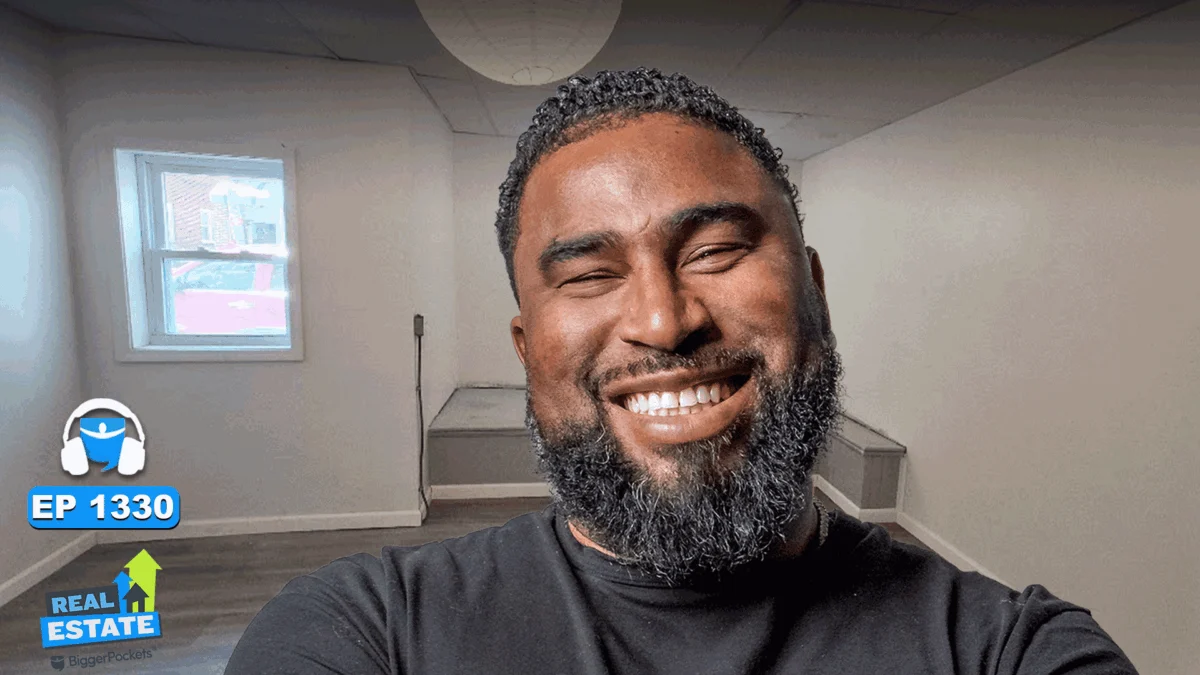
The pursuit of passive income has long been a cornerstone of the American financial narrative, yet for many, the path is obscured by digital marketing rhetoric and unverified "get-rich-quick" schemes. Kent Long, a 46-year-old regional manager in the healthcare sector, found himself at this crossroads in 2024. After investigating various online business models—including a challenging venture into Amazon private labeling—Long pivoted toward the tangible asset class of residential real estate. Within a 24-month period, Long transitioned from a novice investor to the owner of a ten-unit portfolio, generating approximately $5,500 in monthly net cash flow and establishing a timeline to retire from his professional career by age 50.
Long’s entry into the market was precipitated by a personal transition and a desire for financial autonomy. Working as an occupational therapist and regional manager, Long’s professional life required significant travel, often spending three to four days a week on the road. This time in transit became the incubator for his financial education, as he consumed hundreds of hours of real estate investment literature and podcasts. His strategy focused on the "Rust Belt" market of Altoona, Pennsylvania—a region characterized by low entry price points and high rent-to-value ratios, providing a stark contrast to the high-appreciation, low-cash-flow markets found on the American coasts.
The Inaugural Acquisition: A Blueprint for Conversion
In July 2024, Long identified a property that would serve as the foundation for his investment model. The asset, a large single-family home in Altoona that had previously functioned as a duplex, was listed on the market for $70,000. Despite the property sitting dormant through several failed sales attempts, Long recognized the structural potential for a value-add conversion.
Utilizing a 30-year conventional mortgage with a down payment of approximately $14,000, Long acquired the property and immediately began a renovation project focused on "unitizing" the space. Drawing on his background as a hobbyist craftsman and the expertise of his father, a union carpenter, Long executed a $10,000 renovation. The project did not merely restore the duplex but expanded the utility of the building into a triplex. By adding a third unit in a rear extension—originally a business space—and installing separate access points, Long maximized the square footage of the $70,000 purchase.
The financial results of this first deal were immediate. The three units were rented for $850, $900, and $1,250 respectively, totaling $3,000 in monthly gross rent. Against a mortgage payment of approximately $600, the property yielded a significant surplus, allowing Long to recover his initial capital within months rather than years.
Scaling Through the Modified BRRRR Method
A critical component of Long’s rapid scaling was his utilization of home equity as a revolving credit facility. Rather than employing a traditional "Buy, Rehab, Rent, Refinance, Repeat" (BRRRR) strategy—which often involves a total cash-out refinance that can increase monthly debt service—Long opted for a Home Equity Line of Credit (HELOC). After the first property appraised significantly higher than the purchase price, he secured a $78,000 HELOC.
This line of credit provided the liquidity necessary to act quickly in a competitive low-inventory market. In February 2025, Long utilized the HELOC to purchase a second property—a 1,700-square-foot single-family home—for $35,000 in cash. By avoiding the delays of traditional financing at the point of purchase, he was able to secure the deal and begin a $20,000 renovation.
Upon completion, the second property was converted into a duplex, commanding $1,900 in total monthly rent. Long then transitioned the debt to a commercial loan with a local community bank. This move was strategic; community banks often retain loans in-house (portfolio lending), allowing for more flexible terms and a focus on the property’s income-generating potential rather than just the borrower’s personal debt-to-income ratio. The property appraised at $110,000, allowing Long to take out an $85,000 loan, which he used to replenish his HELOC and eliminate high-interest personal debt.
Generational Wealth and Family Involvement
As Long’s portfolio grew, he integrated a pedagogical element into his business model by involving his 19-year-old son in the acquisition of a third property. The objective was twofold: to provide his son with a foundational asset for long-term financial security and to teach the technical skills of property management and renovation.
The duo identified a duplex listed for $44,000. Using the HELOC from the first property for the 15% down payment required by their local bank, they secured a commercial construction loan. The renovation, which cost approximately $25,000, was a family endeavor involving Long, his son, and his father. By utilizing family labor, they significantly reduced the capital expenditure that would have otherwise been paid to external contractors.
The property was subsequently rented for $2,400 per month ($1,200 per unit). Upon refinancing, the son was able to pull out $72,000 in equity. After repaying the initial investment to his father, the 20-year-old was left with a cash reserve of over $50,000 and a cash-flowing asset. This deal underscored a core philosophy of Long’s approach: real estate is not merely a tool for individual retirement but a mechanism for multi-generational wealth transfer.
Portfolio Optimization and Current Market Realities
Long’s fourth and fifth deals followed a similar pattern of conversion and optimization. His most recent acquisition involved a duplex purchased for $90,000, which required a $30,000 renovation. The ground floor, a former corner store that had fallen into disrepair, was gutted and converted into a three-bedroom, one-bathroom unit.
The completed triplex now generates $3,100 in monthly gross rent against a debt of $120,000. This deal highlighted Long’s shift toward larger renovations while maintaining high yield. To manage the workload alongside his full-time job, Long began employing external contractors for specific phases of the projects, though he maintained strict oversight to ensure the "sweat equity" margins remained intact.
Currently, the portfolio consists of four properties (totaling ten units) with a gross monthly cash flow of $5,500. Long manages these assets with a time investment of approximately one to two hours per week, emphasizing the "passive" nature of the income once the initial stabilization phase is complete.
Market Context: Why Altoona?
The success of Long’s strategy is deeply tied to the specific economic conditions of Altoona, Pennsylvania. Located in Blair County, Altoona is a city that has transitioned from its 19th-century roots as a major hub for the Pennsylvania Railroad into a modern service and healthcare-oriented economy.
Data from the U.S. Census Bureau and local real estate boards indicate that while national home prices have surged, certain secondary and tertiary markets in Pennsylvania have remained accessible. In Altoona, the median home price remains significantly below the national average, yet the demand for quality rental housing remains high due to the presence of regional medical centers and educational institutions.
Investors like Long capitalize on the "yield play." In high-priced markets like New York or California, a $100,000 investment might not cover a down payment. In Altoona, it can purchase an entire asset that produces a 20% to 30% cash-on-cash return. However, Long notes that these markets carry the trade-off of lower historical appreciation; the wealth is built through monthly income and debt paydown rather than explosive increases in property value.
Broader Implications and the Path to 2028
The implications of Kent Long’s journey suggest that the "window of opportunity" for real estate investing has not closed, despite higher interest rates compared to the 2020-2021 period. By focusing on "small multifamilies" (2-4 units), Long has exploited a niche that is too small for institutional investors but provides better economies of scale than single-family houses.
Long’s projected retirement at age 50—fifteen years ahead of the traditional American retirement age—is predicated on reaching a specific "number" where rental income fully replaces his salary as a regional manager. With eight units projected to be under management within the next eighteen months, he is on track to exceed his initial goal of ten units in five years.
His success offers a counter-narrative to the "fantasy" of passive income often sold in digital courses. Long’s model required significant manual labor, a deep understanding of local banking relationships, and the willingness to invest in a market that many larger investors overlook. As he prepares to transition from the corporate world to full-time real estate management, his story serves as a case study in the efficacy of the "Value-Add" investment strategy in the contemporary American economy.
The final phase of Long’s plan involves a "zero-out" of his credit lines using the proceeds from his most recent refinances, effectively resetting his capital base for the next round of acquisitions. By 2028, if current market conditions persist, Long will have transitioned from a professional in the healthcare industry to a self-sufficient real estate entrepreneur, validating a system built on hammers, nails, and local bank ledgers.
