

The commencement of diplomatic discussions in the Saudi coastal city of Jeddah marks the first significant attempt to broker a ceasefire between Sudan’s warring military factions since the outbreak of hostilities in mid-April 2023. Mediated by the United States and Saudi Arabia, these "pre-negotiation talks" represent a desperate effort to halt a conflict that has rapidly transformed Khartoum and its sister cities into active war zones, resulting in the deaths of hundreds of civilians and the displacement of hundreds of thousands more. While the international community views these talks as a glimmer of hope, the situation on the ground remains volatile, with both the Sudanese Armed Forces (SAF) and the paramilitary Rapid Support Forces (RSF) showing little initial inclination toward a permanent political compromise.
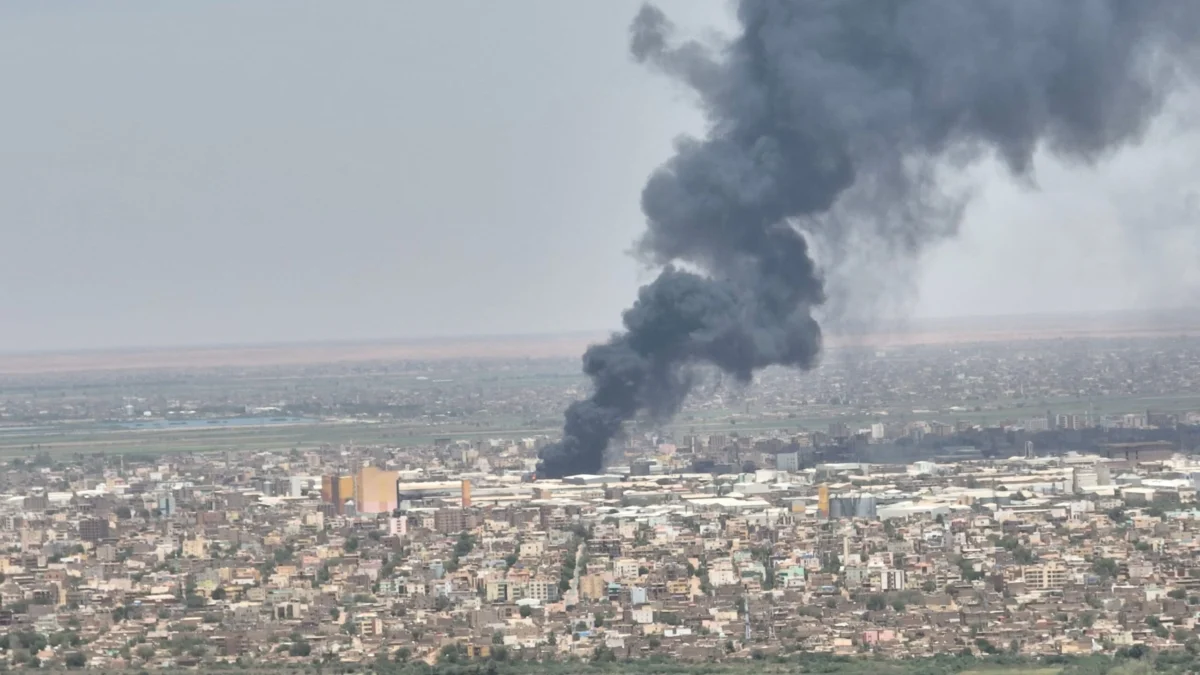
The conflict, which erupted on April 15, 2023, is the culmination of months of mounting tension between General Abdel Fattah al-Burhan, the head of the SAF and the country’s de facto ruler, and General Mohamed Hamdan Dagalo, better known as Hemedti, who leads the RSF. The power struggle has effectively derailed a fragile, internationally backed transition toward civilian democratic rule, a process that began after the 2019 ouster of long-time autocrat Omar al-Bashir. As representatives from both sides gathered in Jeddah on Saturday, May 6, residents in Khartoum reported that the sounds of warplanes and heavy artillery continued to echo through residential neighborhoods, casting a long shadow over the diplomatic proceedings.
The Geopolitical Context and the Jeddah Initiative
The joint U.S.-Saudi initiative is a recognition of the high stakes involved in the Sudanese crisis. Sudan occupies a strategic position at the crossroads of the Middle East and Africa, bordering the Red Sea, the Sahel, and several nations already grappling with internal instability. Saudi Arabia, which shares the Red Sea with Sudan, has a vested interest in the country’s stability to protect its massive economic "Vision 2030" projects along its western coast. Furthermore, both Burhan and Hemedti have historically maintained close ties with Riyadh, having provided troops for the Saudi-led coalition in Yemen.
The United States has also intensified its involvement, with White House National Security Adviser Jake Sullivan traveling to Saudi Arabia to discuss the crisis with Saudi leadership. The American objective is twofold: to prevent a total state collapse that could create a vacuum for extremist groups and to salvage the possibility of a civilian-led government. However, the Jeddah talks are specifically framed as "pre-negotiations" focused primarily on achieving a durable humanitarian truce rather than a comprehensive political settlement. This cautious labeling reflects the deep-seated mistrust between the two generals and the failure of previous short-term ceasefires, which were violated almost as soon as they were announced.
Chronology of the Crisis: From Transition to Civil War
To understand the gravity of the Jeddah talks, one must examine the timeline of events that led to the current catastrophe. The seeds of the conflict were sown during the uneasy power-sharing agreement between the military and civilian leaders following the 2019 revolution.
- October 2021: General Burhan and Hemedti cooperated in a military coup that dissolved the civilian-led transitional government. This move drew widespread international condemnation and led to the suspension of billions of dollars in foreign aid.
- December 2022: Under immense domestic and international pressure, the military signed a "Framework Agreement" with civilian pro-democracy groups. This agreement aimed to return the country to civilian rule.
- Early 2023: Tensions began to flare over the specific timeline and command structure for integrating the RSF into the regular Sudanese army. Hemedti pushed for a ten-year integration period, while the SAF demanded it be completed within two years.
- April 15, 2023: Fighting broke out in Khartoum and quickly spread to Darfur and other regions. The RSF attempted to seize the presidential palace and the international airport, while the SAF responded with heavy airstrikes in densely populated urban areas.
- Late April 2023: As the fighting intensified, foreign nations began massive evacuation operations via Port Sudan and the Khartoum airport, signaling a lack of confidence in a quick resolution.
- May 6, 2023: The Jeddah talks officially began, even as airstrikes were reported in the Bahri and Eastern Khartoum districts.
The Humanitarian Catastrophe and Supporting Data
The human cost of the three-week conflict has been staggering. According to data from the World Health Organization (WHO) and the Sudanese Ministry of Health, the death toll has climbed past 500, with thousands more injured. However, these figures are widely considered to be undercounts, as many bodies remain uncollected in the streets of Khartoum or are buried in haste without official documentation.
The displacement crisis is equally severe. The United Nations High Commissioner for Refugees (UNHCR) reported that by early May, approximately 100,000 people had fled Sudan to neighboring countries, including Egypt, Chad, and South Sudan. Internally, hundreds of thousands of people have been displaced, many of whom are trapped in Khartoum with dwindling supplies of food, water, and electricity.
The healthcare system in the capital has nearly collapsed. The WHO has noted that only a fraction of Khartoum’s hospitals remain functional. Most have been shuttered due to direct shelling, occupation by combatants, or a total lack of medical supplies and fuel for generators. While the WHO successfully delivered a shipment of medical aid to Port Sudan on Saturday, the challenge remains transporting those supplies into the heart of the conflict zone. Without "safe passage" guarantees—a primary goal of the Jeddah talks—vital medicines and surgical supplies cannot reach the patients who need them most.
Official Responses and Diplomatic Obstacles
The rhetoric from the warring parties suggests that a breakthrough in Jeddah will be difficult to achieve. While the SAF sent a delegation to Saudi Arabia, special envoy Dafallah Alhaj emphasized that the military would not engage in direct face-to-face negotiations with the RSF delegation, referring to them as "rebellious" forces. The SAF’s position is that the RSF must withdraw from residential areas and hospitals before any meaningful dialogue can occur.
Conversely, the RSF has accused the SAF of being the aggressors and has portrayed itself as a defender of the 2019 revolution—a claim met with skepticism by civilian activists who remember the RSF’s role in the violent crackdown on protesters in Darfur and Khartoum. Hemedti has characterized Burhan as a "radical Islamist" who is attempting to bring back the remnants of the Bashir regime.
International observers, including the African Union and the Intergovernmental Authority on Development (IGAD), have called for an immediate cessation of hostilities. U.N. Secretary-General António Guterres has warned that Sudan is "failing" and that the conflict could ignite a wider regional conflagration. The U.N. has been forced to scale back its operations significantly after three employees of the World Food Programme were killed in the early days of the fighting and several of its warehouses were looted.
Broader Implications and Future Analysis
The outcome of the Jeddah talks will have profound implications for the future of Sudan and the stability of Northeast Africa. If a humanitarian truce is achieved, it could provide the necessary breathing room to establish aid corridors and allow for the evacuation of the wounded. However, a truce that does not address the underlying issue of military integration and the transition to civilian rule will likely be temporary.
One of the most concerning aspects of the conflict is the potential for it to take on ethnic dimensions, particularly in the Darfur region. The RSF’s origins as the "Janjaweed" militias, which were accused of genocide in Darfur in the early 2000s, have raised fears that the current power struggle could reignite old tribal animosities. Reports of ethnically targeted killings in West Darfur have already begun to emerge, complicating the peace process.
Furthermore, the economic impact on Sudan is catastrophic. The country was already facing a 300% inflation rate and widespread food insecurity before the war. The destruction of vital infrastructure, the closure of banks, and the halt in trade will likely push millions more into poverty and dependence on international aid.
As the delegations in Jeddah begin their deliberations, the world watches with bated breath. The primary objective is to stop the bleeding, but the ultimate goal remains the restoration of the democratic path that the Sudanese people so bravely demanded four years ago. Without a fundamental shift in the willingness of both Burhan and Hemedti to prioritize the nation over their personal ambitions, the road to peace in Sudan will remain long and fraught with peril. The Jeddah talks are a necessary first step, but they are only the beginning of what will likely be a grueling and uncertain diplomatic journey.
