

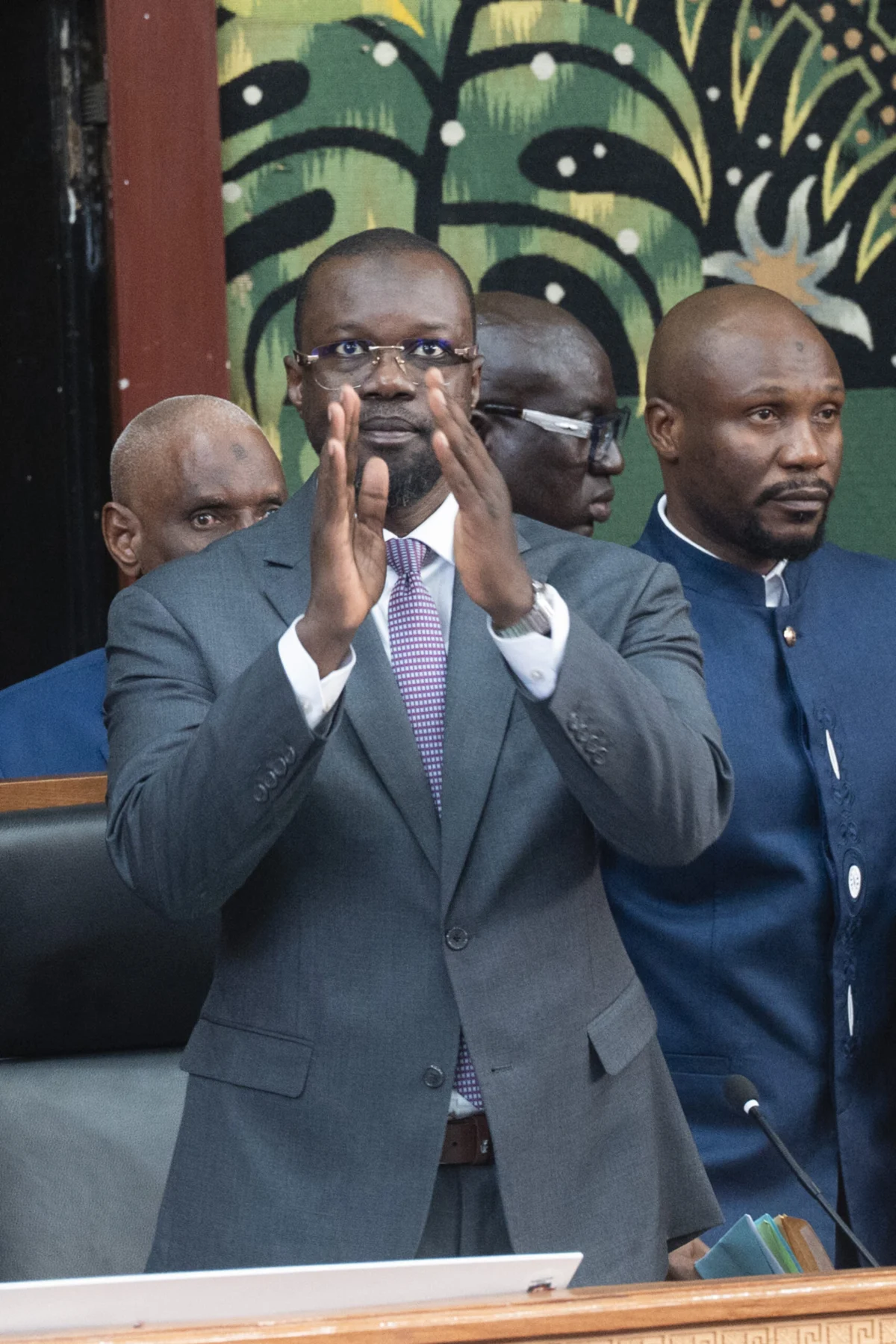
In a dramatic shift within the Senegalese political landscape, the National Assembly has elected Ousmane Sonko as its Speaker, only days after he was dismissed from his role as Prime Minister by President Bassirou Diomaye Faye. The move, which took place on Tuesday, marks a significant realignment of power within the West African nation and signals a potential deepening of the rift between the country’s two most prominent political figures. Sonko, the leader of the ruling African Patriots of Senegal for Work, Ethics and Fraternity (Pastef) party, secured the speakership with an overwhelming 132 votes in favor, with no members voting against him and only one abstention.
The election followed the sudden dissolution of the cabinet on Friday, an act by President Faye that ended months of quiet speculation regarding a growing ideological and strategic divide between the presidency and the prime minister’s office. While the two men were once seen as an inseparable duo—campaigning under the slogan "Sonko is Faye"—the realities of governing a nation burdened by high debt and economic stagnation appear to have strained their alliance. By ascending to the head of the legislative branch, Sonko now occupies a position that provides him with a powerful constitutional platform to influence policy, oversee government spending, and potentially challenge the executive’s agenda.
The Parliamentary Reinstatement and Election
The session of the National Assembly on Tuesday was characterized by a sense of urgency and political maneuvering. Before the vote for Speaker could occur, lawmakers first had to move to reinstate Sonko as a member of the legislative body. Under Senegalese law, individuals serving in the executive branch must relinquish their parliamentary seats. Sonko’s return to the Assembly was facilitated by the resignation of El Malick Ndiaye, a staunch Sonko loyalist who stepped down from the speakership on Sunday specifically to pave the way for his mentor’s return.
The presiding member of the session, Ismael Diallo, confirmed that Sonko was the sole candidate for the position. His election was met with a prolonged standing ovation from the Pastef majority, which currently holds 130 of the 165 seats in the chamber. This parliamentary dominance ensures that while Sonko is no longer directing the cabinet, he remains the gatekeeper of the legislative process.
Roots of the Executive-Legislative Rift
The dismissal of Sonko on Friday was the culmination of a period of heightened tension centered on Senegal’s economic trajectory. Since taking office in April 2024, the administration has been forced to grapple with a crippling debt crisis and an electorate demanding immediate relief from the rising cost of living. Sources close to the presidency suggest that the rift between Faye and Sonko primarily concerned the methodology for handling the country’s fiscal obligations and the pace of promised radical reforms.
President Faye, seeking to reassure international markets and multilateral lenders like the International Monetary Fund (IMF), has leaned toward a more technocratic and cautious approach to fiscal management. Conversely, Sonko is widely perceived as the champion of the more "sovereigntist" and populist wing of the Pastef party, advocating for more aggressive renegotiations of oil and gas contracts and a potential overhaul of the CFA franc currency system.
The appointment of Ahmadou Al Aminou Mohamed Lo as the new Prime Minister on Monday further underscores Faye’s shift toward technocracy. Lo, a senior economist and former official at the Central Bank of West African States (BCEAO), was selected specifically for his expertise in macroeconomics. In his announcement, President Faye stated that the new appointee possessed the necessary "expertise to steer Senegal out of crippling debt," a clear indication that the administration’s priority has shifted from political mobilization to financial stabilization.
Allegations of an Institutional Coup
The swift transition of Sonko from the executive to the head of the legislature has not occurred without fierce criticism from the opposition. Aissata Tall Sall, a prominent figure in the opposition and a former justice minister, has denounced the move as an "institutional coup." Speaking to the media on Monday, Sall argued that the process was orchestrated under intense pressure from the Pastef majority to bypass traditional democratic norms.
Sall contended that for Sonko to legally return to parliament, he should have resigned his post as Prime Minister voluntarily to sit as a lawmaker before seeking the speakership, rather than being dismissed and then immediately installed by a parliamentary vote. "This is a manipulation of our institutions to serve the ambitions of one man," Sall remarked, highlighting concerns that the legislative branch is being used as a defensive "fortress" for Sonko following his removal from the cabinet.
Historical Context: The Faye-Sonko Alliance
To understand the gravity of the current political friction, one must look back at the unique circumstances that brought Faye to power. Ousmane Sonko was the original firebrand of the opposition against former President Macky Sall. However, a series of legal battles, including a conviction for defamation and charges of "corrupting youth," led to Sonko being barred from the March 2024 presidential election.
In a strategic masterstroke, Sonko endorsed his deputy, Bassirou Diomaye Faye, who was also imprisoned at the time. Both men were released just weeks before the vote following an amnesty law. Faye’s landslide victory was largely attributed to Sonko’s endorsement and the transfer of his massive youth following. For the first several months of the administration, Sonko functioned as a "super-prime minister," often overshadowing Faye in public appearances and policy pronouncements. The recent dismissal suggests that President Faye is now attempting to assert his own executive authority and move out of the shadow of his former mentor.
Economic Data and the Debt Crisis
The primary catalyst for the current political reshuffling is Senegal’s precarious economic state. According to data from the Ministry of Finance and international monitoring agencies, Senegal’s public debt-to-GDP ratio has hovered near 75% in recent years, exacerbated by the global pandemic and the impact of the war in Ukraine on commodity prices.
Key economic indicators currently facing the Faye administration include:
- Total Public Debt: Estimated at over $18 billion USD.
- Inflation: While cooling from 2023 peaks, food inflation remains a significant burden for the average Senegalese household.
- Youth Unemployment: Estimated at over 20%, a demographic that forms the core of the Pastef base and expects rapid job creation.
- Growth Projections: The IMF had projected growth of 8% for 2024, largely dependent on the commencement of the Greater Tortue Ahmeyim (GTA) liquefied natural gas project, which has faced repeated delays.
The disagreement between Faye and Sonko likely involved the degree of austerity required to meet IMF targets versus the social spending promised during the campaign. Sonko’s new role as Speaker means he will now oversee the ratification of any new loan agreements or budget adjustments, potentially giving him veto power over Faye’s economic recovery plan.
Timeline of the 2024 Political Crisis
- March 24, 2024: Bassirou Diomaye Faye wins the presidential election in the first round.
- April 2, 2024: Faye is inaugurated; Ousmane Sonko is appointed Prime Minister.
- May – June 2024: Reports emerge of disagreements regarding the audit of the oil and gas sectors and the renegotiation of foreign fishing licenses.
- August 16, 2024: President Faye dismisses Sonko and dissolves the cabinet, citing the need for a new direction in managing the debt crisis.
- August 18, 2024: El Malick Ndiaye resigns as Speaker of the National Assembly.
- August 19, 2024: Ahmadou Al Aminou Mohamed Lo is appointed Prime Minister.
- August 20, 2024: Ousmane Sonko is elected Speaker of the National Assembly with 132 votes.
Analysis of Implications for Governance
The election of Sonko as Speaker creates a "cohabitation" of sorts, but within the same political movement. This unusual dynamic presents several risks and opportunities for Senegal’s democracy.
1. Legislative Oversight vs. Obstruction:
With Sonko at the helm of the National Assembly, the legislature is unlikely to be a rubber stamp for the presidency. While this could enhance democratic checks and balances, it also risks legislative paralysis if Sonko chooses to block executive initiatives that he deems a departure from Pastef’s original "System" (the party’s ideological framework).
2. The 2029 Horizon:
Political analysts suggest that Sonko’s move to the speakership allows him to remain politically relevant and highly visible without the day-to-day administrative burden (and potential blame) of managing the economy. This position could serve as a launchpad for a future presidential bid, should his legal standing be fully cleared or should he seek to challenge Faye in the next cycle.
3. Investor Confidence:
The international community and foreign investors are likely to view the friction between the President and the Speaker with caution. The appointment of a technocratic Prime Minister in Lo is a positive signal to markets, but the potential for a power struggle between the executive and legislative branches could delay essential reforms and budget approvals.
4. Social Stability:
Sonko remains immensely popular among the youth. His removal from the Prime Minister’s office could have sparked protests had he not been immediately moved into a position of comparable power. By becoming Speaker, the "Sonkoists" within the party and the electorate may feel their leader still holds the reins of the state, thus maintaining social peace in the short term.
Conclusion
Senegal stands at a crossroads. The election of Ousmane Sonko as Speaker of the National Assembly effectively splits the leadership of the state between two men who were once considered a single political unit. As President Faye moves to implement a more traditional, technocratic approach to the nation’s debt and economic management through Prime Minister Ahmadou Al Aminou Mohamed Lo, he must now do so under the watchful eye of a legislature led by his former mentor.
The coming months will test the resilience of Senegal’s institutional framework. Whether this new arrangement leads to a more robust system of checks and balances or a debilitating political deadlock will depend on the ability of Faye and Sonko to navigate their differences. For a nation that has long been a beacon of stability in a volatile region, the stakes of this domestic power play could not be higher.
