

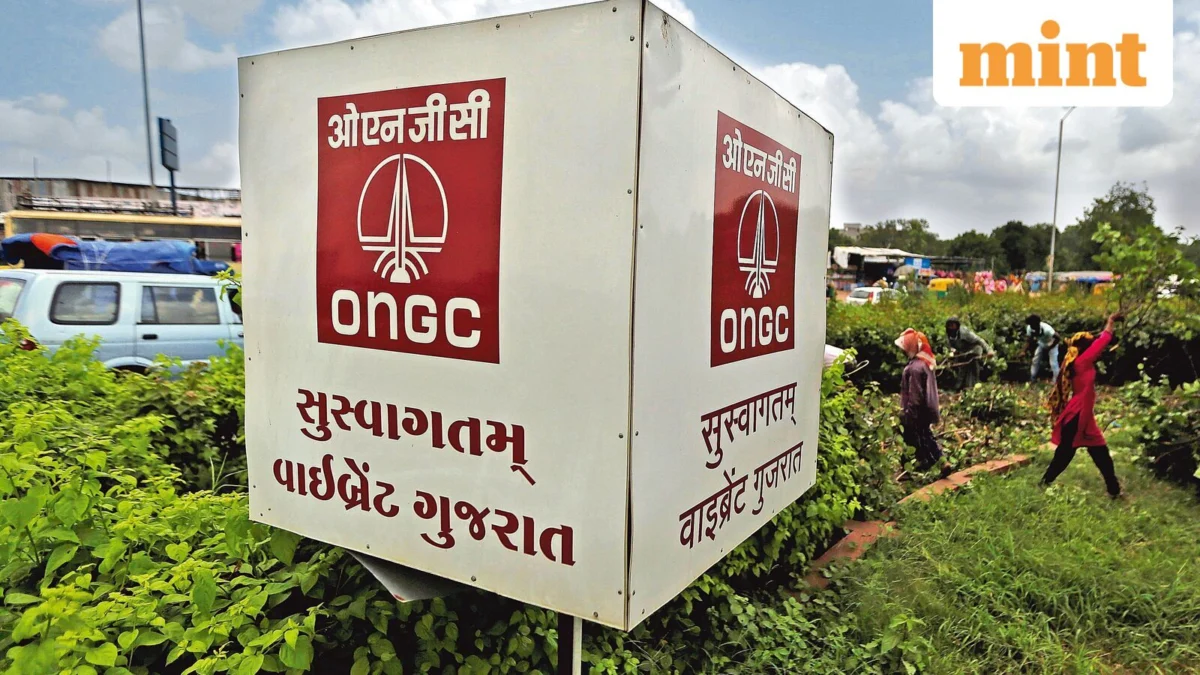
The state-owned Oil and Natural Gas Corporation (ONGC), India’s largest crude oil and natural gas producer, reported its financial results for the fourth quarter of the fiscal year 2025-26, revealing a modest 3% year-on-year (YoY) increase in net profit. The company posted a standalone net profit of ₹6,650 crore for the quarter ending March 31, compared to ₹6,448.28 crore in the corresponding period of the previous fiscal year. While the bottom-line growth remained positive on an annual basis, the company faced significant operational headwinds, including geological complexities in its flagship offshore projects and a substantial write-off related to unsuccessful exploration activities.
The marginal rise in profitability was primarily driven by sustained oil and gas price realizations, which helped offset a decline in total production volumes. Revenue from operations for the quarter under review reached ₹35,928.18 crore, marking a slight increase from the ₹34,982.23 crore reported in Q4FY25. However, the sequential performance told a different story, as the net profit witnessed a sharp decline of 20.6% when compared to the ₹8,380 crore (approximate) recorded in the third quarter (Q3FY26), highlighting the volatility and cost pressures faced by the upstream energy giant in the final months of the fiscal year.
Financial Performance and the Impact of Exploration Write-offs
A critical factor weighing on ONGC’s quarterly earnings was the decision to write off ₹4,876.75 crore toward exploration expenses. This accounting adjustment follows a series of drilling operations where wells failed to yield commercially viable hydrocarbon discoveries. In the high-risk, high-reward business of upstream exploration, "dry wells" are a recurring challenge; however, the scale of this quarter’s write-off was notably higher than the ₹4,173.04 crore recorded in the same quarter of the previous year.
These write-offs reflect the inherent difficulties in discovering new offshore reserves. Despite the deployment of advanced seismic imaging and drilling technologies, the unpredictability of sub-surface geology continues to pose a financial risk to state-owned explorers. For ONGC, these expenses are a necessary component of its long-term strategy to enhance domestic production and reduce India’s heavy reliance on energy imports, which currently hover around 85% for crude oil.
Operational Hurdles: The 98/2 Field and Geopolitical Disruptions
The reporting quarter was characterized by several operational setbacks that prevented the company from maximizing its output potential. According to ONGC’s official earnings filing, the company encountered significant "geological surprises" within the 98/2 field located in the Eastern Offshore Krishna Godavari (KG) basin. Reservoir complexities in this deepwater block—which is central to ONGC’s production growth plans—led to lower-than-anticipated extraction rates. The 98/2 project has long been viewed as a cornerstone of India’s energy security strategy, but technical challenges in deepwater environments have frequently hampered its timeline and output consistency.
Beyond geological factors, external geopolitical tensions also played a role in the company’s performance. The ongoing crisis in West Asia has had a ripple effect on global supply chains and logistics. ONGC noted that the instability in the region impacted various pipeline replacement projects and the DUDP (Daman Upscaling and Development Project). These disruptions slowed down the modernization of infrastructure and the commissioning of new facilities, subsequently affecting oil and gas production from the Western Offshore fields.
Furthermore, the company cited temporary production losses due to essential "hook-up" operations. These activities involved the integration of new pipelines, compressors, turbines, and surface facilities with existing wells in the Western Offshore region. While these maintenance and integration efforts are vital for the long-term integrity and efficiency of the offshore assets, they necessitated short-term shutdowns that reflected in the quarterly production data.
Full-Year Fiscal Analysis: A Contraction in Annual Earnings
Taking a broader view of the full fiscal year (FY26), ONGC’s performance appeared more subdued than the isolated Q4 figures suggest. For the twelve-month period, the company’s total revenue declined by 4%, falling to ₹1.32 lakh crore. The impact on the bottom line was more pronounced, with consolidated net profit dropping by 7.6% to ₹32,894.02 crore, down from the ₹35,610.32 crore achieved in FY25.
Several factors contributed to this annual decline:
- Production Stagnation: ONGC has struggled to reverse the natural decline of its aging mature fields. While new projects like the KG-DWN-98/2 are expected to compensate for this, they have not yet reached the peak production levels required to drive overall growth.
- Cost Escalation: The cost of oilfield services, rig rentals, and specialized equipment has seen an upward trend globally, squeezing the margins of upstream companies.
- Regulatory Environment: The implementation of windfall taxes (Special Additional Excise Duty) by the Government of India, which is adjusted fortnightly based on international crude prices, continues to cap the upside potential for domestic producers when global oil prices surge.
Despite these challenges, ONGC management emphasized that they have initiated a series of "bold, structured, and long-term initiatives" to address the stagnation in production. These include increased investments in Enhanced Oil Recovery (EOR) and Improved Oil Recovery (IOR) techniques, as well as an aggressive bidding strategy in the Open Acreage Licensing Policy (OALP) rounds.
Strategic Expansion: The Dahej Liquid Port Joint Venture
In a significant move toward diversifying its operational capabilities and strengthening its logistics framework, the ONGC Board of Directors approved the formation of a 50:50 joint venture (JV) with the Gujarat Maritime Board (GMB). The primary objective of this partnership is to develop a 5 Million Metric Tonnes Per Annum (MMTPA) liquid port facility at Dahej, Gujarat.
The project is currently subject to final investment approvals from the JV partners and the Department of Investment and Public Asset Management (DIPAM) under the Union Ministry of Finance. Once cleared, the Dahej port will serve as a strategic hub for the ONGC Group’s integrated energy business. By establishing its own port infrastructure, ONGC aims to gain greater control over its supply chain, particularly for the movement of petroleum products and liquid chemicals.
Dahej is already a critical industrial node in India, hosting a major LNG terminal and several petrochemical complexes. ONGC’s entry into port development signifies a shift toward a more vertically integrated model, where the company not only explores and produces energy but also manages the logistical infrastructure required to bring those products to market.
Shareholder Returns: Final Dividend and Payout Structure
Despite the decline in annual profit, ONGC remained committed to its policy of rewarding shareholders. Along with the earnings report, the Board recommended a final dividend of Re 1 per share (20% of the face value of ₹5 each) for the fiscal year 2025-26.
When combined with the interim dividends already disbursed during the year, the total dividend payout for FY26 stands at ₹13.25 per share (265%). This represents a total cash outflow of ₹16,669 crore for the company. The interim dividend portion alone accounted for ₹15,411 crore (₹12.25 per share). This high dividend yield is a characteristic feature of major Indian Public Sector Undertakings (PSUs), which often serve as a reliable source of non-tax revenue for the Government of India, the company’s majority shareholder.
Industry Context and Future Outlook
The performance of ONGC is often viewed as a barometer for the Indian energy sector. As the country’s energy demand continues to grow at one of the fastest rates globally, the pressure on ONGC to increase domestic output is immense. The government has set ambitious targets to reduce energy import dependency, and the success of ONGC’s deepwater exploration in the KG basin and its exploration of "frontier" basins like the Andaman offshore and the Mahanadi basin are crucial to these goals.
Market analysts suggest that while the Q4 results were stable, the focus for the coming quarters will be on the company’s ability to stabilize production at the 98/2 block. Investors will also be watching for any changes in the domestic gas pricing formula. Currently, gas produced from legacy or "APM" (Administrative Price Mechanism) fields is capped, which limits the revenue potential for ONGC. However, gas from "difficult" fields (deepwater, ultra-deepwater, and high-pressure-high-temperature areas) enjoys higher price ceilings, making the success of projects like 98/2 even more vital for the company’s financial health.
Looking ahead, ONGC is also pivoting toward the energy transition. The company has announced plans to invest heavily in renewable energy projects, including offshore wind and green hydrogen, as part of its "Energy Strategy 2040." While crude oil and natural gas remain the core of its business today, the strategic shift toward becoming a "broad-based energy company" is intended to ensure long-term sustainability in a decarbonizing world.
In summary, ONGC’s Q4FY26 results reflect a company in transition—managing the high costs and technical risks of deepwater exploration while simultaneously laying the groundwork for future logistical independence through the Dahej port project. While production hurdles and exploration write-offs remain significant pain points, the company’s ability to maintain profitability and deliver substantial dividends underscores its resilient position within the Indian economy.
