

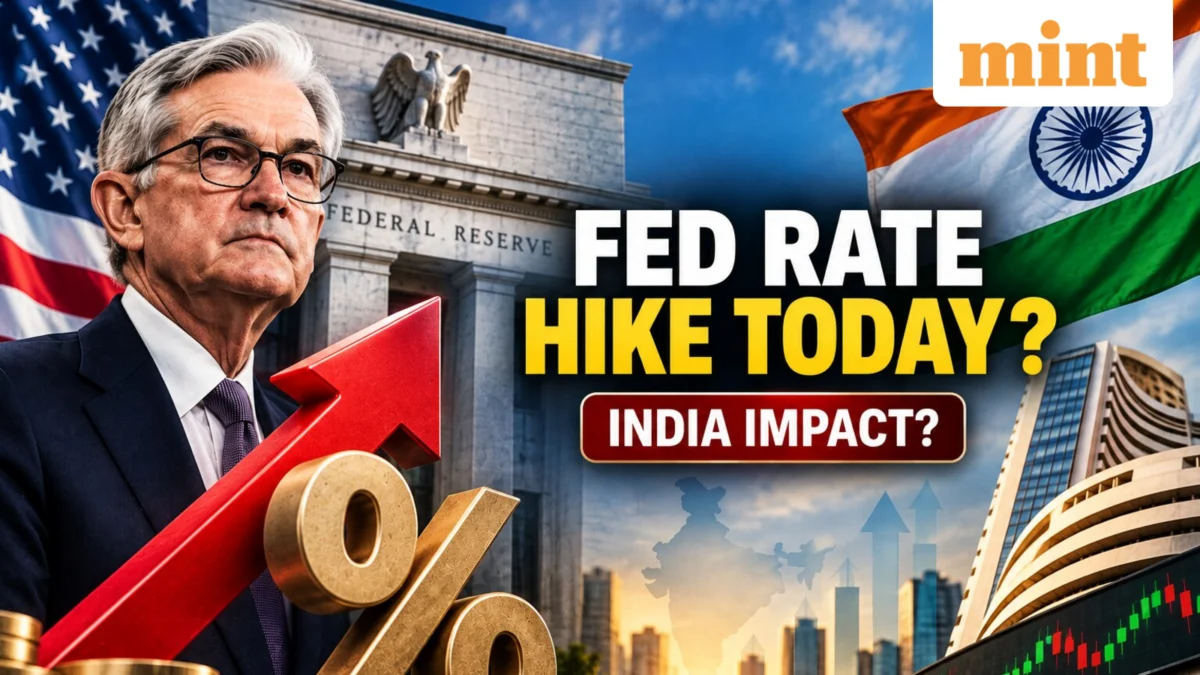
The United States Federal Reserve is poised to announce its highly anticipated monetary policy decision later today, Wednesday, September 16, a move that carries significant weight for global financial stability. Market participants across the globe are bracing for a fresh interest rate hike as a trifecta of economic pressures—stubbornly high inflation, surging bond yields, and volatile oil prices—continues to reshape the macroeconomic landscape. This decision arrives at a particularly sensitive juncture, as the escalating conflict in the Middle East introduces a layer of geopolitical uncertainty that threatens to complicate the central bank’s efforts to achieve a soft landing for the American economy.
For Indian markets, the ramifications of the Fed’s announcement extend far beyond the corridors of Wall Street. The decision is expected to trigger a ripple effect across various asset classes, potentially impacting the value of the rupee, the trajectory of foreign institutional investment (FII) flows, domestic bond yields, and the price of bullion. As the Federal Open Market Committee (FOMC) concludes its two-day deliberations, investors are searching for clarity on whether the current tightening cycle is nearing its end or if a more protracted period of restrictive policy lies ahead.
The Shift in Monetary Expectations: From Cuts to Hikes
The narrative surrounding the Federal Reserve’s policy path has undergone a dramatic transformation in a remarkably short period. Barely two weeks ago, market sentiment was leaning toward a more dovish stance, with the CME FedWatch tool indicating a 60% probability of a rate cut. However, that outlook has been completely upended. Current data shows that traders are now pricing in a 92.5% probability of a 25-basis-point rate increase. This move would elevate the benchmark federal funds rate to a range of 3.75% to 4.00%, marking the first rate hike in more than three years.
This rapid recalibration of expectations has been driven by a series of "hotter-than-expected" economic data points. Most notably, recent US inflation figures revealed that the headline Consumer Price Index (CPI) rose 0.4% on a month-on-month basis, holding steady at an annual rate of 3.4%. These figures suggest that inflationary pressures are more persistent than previously anticipated, leaving the Fed with little choice but to maintain a hawkish posture. The shift from anticipating a cut to pricing in a near-certain hike underscores the volatility of the current economic environment and the central bank’s commitment to its 2% inflation target.
Global Macroeconomic Pressures and Geopolitical Risk
The Federal Reserve’s decision-making process is currently being influenced by several external factors that are driving costs higher and dampening risk appetite. US Treasury yields have been on a relentless upward march, with the 10-year yield approaching the psychologically significant 5% mark. Higher yields typically reflect expectations of sustained higher interest rates and can act as a magnet for capital, drawing investment away from riskier assets and emerging markets.
Simultaneously, the global energy market is facing renewed pressure. Crude oil prices have climbed steadily, fueled by supply concerns and the ongoing conflict in the Middle East. For a central bank fighting inflation, rising energy costs are a major headwind, as they contribute to higher transportation and production costs, which eventually filter down to the consumer. The geopolitical situation adds a "risk-off" element to the markets, where investors seek safety in the US dollar, further complicating the global currency landscape.
Impact on the Indian Equity Market and FII Outflows
Indian equities are standing at a crossroads as they await the Fed’s verdict. The primary concern for domestic investors is the potential for continued capital flight by Foreign Institutional Investors (FIIs). Over the past two weeks, FIIs have already offloaded more than ₹14,400 crore worth of Indian stocks. A rise in US Treasury yields above the 5% threshold could exacerbate this trend, as the risk-adjusted returns of US government debt become increasingly attractive compared to emerging market equities.
V K Vijayakumar, Chief Investment Strategist at Geojit Investments, noted that while the 25-basis-point hike itself might be "discounted" or already factored into current prices, the real impact will stem from the Fed’s commentary. “In today’s meeting, the Fed is most likely to raise interest rates by 25 bp. However, this is unlikely to impact the market since it is already discounted. More market-moving will be the Fed commentary,” Vijayakumar stated. The focus is firmly on whether the Fed views this hike as a "one-off" measure or the start of a renewed tightening cycle.
The Rupee and the Domestic Bond Market
A hawkish Federal Reserve typically bolsters the US dollar, which in turn puts downward pressure on the Indian rupee. A weaker rupee makes imports—particularly crude oil—more expensive, potentially stoking domestic inflation. Furthermore, as US yields rise, Indian sovereign bond yields tend to follow suit to maintain a competitive interest rate differential. This can lead to higher borrowing costs for the Indian government and corporations alike.
The volatility in the currency and bond markets creates a challenging environment for the Reserve Bank of India (RBI). While the Indian central bank has its own domestic mandate, it cannot ignore the actions of the Fed. A significant depreciation of the rupee or a spike in domestic yields could force the RBI’s hand earlier than expected.
The RBI’s Policy Dilemma: October vs. December
Market analysts are closely watching the Reserve Bank of India for its response to the Fed’s move. According to a report by Axis Capital, the RBI was initially expected to remain on hold during its October meeting, despite upside risks to inflation. The prevailing consensus was that a domestic rate hike might not occur until December. However, the aggressive shift in the Fed’s stance has changed the calculus.
Axis Capital noted that a US Fed hike could act as a key trigger, potentially forcing the RBI to act as early as October to defend the currency and manage inflationary expectations. The brokerage highlighted that while tightening policy during an energy shock can be detrimental to economic growth, it may become a "necessary evil" if temporary price shocks transition into broad-based, persistent inflation. This is especially true when fiscal policy is actively cushioning the impact of high prices, as the combined effect of fiscal support and high inflation can lead to an overheated economy.
Commodity Markets: Gold and Silver Technical Outlook
The commodity markets have seen a significant amount of action leading up to the Fed announcement. Gold and silver prices experienced a modest recovery on Wednesday, following a grueling three-week selloff. On the Multi Commodity Exchange (MCX), gold was trading at ₹1,51,850 per 10 grams, up by ₹1,040, while silver saw a sharp bounce to ₹2,35,421 per kg, an increase of ₹3,303.
This recovery is largely attributed to bargain hunting and short covering by traders who believe the recent selloff may have been overdone. Ashish Rajodiya, Head of Commodities at PL Capital, explained the dynamics: “Higher inflation typically pushes central banks toward tighter policy, and the resulting rise in US Treasury yields to near 5% has been the key headwind for non-yielding metals like gold and silver over the past three weeks.”
Rajodiya provided specific technical levels for investors to watch. For gold, immediate support is seen at ₹1,49,500 and ₹1,46,000, with resistance levels placed at ₹1,54,500 and ₹1,57,000. For silver, support is identified at ₹2,23,000, while resistance is pegged at ₹2,40,000 and ₹2,45,000. He warned that if the Fed’s statement today signals more aggressive hikes ahead, these support levels could be tested once again. Conversely, a more cautious or "dovish" tone regarding the pace of future tightening could provide the fuel needed for a sustained recovery in precious metals.
The Importance of Forward Guidance and the "Warsh" Factor
Investors are expected to scrutinize every word of the post-decision remarks delivered by the Fed leadership. In this specific cycle, the commentary from the central bank chair—identified in reports as Kevin Warsh—will be pivotal. Markets are looking for clues regarding the "terminal rate"—the peak level at which interest rates will settle—and the timeline for when the Fed might finally pause its tightening efforts.
Morgan Stanley has already adjusted its forecast, predicting another quarter-point rate increase in December following the expected September hike. The brokerage believes that while the central bank may signal further tightening in the near term, it will eventually transition to a pause as inflationary pressures begin to ebb. The nuance in the Fed’s language will determine whether global markets experience a "relief rally" or a further tightening of financial conditions.
Conclusion: A Delicate Balancing Act
As the Federal Reserve prepares to deliver its verdict, the global financial community remains on high alert. The decision represents a delicate balancing act between quelling inflation and ensuring that the cost of borrowing does not stifle economic growth or trigger a systemic crisis in emerging markets.
For India, the path forward will be dictated by the Fed’s forward guidance. A hawkish stance that emphasizes "higher for longer" rates will likely keep pressure on Indian equities, the rupee, and gold. On the other hand, if the Fed suggests that it is nearing the end of its tightening cycle and adopts a more data-dependent, cautious tone, it could support a return of risk sentiment and provide a much-needed boost to global markets. Regardless of the immediate outcome, the volatility observed in the lead-up to this meeting underscores the profound influence of US monetary policy on the interconnected global economy.
