

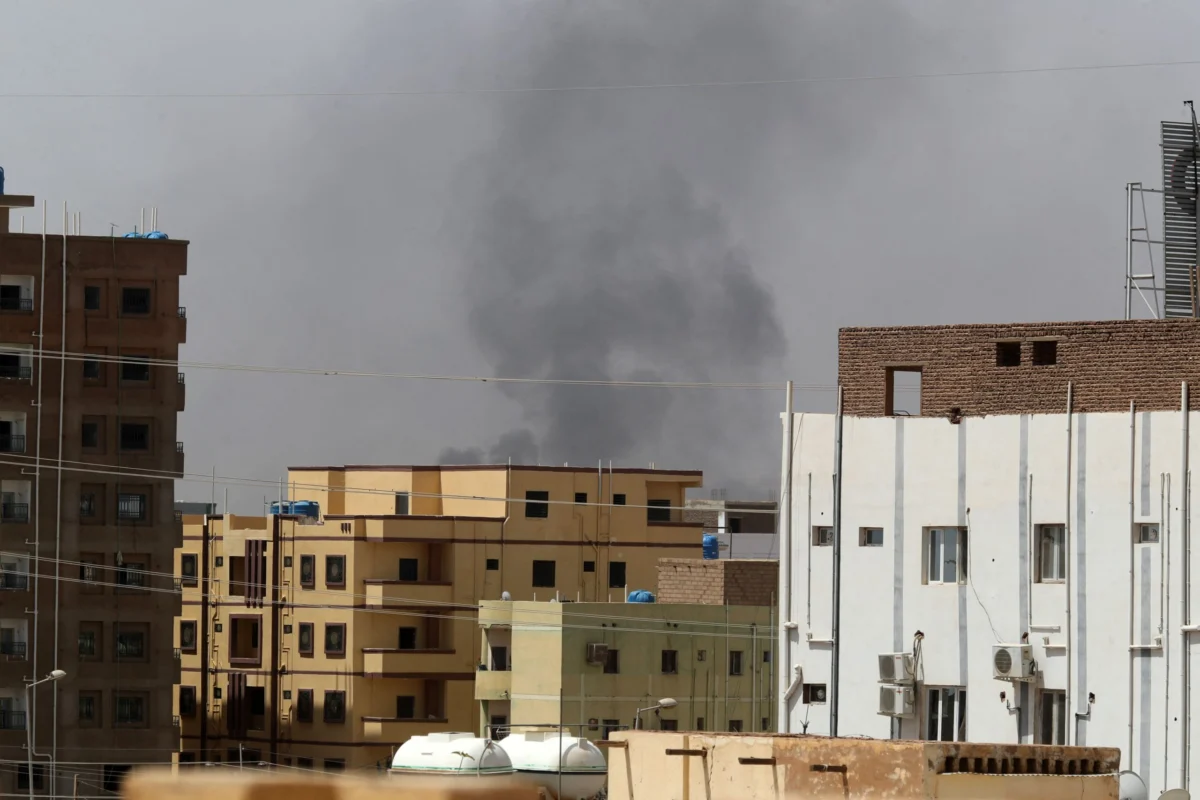
The Sudanese capital of Khartoum remained gripped by the sounds of sporadic artillery fire and heavy machinery on Sunday, even as a glimmer of diplomatic hope emerged from the signing of a week-long ceasefire agreement. Brokered by the United States and Saudi Arabia following intense negotiations in the coastal city of Jeddah, the deal aims to pause a five-week conflict that has pushed Africa’s third-largest nation to the brink of total collapse. The agreement, signed by representatives of the Sudanese Armed Forces (SAF) and the paramilitary Rapid Support Forces (RSF), is scheduled to take effect on Monday evening. Unlike previous declarations of intent, this pact includes a formal monitoring mechanism supported by international observers, raising cautious expectations that a genuine humanitarian window may finally open for millions of trapped civilians.
Since the eruption of violence on April 15, 2023, the conflict has transformed the densely populated urban centers of Khartoum, Omdurman, and Bahri into active war zones. While previous truce attempts were largely ignored within hours of their announcement, the Jeddah agreement marks the first time both warring factions have put pen to paper on a negotiated document. However, the atmosphere on the ground remains tense. Residents in central and southern Khartoum reported that the sounds of war did not cease following the news of the signing. For the 35-year-old Safaa Ibrahim and millions like her, the promise of a ceasefire is a desperate necessity. Ibrahim, who spoke of her family being scattered across provincial towns and into neighboring Egypt, emphasized the exhaustion of the civilian population, noting that the desire for safety has become the primary preoccupation for a citizenry caught in the crossfire of two rival generals.
The Jeddah Agreement and the Monitoring Mechanism
The "Agreement on a Short-Term Ceasefire and Humanitarian Arrangements" is a documented commitment to a seven-day pause in hostilities, with the possibility of extension. Central to this specific deal is the establishment of a "Ceasefire Coordination and Monitoring Committee." This body is expected to be comprised of three representatives each from the SAF and the RSF, alongside three representatives from the United States and three from Saudi Arabia. The involvement of external mediators in the monitoring process is intended to provide a layer of accountability that was missing in earlier, more informal truce announcements.
According to the terms of the deal, both sides have agreed to facilitate the delivery and distribution of humanitarian assistance, restore essential services, and withdraw forces from hospitals and essential public facilities. The United States State Department has indicated that the monitoring mechanism will likely utilize satellite imagery and other data-gathering tools to identify violations. However, analysts remain skeptical about the ability of General Abdel Fattah al-Burhan and RSF commander Mohamed Hamdan Dagalo, better known as Hemedti, to exert total control over their respective forces on the ground. Neither leader traveled to Jeddah to sign the document personally, a move some observers interpret as a sign that both men remain committed to a decisive military victory rather than a political compromise.
A Timeline of the Five-Week Conflict
The descent into violence was not an overnight occurrence but the culmination of months of friction regarding the integration of the RSF into the national army.
- April 15, 2023: Fighting breaks out in Khartoum and the Soba military base. The RSF claims control over the presidential palace and Khartoum International Airport, while the SAF launches airstrikes against paramilitary positions.
- April 18–20: Early attempts at 24-hour and 72-hour ceasefires fail immediately. Foreign governments begin planning the evacuation of diplomatic staff as the airport remains a focal point of combat.
- Late April: The conflict spreads rapidly to the Darfur region, particularly El Geneina, reigniting long-standing ethnic tensions. Massive displacement begins as civilians flee toward Chad and Egypt.
- May 6: Direct talks begin in Jeddah, Saudi Arabia, facilitated by the U.S. and the Saudi kingdom. These talks initially focus on a "Declaration of Commitment to Protect Civilians" rather than a formal ceasefire.
- May 11: The Declaration of Commitment is signed, but fighting intensifies in the following days as both sides jockey for territorial advantage in the capital.
- May 20: The signing of the seven-day short-term ceasefire agreement is announced, slated for implementation on May 22.
The Humanitarian Crisis and Socio-Economic Collapse
The human cost of the conflict has been staggering. According to data provided by the World Health Organization (WHO), at least 705 people have been killed and over 5,287 injured. However, medical professionals on the ground and local activist groups warn that the true death toll is significantly higher, as many bodies remain uncollected in the streets or are buried in private gardens due to the danger of moving toward cemeteries.
The displacement crisis has reached a critical mass. The United Nations reports that approximately 1.1 million people have been uprooted. This includes roughly 840,000 internally displaced persons and over 250,000 who have crossed into neighboring countries such as Egypt, Chad, South Sudan, and Ethiopia. This mass exodus is fueling a regional humanitarian emergency, as neighboring states—many of which are already struggling with their own economic and security challenges—scramble to accommodate the influx of refugees.
Inside Khartoum, the infrastructure of daily life has largely disintegrated. Large-scale looting of markets, homes, and warehouses has left food supplies dwindling. The health sector is in a state of near-total collapse; the Sudanese Doctors’ Union reports that more than 70% of hospitals in conflict zones are out of service, either due to physical damage, a lack of medical supplies, or occupation by armed forces. Power outages are frequent, and the water supply system has been severely compromised, forcing residents to drink from the Nile or unreliable wells.
Political Roots and Military Dynamics
The current war is deeply rooted in the power struggle that followed the 2019 popular uprising that ousted the long-time authoritarian leader Omar al-Bashir. Following a brief period of civilian-military power-sharing, General al-Burhan and Hemedti joined forces in a 2021 coup to dissolve the civilian government. However, the alliance between the two generals fractured over the "Framework Agreement," a plan intended to return the country to civilian rule. The primary sticking point was the timeline for the RSF’s integration into the SAF and the chain of command during that transition.
The military dynamics are characterized by a stark asymmetry. The SAF possesses superior airpower and heavy artillery, which it has used to bombard RSF positions from a distance. Conversely, the RSF is a highly mobile, light-infantry force that has embedded itself within residential neighborhoods, using homes and schools as tactical bases. This "urban guerrilla" approach has effectively neutralized some of the army’s technological advantages but has resulted in catastrophic damage to civilian property.
In a recent statement to Sudanese state television, senior army general Yassir al-Atta defended the military’s tactics, stating that the army was focused on "cleaning" residential areas of paramilitary presence. When questioned about the arming of civilians—a move suggested by some tribal leaders—al-Atta noted that while it was not yet a formal military requirement, it was a "natural right" for residents to arm themselves for self-defense against looters and attackers. This rhetoric has raised concerns among international observers about the potential for the conflict to devolve into a full-scale civil war involving armed civilian militias.
Regional Implications and International Response
The international community has viewed the Sudanese conflict with increasing alarm. Sudan occupies a geostrategically vital position, bordering the Red Sea, the Sahel, and the Horn of Africa. A prolonged state of anarchy in Sudan could provide a vacuum for extremist groups and disrupt vital trade routes.
The African Union (AU) and the Intergovernmental Authority on Development (IGAD) have repeatedly called for an immediate cessation of hostilities, emphasizing that there is no military solution to the crisis. The United Nations has warned that without a significant infusion of aid and a lasting peace, more than half of Sudan’s population—roughly 25 million people—will require humanitarian assistance by the end of the year.
The role of the United States and Saudi Arabia in the Jeddah talks represents a concerted effort to prevent a total state failure. However, critics of the process argue that by focusing primarily on the two generals, the international community risks sidelining the civilian pro-democracy movements that led the 2019 revolution. Mediators have countered that the immediate priority must be the "silencing of the guns" to prevent further loss of life, with broader political transitions to be addressed in subsequent phases of negotiation.
Future Outlook: The Path Toward Permanent Peace
The success of the Jeddah agreement hinges on the first 48 hours of its implementation. If the ceasefire holds, it could pave the way for more substantive discussions regarding a permanent cessation of hostilities. Mediators have indicated that future rounds of talks will need to address the removal of military forces from urban centers and the restoration of a civilian-led political process.
However, the path to peace remains fraught with obstacles. The trust between al-Burhan and Hemedti has been completely destroyed, and both sides have invested heavily in a narrative of total victory. Furthermore, the decentralization of the fighting means that local commanders may not always adhere to orders issued from high-level negotiators.
As the sun set over Khartoum on Sunday, the sound of explosions served as a grim reminder of the challenges ahead. For the people of Sudan, the Jeddah agreement is not yet a victory, but a desperate lifeline. The coming days will determine whether this document is a genuine turning point or merely another brief pause in a conflict that threatens to redefine the map of Northeast Africa. The world now waits to see if the monitoring mechanism can provide the accountability necessary to turn a signed piece of paper into a lived reality for the millions currently trapped in the crossfire.
