

The second week of May 2026 has marked a significant turning point in the global environmental, social, and governance (ESG) landscape, characterized by a widening chasm between European regulatory progression and a sharp pivot in United States federal policy. While the European Commission moved to solidify its position as the global leader in sustainability transparency by finalizing mandatory reporting standards, the U.S. Securities and Exchange Commission (SEC) took the unprecedented step of initiating the repeal of its own climate disclosure rules. Amidst this regulatory friction, private capital markets continue to signal a decoupling from political volatility, with new data from Morgan Stanley indicating that investor appetite for sustainable assets remains robust, driven primarily by financial performance rather than ideological alignment.
A Tale of Two Jurisdictions: The Regulatory Chasm
The most consequential development of the week is the formal divergence in sustainability reporting requirements between the European Union and the United States. On May 8, the European Commission released its proposed finalized sustainability reporting standards, which include both mandatory requirements for large enterprises and voluntary frameworks for small and medium-sized enterprises (SMEs). These standards are designed to streamline the Corporate Sustainability Reporting Directive (CSRD), ensuring that investors have access to comparable, audited data regarding a company’s environmental impact and social governance.
The EU also addressed concerns regarding the European Union Deforestation Regulation (EUDR). In a move to balance environmental rigor with economic feasibility, the Commission announced a simplification of the law that is projected to reduce compliance costs for businesses by up to 75%. This adjustment follows months of lobbying from trade partners who argued that the original administrative burden was prohibitive for smaller operators in the global supply chain.
In stark contrast, the U.S. SEC has moved to scrap its corporate climate reporting rules. These rules, which were intended to provide investors with clear data on greenhouse gas emissions and climate-related risks, have faced relentless legal challenges and political opposition since their inception. The move to repeal reflects the current administration’s broader agenda of deregulation. This shift creates a complex environment for multinational corporations, which may now face a "Brussels Effect" where they must comply with rigorous EU standards to maintain access to European markets, even as their domestic reporting requirements are rolled back.
Legal Challenges and the Re-evaluation of DEI
The social pillar of ESG also faced significant headwinds this week in the United States. The Trump administration, through the Department of Justice, filed a lawsuit against the New York Times, alleging discrimination based on Diversity, Equity, and Inclusion (DEI) policies. The lawsuit centers on a white male employee and argues that the publication’s hiring and promotion practices violated federal civil rights laws.
This legal action is part of a broader, systemic challenge to corporate DEI programs across the U.S. Over the past year, several high-profile corporations have scaled back their DEI initiatives in response to similar legal threats and the growing "anti-woke" sentiment in the political sphere. Legal analysts suggest that this case could serve as a bellwether for the future of corporate social policies, potentially forcing a shift toward "neutrality" in human resources and recruitment frameworks.
Investor Sentiment: Performance Over Politics
Despite the legislative and legal turbulence, the financial case for sustainable investing appears to be strengthening. A comprehensive survey released by Morgan Stanley this week revealed that two-thirds of global investors plan to increase their allocations to sustainable investments over the next year.
The survey data highlights a critical shift in the narrative: the primary driver for sustainable investing is no longer purely ethical. Instead, performance and risk mitigation have emerged as the leading factors. Investors increasingly view ESG metrics as a proxy for management quality and long-term resilience. Even in the face of political pushback in the U.S., institutional investors are prioritizing decarbonization and resource efficiency as essential components of a modern fiduciary duty.
Simultaneously, the European Parliament is moving to tighten the rules further. A new draft of the Sustainable Finance Disclosure Regulation (SFDR) proposes tougher labeling rules for ESG funds. The goal is to eliminate "greenwashing" by ensuring that funds labeled as "sustainable" or "green" meet strict, quantifiable thresholds. This move is expected to lead to a reclassification of many existing funds, providing greater clarity for retail and institutional investors alike.
Corporate Initiatives and the Decarbonization of Industry
While regulators debate, the private sector continues to execute large-scale sustainability initiatives. This week saw several major deals in the renewable energy sector:
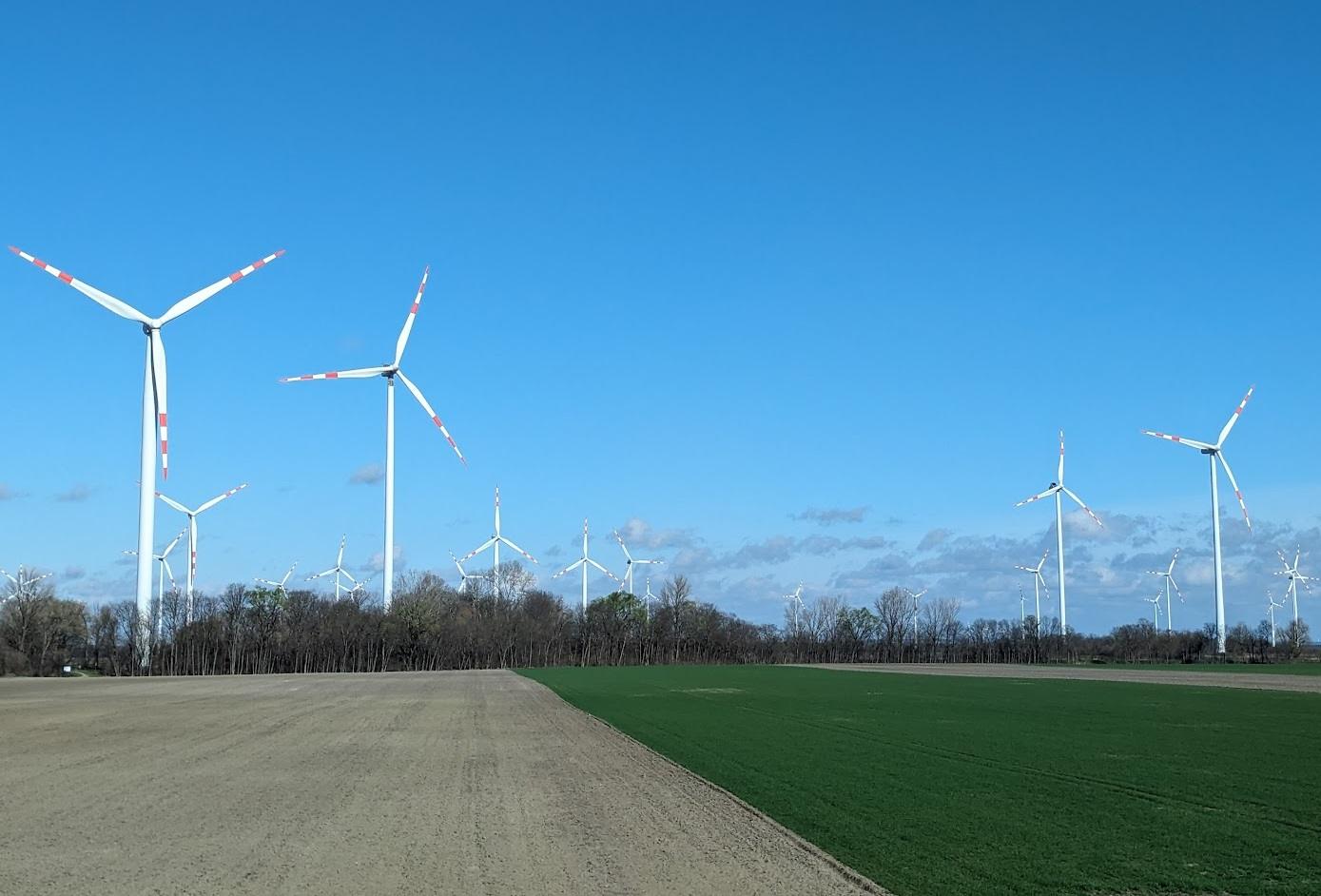
- Meta: The social media giant signed a 250 MW renewables deal with EDP Renewables to power its U.S. operations. This move aligns with Meta’s goal of maintaining 100% renewable energy for its global data centers.
- Octopus Energy: The firm announced a massive $680 million investment to expand its European wind energy portfolio, signaling continued confidence in the EU’s energy transition.
- TotalEnergies: The French energy major committed $300 million to a new solar project in the Philippines, highlighting the growth of renewable infrastructure in emerging markets.
The industrial sector is also seeing significant state-backed support. Germany has allocated €5 billion to decarbonize energy-intensive industries, such as steel and chemicals. This investment is part of a broader EU-approved plan to compensate companies for carbon pricing costs, preventing "carbon leakage"—where companies relocate to regions with laxer environmental regulations to avoid the costs of the Emissions Trading System (ETS).
In the consumer goods sector, PepsiCo announced a pilot program to deploy green hydrogen-based fertilizers in its European food supply chain. Fertilizer production is traditionally a high-carbon process; by switching to green hydrogen, PepsiCo aims to significantly lower the Scope 3 emissions of its agricultural suppliers. Similarly, Pandora has introduced carbon footprint labeling for its lab-grown diamonds, responding to consumer demand for greater transparency in the luxury sector.
Technological Innovation: AI and Carbon Accounting
The intersection of Artificial Intelligence (AI) and sustainability is becoming a focal point for both risk and opportunity. This week, industry experts warned that AI governance is rapidly evolving from a niche ESG issue into a critical supply chain risk. The massive energy consumption of AI data centers and the ethical implications of algorithmic bias are now major concerns for corporate boards.
However, AI is also being harnessed as a solution. Persefoni launched a new "Agentic AI" tool designed to help companies autonomously analyze their carbon footprints and identify inefficiencies. IBM also entered the fray, launching a greenhouse gas (GHG) emissions calculation solution specifically designed for spreadsheet users, aiming to democratize carbon accounting for companies that lack sophisticated ERP systems.
In a more unconventional move, a capital raise led by Peter Thiel secured $140 million for Panthalassa. The company aims to power AI computing centers using ocean wave energy, addressing the dual challenges of energy demand and data center cooling by utilizing the natural properties of the marine environment.
Sustainable Finance and Venture Capital Trends
The venture capital and private equity sectors remain active in the "hard tech" space of the energy transition. Notable raises this week include:
- Moment Energy: Raised $40 million to repurpose used electric vehicle (EV) batteries for industrial energy storage and data center backup power. This circular economy approach addresses the growing problem of EV battery waste while providing a second-life solution for energy storage.
- Reel: Secured €15 million to improve the economics of the energy transition for power producers and corporate buyers through innovative electricity procurement models.
- Ameresco and HASI: Launched a $1.8 billion biofuels platform, emphasizing the growing importance of renewable natural gas and liquid biofuels in the transport and heating sectors.
In Asia, the Asian Development Bank (ADB) launched a new financing initiative to scale critical mineral supply chains. As the global demand for lithium, cobalt, and rare earth elements surges, the ADB initiative aims to ensure that the extraction and processing of these minerals in Asia meet high environmental and social standards.
Executive Leadership Transitions
The week concluded with several high-profile appointments in the ESG space, reflecting the ongoing demand for specialized leadership. Risilience, a leading climate analytics provider, appointed Angela Brown as its new CEO, signaling a focus on scaling its predictive modeling platforms. Meanwhile, Aberdeen appointed Kate McGrath as the Head of ESG for Fixed Income, a role that will be pivotal as the green bond market continues to mature and diversify.
Analysis of Implications
The events of this week suggest a "multi-speed" global energy transition. Europe is doubling down on a regulated, transparent marketplace, betting that clear rules will attract long-term capital. The United States, conversely, is testing a market-led approach, removing federal mandates in favor of a deregulated environment, even as its legal system becomes a battleground for social and governance policies.
For global corporations, the primary challenge remains "regulatory fragmentation." Companies operating in both jurisdictions must now manage two vastly different sets of books—one for the EU’s rigorous disclosures and another for a U.S. market that is increasingly skeptical of ESG as a formal framework. However, the consistent flow of capital into renewables and decarbonization technology suggests that while the terminology of ESG may be under fire, the economic transition it represents remains an unstoppable market force. The focus is shifting from "compliance" to "competitiveness," as firms realize that energy efficiency and supply chain resilience are essential for survival in a volatile global economy.
