

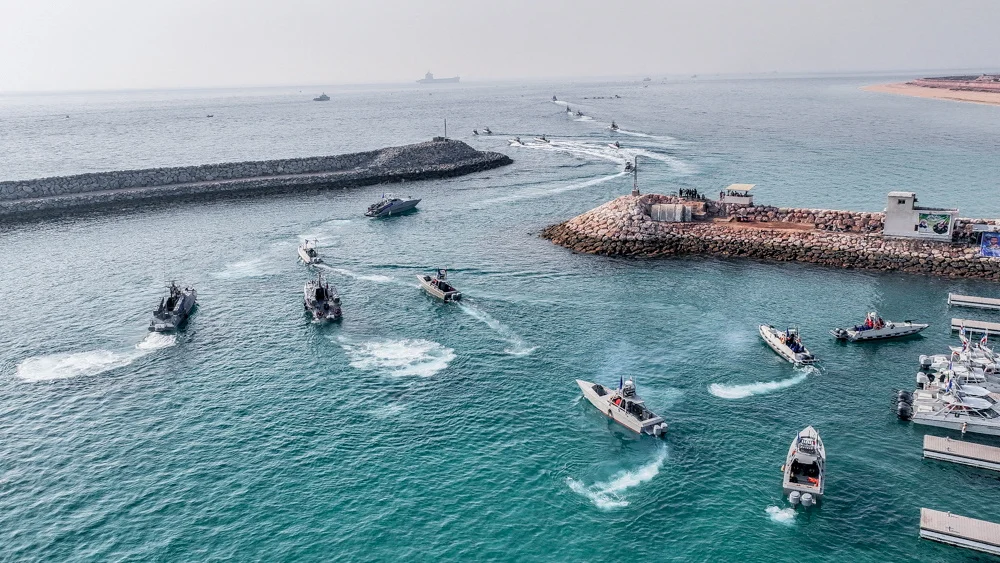
The Islamic Revolutionary Guard Corps (IRGC) of Iran has officially confirmed the seizure of the Barbados-flagged oil tanker, Ocean Koi, during a high-stakes "special operation" conducted in the strategically vital waters of the Gulf of Oman. According to statements released by Iranian state media and the Fars news agency, the vessel was intercepted and detained on the grounds that it was allegedly attempting to disrupt the Islamic Republic’s oil exports and undermine the broader economic interests of the Iranian nation. This latest maritime intervention by Tehran marks a significant escalation in regional tensions and signals a fundamental shift in how Iran intends to manage and monitor one of the world’s most critical energy corridors.
The operation involved a coordinated effort by the Iranian Navy’s elite units, including rangers and marines, who successfully boarded the vessel and redirected it toward the southern coastline of Iran. Footage broadcast by Iranian state television depicted IRGC forces descending onto the deck of the Ocean Koi, a maneuver intended to project both tactical proficiency and sovereign authority over the surrounding waters. While the specific nature of the vessel’s alleged "offending" actions has not been detailed in full by Iranian authorities, a spokesperson for the army emphasized that the military would continue to "powerfully defend the interests and assets of the Iranian nation" within its territorial waters, asserting that no "violators or aggressors" would be tolerated.
Implementation of the Persian Gulf Strait Authority
Beyond the physical seizure of the Ocean Koi, the Iranian government has utilized this incident to announce the establishment of a "new maritime regime" aimed at exerting unprecedented control over the Strait of Hormuz and the Gulf of Oman. This new regulatory framework will be overseen by a newly formed body known as the Persian Gulf Strait Authority. According to reports from Tehran, this authority is tasked with managing all passages through the Strait of Hormuz, a waterway through which approximately 20 to 21 percent of the world’s total petroleum consumption passes daily.
Under the protocols of this new regime, any vessel intending to transit through the Strait of Hormuz—whether entering or exiting the Persian Gulf—is now required to undergo a rigorous coordination and clearance process with Iranian forces. The regulations dictate that shipping companies must provide detailed documentation via email to Iranian authorities prior to transit. Required information includes the vessel’s country of origin, the specific nature and volume of the cargo, and the final destination of the shipment. Furthermore, Iran has indicated that it will assess these notifications and subsequently require vessels to pay "toll fees" for passage through what it considers its sphere of maritime sovereignty.
This move represents a departure from traditional interpretations of international maritime law, specifically the United Nations Convention on the Law of the Sea (UNCLOS), which generally provides for the right of "transit passage" for all ships through straits used for international navigation. By imposing a toll and a mandatory clearance system, Tehran is effectively asserting that the strategic environment in the region has changed to the point where international norms are being superseded by national security imperatives.
Chronology of Maritime Tensions in the Region
The seizure of the Ocean Koi is the latest in a series of maritime incidents that have defined the volatile relationship between Iran and the international shipping community over the past several years. To understand the significance of this event, it is necessary to examine the timeline of escalating tensions in the Strait of Hormuz and the Gulf of Oman:
- May 2019: Four commercial vessels, including two Saudi oil tankers, were sabotaged off the coast of the United Arab Emirates. The United States and its allies blamed Iran, which denied involvement.
- July 2019: The IRGC seized the British-flagged tanker Stena Impero in the Strait of Hormuz, an act widely viewed as a retaliatory move after British authorities detained an Iranian tanker, the Grace 1, in Gibraltar.
- January 2021: Iranian forces seized the South Korean-flagged tanker MT Hankuk Chemi, citing "environmental pollution" concerns. The vessel was held for several months amid a dispute over billions of dollars in Iranian funds frozen in South Korean banks due to U.S. sanctions.
- May 2022: Iran seized two Greek tankers, the Delta Poseidon and the Prudent Warrior, in the Persian Gulf. This followed the seizure of an Iranian oil cargo by the United States in Greek waters.
- April-May 2023: In a span of less than a week, Iran seized two tankers: the Marshall Islands-flagged Advantage Sweet and the Panama-flagged Niovi. The IRGC claimed the seizures were based on court orders following maritime accidents or legal disputes.
- Current Event: The seizure of the Ocean Koi and the formalization of the Persian Gulf Strait Authority represents a transition from reactive seizures to a formalized, systemic control of the waterway.
Strategic and Economic Significance of the Strait of Hormuz
The strategic importance of the Strait of Hormuz cannot be overstated. As a narrow chokepoint connecting the Persian Gulf to the Gulf of Oman and the Arabian Sea, it serves as the primary artery for the global energy market. Data from the U.S. Energy Information Administration (EIA) indicates that the volume of oil transiting the strait averages over 20 million barrels per day. This includes the majority of crude oil exports from Saudi Arabia, the United Arab Emirates, Kuwait, Iraq, and Iran itself, as well as nearly all the liquefied natural gas (LNG) exported from Qatar.
The imposition of toll fees and mandatory Iranian clearance has the potential to significantly disrupt global supply chains. If the "new maritime regime" is strictly enforced, it could lead to increased shipping costs, higher insurance premiums for "war risk" zones, and potential delays that could ripple through the global economy. For the shipping industry, the requirement to coordinate directly with the IRGC—a group designated as a foreign terrorist organization by the United States—presents a complex legal and ethical dilemma for international corporations and their insurers.
Analysis of Political Clout and Diplomatic Leverage
Defense analysts suggest that the seizure of the Ocean Koi is as much a political statement as it is a military operation. Alex Alfirraz Scheers, a prominent defense analyst, noted that by taking control of the vessel, the IRGC is actively projecting power in a way that it previously could not or chose not to. According to Scheers, the goal is to make the waterway "inhospitable and dangerous" for those who do not comply with Tehran’s terms, thereby demonstrating "strategic and political clout."
This shift in maritime policy is also inextricably linked to broader geopolitical negotiations, particularly those involving the United States and the future of the Joint Comprehensive Plan of Action (JCPOA) or subsequent nuclear arrangements. Analysts argue that if diplomatic efforts reach an impasse, or if the United States continues to enforce stringent economic sanctions, the IRGC utilizes its control over the Strait of Hormuz as a lever to "tip the balance of things in their favor." By creating a "new maritime regime," Iran is signaling to the international community that it holds the keys to global energy security and is willing to use that leverage to achieve its national objectives.
International Legal Framework and Sovereignty Claims
The establishment of the Persian Gulf Strait Authority raises profound questions regarding international law. Under UNCLOS, the Strait of Hormuz is considered an international strait where the right of transit passage applies. This right allows for the "continuous and expeditious transit" of foreign ships. Iran, while a signatory to UNCLOS, has not ratified the treaty and has historically maintained that the right of "innocent passage"—a more restrictive standard—applies to its territorial waters.
By requiring email notifications and tolls, Iran is essentially treating the Strait of Hormuz as internal waters or a managed canal rather than an international waterway. This assertion of sovereignty is likely to be challenged by the United States Navy’s Fifth Fleet, based in Bahrain, which maintains a consistent presence in the region to ensure the "freedom of navigation." The potential for a direct naval confrontation remains high as international vessels may be caught between Iranian demands for clearance and Western insistence on transit rights.
Conclusion and Future Outlook
The detention of the Ocean Koi and the unveiling of a formalized regulatory body for the Strait of Hormuz mark a definitive new chapter in the regional security landscape. For Tehran, these actions are framed as a legitimate defense of national security and a necessary response to a "strategic environment" that has been used against its interests. For the rest of the world, the move represents a bold challenge to the established maritime order and a significant risk to the stability of global energy markets.
As the Persian Gulf Strait Authority begins its operations, the international community will be watching closely to see how shipping companies and naval powers respond. Whether this "new maritime regime" becomes a permanent fixture of regional geography or serves as a temporary flashpoint in a larger diplomatic struggle remains to be seen. However, the message from the IRGC is clear: the rules of the sea in the Persian Gulf have changed, and Iran intends to be the one who writes them.
