

The Kingdom of Saudi Arabia and the United States have officially convened "pre-negotiation talks" in the coastal city of Jeddah between representatives of the Sudanese Armed Forces and the paramilitary Rapid Support Forces, marking the most significant diplomatic attempt to date to halt a conflict that has devastated the nation’s capital and triggered a regional humanitarian emergency. While international mediators expressed cautious optimism regarding the start of these discussions on Saturday, May 6, 2023, the reality on the ground in Khartoum remained grim. Reports of heavy artillery, airstrikes, and localized skirmishes continued to emerge from the capital and its sister cities, Bahri and Omdurman, even as the rival delegations arrived in the Red Sea port city. This initiative follows three weeks of relentless urban warfare that has dismantled the nation’s infrastructure, killed hundreds of civilians, and displaced hundreds of thousands of others, both internally and across international borders.
The conflict, which erupted on April 15, 2023, is the culmination of a long-simmering power struggle between General Abdel Fattah al-Burhan, the commander of the Sudanese Armed Forces (SAF) and de facto head of state, and General Mohamed Hamdan Dagalo, better known as Hemedti, who leads the Rapid Support Forces (RSF). The talks in Jeddah represent the first time the two sides have agreed to send representatives for formal dialogue since the outbreak of hostilities, though both parties have been quick to temper expectations. The Sudanese military has characterized its participation as an effort to discuss a "humanitarian truce" rather than a permanent political settlement, while the RSF’s presence was initially clouded by conflicting reports before being confirmed by international observers.
The Genesis of the Conflict and the Path to Jeddah
The roots of the current violence are deeply embedded in the complex political landscape that followed the 2019 ouster of long-time autocrat Omar al-Bashir. Following the popular uprising that ended Bashir’s thirty-year rule, a fragile power-sharing agreement was established between military leaders and civilian pro-democracy groups. However, this transition was derailed in October 2021 when Burhan and Hemedti joined forces to stage a military coup, dissolving the civilian-led government.
The alliance between the two generals proved to be one of convenience rather than shared vision. Tensions began to escalate over the "Framework Agreement," an internationally backed plan designed to return Sudan to civilian rule. A primary sticking point was the timeline for the integration of the RSF into the regular army. The SAF pushed for a swift two-year integration period, while the RSF sought a ten-year window that would allow Hemedti to maintain his independent power base. As the deadline for the transition approached in April, the deployment of RSF forces to various parts of the country triggered a pre-emptive strike by the military, sparking a full-scale war in the heart of Khartoum.
Chronology of Escalation: April 15 to May 6
The timeline of the conflict illustrates a rapid descent from political tension into total war:
- April 15: Heavy fighting breaks out at the Soba military base and the Khartoum International Airport. Both sides trade accusations over who fired the first shot.
- April 18-20: Multiple 24-hour and 72-hour ceasefires are announced but immediately violated. The fighting spreads to the Darfur region, awakening old ethnic tensions.
- April 23-25: Foreign nations, including the U.S., UK, and Saudi Arabia, begin massive evacuation operations of diplomats and citizens via Port Sudan and military airbases.
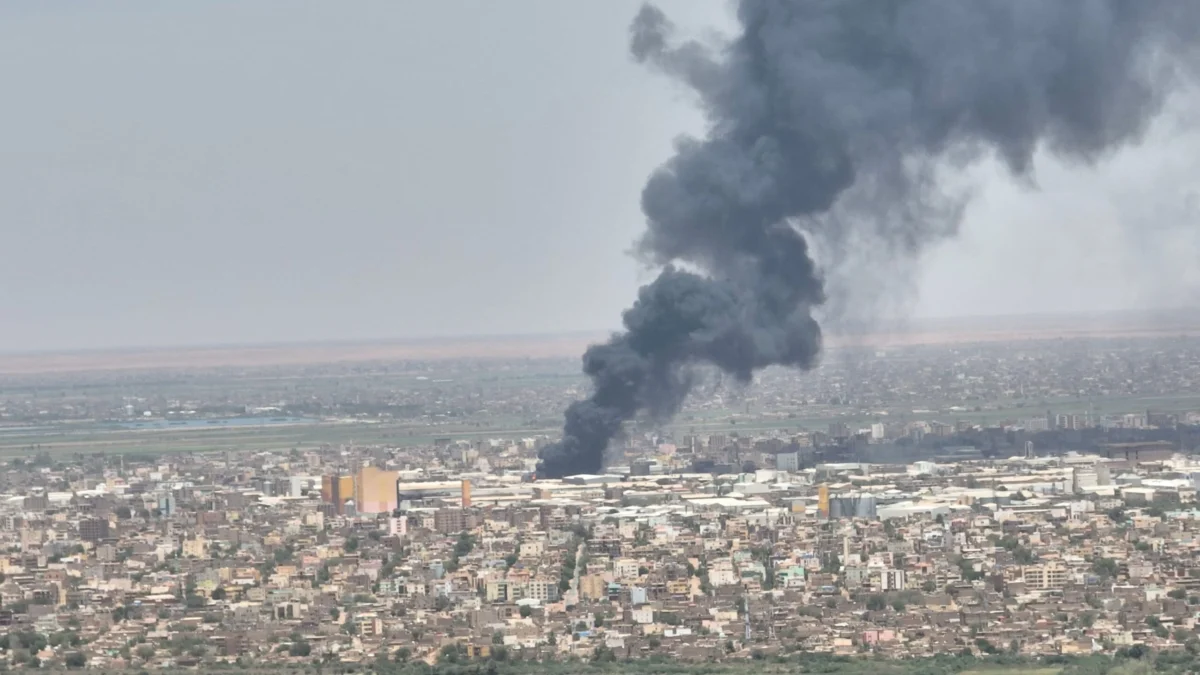
- May 1: Drone footage reveals massive plumes of black smoke over Bahri (Khartoum North) following airstrikes on industrial zones and fuel depots.
- May 4: The White House announces that National Security Adviser Jake Sullivan will travel to Saudi Arabia to discuss the crisis, signaling a shift in U.S. diplomatic priority toward the Jeddah channel.
- May 5-6: The SAF confirms its delegation has arrived in Jeddah, while the RSF signals its intent to participate, despite ongoing clashes in eastern Khartoum.
Humanitarian Data and the Cost of War
The human toll of the three-week conflict has been catastrophic, with data from the Sudanese Ministry of Health and various United Nations agencies painting a dire picture of the situation. As of early May, the official death toll had surpassed 500, though medical professionals on the ground suggest the actual number is significantly higher, as many bodies remain uncollected in the streets of Khartoum.
The World Health Organization (WHO) reported that only about 16% of health facilities in Khartoum are operating at full capacity. Most hospitals have been forced to close due to direct shelling, a lack of medical supplies, or the inability of staff to reach the facilities safely. Furthermore, the UN High Commissioner for Refugees (UNHCR) estimated that approximately 100,000 people have fled to neighboring countries, including Egypt, Chad, South Sudan, and Ethiopia. An additional 330,000 people are estimated to be internally displaced.
Infrastructure damage has been equally severe. Residents in Khartoum North (Bahri) and Omdurman have reported prolonged outages of electricity and water. The banking system has largely collapsed, leaving millions without access to cash to buy food or fuel, which has seen its price quadruple in some areas. The looting of UN warehouses, including those belonging to the World Food Programme (WFP), has resulted in the loss of thousands of tons of emergency food aid, further exacerbating the risk of famine in a country where one-third of the population already required assistance before the war began.
The Strategic Importance of the Jeddah Talks
The choice of Jeddah as the venue for these talks is strategically significant. Saudi Arabia has emerged as a central player in the Sudanese crisis due to its geographic proximity across the Red Sea and its historical ties to both Burhan and Hemedti. Both generals previously provided troops to the Saudi-led coalition in the Yemeni civil war, establishing a rapport with Riyadh that other mediators lack.
The "Jeddah Initiative" is a joint effort between the United States and Saudi Arabia, supported by the "Quad" (which also includes the United Kingdom and the United Arab Emirates). The primary objective of these "pre-negotiations" is to establish a verifiable and durable ceasefire that allows for the creation of humanitarian corridors. Special Envoy Dafallah Alhaj, representing the Sudanese army, emphasized that the military’s presence in Jeddah does not constitute a recognition of the RSF as a legitimate political entity, but rather a necessary step to address the "rebellion."
The RSF, for its part, has utilized social media to project a willingness to negotiate, while simultaneously accusing the SAF of using heavy artillery against residential neighborhoods. The international community, including the African Union (AU) and the Intergovernmental Authority on Development (IGAD), has called for a "permanent cessation of hostilities," though the Jeddah talks are currently focused on the immediate short-term goal of humanitarian access.
Regional and International Implications
The stability of Sudan is vital for the broader security of East Africa and the Red Sea. Sudan shares borders with seven countries, many of which are already grappling with their own internal instabilities. A prolonged civil war in Sudan threatens to spill over into the volatile Sahel region, where militant groups could exploit the vacuum of power.
Egypt, which shares a long border and deep historical ties with Sudan, has expressed grave concern over the influx of refugees and the potential for the conflict to affect Nile water security. Ethiopia, meanwhile, is monitoring the situation closely as it navigates its own delicate peace process following the Tigray conflict. The involvement of the United States in the Jeddah talks reflects Washington’s desire to prevent the conflict from becoming a proxy war involving regional powers, as well as its interest in maintaining the momentum toward a civilian-led democratic transition.
Analysis of Potential Outcomes
The prospects for a breakthrough in Jeddah remain uncertain. Military analysts suggest that both Burhan and Hemedti still believe they can achieve a decisive victory on the battlefield. The SAF possesses superior air power and heavy weaponry, but the RSF is highly mobile and deeply embedded within the urban fabric of Khartoum, making it difficult to dislodge without causing massive civilian casualties.
The "pre-negotiation" phase is likely to be fraught with challenges. The SAF’s refusal to sit directly with the RSF delegation—preferring a mediated exchange through third parties—indicates the level of animosity between the former partners. For a ceasefire to hold, it will require more than just a signed document; it will need an international monitoring mechanism, something that has been absent from previous failed truces.
If the Jeddah talks fail to produce a meaningful pause in the fighting, the international community may move toward more punitive measures, including targeted sanctions on the leadership of both factions. However, for the millions of civilians trapped in Khartoum and the thousands waiting at border crossings, the success of the Jeddah initiative is not a matter of geopolitical strategy, but a matter of basic survival. The coming days will determine whether diplomacy can finally silence the guns or if Sudan is destined for a protracted and bloody stalemate.
