

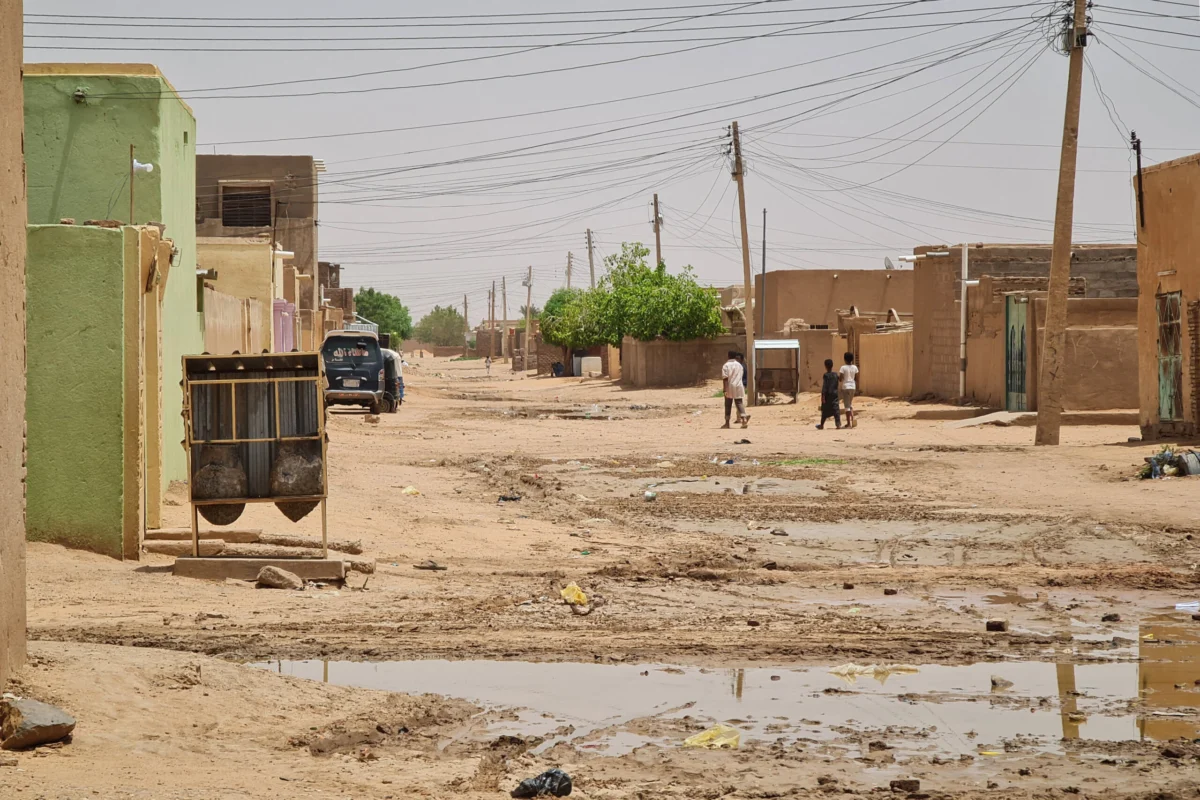
The humanitarian situation in Sudan reached a grim milestone this weekend as an airstrike targeted the densely populated Yarmouk neighborhood in southern Khartoum, resulting in the deaths of at least 17 people. Among the victims were five children, according to local health officials, highlighting the increasing toll on non-combatants as the conflict between the Sudanese Armed Forces (SAF) and the paramilitary Rapid Support Forces (RSF) enters a more volatile phase. The strike, which occurred on Saturday, June 17, 2023, is regarded as one of the deadliest single incidents in the capital since the outbreak of hostilities in mid-April. In addition to the loss of life, the Sudan Ministry of Health confirmed via social media that at least 25 houses were leveled or severely damaged, leaving many families buried under rubble and further straining the city’s collapsing medical infrastructure.
The Yarmouk Strike and the Realities of Urban Combat
The Yarmouk district has become a focal point of the struggle for Khartoum due to its proximity to vital military installations, including a major weapons manufacturing and storage facility controlled by the regular army. On Saturday morning, residents reported the sound of heavy explosions followed by plumes of black smoke rising from residential blocks. While the Ministry of Health confirmed the casualty figures, the exact nature of the ordnance used remains a subject of contention. Witnesses and local activists are divided on whether the destruction was caused by a traditional fighter jet strike or a targeted drone operation.
The Sudanese Armed Forces, led by General Abdel Fattah al-Burhan, maintain a significant advantage in airpower, frequently deploying MiG and Sukhoi fighter jets to strike RSF positions embedded within civilian neighborhoods. Conversely, the RSF, commanded by General Mohamed Hamdan "Hemedti" Dagalo, has increasingly utilized anti-aircraft weaponry and, according to military intelligence reports, small-scale loitering munitions or drones to harass army positions.
In the immediate aftermath of the Yarmouk strike, the RSF issued a formal statement accusing the military of "cowardly" aerial bombardments against innocent civilians. The paramilitary group further claimed to have successfully downed a military MiG fighter jet during the engagement, though this assertion has not been independently verified. The Sudanese military has remained largely silent regarding the specific details of the Yarmouk operation, following a pattern of limited communication regarding tactical strikes in residential areas.
A Chronology of the Conflict: From Political Tension to Civil War
To understand the severity of the Saturday airstrike, it is necessary to examine the rapid disintegration of the Sudanese state over the past several months. The conflict did not emerge in a vacuum but was the result of a protracted power struggle that derailed Sudan’s fragile transition toward democratic civilian rule.
October 2021: General al-Burhan and General Dagalo cooperated in a military coup that ousted the civilian-led transitional government. This move drew international condemnation and froze billions of dollars in foreign aid.
December 2022: Under immense domestic and international pressure, the military and the RSF signed a "framework agreement" promising a return to civilian leadership. However, the deal left critical questions unanswered, specifically the timeline for integrating the RSF into the regular army.
Early April 2023: Tensions reached a breaking point as the RSF began mobilizing troops toward the Merowe airbase and other strategic locations without the army’s permission. Negotiations mediated by international actors failed to de-escalate the situation.
April 15, 2023: Full-scale fighting erupted in Khartoum. What was initially described as a "security disturbance" quickly transformed into an all-out war, with heavy artillery and airstrikes utilized in the heart of a city inhabited by five million people.
May 2023: Multiple "short-term" ceasefires brokered by the United States and Saudi Arabia in Jeddah were repeatedly violated. The fighting expanded beyond the capital to the volatile Darfur region.
June 17, 2023: The Yarmouk airstrike occurs, signaling a shift toward more aggressive aerial operations as the military attempts to dislodge RSF fighters from southern Khartoum.
Humanitarian Impact and the Rise of "Emergency Rooms"
The human cost of the war has been staggering. As of mid-June, official records suggest hundreds of civilians have been killed, though the actual number is widely believed to be much higher due to the inability of medical personnel to reach active combat zones. More than 2.2 million people have been forcibly displaced from their homes. Approximately 1.7 million remain internally displaced within Sudan, while over 500,000 have sought refuge in neighboring countries such as Chad, Egypt, and South Sudan.
In the absence of a functioning state or international aid presence in many parts of Khartoum, local communities have formed "The Emergency Room" committees. these grassroots organizations consist of doctors, engineers, and youth activists who coordinate the distribution of food, water, and medical supplies. Following the Yarmouk strike, members of the local Emergency Room were the first on the scene, documenting the destruction and transporting the wounded to the few remaining operational hospitals.
According to these volunteers, at least 11 people were treated for severe shrapnel wounds and burns following the Saturday attack. Images circulated by the group showed harrowing scenes of residents digging through concrete slabs with their bare hands to recover bodies, illustrating the total breakdown of emergency services in the capital.
The Darkening Shadow of Darfur
While the airstrike in Khartoum captured international headlines, the situation in western Sudan’s Darfur region has arguably been even more catastrophic. The conflict in Khartoum has acted as a catalyst for the resurgence of ethnic violence in West Darfur, particularly in the provincial capital of Genena.
The RSF, which evolved from the Janjaweed militias used by the previous regime of Omar al-Bashir during the Darfur genocide in the early 2000s, has been accused of partnering with allied Arab militias to target non-Arab ethnic groups, such as the Masalit. In a chilling escalation, the Governor of West Darfur, Khamis Abdalla Abkar, was abducted and killed on Wednesday, June 14. His death came just hours after he participated in a televised interview in which he accused the RSF and its allies of committing "genocide" in Genena.
The killing of a high-ranking state official underscored the total collapse of law and order. While the RSF denied responsibility for the governor’s death, blaming "outlaws," the United Nations and various human rights organizations have pointed to a pattern of targeted assassinations and ethnic cleansing in the region. The mass exodus from Genena to the border town of Adre in Chad has created a secondary humanitarian crisis, with refugees reporting systematic executions of men and boys along the escape routes.
Official Responses and International Stagnation
The international community’s response to the escalating violence has been characterized by a mix of diplomatic frustration and logistical paralysis. The "Jeddah Talks," facilitated by the U.S. and Saudi Arabia, were suspended earlier in June after the Sudanese military withdrew its delegation, citing the RSF’s failure to vacate civilian homes and hospitals.
Volker Perthes, the UN Special Representative for Sudan, has repeatedly warned that the conflict is taking on an ethnic dimension that could lead to a protracted civil war and regional instability. However, the UN’s influence has been hampered by the Sudanese government’s recent declaration of Perthes as "persona non grata," a move the UN has ignored while emphasizing the safety of its staff.
Regional powers, including the African Union and the Intergovernmental Authority on Development (IGAD), have proposed mediation roadmaps, but neither the SAF nor the RSF has shown a genuine willingness to compromise. Both General al-Burhan and General Dagalo appear to believe in the possibility of a total military victory, despite the evident stalemate on the ground.
Fact-Based Analysis: The Implications of a Protracted Conflict
The Saturday airstrike in Khartoum is emblematic of a "war of attrition" that is destroying the very infrastructure required to sustain a modern state. The implications of this continued violence are three-fold:
-
State Collapse: Sudan is at risk of becoming a "failed state" in the heart of Africa. The destruction of the Yarmouk neighborhood and the targeting of industrial zones mean that even if a ceasefire is reached, the economic recovery of the country will take decades. The central bank, ministries, and telecommunications hubs have all sustained significant damage.
-
Regional Contagion: With seven neighbors, many of whom are dealing with their own internal instabilities, a prolonged war in Sudan could destabilize the Horn of Africa and the Sahel. The influx of refugees into Chad and South Sudan is already straining the resources of these fragile nations.
-
Radicalization and Militia Power: As the formal military struggles to maintain control, there is an increasing reliance on irregular militias and tribal alignments. This fragmentation makes it harder to reach a centralized peace agreement and increases the likelihood of long-term insurgencies similar to those seen in Libya or Yemen.
As the smoke clears from the Yarmouk neighborhood, the immediate priority for humanitarian agencies remains the establishment of "safe corridors" to allow for the evacuation of the wounded and the delivery of food. However, with both generals doubling down on their military objectives, the residents of Khartoum remain caught in a crossfire that shows no signs of abating. The 17 lives lost on Saturday, including the five children, serve as a tragic reminder that in the battle for control of Sudan, it is the civilian population that pays the highest price.
