

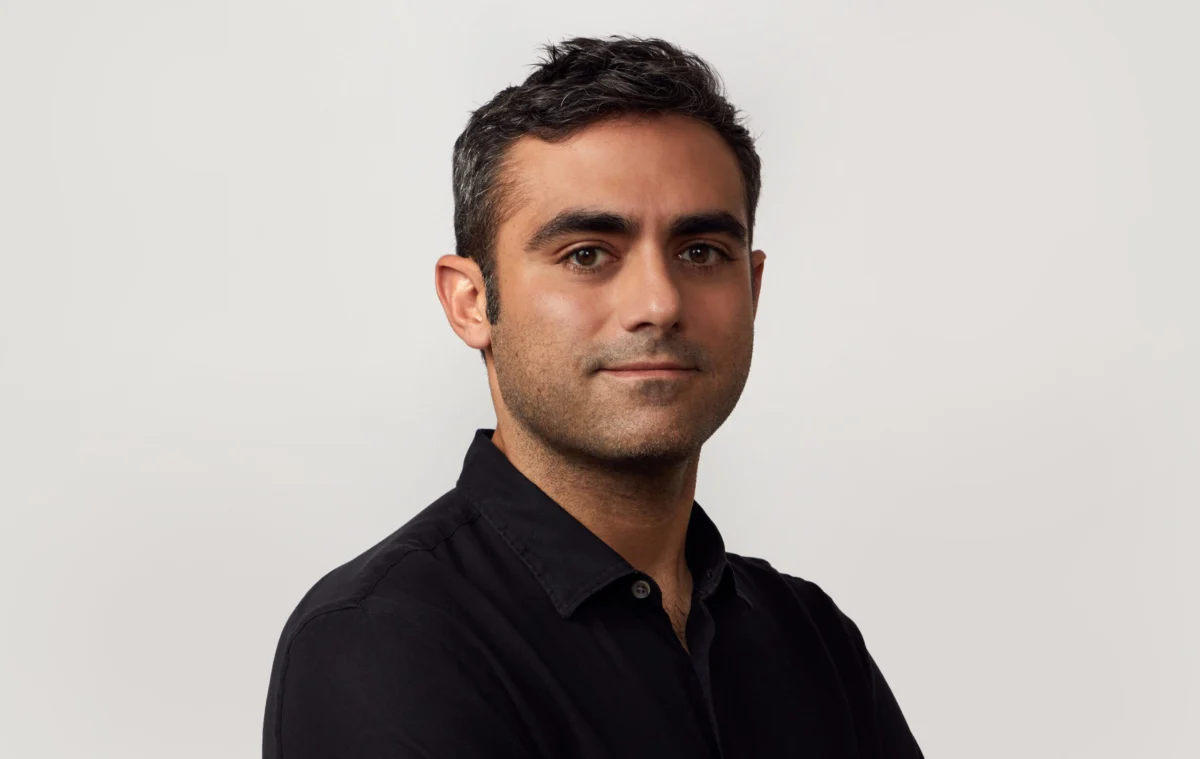
Michael Polansky is remarkably unassuming for someone operating in a corner of the world known for outsize egos, yet his influence spans the disparate realms of high-stakes venture capital, cutting-edge biotechnology, and global entertainment. Seated at a leafy patio outside a popular bakery in Mill Valley, an affluent enclave north of San Francisco, Polansky—bespectacled and unassuming—presents the demeanor of a young academic rather than a Silicon Valley power player. However, his current portfolio is anything but quiet. As the co-founder and CEO of Outer Biosciences, a stealthy AI-driven biology startup, and the creative and romantic partner to Stefani Germanotta, known globally as Lady Gaga, Polansky is navigating a unique double life that merges the rigors of scientific innovation with the complexities of the celebrity economy.
Outer Biosciences represents a significant shift in the landscape of dermatological and biological research. While the company has operated largely in the shadows for several years, it has achieved a feat that has long eluded the scientific community: keeping living human tissue viable outside the body for over a month. This breakthrough allows for the testing of biological processes—such as collagen remodeling and barrier repair—that were previously impossible to observe in a laboratory setting. As Polansky steps into the public eye to discuss his work, he reveals a trajectory defined by strategic pivots, high-level mentorship, and a deep-seated belief in the power of predictive modeling to revolutionize human health.
A Trajectory Defined by Data and Venture Capital
Polansky’s journey to the forefront of biotechnology began in the Midwest. Raised in Minnesota, he attended Harvard University, where he studied applied mathematics and computer science, graduating in 2006. This quantitative foundation proved essential for his early career at Bridgewater Associates, the world’s largest hedge fund. Polansky describes his three-year tenure at the firm as a "very unique" and formative experience, though he admitted that the world of pure finance was not his ultimate calling.
His transition to the Silicon Valley ecosystem was catalyzed by a chance encounter. In 2009, at a wedding in Minnesota, he reconnected with a childhood neighbor who was serving as an assistant to Sean Parker, the co-founder of Napster and the first president of Facebook. Parker was looking for a partner to help manage his expanding interests. Following a dinner in New York, Polansky quit Bridgewater the next day and relocated to San Francisco.
Polansky’s initial role in the Bay Area was as a principal at Founders Fund during its foundational years. Working alongside original partners Peter Thiel, Sean Parker, Luke Nosek, and Ken Howery, Polansky was immersed in the "move fast and break things" ethos of early 2010s venture capital. When Parker eventually moved to establish his own family office after the Facebook IPO, Polansky went with him to manage a diverse array of business, investment, and philanthropic interests. This included the establishment of the Parker Institute for Cancer Immunotherapy (PICI), where Polansky continues to serve as executive director. It was during this decade-long immersion in cancer research that Polansky, a mathematician by trade, "accidentally" became an expert in the life sciences.
The Intersection of Science and Stardom
The shift in Polansky’s life toward the world of global entertainment occurred in late 2019. He met Stefani Germanotta at a birthday party for Sean Parker, a meeting facilitated by Germanotta’s mother, Cynthia Germanotta. The relationship quickly evolved into a comprehensive partnership that spans personal and professional boundaries. Polansky’s influence is visible in the logistical precision of Lady Gaga’s recent "Chromatica Ball" world tour, an operation he likens to running a "200-person startup that travels around the world every day."
The collaboration extends to Haus Labs, the cosmetics brand Germanotta founded. Unlike many celebrity-backed beauty lines that rely on licensing agreements, Haus Labs is a vertically integrated operation based in El Segundo, California. Polansky highlights Germanotta’s acumen as a businessperson, noting that she built the brand from the ground up. The synergy between their worlds is further evidenced by the fact that Germanotta sits on the board of Outer Biosciences, and the two companies share scientific expertise. Kyung-Jin Jang, the chief scientist at Outer Biosciences, also serves on the scientific advisory board for Haus Labs, ensuring that the innovations discovered in the lab have a potential pathway to consumer products.
Breakthroughs in Tissue Longevity and AI Modeling
The core mission of Outer Biosciences, co-founded in 2022 by Polansky, Jang, Chris Hinojosa, and Stanley King, is to solve a fundamental bottleneck in biological research: the "proxy problem." Traditionally, scientists have relied on animal models or simplified cell cultures to test new compounds. However, these models often fail to accurately predict how a human organ will react. Outer Biosciences sidesteps this by using actual human skin, sourced from discarded tissue following plastic surgeries.
By partnering with organizations like the National Disease Research Interchange (NDRI) and the Cooperative Human Tissue Network (CHTN), Outer Biosciences has built a sophisticated pipeline to receive living tissue within hours of surgery. The company’s proprietary support system provides nutrients and removes metabolic waste, extending the tissue’s life to 30 days—a massive leap from the industry standard of just a few days.
This extended window allows the company to observe slow-moving biological responses. For example, by inducing UVB damage (sunburn) on the tissue, researchers can track inflammatory and recovery-related responses over several weeks. This data is then fed into an AI model that predicts which untested chemicals are likely to have beneficial effects. While early efforts relied on "brute force" mining of scientific literature, the integration of AI has accelerated discovery significantly. The company now generates a new ingredient candidate roughly every six weeks, with six leads currently in its active pipeline.
Market Context and Competitive Landscape
The market for skin-active ingredients is surprisingly small. While thousands of cosmetic products exist, only about 120 to 130 active ingredients are formally approved by the FDA for over-the-counter skin drugs, and only about 200 cosmetic ingredients are backed by rigorous research. This represents a massive opportunity for a company capable of discovering new, effective compounds.
Outer Biosciences’ business model focuses on licensing these discovered ingredients to established beauty and pharmaceutical brands rather than building its own consumer-facing label. This "Intel Inside" approach allows the company to remain focused on the science while leveraging the marketing and distribution power of industry giants.
To date, Outer Biosciences has raised approximately $23 million from investors including Wing Ventures, Initialized, and Hawktail. However, the company faces stiff competition. Vivodyne, a Philadelphia-based startup, recently raised nearly $80 million to develop lab-grown human organ tissue for similar testing purposes. Other competitors are pursuing "organ-on-a-chip" technology, which uses microfluids to mimic organ function.
Polansky remains unfazed by the competition, citing the unique nature of his company’s data. Unlike AI companies that scrape the internet for information, Outer Biosciences is generating its own proprietary data from real human tissue—data that does not exist anywhere else. Furthermore, the company keeps its AI operations on-premise to ensure data security, a move that distinguishes it from many cloud-dependent tech startups.
Implications and Future Outlook
The work being done at Outer Biosciences has implications that reach far beyond the beauty industry. By proving that human tissue can be maintained and studied effectively outside the body, the company is paving the way for a new era of personalized medicine and safer pharmaceutical testing. The ability to study why certain cancer drugs cause severe skin rashes, for instance, is already a focus of one of the company’s pharmaceutical partnerships.
As Polansky transitions Outer Biosciences from a stealth operation to a public-facing entity, the focus is on scaling the product development team. The goal is to create a predictive model so accurate that the company can identify promising biological directions without having to run every physical experiment first.
For Polansky, the journey from the rigid structures of Bridgewater to the creative whirlwind of Lady Gaga’s world tour and the precision of the lab represents a synthesis of his life’s work. By applying the data-driven rigor of his hedge fund background to the untapped potential of human biology, he is attempting to build a bridge between what is known and what is possible. As the wait staff at the Mill Valley bakery began to clear the tables, signaling the end of the day, Polansky’s outlook remained focused on the future. "We kind of want to start working in public now," he said, signaling that the quiet years of discovery are about to meet the noise of the marketplace.
