

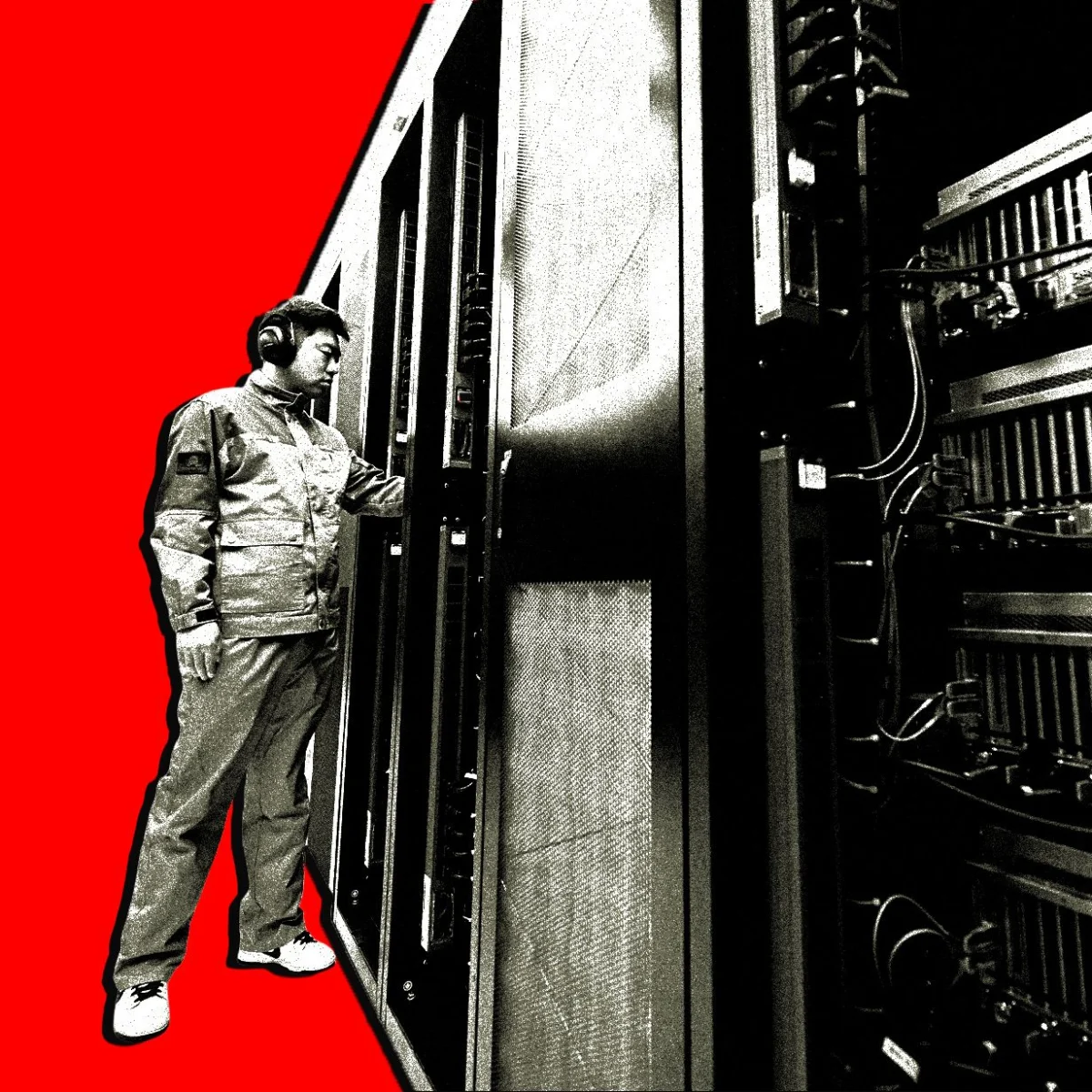
Just two hours west of Beijing by high-speed rail, the landscape shifts from the dense urban sprawl of the capital to the undulating grasslands and dormant volcanic cones of Inner Mongolia. This region, historically recognized for its pastoral heritage and extensive coal reserves, is undergoing a profound industrial metamorphosis. Ulanqab, a city of 1.5 million people, has emerged as the epicentral node in China’s aggressive bid for artificial intelligence (AI) supremacy. In less than a decade, the city has transformed from a quiet agricultural hub into one of the most concentrated clusters of compute power on the planet, attracting billions of dollars in investment from the world’s most valuable technology conglomerates.
According to a recent research memorandum from Goldman Sachs, Ulanqab is currently witnessing a growth trajectory that outpaces almost any other digital infrastructure project globally. Since 2016, nearly 100 data centers have either been commissioned or have broken ground within the city limits. Chinese technology firms have committed to projects with a combined projected capacity of 12.5 gigawatts (GW). To put this scale into a global perspective, OpenAI’s highly publicized "Stargate" project, an initiative backed by a $100 billion to $500 billion investment framework, is slated to reach a total capacity of 10 GW upon completion. Remarkably, over 70 percent of Ulanqab’s total capacity commitments were announced in the last 12 months alone, signaling an unprecedented acceleration in physical AI infrastructure.
The Strategic Geography of Compute
The migration of "Big Tech" to the Inner Mongolian Plateau is driven by a calculated blend of environmental advantages and economic pragmatism. Data centers are notoriously energy-intensive and generate immense heat; maintaining optimal operating temperatures for thousands of high-performance GPUs is one of the most significant operational costs for AI companies. Ulanqab’s geography offers a natural solution. Situated at a high elevation with long, frigid winters, the city allows for "free cooling"—using ambient outside air to regulate server temperatures—thereby drastically reducing electricity consumption compared to facilities in southern or coastal provinces.
Proximity to Beijing remains a critical competitive advantage. While other remote regions in China offer similar climates, Ulanqab is uniquely positioned near the nation’s political and intellectual heart. This proximity is bolstered by a robust telecommunications backbone. In 2017 and 2019, the region saw the installation of two dedicated ultra-high-speed fiber optic cables, which slashed average latency to less than five milliseconds. This technical threshold is vital; while training large language models (LLMs) can tolerate some latency, real-time AI inference—the process of a model providing answers to users—requires the near-instantaneous data exchange that Ulanqab’s infrastructure now provides.
Furthermore, the cost of electricity in Inner Mongolia is among the lowest in China. This is the result of a "dual-energy" strategy: the region possesses some of the country’s most productive wind and solar farms while maintaining an abundant, low-cost supply of coal. For AI startups and established giants alike, the combination of natural cooling, low latency, and cheap power creates an irresistible economic trifecta.
A Paradigm Shift in Infrastructure Ownership
The Ulanqab boom also marks a significant shift in how Chinese AI companies manage their hardware. Historically, many Chinese tech firms followed the Western model of "asset-light" operations, renting compute power from established cloud providers like Alibaba Cloud or Tencent Cloud. However, the current surge is characterized by companies building and owning their own massive dedicated facilities.
Leading this charge is DeepSeek, the AI startup that recently disrupted the global market with its highly efficient models. Reports indicate that DeepSeek is developing a massive proprietary data center in Ulanqab to house its training clusters. They are joined by ByteDance (the parent company of TikTok), Alibaba, and the social media giant Xiaohongshu. Industry analysts suggest this shift toward self-owned infrastructure is a defensive move intended to secure long-term compute capacity amidst global supply chain uncertainties and the rising costs of third-party cloud services. By controlling the physical layer of their AI stacks, these companies can optimize hardware specifically for their proprietary algorithms, potentially gaining an edge in training efficiency.
Chronology of Development: From Backup Storage to AI Powerhouse
The evolution of Ulanqab as a digital hub did not happen overnight. It is the result of a decade-long industrial policy aimed at balancing China’s regional economic development.
- 2016: Huawei becomes one of the first major tech entities to establish a presence in Ulanqab, recognizing the potential of the region’s climate.
- 2017-2019: The installation of high-speed fiber optics connects Ulanqab directly to Beijing, bridging the digital divide and making the region viable for more than just "cold storage" (archival data).
- 2019: Apple establishes a data center in the region to comply with Chinese data localized laws, further legitimizing Ulanqab as a secure and reliable node.
- 2021: The Chinese government officially launches the "Eastern Data, Western Compute" project. This national strategy designated Inner Mongolia as one of eight national computing hubs, intended to funnel data from the populous, energy-constrained eastern provinces to the energy-rich western hinterlands.
- 2022-2023: The global generative AI explosion creates a desperate need for GPU clusters. Ulanqab transitions from a general-purpose data hub to a specialized AI training ground.
- 2024: Goldman Sachs reports that Ulanqab has become one of the fastest-growing compute clusters in Asia, with 12.5 GW of pledged capacity.
The Energy Paradox and the Green Transition
The Chinese government views the Ulanqab data center cluster as a primary "sink" for the country’s excess renewable energy. China has built wind and solar capacity at a staggering rate, but the national power grid often struggles to transport this energy from the remote west to the industrial east, leading to "curtailment"—where clean energy is essentially wasted. By building data centers directly in Inner Mongolia, the government can utilize this green energy on-site.
Envision, one of the world’s largest manufacturers of wind turbines, recently announced a 2 GW AI data center project in Ulanqab that will be powered directly by its own clean energy installations. This "behind-the-meter" approach is seen as a blueprint for the future of sustainable AI.
However, the transition remains a work in progress. Despite the green narrative, approximately 37 percent of Ulanqab’s electricity is still generated from coal. Because AI training runs must operate 24/7 without interruption, operators often rely on the baseload stability provided by coal-fired power plants when wind or solar output fluctuates. "Inner Mongolia has long been the ‘West Virginia’ of China," notes Damien Ma, director of Carnegie China. While the region is racing toward a carbon-neutral future, the current reality is a hybrid model where fossil fuels still provide the necessary reliability for the digital economy.
Environmental Constraints: The Water Challenge
The most immediate threat to Ulanqab’s growth is not a lack of power, but a lack of water. Despite the benefits of a cold climate, data centers still require significant amounts of water for evaporative cooling and humidity control, especially during the peak summer months.
Ulanqab is an arid region, receiving an average of only 14 inches of rainfall annually—comparable to the semi-arid climate of Denver, Colorado. The influx of massive industrial projects is straining local resources. In a stark illustration of this tension, the Ulanqab water utility was recently forced to implement nightly seven-hour shutdowns of several waterworks to manage peak demand and ensure residential supply.
While weather data suggests that data centers in the region may only require intensive water cooling for two months of the year, the sheer scale of the 12.5 GW planned capacity poses an existential environmental question. If the local government cannot secure sustainable water sources or mandate the use of waterless "closed-loop" cooling technologies, the city’s digital ambitions may collide with its ecological limits.
Broader Implications and Global Context
The rapid expansion of Ulanqab’s compute capacity is a clear indicator that China is closing the "infrastructure gap" with the United States. While the U.S. currently holds an advantage in high-end semiconductor design (such as NVIDIA’s H100 and B200 chips), China is focusing on the sheer scale of deployment and the integration of energy systems with compute clusters.
The development of Ulanqab also reflects a broader trend of "compute sovereignty." By centralizing its AI infrastructure in a secure, inland province powered by domestic energy sources, China is insulating its tech sector from external geopolitical pressures. As Andrew Stokols, a professor at Singapore Management University, observes, the growth in Ulanqab is now being driven more by commercial demand and the success of Chinese AI startups than by top-down government mandates alone.
In the coming three to five years, Ulanqab will serve as a global test case for whether a remote, resource-rich region can successfully pivot from a traditional "extraction economy" (coal and farming) to a "high-tech service economy" (AI and data). If the region can solve its water scarcity issues and fully transition to its vast renewable reserves, the "Silicon Steppe" may well become the primary engine of the next industrial revolution. For now, the world watches as the rolling grasslands of Inner Mongolia become the unlikely foundation for the future of artificial intelligence.
