

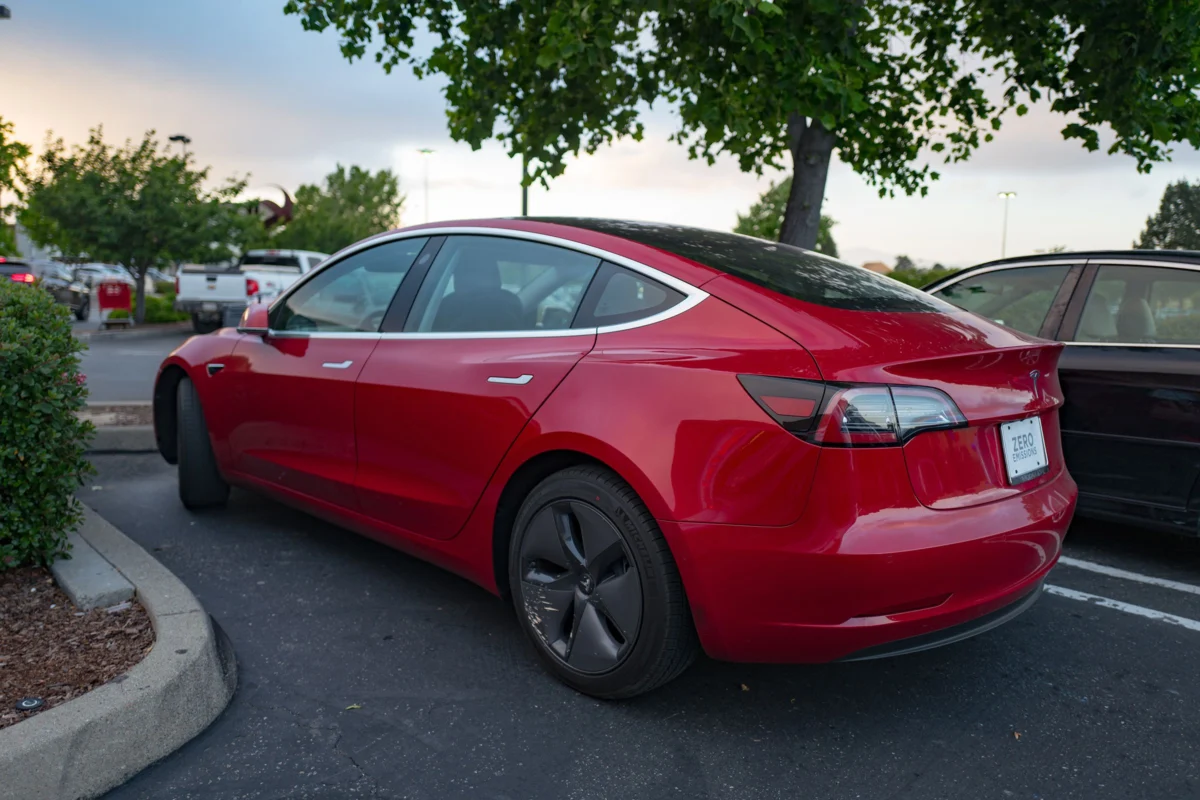
The State Administration for Market Regulation (SAMR) of the People’s Republic of China has announced one of the most significant automotive recalls in the nation’s history, targeting more than 2.9 million Tesla vehicles due to safety risks associated with their electronic retractable door handles. This massive regulatory action, which affects Model 3 and Model Y vehicles manufactured at Tesla’s Giga Shanghai facility between 2019 and 2026, marks a pivotal moment in the intersection of high-tech automotive design and stringent safety oversight. The recall addresses long-standing concerns that these sleek, flush-mounted handles—once hailed as a hallmark of futuristic design—can become a life-threatening hindrance during emergencies, particularly following high-impact collisions or electrical system failures.
For years, Tesla’s retractable door handles have been a subject of both admiration and scrutiny. Designed to improve aerodynamics and provide a minimalist aesthetic, the handles sit flush with the car’s body and extend electronically when a passenger approaches or touches them. However, government regulators and safety advocates have increasingly questioned the reliability of this mechanism. The core of the issue lies in the dependency of these handles on the vehicle’s low-voltage battery system. While the high-voltage battery pack powers the drivetrain, a separate low-voltage battery (traditionally 12 volts, though newer models use a 16-volt lithium-ion variant) powers the onboard computers, sensors, displays, and the electronic latches of the doors. In the event of a severe crash where the low-voltage system is compromised, the electronic handles may fail to deploy, effectively trapping occupants inside the vehicle and preventing first responders from gaining access from the outside.
The Scale of the Recall and Technical Remediation
The SAMR’s announcement on Friday detailed a two-pronged approach to mitigating these risks. First, Tesla will deploy an over-the-air (OTA) software update to a vast majority of the 2.9 million affected vehicles. This software patch is designed to automatically lower the vehicle’s windows immediately following a detected collision. By lowering the windows, the vehicle provides an alternative egress route for passengers and an entry point for rescuers, bypassing the need to operate the door handles entirely if the electronic latches fail.
However, software alone cannot address the fundamental human-factors engineering flaw identified by regulators. Many of the recalled vehicles will also require physical intervention in the form of new, high-visibility warning stickers. These stickers, to be affixed free of charge by Tesla service technicians, are intended to help occupants locate and operate the emergency mechanical release handles. In many Tesla models, the mechanical override is integrated into the door panel in a way that makes it aesthetically seamless but functionally obscure. Often colored to match the interior trim, these manual releases can be difficult to find in a dark, smoke-filled, or high-stress environment. The new labeling requirement underscores a shift in regulatory philosophy: safety features must not only exist but must be intuitively identifiable during a crisis.
A Growing Catalog of Safety Incidents and Litigation
The regulatory crackdown in China follows a series of high-profile incidents and legal challenges in both Asia and North America. In the United States, several lawsuits have been filed against Tesla by the families of crash victims who alleged that the retractable handles played a decisive role in their loved ones’ deaths. One notable case involved a 2019 crash in Florida, where a Tesla Model S burst into flames after hitting a tree; witnesses and a responding police officer reported being unable to open the doors because the handles did not retract, and the driver ultimately perished in the fire.
In China, similar reports of "death trap" scenarios have circulated on social media and in local news outlets, putting pressure on the SAMR to act. The agency’s decision to mandate a recall of this magnitude suggests that the frequency and severity of these design-related obstacles have reached a critical threshold. By forcing Tesla to acknowledge the handle design as a safety defect, the Chinese government is setting a precedent that could influence regulators in other major markets, including the European Union and the United States.
Broader Industry Impact: A Collective Recall
Tesla is not the only automaker facing scrutiny over flush-mounted door handles. In a move that demonstrates the systemic nature of this design trend, the Chinese government simultaneously issued recalls for more than one million additional vehicles manufactured by eight other prominent automakers. This group includes both legacy manufacturers and emerging EV giants: Beijing Automotive, Chery, Dongfeng, First Auto Works (FAW), Geely, Leapmotor, Xiaomi, and Xpeng.
This collective action indicates that the SAMR is targeting the technology itself rather than a single brand. Flush door handles have become a "must-have" feature for electric vehicle manufacturers seeking to maximize range by reducing wind resistance. However, the move by Chinese regulators suggests that the era of "form over function" in EV door design may be coming to a close. Earlier this year, China introduced new regulations that will eventually ban fully retractable door handles that do not have a clear, redundant mechanical operation accessible from the exterior.
The Secondary Recall: Assisted Steering and Driver Monitoring
In addition to the door handle crisis, Tesla is facing a separate but significant recall in China involving nearly 50,000 imported Model 3, Model S, and Model X vehicles. This recall focuses on the safety of Tesla’s assisted steering technology, often marketed as Autopilot. According to the SAMR, the current iteration of the software does not sufficiently monitor driver engagement, leading to a heightened risk of collisions when drivers over-rely on the system or become distracted.
While some of these vehicles can be updated via software to include more frequent and intrusive driver-attention alerts, a portion of the fleet will require hardware upgrades. Specifically, some older imported models will need the installation of new in-cabin cameras. These cameras use computer vision to track the driver’s eye movement and head position, ensuring they are looking at the road while the assisted steering is active. This requirement for a hardware retrofit is particularly costly and logistically complex for Tesla, as it moves beyond the convenience of remote software fixes.
Chronology of Regulatory Pressure on Tesla in China
The relationship between Tesla and Chinese regulators has evolved rapidly over the last five years, characterized by a transition from enthusiastic support to rigorous oversight.
- 2019: Tesla opens Giga Shanghai, the first wholly foreign-owned car plant in China, with significant government backing. Production of the Model 3 begins.
- 2021: The SAMR and other agencies begin tightening the leash. New regulations are issued regarding the security of data generated by "intelligent connected vehicles." Tesla is forced to set up local data centers to store Chinese consumer data.
- 2022: Public complaints regarding brake failures and "unintended acceleration" gain traction, leading to increased scrutiny of Tesla’s software-heavy approach to vehicle control.
- 2023: Regulators begin investigating the safety of flush door handles following several crash reports where doors remained locked.
- 2024: The Chinese government implements new rules governing autonomous and semi-autonomous driving, leading to the current recall of 50,000 vehicles for driver monitoring deficiencies.
- Late 2024 (Friday Announcement): The SAMR officially mandates the recall of 2.9 million vehicles for door handle safety, the largest in Tesla’s history in China.
Analysis of Implications for the Global EV Market
The actions taken by the Chinese government have profound implications for the global automotive industry. China is the world’s largest market for electric vehicles and serves as a regulatory bellwether for new technologies. By being more aggressive than the U.S. National Highway Traffic Safety Administration (NHTSA), China is effectively forcing global manufacturers to redesign their vehicles to meet the highest common denominator of safety standards.
For Tesla, the financial burden of these recalls—though mitigated by the use of OTA updates—is compounded by the potential damage to its brand reputation in a fiercely competitive market. Domestic Chinese rivals like BYD and Xiaomi are rapidly gaining market share, and any perception that Tesla vehicles are "unsafe" or "difficult to escape" could drive consumers toward local alternatives. Furthermore, the requirement for physical stickers and hardware camera retrofits adds a layer of operational complexity that challenges Tesla’s "software-first" business model.
In the United States, the NHTSA has recently begun to examine whether it needs to follow China’s lead. According to reports from Bloomberg, U.S. regulators are currently reviewing data related to door handle failures in Tesla vehicles to determine if a similar federal mandate is necessary. If the U.S. adopts similar rules, it could force a total redesign of Tesla’s current lineup, as well as those of competitors like Rivian and Lucid, who have also adopted flush handle designs.
Conclusion
The recall of 2.9 million Tesla vehicles in China represents a turning point in the regulation of the "software-defined vehicle." It highlights a critical tension in modern automotive engineering: the desire to innovate through digital and electronic systems versus the fundamental necessity of mechanical reliability in life-and-death situations. As Tesla works to deploy software patches and distribute warning labels across China, the broader industry must now grapple with the reality that "cool" design flourishes will no longer be tolerated if they come at the expense of basic occupant safety. For now, the electronic door handle stands as a cautionary tale of how a small design choice can lead to a multi-million-vehicle liability.
