

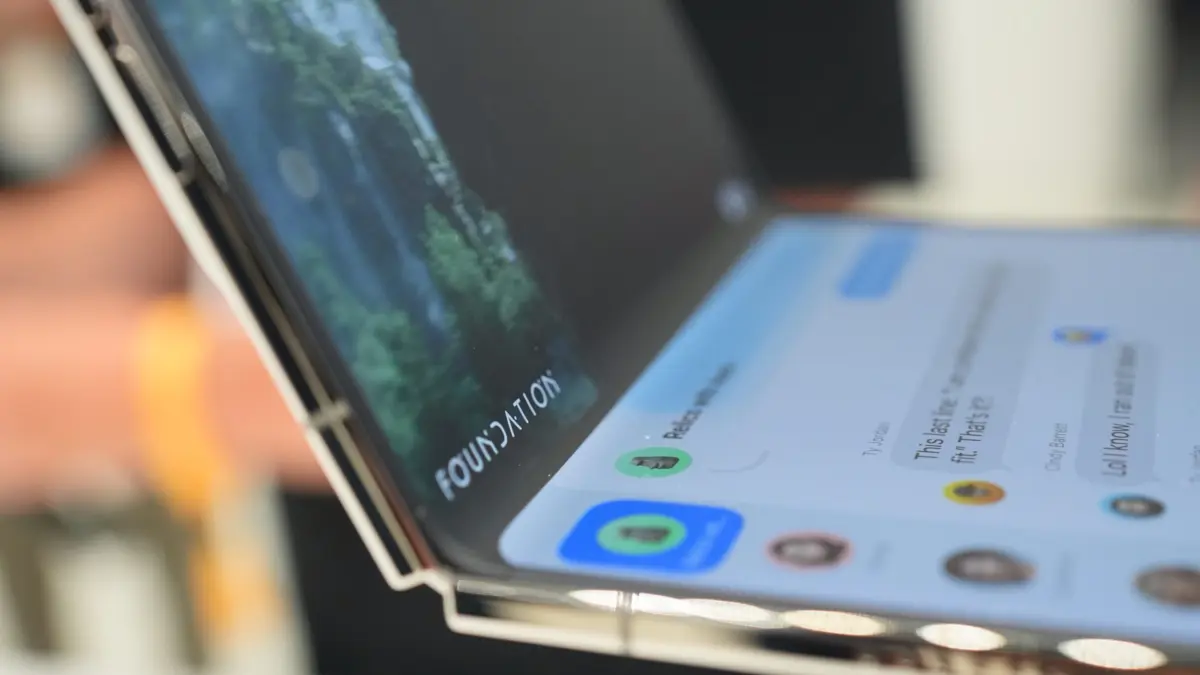
The highly anticipated launch of Apple’s first foldable smartphone, the iPhone Duo, has been met with immediate technical scrutiny following a wave of reports regarding premature display failures. Shortly after the device reached consumers last Friday, a segment of early adopters began documenting significant malfunctions in the internal folding screen. These reports, which have circulated widely on social media platforms and tech forums, describe the sudden appearance of bright white vertical lines and unresponsive display areas, occurring in some instances within hours of the device being unboxed.
While the iPhone Duo represents Apple’s most significant design departure in over a decade, the emergence of these hardware issues has triggered a phenomenon dubbed "Crackgate" by the online community. The failures appear concentrated on the flexible inner display, a component that Apple has marketed as a pinnacle of engineering. Despite the premium price point of the device—ranging from $1,999 for the base model to $3,199 for high-capacity tiers—the reports suggest that a subset of the initial production run may suffer from a critical mechanical or assembly flaw.
Official Response and Replacement Protocols
Apple has moved to address the situation, acknowledging that a "small number" of units are experiencing issues with the internal folding mechanism and display. In an official statement, a company spokesperson confirmed the manufacturer’s awareness of the defect: "We are aware of an issue impacting the inner display on a small number of iPhone Duo units. If users experience issues with their iPhone Duo display, they should contact AppleCare for a replacement."
The directive from Apple signifies that the company is treating these specific failures as manufacturing defects covered under the standard limited warranty, rather than accidental damage. However, the implementation of this replacement policy has seen varying degrees of success at the retail level. Some consumers have reported inconsistent experiences at Apple Store Genius Bars. In one documented case in Jacksonville, Florida, a customer was initially told the damage was likely the result of a drop or misuse, with staff suggesting that such fragility is "expected with new technology."
To navigate these inconsistencies, industry analysts recommend that affected owners document the progression of the failure. If the hinge begins to show resistance or if the display exhibits flickering before a total crack occurs, capturing video evidence can be crucial for warranty claims. Under current guidelines, users are advised to contact Apple Support via the official app or website to initiate a mail-in or in-store replacement process, ensuring the issue is coded as a hardware defect rather than a user-inflicted break.
Technical Analysis: The Engineering of the Hinge
The iPhone Duo’s hinge is a marvel of miniaturization, reportedly consisting of over 100 individual components designed to provide a seamless folding experience while maintaining structural integrity. However, the complexity of this mechanism appears to be the primary point of failure. Teardown experts from iFixit and independent researchers have begun analyzing the failed units to determine the root cause of the screen damage.
Initial findings from iFixit’s 3D modeling of the hinge suggest several potential failure points:
- Non-Retracting Support Bars: The flexible display relies on a series of support bars that must retract perfectly when the device is closed. If a bar fails to retract, it creates a localized pressure point against the back of the OLED panel, leading to the "bright white line" defect.
- Debris and Rail Friction: The internal rails that guide the folding motion operate with microscopic tolerances. Any misalignment during assembly can cause these rails to brush against the delicate underside of the display.
- Stress Convergence: The damage frequently originates at the central axis where multiple moving parts converge. This area is subject to the highest mechanical stress, and any manufacturing variance in the tension of the hinge springs can result in the display being stretched beyond its physical limits.
South Korean hardware analyst CuriousHagi also conducted a forensic teardown of a failed unit, identifying a correlation between hinge resistance and subsequent screen failure. Users have reported that the device initially operates smoothly but develops a "gritty" feel or physical resistance after a few dozen folds. Shortly after this resistance is felt, the display typically suffers catastrophic failure within the next few cycles.
Durability Testing and Statistical Context
To put the "Crackgate" reports into perspective, it is essential to look at the broader failure rate relative to the total number of units shipped. While social media creates an amplified view of hardware defects, the current number of reported failures remains low in comparison to the hundreds of thousands of units estimated to have been delivered during the launch weekend.

In a controlled durability test, CNET utilized a custom-built automated folding machine to stress-test the iPhone Duo’s longevity. As of the most recent update, the test unit has surpassed 80,000 fold cycles without experiencing a screen crack or hinge failure. This data suggests that the issue may not be a fundamental design flaw inherent to every device, but rather a "batch issue" involving defective components or assembly errors at specific manufacturing facilities.
For context, Apple’s internal testing reportedly rates the iPhone Duo for 200,000 folds, which equates to approximately five years of heavy use (roughly 100 folds per day). The fact that some units are failing within the first 10 to 50 folds strongly points toward a manufacturing anomaly rather than a lack of durability in the overall design.
The Impact of Supply Chain Shortages
One of the most significant challenges facing affected iPhone Duo owners is the current state of Apple’s supply chain. Even before the reports of screen failures, the iPhone Duo was in short supply, with shipping estimates for new orders slipping into January 2027 in many regions.
This shortage has complicated the replacement process. Most retail locations do not have "buffer stock" set aside for immediate swaps. Consequently, customers with defective units are often being told they must wait weeks or even months for a replacement device. While Apple has the option to divert stock from new sales to the replacement channel, doing so would further lengthen the wait times for customers who have already pre-ordered.
For users who cannot afford to wait for a replacement, Apple’s standard 14-day return policy remains an option. Returning the device for a full refund allows consumers to step back from the "first-generation" risks and wait for more stable production batches. However, for those who purchased through carriers or third-party retailers, return policies may involve restocking fees or different eligibility requirements.
Chronology of the iPhone Duo Launch and "Crackgate"
- October 15, 2026: Pre-orders for the iPhone Duo open globally. High demand leads to shipping delays within the first hour.
- October 23, 2026 (Launch Day): The first wave of iPhone Duo units arrives at customers’ homes and retail stores.
- October 23, 2026 (Launch Day + 3 Hours): The first reports of internal screen failures surface on Reddit and X (formerly Twitter), showing vertical lines on the crease.
- October 24-25, 2026: The term "Crackgate" begins trending as more users document identical failure patterns. iFixit begins its preliminary teardown analysis.
- October 26, 2026: Apple issues an official statement acknowledging the display issue and directing users to AppleCare.
- October 27, 2026: CNET’s live-streamed fold test crosses the 80,000-cycle mark, providing a counterpoint to the reports of widespread fragility.
Broader Industry Implications and Analysis
The iPhone Duo’s "Crackgate" is not the first time a major manufacturer has struggled with the transition to foldable technology. In 2019, Samsung was forced to delay the launch of the original Galaxy Fold after reviewers discovered that debris could enter the hinge and puncture the screen. Apple’s entry into the foldable market was intentionally delayed by several years, a move many analysts believed was intended to avoid these very types of mechanical pitfalls.
The current situation highlights the inherent risks of flexible Ultra-Thin Glass (UTG). While UTG provides a more premium, glass-like feel compared to plastic polymers, it has a much lower tolerance for uneven pressure. If Apple’s hinge mechanism allows even a microscopic amount of uneven force to be applied to the display’s underside, the glass will inevitably fracture.
From a market perspective, this incident may temporarily dampen the enthusiasm for ultra-premium foldables. However, if Apple can demonstrate that the issue is limited to a small batch and can resolve the replacements efficiently, the long-term impact on the iPhone Duo brand may be minimal. The critical factor will be whether the replacements issued in the coming weeks suffer from the same fate. If "Version 2" of the launch-day units remains stable, the narrative will likely shift from a design failure to a launch-day hiccup.
For now, the recommendation for prospective buyers is one of cautious observation. For current owners, the best course of action is to utilize AppleCare+ and maintain a comprehensive backup of all data, as the transition from a functional device to a "Crackgate" victim appears to happen with very little warning. As Apple continues to investigate the manufacturing process, the tech industry remains focused on whether the world’s most valuable company can master the fold, or if the iPhone Duo will serve as a cautionary tale for the limits of current material science.
