

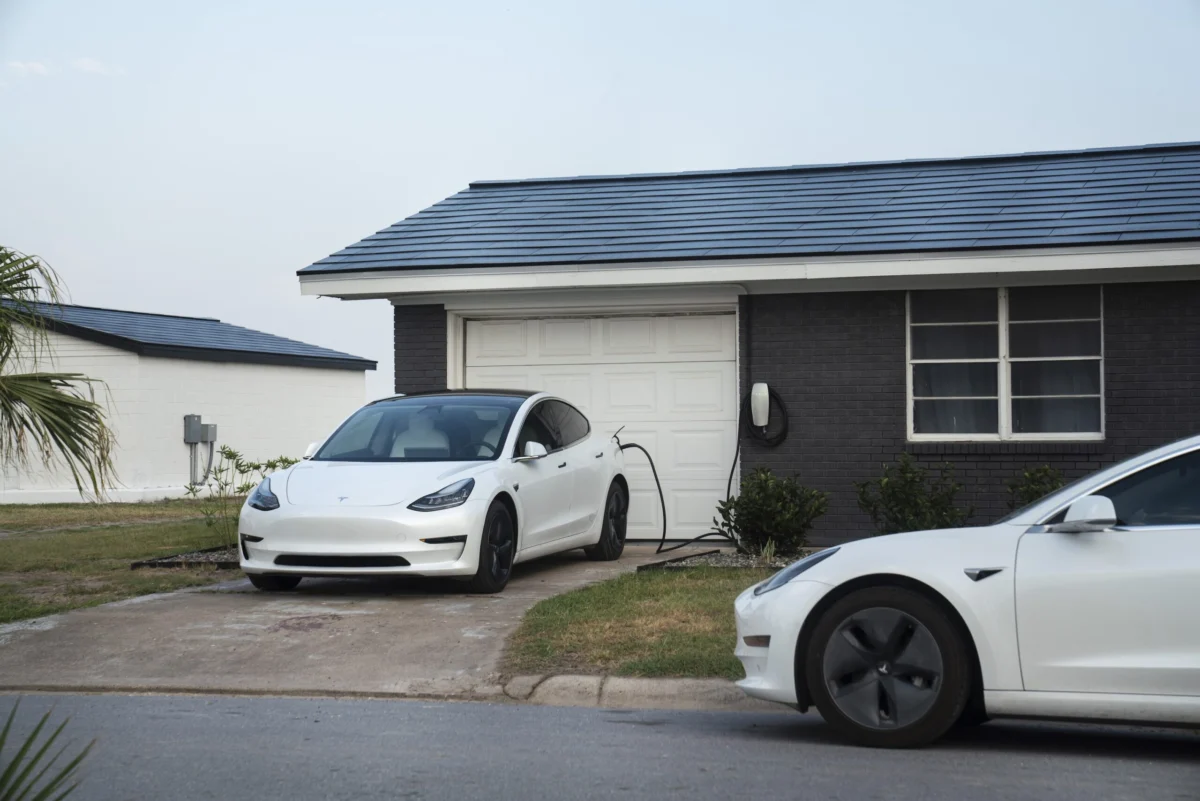
The era of Tesla’s highly publicized solar roof, a product once envisioned as the cornerstone of a sustainable residential revolution, has come to a quiet conclusion. Nearly a decade after its dramatic unveiling on a Hollywood set, Tesla has effectively removed the solar roof from its commercial lineup, scrubbing public-facing mentions of the product from its official website. Technical analysis of the company’s digital infrastructure confirms that the dedicated solar roof URL now redirects to a generic solar landing page, while auxiliary support documents and installation guides have similarly been redirected or archived. This move, first identified by industry observers and corroborated by field reports from installers, signals the end of one of Elon Musk’s most ambitious—and troubled—clean energy initiatives.
The disappearance of the solar roof marks a significant pivot for Tesla’s energy division. While the company continues to offer traditional solar panels and its popular Powerwall battery storage systems, the integrated "shingle" approach appears to have succumbed to the pressures of high manufacturing costs, installation complexities, and persistent technical failures. Although Tesla has not issued a formal press release regarding the discontinuation, the total removal of the product from its consumer interface serves as a definitive statement on the product’s viability within the company’s current portfolio.
The Vision of 2016: A New Aesthetic for Renewable Energy
To understand the weight of this discontinuation, one must look back to October 2016. In a carefully choreographed event held on the former set of Desperate Housewives at Universal Studios, Elon Musk introduced the world to the Tesla Solar Roof. The pitch was seductive: instead of mounting bulky, industrial-looking silicon panels on top of an existing roof, the roof itself would be the power plant.
Tesla showcased four distinct styles—textured glass, slate, Tuscan terracotta, and smooth glass. From the street, the tiles appeared identical to high-end roofing materials. From directly above, however, they were transparent to the sun, allowing embedded solar cells to capture energy. Musk framed the product as a "no-compromise" solution for homeowners who wanted renewable energy without sacrificing the aesthetic appeal of their luxury homes.
This launch occurred just weeks before Tesla’s controversial $2.6 billion acquisition of SolarCity, a solar installation company founded by Musk’s cousins. Critics at the time argued the acquisition was a bailout of a struggling company, but Musk pointed to the solar roof as the "missing piece" of the Tesla ecosystem, which would eventually link electric vehicles, home storage, and power generation into a single, seamless brand.
A History of Missed Targets and Production Bottlenecks
Despite the initial excitement, the transition from prototype to mass production was fraught with delays. Tesla originally aimed to begin high-volume installations by 2017, but the product remained in a "design hell" for years. It wasn’t until late 2019 that Tesla launched "Version 3" of the tiles, which the company claimed were cheaper, faster to install, and more durable.
At that time, Musk set an ambitious goal of 1,000 installations per week. He argued that the solar roof would eventually cost less than a traditional roof plus the cost of electricity. However, internal data and industry tracking told a different story. By mid-2022, reports indicated that Tesla was achieving only 20 to 40 installations per week—a mere 2% to 4% of its stated goal.
The production difficulties were rooted in the bespoke nature of the product. While traditional solar panels benefit from decades of global standardization, Tesla’s solar tiles required unique manufacturing equipment and specialized supply chains. Each roof was essentially a custom engineering project, requiring precise measurements and a complex array of active (solar-producing) and inactive (matching glass) tiles to fit the specific geometry of a home’s roofline.
The Economic Reality: The $200,000 Roof
The primary deterrent for most consumers was the prohibitive cost. While Tesla marketed the roof as a premium product, the final quotes often exceeded even the most liberal estimates. Early adopters reported receiving initial quotes in the $35,000 to $50,000 range, only to have Tesla retroactively increase those prices by 50% to 100% after contracts were signed, citing "roof complexity."
In some extreme cases, homeowners documented quotes as high as $200,000 for large, complex installations. Even when factoring in federal tax credits and long-term energy savings, the return on investment (ROI) for a Tesla Solar Roof often stretched into decades, far exceeding the 7-to-10-year ROI typical of standard solar panel systems.
Furthermore, the "soft costs" associated with the solar roof were staggering. Because the product replaced the entire roof, the installation required specialized crews trained in both roofing and electrical work. The labor-intensive process of wiring hundreds of individual tiles together created more points of failure and required significantly more time on-site than a standard panel installation, which typically takes one to two days.
Technical Failures and the Laws of Physics
Beyond economics, the solar roof faced significant technical hurdles related to thermal management and durability. One of the fundamental challenges of solar technology is heat; solar cells become less efficient as they get hotter, typically losing about 0.5% of their efficiency for every degree Celsius increase in temperature.
Standard solar panels are mounted on racks that leave a gap of several inches between the panel and the roof, allowing for natural convection and airflow to cool the cells. Tesla’s solar tiles, by design, were integrated directly into the roof structure. While Tesla attempted to engineer airflow gaps into the tile design, reports from the field suggested these were insufficient. Homeowners reported significant underproduction, with some systems generating 20% less electricity than promised, likely due to thermal throttling.
More alarming were reports of physical degradation. In various consumer forums and technical reviews, users shared images of non-solar trim pieces warping under intense sun exposure. There were even documented instances of the specialized underlayment—the waterproof layer beneath the tiles—melting or failing due to the high temperatures trapped by the glass tiles. These issues not only reduced energy output but also compromised the primary function of the product: protecting the home from the elements.
The Current Market and Inventory Offloading
The discontinuation does not mean every solar roof project has stopped immediately. Two independent solar installers confirmed to TechCrunch that they still have access to some inventory, though they noted that availability is strictly limited to existing stock. This suggests that Tesla is currently in an "offloading" phase, fulfilling remaining obligations and clearing out warehouses of manufactured tiles without plans to replenish the supply.
This strategy mirrors Tesla’s previous pivots in its energy division. When the company realized it could not scale its internal installation teams effectively, it began leaning more heavily on "Tesla Certified Installers"—third-party roofing companies that took on the liability and labor of the installs. Now, it appears even that model has been deemed unsustainable for the solar roof product line.
A Comparative Look: Why Competitors Persist
While Tesla has stepped back, the concept of Building-Integrated Photovoltaics (BIPV) is not entirely dead. Companies like GAF Energy and Merlin Solar are continuing to pursue the market, though with different strategies. GAF Energy, for instance, launched the Timberline Solar shingle, which can be nailed directly to a roof by traditional roofers using standard tools. By prioritizing ease of installation over the high-gloss aesthetic of Tesla’s glass tiles, GAF has managed to gain more traction in the mass market.
The failure of Tesla’s specific iteration suggests that the "luxury aesthetic" may not be the primary driver for solar adoption. Most consumers prioritize reliability, efficiency, and cost-effectiveness over a roof that looks like slate but costs five times as much.
Chronology of the Tesla Solar Roof
- October 2016: Elon Musk unveils the Solar Roof at Universal Studios.
- November 2016: Tesla shareholders approve the acquisition of SolarCity.
- May 2017: Tesla begins taking $1,000 deposits for the Solar Roof.
- 2018: Production begins at Gigafactory 2 in Buffalo, New York, but at a very slow pace.
- October 2019: Tesla launches "Solar Glass Roof V3," aiming for 1,000 installs per week.
- April 2021: Tesla significantly raises prices for existing contract holders, leading to multiple lawsuits.
- July 2022: Internal data reveals installations are averaging fewer than 25 per week.
- August 2024: Tesla removes all Solar Roof branding and URLs from its website, redirecting users to traditional solar panel options.
Broader Implications for the Green Energy Sector
The retreat of Tesla from the integrated solar market is a sobering moment for the clean energy industry. It serves as a case study in the difficulty of disrupting established construction industries. While Tesla successfully disrupted the automotive industry by building a superior product at a premium price, the roofing industry operates under different constraints—namely, the harsh realities of local building codes, weather extremes, and a labor force that is highly resistant to overly complex installation methods.
For Tesla, the move is likely a pragmatic financial decision. The company’s energy division has seen record growth in its "Megapack" utility-scale storage business and its residential Powerwall business. By cutting the underperforming and resource-heavy solar roof, Tesla can refocus its engineering talent on battery technology and AI-driven grid management, areas where it maintains a clearer competitive advantage.
Ultimately, the story of the Tesla Solar Roof is one of a vision that outpaced the available technology and economic reality. While it successfully pushed the conversation about aesthetic renewable energy into the mainstream, it remains to be seen if any other company can solve the "physics and price" puzzle that eventually forced Tesla to pull the plug. For now, the future of residential solar seems firmly rooted in the traditional, standardized panels that Tesla once sought to replace.
