

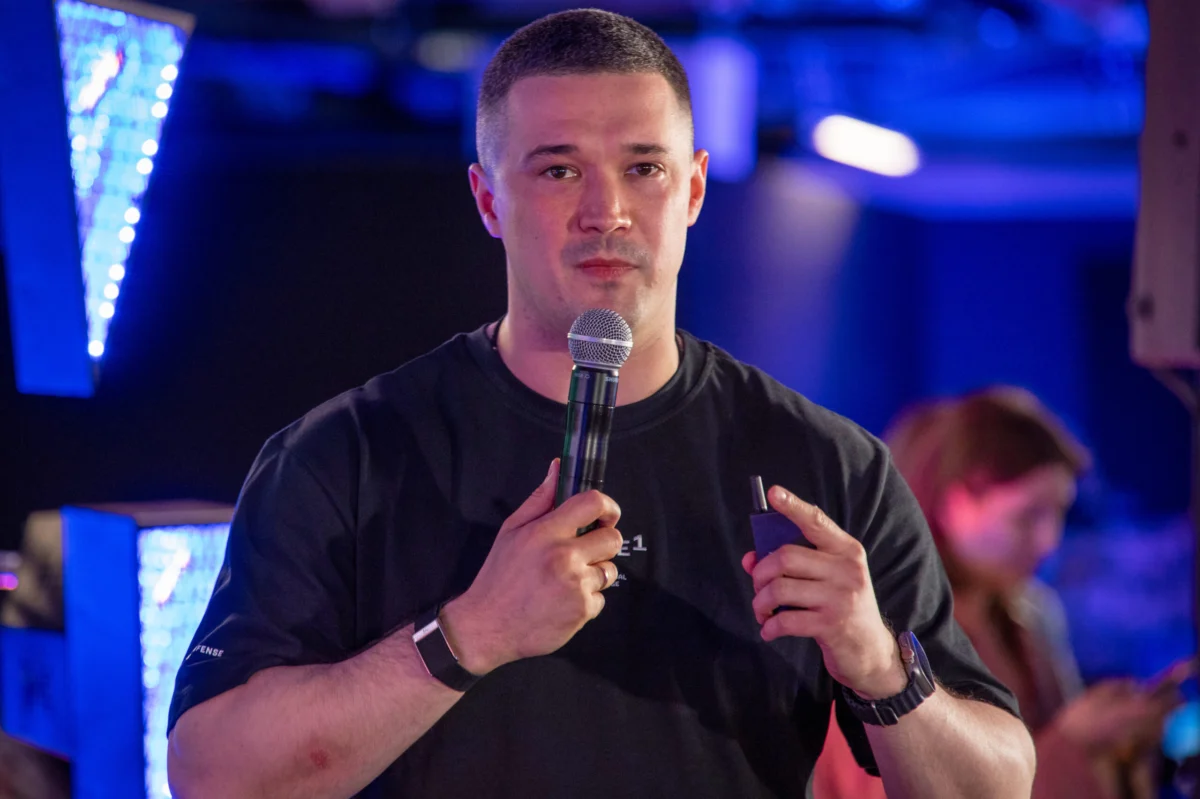
Mykhailo Fedorov, Ukraine’s former Defence Minister, has issued a groundbreaking call for the nation to hold wartime elections, a demand that marks the most significant internal political challenge to President Volodymyr Zelenskyy’s leadership since Russia launched its full-scale invasion in February 2022. In a detailed address disseminated via YouTube on Tuesday, Fedorov articulated his conviction that Ukrainian democracy "cannot be held hostage by Russia," urging for the establishment of "a legal, safe and realistic mechanism" to fully reinstate democratic processes, even amidst the protracted conflict. This declaration directly confronts Ukrainian law, which currently prohibits elections during a period of martial law, and represents the first public divergence on this critical issue by a prominent political figure since the commencement of hostilities.
The Demand for Democratic Revival Amidst War
Fedorov, 35, emphasized the urgent need for Ukraine to reaffirm its commitment to democratic principles, even as the nation grapples with existential threats. His statement underscores a growing sentiment that while national unity is paramount, the long-term health of Ukraine’s democratic institutions necessitates a pathway for regular electoral cycles. He did not explicitly detail the "legal, safe and realistic mechanism" but implied a constitutional framework would be required to navigate the complexities of conducting nationwide polls under martial law, including issues of voter safety, participation of internally displaced persons and refugees, and the integrity of the electoral process in occupied territories. The former minister’s address highlighted concerns over a perceived "systemic crisis of governance," characterized by institutions "scared of change" and pervasive corruption, factors he argued were actively undermining Ukraine’s war effort. While refraining from naming President Zelenskyy directly, Fedorov’s critique resonated with broader public anxieties regarding transparency and accountability within the government.
Legal and Constitutional Framework: The Martial Law Dilemma
Ukraine’s Constitution, specifically Article 83 and 108, along with the Law on the Legal Regime of Martial Law, explicitly suspends elections during periods of martial law. This legal provision was invoked immediately following Russia’s full-scale invasion in February 2022, leading to the postponement of all scheduled elections, including parliamentary elections initially due in October 2023 and the presidential election that would have taken place in March 2024, with President Zelenskyy’s term officially expiring in May 2024. The rationale behind this prohibition is rooted in the practical and security challenges of holding free and fair elections during active conflict, including the inability to ensure the safety of voters and electoral staff, the displacement of millions of citizens, and the presence of Russian occupation in significant parts of the country.
Fedorov’s challenge, therefore, is not merely a political statement but a direct confrontation with the established legal order. Any move to hold elections would necessitate significant constitutional amendments or legislative changes, requiring broad consensus across the political spectrum and potentially a referendum, all while the nation is at war. Legal scholars and political analysts have long debated the theoretical possibility of such a move, weighing the democratic imperative against the practical impossibilities and security risks. Proponents of holding elections argue that prolonged postponement risks undermining democratic legitimacy and consolidating power, while opponents warn of the logistical nightmare, potential for Russian interference, and diversion of resources from the war effort.
A Politician’s Ascent and Abrupt Dismissal: The Fedorov Backstory
Mykhailo Fedorov’s emergence as a vocal proponent of wartime elections is inextricably linked to his recent and dramatic exit from President Zelenskyy’s administration. Appointed Defence Minister in January 2026, Fedorov quickly cultivated a reputation as a dynamic reformer and a technocrat committed to rooting out corruption and modernizing the military establishment. His tenure, though brief, was marked by efforts to introduce greater transparency in procurement, streamline administrative processes, and challenge entrenched bureaucratic norms within the defence sector. This proactive approach, while lauded by many segments of the public and international observers, reportedly created friction within the established military leadership.
Fedorov’s dismissal in July 2026, a mere six months into his appointment, sent shockwaves through Ukraine’s political landscape and ignited widespread public outcry. The decision sparked spontaneous protests across the country, with thousands gathering in Kyiv and other major cities to demand his reinstatement. These demonstrations, which have continued for over a month, albeit with fluctuating momentum, underscore Fedorov’s considerable public appeal and the resonance of his reformist agenda.
Sources close to the administration and defence circles suggested that Fedorov’s reformist zeal led to significant tensions with then-Commander-in-Chief of the Armed Forces, Oleksandr Syrskii. Fedorov’s public challenges to the military establishment, particularly concerning procurement irregularities and the pace of modernization, were seen as directly conflicting with Syrskii’s more traditionalist approach. The internal discord between these two key figures in Ukraine’s wartime leadership was reportedly a major factor in Fedorov’s abrupt removal. Ironically, Syrskii himself was replaced just weeks later, following sustained public pressure and weeks of demonstrations that, in part, called for Fedorov’s reinstatement. This sequence of events further fueled speculation about the internal power dynamics within Zelenskyy’s government and the president’s handling of dissenting voices.
Fedorov’s profile as a reformer and his sudden ousting have led to significant speculation about his potential emergence as a genuine political rival to President Zelenskyy. His refusal to accept other government roles offered to him, including Deputy Prime Minister for Military Innovation, and his insistence on returning only as Defence Minister, further solidify his image as an independent political force rather than a mere functionary.

President Zelenskyy’s Response and the Path Forward for the Defence Ministry
President Zelenskyy’s administration has yet to issue an official statement regarding Fedorov’s latest remarks, maintaining silence on what is undoubtedly a politically sensitive issue. However, the President’s actions in the wake of Fedorov’s dismissal indicate a clear intent to move forward with his own appointments. Following Fedorov’s removal, Zelenskyy appointed Yevhenii Khmara, a career intelligence official with a notably low public profile, as acting Defence Minister. Just hours before Fedorov’s public address, President Zelenskyy confirmed his intention to seek parliamentary confirmation for Khmara’s permanent appointment, signalling a desire to stabilize the leadership of the critical Defence Ministry.
The absence of an immediate official response from the President’s office could be interpreted in several ways: a strategic decision to avoid dignifying Fedorov’s challenge with a direct reply, a measured approach to assess public reaction, or an indication of the internal deliberation required to address such a significant political development. However, the timing of Zelenskyy’s move to confirm Khmara suggests an attempt to assert executive authority and maintain continuity in defence leadership amidst internal political pressures.
Public Sentiment and the Sustained Protests
The protests sparked by Fedorov’s dismissal have been a notable feature of Ukraine’s internal political landscape in recent months. While initial demonstrations in July 2026 drew thousands of participants across major cities, calling for Fedorov’s reinstatement and a broader reform of the defence sector, the movement has evolved. Though the scale of protests has somewhat diminished from its peak, regular gatherings continue in Kyiv, consistently attracting hundreds, if not a couple of thousand, attendees. These sustained demonstrations highlight a segment of the Ukrainian population that remains deeply concerned about issues of governance, corruption, and the perceived lack of accountability within the wartime administration. The protesters’ demands often extend beyond Fedorov’s reinstatement to encompass broader calls for transparency, democratic renewal, and an end to perceived political infighting during a critical period for the nation.
Broader Implications: Democratic Health and International Scrutiny
Mykhailo Fedorov’s call for wartime elections introduces a complex dynamic into Ukraine’s already challenging political environment. The balancing act between national security and democratic principles is a dilemma faced by many nations during conflict, but for Ukraine, it carries profound implications.
Firstly, it risks fracturing the national unity that has been a cornerstone of Ukraine’s resilience against Russian aggression. While internal political debate is a healthy aspect of democracy, an open dispute over the timing of elections could be exploited by Russia to sow discord and undermine confidence in Ukraine’s leadership.
Secondly, it raises questions about Ukraine’s long-term democratic trajectory. Western allies, who have provided unprecedented financial and military support, often emphasize the importance of democratic governance, rule of law, and anti-corruption efforts as conditions for continued aid and future integration into European structures. A prolonged suspension of elections, even if legally justified by martial law, could eventually fuel concerns about democratic backsliding, potentially impacting international perceptions and support. Conversely, attempting to hold elections under duress could be seen as reckless, risking legitimacy if not conducted freely and fairly.
Thirdly, the debate over elections intertwines with broader concerns about corruption, which Fedorov explicitly mentioned. Corruption has been a persistent challenge for Ukraine and a significant point of scrutiny for its international partners, particularly in the context of massive aid flows. Fedorov’s framing of a "systemic crisis of governance" and "institutions scared of change" resonates with these concerns, adding pressure on the Zelenskyy administration to demonstrate tangible progress on reforms and accountability, even during wartime.
The current situation presents a multifaceted challenge for President Zelenskyy. He must navigate the immediate demands of the war, maintain military cohesion, and secure international support, all while addressing growing internal pressures for democratic accountability and reform. The call for wartime elections, therefore, is not merely about a vote; it is a profound test of Ukraine’s democratic resilience and its ability to uphold its values even under the most extreme circumstances. The coming weeks will likely determine how the Zelenskyy administration chooses to respond to this unprecedented internal challenge and what trajectory Ukraine’s wartime democracy will take.
