

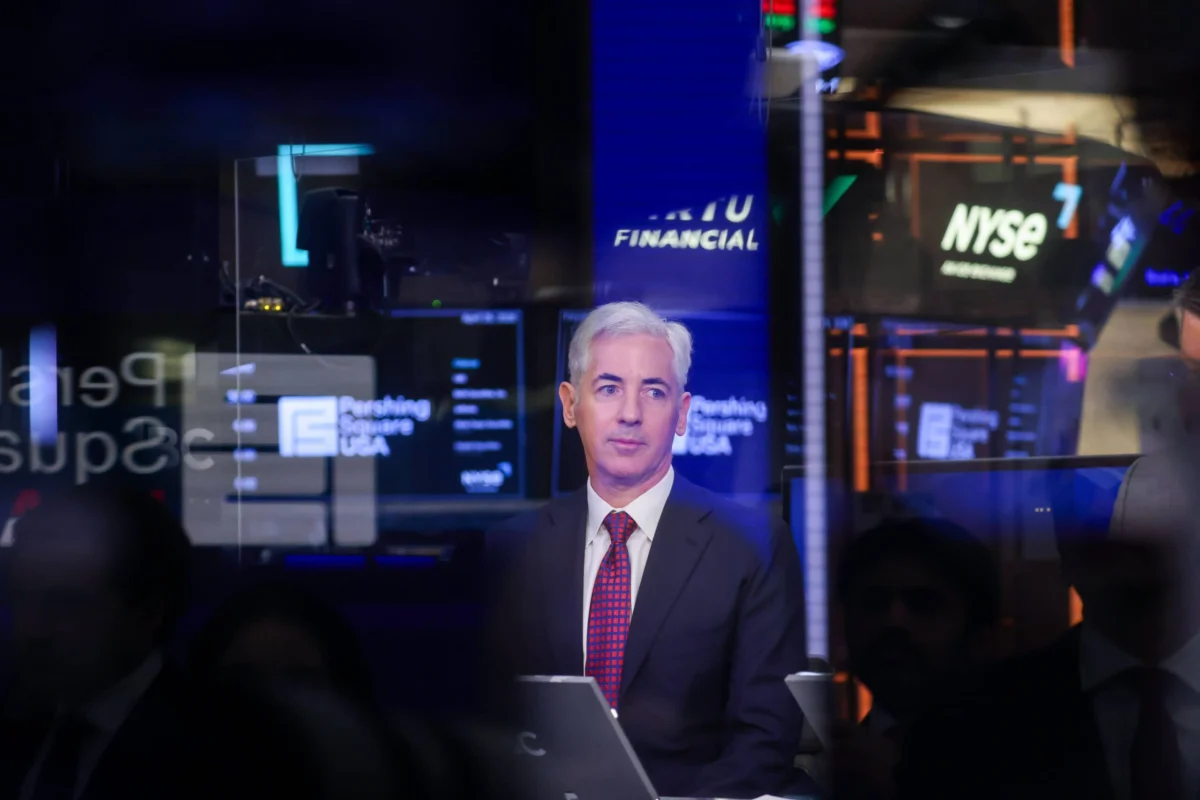
One of the most persistent laments within the investment community, particularly among everyday individuals, revolves around the missed opportunities to invest in groundbreaking companies like SpaceX during their nascent, high-growth private stages. This sentiment, often articulated as, "I knew SpaceX was going to be huge, but I never had the chance to invest before its IPO," highlights a significant chasm between institutional and retail investors. Billionaire hedge fund manager Bill Ackman, the founder of Pershing Square, has evidently taken note of this widespread frustration and is now moving to address it with a novel investment vehicle. Through the proposed Pershing Square Ventures Ltd., Ackman aims to extend the privilege of early-stage private market investment, traditionally reserved for accredited investors and large institutions, to a broader public audience.
The Genesis of a New Venture: Bridging the Private-Public Divide
The initiative was formally unveiled during Pershing Square’s earnings call on August 13, as reported by Investing.com, and further detailed in a shareholder letter penned by Ackman and Chief Investment Officer Ryan Israel. During the call, Ackman articulated the core problem his new fund seeks to solve: "One of the biggest complaints of the average investor today is that while SpaceX is an amazing company and still has a great trajectory, their first chance to invest in SpaceX was at a $1.5 trillion valuation." He contrasted this with his own firm’s experience, stating, "I got to invest in SpaceX and X and xAI at much lower valuations. We want to give that opportunity to the average person on the street." This direct acknowledgment underscores a strategic shift by Pershing Square to democratize access to high-potential private companies, offering a pathway for retail investors to participate in value creation typically captured before a company goes public.
Pershing Square Ventures Ltd. is envisioned as an evergreen permanent capital vehicle, targeting a launch by the fall or end of 2026, contingent upon a planned SEC filing. This structure is a critical departure from traditional closed-end private equity funds or even Ackman’s previous Special Purpose Acquisition Company (SPAC) ventures, which often carried specific timelines and redemption mechanisms. The evergreen nature implies a fund without a fixed liquidation date, allowing it to hold investments for extended periods, from pre-IPO through to their public listing and beyond, thus maximizing long-term value capture.
Understanding the Mechanics: What Pershing Square Ventures Offers
The structural intricacies of Pershing Square Ventures are paramount to appreciating its potential impact and differentiation. Unlike conventional private equity or venture capital funds that typically have a fixed term (e.g., 10-12 years) after which assets are liquidated and proceeds distributed, an evergreen fund maintains its capital base indefinitely. This characteristic provides significant flexibility, enabling the fund to support portfolio companies through various stages of growth without the pressure of forced sales driven by fund expiry dates. For investors, this means alignment with a long-term investment horizon, theoretically allowing them to benefit from sustained growth trajectories rather than being constrained by the often-volatile timing of an IPO.
A significant distinguishing feature highlighted in the shareholder letter is the fund’s initial seeding strategy. Pershing Square Ventures will commence operations with a portfolio comprising private investments already held on Pershing Square’s balance sheet, supplemented by select private holdings from Ackman’s personal family office. This approach directly addresses a major criticism leveled against blank-check companies (SPACs), which often launch without specific targets, leaving investors to speculate on future acquisitions. By contrast, investors in Pershing Square Ventures will have clear visibility into a portion of their initial holdings from day one, fostering greater transparency and reducing the "blind pool" risk inherent in many early-stage investment vehicles. This transparency is crucial for building trust with retail investors, who historically have limited avenues for comprehensive due diligence in private markets.
The target investment universe for the new fund is broad, spanning a wide valuation range from companies valued in the hundreds of millions to "decacorns" exceeding $10 billion in valuation, according to Ackman’s comments. This expansive scope suggests a strategy focused on identifying disruptive companies across various sectors, not solely limited to late-stage "unicorns" but also potentially engaging with earlier-stage, high-growth enterprises. Initially, the fund is expected to start small, meaning its impact on Pershing Square’s overall assets under management will be modest at launch. However, its long-term potential for growth and expansion, particularly if successful in attracting widespread retail investor interest, could be substantial.
The Investment Gap: Why Retail Investors are Left Out
The frustration expressed by average investors about missing out on companies like SpaceX is rooted in the structural realities of private capital markets. Historically, early-stage and high-growth private companies are financed by venture capitalists, private equity firms, and wealthy individuals who meet "accredited investor" criteria (generally defined by income or net worth thresholds). These private funding rounds are not accessible to the general public for several reasons:
- Regulatory Restrictions: Securities laws, such as the U.S. Securities Act of 1933, are designed to protect less sophisticated investors from the higher risks associated with private placements. These regulations restrict who can invest in private companies, typically limiting participation to accredited investors deemed capable of understanding and bearing such risks.
- Information Asymmetry: Private companies are not subject to the same rigorous disclosure requirements as public companies. Information about their financials, operations, and future prospects is often proprietary and shared only with existing investors or potential strategic partners.
- Illiquidity: Investments in private companies are inherently illiquid. There is no public exchange where shares can be easily bought or sold, making it difficult for investors to exit their positions or value their holdings accurately.
- High Minimum Investments: Private funds and direct private investments often require substantial minimum capital commitments, typically in the hundreds of thousands or millions of dollars, effectively precluding most retail investors.
Over the past two decades, there has been a significant trend of companies staying private for much longer periods. In the late 1990s, the average age of a company at IPO was around 4-5 years. Today, it’s often 10-12 years or more. This extended private phase means that a substantial portion of a company’s growth and value creation occurs before it becomes accessible to public market investors. For instance, companies like Uber, Airbnb, and SpaceX accumulated billions in valuation and built significant market share while still private. When they eventually go public, much of the exponential early growth has already been captured by pre-IPO investors, leaving later-stage public investors to participate in a more mature, albeit still potentially growing, phase. This trend has fueled the perception among retail investors that they are consistently "missing out" on the most lucrative early investment opportunities.
A Broader Trend: Democratizing Private Markets
Bill Ackman’s move with Pershing Square Ventures is not an isolated phenomenon but rather reflects a broader industry trend toward democratizing access to private markets. Several platforms and funds have emerged in recent years aiming to provide retail investors, including non-accredited individuals, with avenues to invest in alternative assets or private companies, albeit often with different structures and risk profiles. However, a fund managed by a prominent hedge fund manager like Ackman, with a track record of significant public market investments and an established institutional infrastructure, represents a new level of entry into this space.
The timing of Ackman’s initiative is particularly astute. The pre-IPO universe currently includes some of the most closely watched private companies in market history, spanning disruptive technologies, artificial intelligence, biotechnology, and sustainable energy. The prolonged period of high interest rates has somewhat cooled the IPO market, meaning many promising companies are choosing to remain private longer, creating a fertile ground for funds capable of providing patient capital.
Regulatory Landscape and Future Outlook
The planned SEC filing for Pershing Square Ventures Ltd. will be a crucial step. The U.S. Securities and Exchange Commission (SEC) plays a vital role in regulating investment vehicles to protect investors. The specific structure and disclosures required for a fund designed to appeal to a wider range of investors, potentially including non-accredited individuals, will be subject to careful regulatory scrutiny. While the original article does not specify if the fund will be open to non-accredited investors, Ackman’s stated goal of reaching "the average person on the street" suggests a broader accessibility than traditional private funds. This could imply a structure akin to a publicly traded closed-end fund or an interval fund, which can offer greater liquidity than direct private investments while still allowing for investment in private securities, but subject to specific regulatory frameworks.
The success of Pershing Square Ventures will depend on several factors:
- Investment Performance: Ultimately, the fund’s ability to identify and invest in successful private companies will dictate its appeal.
- Liquidity Mechanism: While evergreen funds offer permanent capital, the question of how individual investors can redeem their shares (if at all, or with what frequency and potential penalties) will be critical for retail participation.
- Fees and Structure: The fee structure (management fees, performance fees) will need to be competitive and transparent, particularly for retail investors.
- Marketing and Education: Effectively communicating the unique value proposition, as well as the inherent risks of private market investing, to a broader retail audience will be essential.
Implications for the Investment Landscape
Ackman’s foray into this space could have several significant implications:
- Increased Competition: If successful, it could spur other large asset managers and hedge funds to develop similar vehicles, further democratizing access to private markets and intensifying competition for promising private companies.
- Shifting Capital Flows: A significant influx of retail capital into private markets could alter funding dynamics for startups and growth companies, potentially providing a new, substantial source of capital beyond traditional venture capital.
- Investor Education: This initiative could inadvertently accelerate the need for enhanced financial literacy among retail investors, particularly concerning the complexities, risks, and illiquidity associated with private investments.
- Regulatory Evolution: The SEC and other regulatory bodies may face increasing pressure to review and potentially adapt existing regulations to accommodate new structures that aim to broaden access to private markets responsibly.
While the opportunity to invest in companies like SpaceX at earlier valuations is undoubtedly enticing, it is crucial for potential investors to understand the associated risks. Private investments are generally more volatile, less liquid, and harder to value than public market securities. Even with a seeded portfolio and an experienced manager like Ackman, there is no guarantee of returns, and capital can be at significant risk. The "evergreen" nature also means that investment decisions are long-term, and immediate liquidity might not be available.
Bill Ackman’s Pershing Square Ventures represents a compelling response to a long-standing frustration among retail investors. By leveraging an evergreen fund structure, a seeded portfolio of existing private investments, and the backing of a prominent hedge fund, Ackman aims to carve out a new path for the average investor to participate in the lucrative, yet historically exclusive, world of pre-IPO growth. As the fund moves towards its planned launch in late 2026 and its SEC filing, the financial community will be closely watching whether this initiative can truly bridge the divide between institutional privilege and retail aspiration, reshaping the landscape of private market investing for years to come.
