

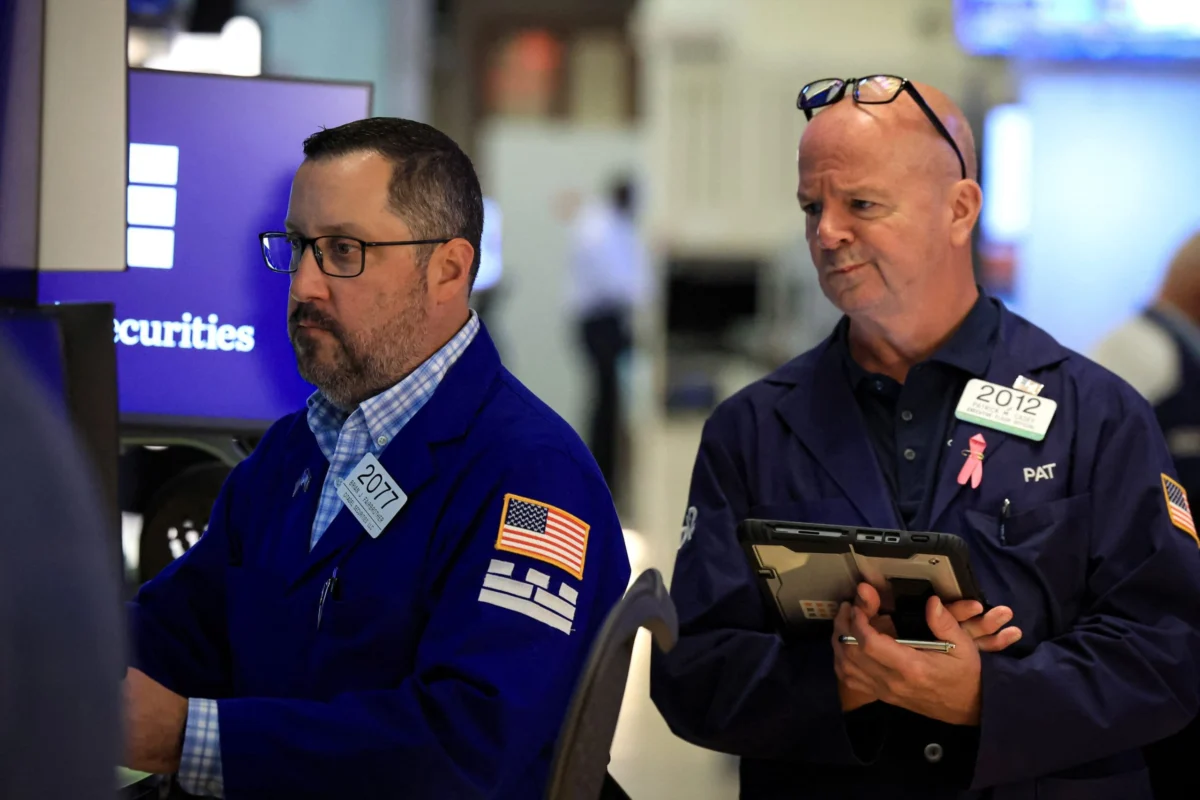
The landscape of global financial journalism has undergone a seismic shift as of 2026, characterized by the consolidation of legacy broadcasting entities under tech-forward parent companies such as Versant Media, LLC. As the financial sector becomes increasingly reliant on high-frequency data and algorithmic interpretation, the role of primary news providers like CNBC has transitioned from mere reporting to providing the essential infrastructure for market participation. This evolution is driven by the demand for instantaneous data, where the traditional "15-minute delay" once standard for retail investors is now being supplanted by "real-time snapshots" that integrate multi-source intelligence from providers like Reuters. This report analyzes the structural changes within the financial media industry, the technological demands of modern market data delivery, and the implications for global economic transparency.
The Consolidation of Financial Media: The Rise of Versant Media
In the mid-2020s, the media industry faced a period of intense fragmentation followed by rapid consolidation. Versant Media, LLC emerged as a dominant force by acquiring a suite of financial news assets and integrating them into a unified data ecosystem. By 2026, the company has successfully positioned itself as a bridge between institutional-grade data and the growing demographic of sophisticated retail investors. The transition of CNBC into the Versant Media portfolio represents a broader trend where content is no longer a standalone product but a component of a larger data-service platform.
The integration of CNBC’s editorial expertise with Versant’s proprietary data-processing algorithms has allowed for a new form of financial reporting. This model prioritizes "snapshot" analytics—brief, data-heavy updates that provide an immediate view of market conditions. According to industry analysts, the valuation of the global financial information market reached an estimated $42 billion in 2025, with a projected compound annual growth rate (CAGR) of 7.4% through 2030. This growth is largely attributed to the democratization of real-time data access, which was previously the exclusive domain of hedge funds and institutional trading desks.
Chronology of the Media Transformation (2022–2026)
The path to the current 2026 media environment was marked by several pivotal moments in technology and corporate restructuring:
- 2022–2023: The AI Integration Phase. Financial newsrooms began implementing large language models (LLMs) to automate the production of routine earnings reports and market summaries. This allowed human journalists to focus on investigative pieces and high-level analysis.
- 2024: The Great Consolidation. Rising operational costs and the need for massive server infrastructure led to a wave of mergers. Versant Media, LLC acquired several mid-tier financial outlets, eventually culminating in the acquisition of major broadcast assets.
- 2025: The Regulatory Shift on Data Latency. Regulatory bodies in both the United States and the European Union introduced new standards for data transparency. These regulations required news outlets to clearly distinguish between "real-time" and "delayed" data to prevent the unintentional misleading of retail traders.
- 2026: The Era of the "Real-Time Snapshot." By the first quarter of 2026, the standard for digital news consumption shifted toward the "snapshot" model, where users receive instantaneous updates synchronized across mobile, desktop, and professional trading terminals.
The Role of Reuters and Third-Party Data Providers
The infrastructure of modern financial news is built upon a complex web of data partnerships. While Versant Media provides the platform and the editorial voice, the underlying figures are often sourced from global wire services like Reuters. This relationship is critical for maintaining the accuracy and neutrality of the information provided. In 2026, the collaboration between media conglomerates and data giants has become more integrated, with API (Application Programming Interface) feeds delivering thousands of data points per second.
Reuters continues to serve as the backbone for international market data, providing the raw numbers that news outlets then contextualize for their specific audiences. The "Market Data Terms of Use and Disclaimers" found on modern platforms are not merely legal boilerplate; they represent the complex licensing agreements that govern how information travels from an exchange floor to a consumer’s screen. These terms have become increasingly stringent as the value of "zero-latency" data has skyrocketed.
Supporting Data: Market Speed and Investor Behavior
The necessity for real-time data is underscored by the increasing speed of market movements. In 2026, high-frequency trading (HFT) accounts for approximately 78% of all equity market volume in the United States. For a retail investor, a 15-minute delay in data can mean the difference between a profitable exit and a significant loss during periods of high volatility.
- Data Latency Statistics: In 2020, the average retail trading app had a latency of 500 milliseconds. By 2026, premium tiers on platforms like CNBC under Versant Media have reduced this to under 50 milliseconds.
- User Engagement: Surveys indicate that 84% of active traders prioritize "data accuracy and speed" over "editorial opinion" when choosing a news source.
- Subscription Models: There has been a 40% increase in "data-only" subscriptions, where users pay for access to the real-time feed without the accompanying video or written content.
Official Responses and Industry Sentiment
Spokespersons for Versant Media have emphasized that their mission is to "provide a transparent window into the global economy." In a recent shareholder meeting, the CEO of Versant Media stated, "Our goal is not just to report the news, but to provide the tools that allow every investor to see the market as it exists in the exact moment, not as it was fifteen minutes ago. The partnership with Reuters ensures that our ‘snapshot’ technology is anchored in the most reliable data available."
Conversely, some market watchdogs have expressed concerns regarding the "gamification" of financial data. Analysts from the Financial Stability Oversight Council (FSOC) have noted that while the democratization of data is positive, the constant stream of real-time "snapshots" may encourage over-trading and increased market volatility among non-professional investors.
Broader Impact and Implications for the Global Economy
The shift toward real-time, consolidated financial media has profound implications for the global economy. First, it has narrowed the information gap between institutional and retail investors. While institutional desks still hold an advantage in terms of raw processing power and proximity to exchange servers, the average investor now has access to the same headline-moving data at nearly the same time.
Second, the centralization of news under entities like Versant Media, LLC creates a "single point of truth" that can be both beneficial and risky. While it ensures a high standard of journalistic integrity and data accuracy, any technical failure or systemic bias within such a large platform could have outsized effects on market sentiment.
Furthermore, the legal landscape regarding data disclaimers has evolved. The "Market Data Terms of Use" are now central to the user experience, as they define the boundaries of liability in an era where an algorithm might make a million-dollar trade based on a single news alert. The distinction between "Global Business News" and "Financial Advice" remains a critical legal line that providers must navigate carefully.
The Future of Market Analysis in 2027 and Beyond
Looking forward, the trend toward more immersive and instantaneous data is expected to continue. Industry insiders predict that by 2027, "predictive snapshots" will become the next frontier. These will use generative AI to not only report what is happening in the market but to simulate potential outcomes of breaking news events in real-time.
As Versant Media, LLC continues to refine its 2026 model, the emphasis will likely shift toward personalization. AI-driven feeds will deliver specific market data tailored to an individual’s portfolio, ensuring that they receive "real-time snapshots" of only the most relevant assets. This level of customization represents the final stage in the evolution of financial media: the transition from a broadcast medium to a personalized intelligence service.
In conclusion, the 2026 financial media landscape, exemplified by the operational structure of CNBC under Versant Media, reflects a world where data is the primary commodity. The integration of real-time snapshots, the reliance on established data providers like Reuters, and the rigorous adherence to data terms of use define the modern information economy. As the speed of global markets continues to accelerate, the media’s role in providing a factual, real-time reflection of those markets remains more critical than ever. The focus remains steadfast on delivering global business and financial news, stock quotes, and analysis with a level of precision that meets the demands of a high-speed, data-driven world.
