

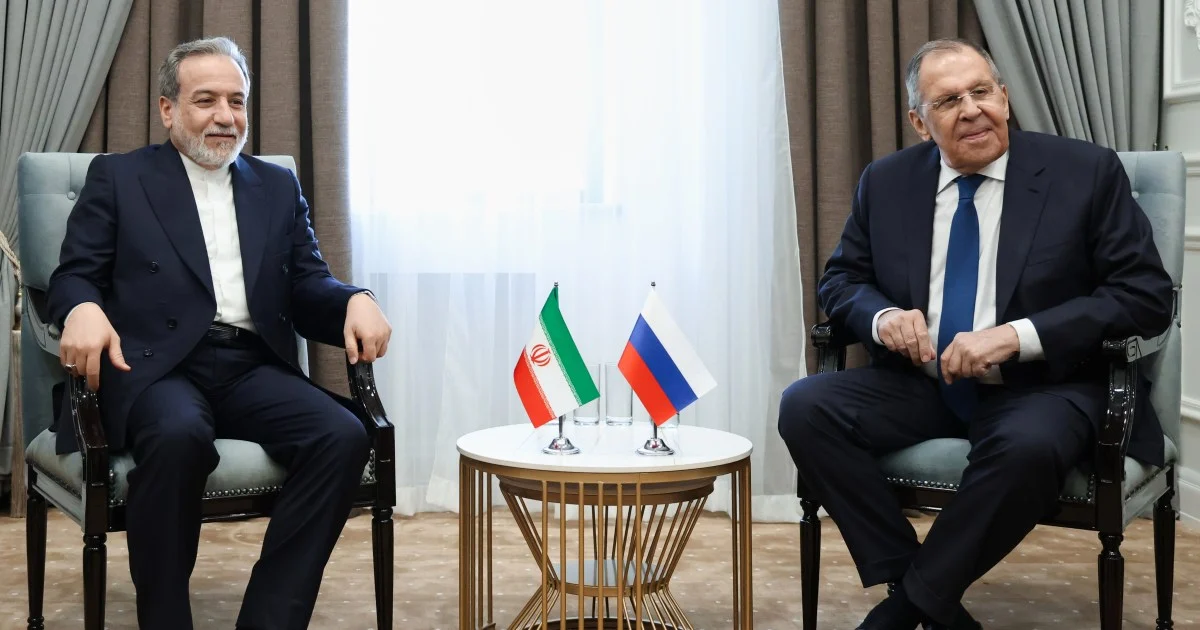
Iran’s Foreign Minister, Abbas Araghchi, has declared that a recent Ukrainian attack on an Iranian commercial vessel in the Caspian Sea, which resulted in one death and several injuries, “cannot go unanswered,” unequivocally labeling the incident a violation of the United Nations Charter. This forceful condemnation signals a significant escalation in the complex geopolitical landscape, drawing in not only Ukraine and Iran but also implicating Russia and, according to Tehran, even Israel. The strike, which occurred on Saturday, has ignited a diplomatic firestorm, with Iran summoning Ukraine’s charge d’affaires in Tehran to protest what it described as a “hostile and criminal act.”
Escalating Tensions in the Caspian: Iran’s Vehement Condemnation
The attack, confirmed by Iran’s Ministry of Foreign Affairs, caused the commercial vessel to "explode, killing one sailor and injuring several others." The precise nature of the vessel, beyond being described as "commercial," has not been fully detailed by Iranian authorities, though its journey began from Russia’s Astrakhan region, a key port on the Caspian Sea. This incident marks a rare direct military engagement involving a non-littoral state in the strategically vital inland sea, raising immediate concerns about regional stability and maritime security.
Foreign Minister Araghchi, in a social media post on Sunday, not only condemned the strike but also accused Israel of orchestrating the attack in an alleged attempt to “drag Europe into its war.” This accusation adds another layer of complexity to an already volatile situation, linking the incident directly to the broader shadow conflict between Iran and Israel. Araghchi stated that he conveyed these concerns in calls with European Union foreign policy chief Kaja Kallas and Russian Foreign Minister Sergey Lavrov, underscoring Iran’s efforts to rally international diplomatic support for its position and to highlight the perceived gravity of the attack.
Further emphasizing Iran’s stern stance, a senior Iranian lawmaker, Ebrahim Azizi, who heads parliament’s National Security and Foreign Policy Commission, issued a stark warning to Ukraine. In a post on X (formerly Twitter) early on Monday, Azizi asserted, "Any attack on Iran always comes with a cost, and that remains true today; the US and Israel are well aware of this." He added, with a clear threat, "Ukraine, too, may soon come to understand that Iran does not let actions go unanswered," characterizing the strike as "miscalculated." These statements from both the diplomatic and parliamentary echelons of Iran underscore a unified and uncompromising resolve to respond to what they view as an act of aggression.
Ukraine’s Justification and Counter-Accusations
In stark contrast to Iran’s narrative, Ukrainian President Volodymyr Zelenskyy, also on X, claimed that Ukraine had achieved "very strong results" with long-range strikes in the Caspian Sea. While not explicitly naming the Iranian vessel, Zelenskyy’s statement referred to strikes against "vessels used in military cargo shipments involving Iran, as well as a warship." This suggests Ukraine’s intent was not to target a purely civilian commercial ship but rather assets perceived to be involved in military logistics that support Russia’s war effort.
Kyiv has consistently denied targeting purely commercial vessels and has maintained that any strikes are aimed at legitimate military targets or assets facilitating military operations. The Ukrainian Foreign Ministry, in response to Iran’s accusations, stated that Ukraine had targeted a Russian warship and vessels used for transporting Iranian-linked military cargo in the Caspian Sea. This implies a belief within Kyiv that the Iranian vessel was not merely engaged in civilian trade but rather played a role in the ongoing conflict between Russia and Ukraine, despite Iran’s steadfast denial that it "has never intervened in the conflict between Russia and Ukraine."
Furthermore, Zelenskyy escalated his accusations against Russia, claiming Moscow was supplying military support to Iran. He cited, "Since the beginning of July, we have recorded active Russian satellite surveillance of the Gulf states and US military facilities located there. These images subsequently appear in Iran." This claim, if substantiated, would indicate a deeper level of intelligence sharing and military cooperation between Russia and Iran, providing a potential rationale for Ukraine’s actions against Iranian-linked vessels. It also highlights the intricate web of alliances and antagonisms that define the current global security landscape, where the war in Ukraine has far-reaching consequences.
The Broader Geopolitical Chessboard: Iran, Russia, and Ukraine
The incident in the Caspian Sea is not an isolated event but rather a flashpoint in a prolonged period of deteriorating relations between Iran and Ukraine, set against the backdrop of Russia’s full-scale invasion of Ukraine in February 2022.
Iran’s Alleged Role in the Ukraine Conflict
Since the onset of the war, Kyiv has repeatedly accused Tehran of providing substantial military assistance to Moscow, primarily in the form of thousands of Shahed-136 "kamikaze" drones. These unmanned aerial vehicles (UAVs), often rebranded by Russia as Geran-2, have been extensively used by Russian forces to target Ukrainian cities, critical infrastructure, and military installations, causing significant damage and civilian casualties. Ukraine and its Western allies have presented considerable evidence, including recovered drone wreckage with Iranian markings, to support these claims. In response, numerous international sanctions have been imposed on Iranian entities and individuals linked to the drone production and transfer. While Iran has consistently denied direct military aid to Russia in the Ukraine conflict, its denials have been met with skepticism by Kyiv and Western capitals.
Deepening Iran-Russia Ties
The war in Ukraine has significantly strengthened the strategic partnership between Iran and Russia. Both nations are subject to extensive Western sanctions and share a common interest in challenging the U.S.-led international order. This alignment has fostered deeper military-technical cooperation, economic ties, and diplomatic coordination. Russia, in turn, has reportedly provided Iran with advanced military equipment and technology, potentially including fighter jets and air defense systems, further solidifying their axis. Russian Foreign Minister Sergey Lavrov, in a statement posted on the Russian Foreign Ministry’s website, offered condolences over the sailor’s death, and highlighted Araghchi’s gratitude to Russian authorities for assisting the crew. Lavrov stressed the need to “put an end to such adventures by the Kyiv regime,” reinforcing Moscow’s alignment with Tehran’s condemnation of the strike.
Ukraine’s Stance on Middle East Security
Beyond the direct conflict, Ukraine has also sought to position itself as a defender of international norms against alleged Iranian aggression in other regions. Kyiv has expressed solidarity with countries in the Middle East that have been targeted by Tehran, particularly following the recent escalation of tensions between the U.S. and Israel with Iran. Notably, the original article mentions that Ukraine has "sending Ukrainian military personnel to Gulf states to help intercept Shahed drones." This claim, if verified, would represent a remarkable extension of Ukraine’s security interests and capabilities into a distant theatre, aligning itself with Gulf states potentially threatened by Iranian drone technology. It underscores Ukraine’s attempt to highlight Iran’s global proliferation of drone technology as a threat beyond the immediate Ukrainian conflict.
The Strategic Significance of the Caspian Sea
The Caspian Sea, the world’s largest inland body of water, holds immense geopolitical and economic significance. Bordered by five nations—Iran, Russia, Azerbaijan, Kazakhstan, and Turkmenistan—it is a critical region for energy resources (oil and natural gas) and serves as a vital transit corridor connecting Central Asia to Europe and the Middle East.
Historically, the legal status of the Caspian Sea has been a subject of contention among its littoral states, with agreements finally reached in recent years aiming to clarify navigation, resource extraction, and security protocols. Despite these agreements, the Caspian remains a sensitive area, with each bordering nation maintaining naval assets to protect its interests. Direct military engagement involving non-littoral states or targeting of commercial vessels has been exceedingly rare, making Saturday’s incident particularly alarming. It threatens to destabilize a region that is crucial for energy supply chains and trade routes, potentially impacting the economies of all five Caspian nations. The security implications of such a strike extend beyond immediate casualties, raising questions about the safety of maritime traffic and the potential for a broader militarization of the sea.
A Chronology of Escalation and Diplomatic Maneuvers
The current incident is the culmination of a series of events that have steadily eroded Iran-Ukraine relations:
- Pre-2022: Iran and Ukraine maintained relatively cordial diplomatic ties, with bilateral trade and cultural exchanges.
- February 2022: Russia launches its full-scale invasion of Ukraine. Iran initially adopts a stance of "neutrality" but is soon accused by Kyiv and Western intelligence of supplying drones to Russia.
- Late 2022 – Present: Accumulation of evidence and intelligence reports detailing Iran’s alleged drone transfers to Russia, leading to international sanctions against Iranian entities. Ukraine repeatedly condemns Iran’s actions, viewing them as a direct intervention in the conflict.
- Saturday (Incident Day): A Ukrainian strike targets an Iranian commercial vessel in the Caspian Sea, causing an explosion, one fatality, and several injuries.
- Sunday (Immediate Aftermath): Iranian Foreign Minister Abbas Araghchi posts on social media, condemning the attack, accusing Israel, and stating it "cannot go unanswered." He holds calls with EU foreign policy chief Kaja Kallas and Russian Foreign Minister Sergey Lavrov.
- Monday (Further Reactions): Iranian lawmaker Ebrahim Azizi issues a strong warning of retaliation against Ukraine. Iran summons Ukraine’s charge d’affaires in Tehran, protesting the “hostile and criminal act.” Ukrainian President Volodymyr Zelenskyy claims "very strong results" from long-range strikes in the Caspian, targeting "vessels used in military cargo shipments involving Iran, as well as a warship," and accuses Russia of supplying military support to Iran. The Russian Foreign Ministry issues a statement, with Lavrov offering condolences and condemning Kyiv’s "adventures." Araghchi informs Lavrov of "continuing diplomatic efforts aimed at de-escalating tension in the Middle East."
International Reactions and the Call for De-escalation
While the European Union foreign policy chief Kaja Kallas was mentioned as receiving a call from Araghchi, no direct statement from the EU has been publicly released regarding this specific incident. However, given the EU’s consistent support for Ukraine and its imposition of sanctions on Iran over drone supplies, the bloc would likely call for de-escalation and adherence to international law, while simultaneously pressing Iran on its alleged military cooperation with Russia.
Israel, despite being directly accused by Araghchi of instigating the attack, has maintained silence on the matter, consistent with its policy of strategic ambiguity regarding covert operations. Nevertheless, the backdrop of deep-seated animosity and ongoing regional proxy conflicts between Iran and Israel means that any incident involving Iranian assets is often viewed through the lens of this broader confrontation.
The reference to the United Nations Charter by Iran underscores the invocation of international law in this dispute. Article 2, Paragraph 4 of the UN Charter prohibits the threat or use of force against the territorial integrity or political independence of any state. Iran’s claim of a violation hinges on whether the vessel was a purely civilian asset and whether the strike constituted an unprovoked act of aggression. Ukraine’s counter-claim that the vessel was involved in military cargo shipments would be its legal justification, attempting to frame the action as a legitimate target in an ongoing conflict.
Potential Implications and Future Outlook
The attack on the Iranian commercial vessel in the Caspian Sea carries significant implications for regional security and international relations:
- Risk of Direct Iranian Retaliation: Iran’s strong rhetoric, particularly from lawmaker Azizi, signals a high probability of a retaliatory response. The nature, target, and timing of such a response could further escalate tensions, potentially involving cyber attacks, proxy actions, or even direct military responses, though the latter would be a major escalation.
- Caspian Sea Security: The incident challenges the established, albeit complex, security environment of the Caspian Sea. If commercial vessels become targets, it could severely disrupt vital trade routes for energy and goods, leading to increased insurance costs, rerouting of shipments, and a general destabilization of maritime activities in the region.
- Challenges to International Maritime Law: The differing accounts from Iran and Ukraine regarding the vessel’s nature and cargo raise critical questions about the application of international maritime law in conflict zones, particularly in enclosed seas like the Caspian.
- Ukraine’s Long-Range Capabilities: The strike demonstrates Ukraine’s expanding long-range strike capabilities, suggesting an ability to project power far beyond its immediate borders and into areas previously considered secure. This could alter strategic calculations for both Russia and its allies.
- Diplomatic Tightrope Walks: The incident forces difficult diplomatic calculations for all parties. Iran must weigh its response carefully to avoid a wider conflict while maintaining its credibility. Ukraine seeks to disrupt Russian supply chains and punish alleged Iranian complicity. Russia aims to consolidate its alliance with Iran while navigating its war in Ukraine.
- Intricate Web of Alliances and Antagonisms: The accusations against Israel by Iran further intertwine the conflict in Ukraine with the broader Middle Eastern security architecture, making any resolution more challenging and increasing the potential for miscalculation.
The incident in the Caspian Sea is a stark reminder of how interconnected global conflicts have become. It underscores the profound and often unforeseen ripple effects of geopolitical shifts, where a conflict in Eastern Europe can directly impact maritime security in a landlocked sea thousands of kilometers away, potentially igniting new fronts of confrontation. The coming days will be critical in determining whether this incident leads to further escalation or if diplomatic efforts can succeed in de-escalating a dangerous new phase of an already complex international crisis.
