

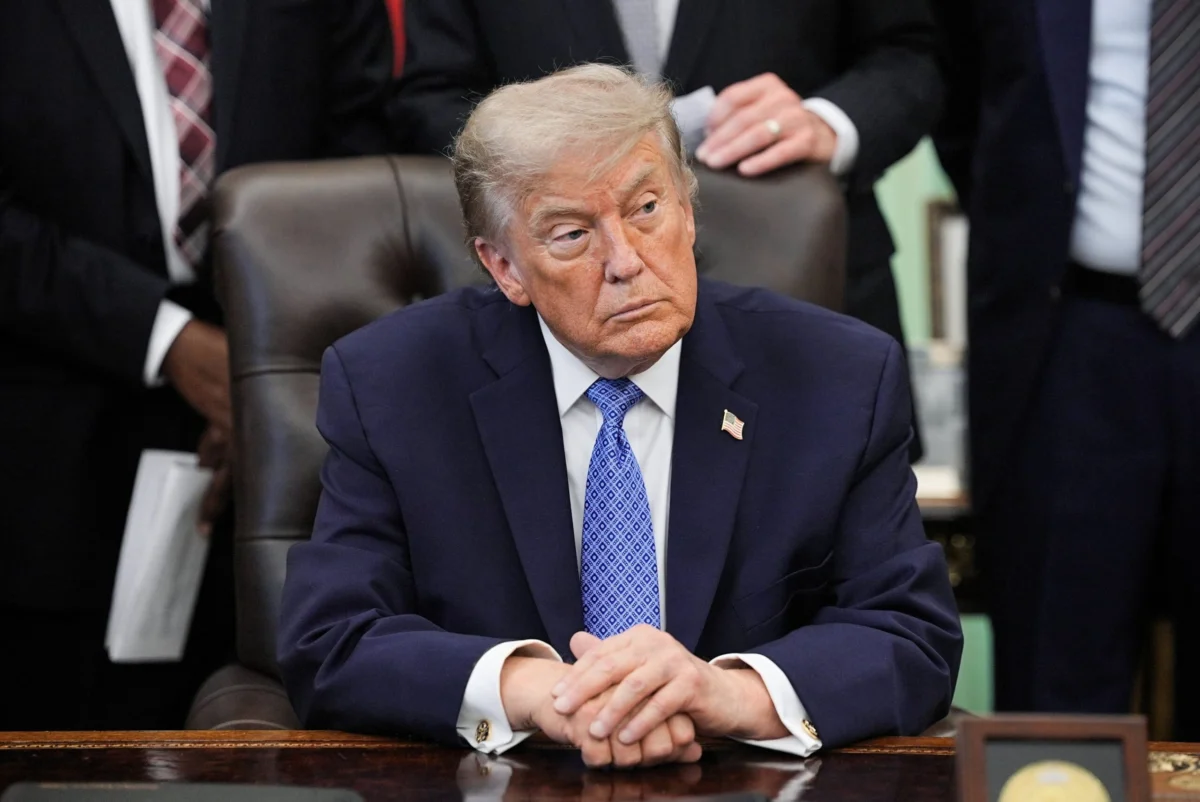
In a move that underscores the persistent legislative gridlock and deep partisan divides in Washington, President Donald Trump announced Friday that he would withhold his signature from a widely supported bipartisan housing bill. The legislation, known as the 21st Century ROAD to Housing Act, which passed both chambers of Congress with overwhelming majorities, will nonetheless automatically become law at midnight ET, as the President stopped short of issuing a veto. Trump stated his refusal to sign the bill was a direct protest against the Senate’s failure to pass the controversial election security legislation, the SAVE America Act. This decision highlights the intricate interplay between executive power, legislative will, and the looming political battles ahead of the November midterm elections.
The "21st Century ROAD to Housing Act": A Legislative Triumph Amidst Economic Strain
The 22nd Century ROAD to Housing Act, formally House Bill 6644, represents a significant legislative effort to address the escalating housing crisis gripping the United States. Its primary objectives are to lower costs for homebuyers and curb the influence of institutional investors in the residential real estate market. The bill received resounding bipartisan affirmation, passing the House of Representatives with a vote of 358-32 and the Senate with an equally decisive 85-5 margin. These margins are particularly noteworthy as they far exceed the two-thirds supermajority required to override a presidential veto, effectively rendering any potential veto by President Trump easily reversible by Congress.
The urgency for such legislation has been underscored by recent economic data. Just one day prior to President Trump’s announcement, the National Association of Realtors (NAR) reported that home prices in the preceding month had surged to the highest level on record. The median price of an existing home sold in June reached an unprecedented $440,600, marking a 1.8% increase from the previous year. This continuous upward trend in housing costs has placed immense financial pressure on millions of American families, making homeownership an increasingly distant dream for many and exacerbating the affordability crisis across the nation. The NAR’s findings highlight a market struggling with persistent inventory shortages, elevated demand, and the impact of broader inflationary pressures, all of which contribute to a challenging environment for prospective homebuyers and renters alike. The housing bill sought to introduce measures designed to alleviate some of these pressures, making its passage a beacon of hope for many struggling with the cost of living.
The President’s Protest: Stalled Election Security Legislation
President Trump’s decision not to sign the housing bill stems from his frustration over the Senate’s inability to advance the SAVE America Act. In a post on his Truth Social platform, Trump explicitly stated, "I will not sign the Housing Bill, which has been fully approved by Congress and sent to the White House, in PROTEST over the fact that the United States Senate is not capable of passing THE SAVE AMERICA ACT." He further characterized the non-passage of the SAVE America Act as "CRAZY" and a "serious threat to any politician who votes against it!" This aggressive rhetoric underscores the high priority Trump places on this particular piece of legislation.
The SAVE America Act is designed to bolster election security by reducing the likelihood of noncitizens participating in U.S. elections. Key provisions of the bill include a mandate for voters to present photo identification at polling places and require proof of citizenship during voter registration. While proponents, primarily within the Republican Party, argue these measures are crucial for safeguarding the integrity of the electoral process and preventing potential fraud, critics, predominantly Democrats, contend that such requirements are largely unnecessary and could disenfranchise eligible voters.
It is already illegal under federal law for noncitizens to vote in federal elections, and extensive research by organizations like the Election Innovation Alliance has consistently found that instances of noncitizens casting ballots are extraordinarily rare. This existing legal framework and empirical evidence form the core of Democratic opposition, who argue that the SAVE America Act constitutes a solution to a problem that barely exists, while simultaneously creating barriers to voting for legitimate citizens, particularly minority groups, the elderly, and low-income individuals who may face challenges obtaining the required documentation. Trump, however, has consistently maintained that the bill has broad public support, a claim that has been contradicted by various polls indicating voter uncertainty or outright opposition to some of its more stringent provisions.
A Constitutional Quirk: The Unsigned Law
President Trump’s refusal to sign the housing bill without issuing a formal veto invokes a specific clause within the U.S. Constitution. Article I, Section 7, Clause 2 stipulates that if the President does not veto a bill within 10 days of receiving it (excluding Sundays), the bill "shall be a Law," as if he had signed it. This mechanism, sometimes referred to as a "pocket signature" or "silent assent," allows legislation to take effect even without explicit presidential approval, provided Congress remains in session. It differs from a "pocket veto," which occurs when the President effectively vetoes a bill by neither signing nor returning it to Congress within the 10-day period and Congress has adjourned, preventing them from overriding the veto. In this instance, with Congress still in session, the housing bill’s path to becoming law was assured regardless of the President’s signature.
The White House, when pressed by CNBC reporters regarding a potential veto, simply referred back to President Trump’s Truth Social post, reiterating his intention not to sign the bill. This communication strategy left no doubt that the President was choosing a symbolic act of protest rather than a direct legislative blockage that would have required a formal veto message and risked a congressional override. The constitutional provision thus allowed the highly popular housing legislation to pass into law, even as the President registered his strong disapproval of the Senate’s inaction on a separate legislative priority.
A Timeline of Legislative Tensions
The path to this unique legislative outcome has been marked by a series of events that highlight the political tensions surrounding both bills:
- June (Early): The 21st Century ROAD to Housing Act passes both the House and Senate with overwhelming bipartisan majorities, signaling a broad consensus on the need to address housing affordability.
- June (Mid): President Trump abruptly cancels a scheduled signing ceremony for the housing bill. At the time, White House officials cited the President’s demand for the Senate to prioritize and pass the SAVE America Act as the reason for the cancellation, foreshadowing Friday’s formal announcement.
- July 9: The National Association of Realtors releases its latest report, revealing that median home prices in June reached an all-time high of $440,600, intensifying public and political pressure to address the housing crisis.
- Friday (Following NAR Report): President Trump makes his official announcement via Truth Social, confirming his decision to withhold his signature from the housing bill in protest over the stalled SAVE America Act.
- Midnight ET (Friday night/Saturday morning): The 10-day constitutional window expires, and the 21st Century ROAD to Housing Act automatically becomes law, despite the President’s explicit refusal to sign it.
This chronology reveals a consistent pattern of President Trump leveraging his executive authority to pressure Congress on the SAVE America Act, even at the expense of publicly endorsing widely popular legislation.
Political Fallout and Sharpened Rhetoric
President Trump’s decision immediately drew sharp criticism from Democrats, who seized upon the opportunity to frame his actions as indifference to the economic struggles of everyday Americans. Senate Minority Leader Chuck Schumer (D-N.Y.) took to X (formerly Twitter) to condemn the President’s stance. "Millions of Americans are being crushed by housing costs," Schumer wrote. "Donald Trump called their crisis ‘a big yawn’ – then refused to sign the most significant bipartisan housing bill in decades." Schumer’s reference to Trump’s prior characterization of the housing issue as "a big yawn" aimed to highlight what Democrats portray as the President’s detachment from the concerns of working families. He concluded his post by asserting, "His priorities couldn’t be clearer: higher costs for families and more power for himself."
Echoing Schumer’s sentiment, Representative Jason Crow (D-Colo.) also posted on X, stating, "The rising cost of mortgages and rent are hitting Americans hard. Yet Trump refuses to act." These reactions underscore a concerted effort by Democrats to pivot the narrative towards affordability, a key plank in their political messaging ahead of the crucial midterm elections. They aim to retake control of both chambers of Congress in those contests, and Trump’s actions provide potent ammunition for their campaign narratives.
The President’s rhetoric on Truth Social also revealed his continued push for Senate Republicans to prioritize the SAVE America Act and, notably, to eliminate the filibuster rules to facilitate its passage. Trump’s demand to scrap the filibuster rules highlights a deep divide within the Republican Party itself, as well as between the executive and legislative branches.
The Filibuster Flashpoint: A GOP Divide
The Senate filibuster, a procedural tool requiring most legislation to clear a 60-vote threshold rather than a simple 51-vote majority, has long been a contentious issue. President Trump has repeatedly called for Senate Republicans to abolish the filibuster to allow GOP priorities, including the SAVE America Act, to pass with a simple majority. This demand places significant pressure on Republican leadership, who have historically defended the filibuster as an essential mechanism for protecting minority rights and fostering bipartisan compromise.
Senate Majority Leader John Thune (R-S.D.) last month publicly stated that there is insufficient support within the GOP caucus to eliminate the filibuster. Despite Republicans holding a 53-47 majority in the Senate, several GOP lawmakers have signaled their opposition to the SAVE America Act itself, or to the drastic procedural change of eliminating the filibuster. This internal dissent underscores the challenges faced by Republican leadership in navigating Trump’s demands while maintaining party unity and adhering to long-standing institutional norms. The filibuster debate is not merely about legislative tactics; it reflects a fundamental disagreement over the nature of legislative power and the role of compromise in a closely divided Congress.
Implications for the Midterm Elections
The President’s decision to leverage a popular housing bill as a bargaining chip for election security legislation carries significant implications for the upcoming midterm elections. Democrats are actively centering their political messaging around affordability, hoping to capitalize on voter frustration over inflation, high housing costs, and rising interest rates. Trump’s actions, they argue, demonstrate a disregard for these pressing economic concerns, bolstering their narrative that Republicans are out of touch with the average American.
Conversely, President Trump and his allies are making election integrity a cornerstone of their midterm campaign strategy. By spotlighting the SAVE America Act and accusing Democrats of obstructing vital reforms, they aim to energize their base and rally support around an issue that resonates strongly with a segment of the Republican electorate. The ongoing debate over voter identification and citizenship requirements will likely remain a prominent feature of political discourse leading up to November. This event further solidifies Trump’s continued influence over the Republican Party’s agenda and strategy, even as he navigates a complex legislative landscape.
Broader Legislative Landscape and Future Challenges
The unprecedented nature of President Trump’s "protest" signature withholding, allowing a bill to become law by default while publicly decrying its passage, sets an intriguing precedent for executive-legislative relations. It demonstrates a novel approach to expressing presidential disapproval without directly engaging in a veto battle that might prove futile. However, it also highlights the increasing polarization in Washington, where even widely supported bipartisan initiatives can become casualties of unrelated political disputes.
The incident underscores the persistent struggle to address critical national issues amidst deep partisan divides. While the 21st Century ROAD to Housing Act is now law, the underlying tensions surrounding housing affordability and election security remain unresolved. The battle over the SAVE America Act, and the broader debate about voting rights and election integrity, will undoubtedly continue to shape legislative priorities and political campaigns. The long-term effects of such executive actions on public trust in government and the perceived efficacy of legislative processes warrant close observation, as they contribute to a political environment where fundamental national challenges often become entangled in broader ideological and power struggles.
