

A groundbreaking study released Thursday has revealed that a vast majority of the world’s data center capacity — an estimated 79% — is exposed to elevated risks from acute climate hazards. These include severe, climate-induced events such as devastating floods, extreme winds, and uncontrolled wildfires, which pose a significant threat to operational continuity, drive up downtime, and inflate insurance and repair costs for critical digital infrastructure. The report, conducted by First Street, a leading climate risk analytics firm, scrutinized 97 global data center markets, painting a stark picture of the vulnerabilities inherent in the foundation of the modern digital economy.
The findings underscore a critical disconnect between traditional risk assessment methodologies and the rapidly evolving realities of a changing climate. Matthew Eby, CEO of First Street, emphasized this point, stating, "Most underwriting for real assets still uses historical data, but the climate is no longer behaving the way the historical record would predict." He added, "As heat, drought, and water stress increase, outdated models simply don’t offer a complete view of risk anymore." This reliance on backward-looking data, the study posits, leads to a systemic underestimation of present and future risks, jeopardizing investments and operational stability across the sector.
Dual Threat: Acute and Chronic Climate Stressors
Beyond the immediate, catastrophic impacts of acute hazards, the study also identified a pervasive threat from chronic climate stress. Just over half of all global data centers are situated in markets grappling with persistent challenges like extreme heat and prolonged drought. These chronic conditions do not typically manifest as sudden disruptions but rather as insidious pressures that degrade energy efficiency, elevate cooling requirements, and consequently increase operating costs over time. While a singular event like a powerful hurricane can cause immediate and visible damage, the cumulative effect of chronic climate change often leads to more profound and enduring physical and financial strain on infrastructure designed for decades of operation.
Jeremy Porter, chief economist at First Street, highlighted the deficiencies in current risk modeling. "Ultimately, it’s just something that we’re underestimating," Porter noted, pointing to government models that remain outdated by failing to factor in the intensifying effects of climate change. As global temperatures rise, the atmosphere holds more moisture, leading to heavier and more intense rainfall events that historical precipitation data simply cannot predict. This oversight creates a dangerous blind spot for investors and developers who continue to rely on traditional metrics when planning and underwriting data centers, which are typically expected to operate for 20 to 30 years.
The Economic Imperative: Re-evaluating Investment and Underwriting
The implications of First Street’s research are profound for the global financial landscape, particularly for real estate investors and insurers. Data centers represent a colossal and growing investment, underpinning everything from cloud computing and e-commerce to artificial intelligence and telecommunications. The global data center market size, valued at hundreds of billions of dollars annually, is projected for substantial growth, driven by ever-increasing data demands. Mispricing the climate risk associated with these assets could lead to significant financial losses, stranded assets, and widespread disruption to the digital infrastructure that society increasingly depends upon.
Eby urged a paradigm shift in investment strategies, stating, "Investors who incorporate these factors into underwriting and capital allocation decisions will be better positioned to identify resilient markets and avoid mispriced risk." This call to action resonates with a broader trend in environmental, social, and governance (ESG) investing, where climate risk is increasingly scrutinized as a material financial risk. Insurance companies, already grappling with mounting payouts from extreme weather events, are beginning to recalibrate their models, with some potentially raising premiums or even withdrawing coverage from high-risk areas, further impacting the operational viability and attractiveness of vulnerable data center locations. The rising cost of capital and insurance in these zones could deter future development, steering investment towards more climate-resilient regions.
Vulnerabilities of Critical Infrastructure: Beyond the Building Envelope
Data centers are complex ecosystems of hardware, power, and cooling systems, all housed within purpose-built structures. While developers can implement resilient measures for building envelopes – the physical barrier between a building’s interior and the outside – to protect structures from severe weather, Porter emphasizes that the most critical vulnerabilities often lie beyond the immediate physical structure. He argues that a "systems-level thinking" is imperative, requiring an understanding of the broader infrastructure and community demographics that support a data center.
This holistic view encompasses the reliability of the local power grid, access roads for maintenance and emergency services (egress and access to the site), and the availability of essential resources like water for cooling. An extreme heatwave, for instance, can stress regional power grids, leading to blackouts that even a resilient data center, with its backup generators, cannot indefinitely withstand. Similarly, widespread flooding or wildfires can cut off critical fiber optic lines or prevent staff access, rendering even the most robust facility inoperable. Therefore, while building adaptation can mitigate acute climate risk to the structure itself, the surrounding infrastructure and community resilience are paramount to ensuring continuous operation.

Industry Responses and Mitigation Strategies: A Path Forward
Despite the sobering findings, some developers and operators are proactively integrating climate considerations into their design and operational strategies. Digital Realty, a global provider of cloud and carrier-neutral data centers, stands out as an example. Its CEO, Andrew Power, highlighted the company’s commitment to water conservation for cooling, a critical component of data center operations, especially in drought-prone areas. "Almost all of our data centers today, 300 around the world, the global portfolio, are either a waterless system or closed loop water," Power explained on CNBC’s Property Play podcast earlier this year. "So think of it as there’s no evaporation. We make the investments and elect to do that." This proactive approach showcases how technological innovation and strategic investment can enhance resilience against chronic climate stressors.
Other mitigation strategies include:
- Site Selection: Prioritizing locations with lower exposure to acute and chronic climate hazards.
- Redundancy: Implementing multiple layers of backup systems for power, cooling, and network connectivity.
- Distributed Architecture: Spreading data across multiple geographically diverse centers to minimize the impact of a localized event.
- Sustainable Cooling Technologies: Investing in advanced cooling solutions that reduce water and energy consumption, such as liquid cooling or adiabatic cooling.
- Renewable Energy Integration: Powering data centers with renewable energy sources to reduce their carbon footprint and enhance energy independence.
Geographic Hotspots and Emerging Trends
The study also provided a crucial regional breakdown of climate risk exposure, revealing significant disparities across the globe. The Asia-Pacific region emerged as the most vulnerable, with a staggering 89% of its data center capacity facing elevated risk. This contrasts sharply with 50% exposure in the Americas and 46% in Europe, the Middle East, and Africa (EMEA). This high exposure in Asia-Pacific is particularly concerning given that many of the industry’s fastest-growing markets are located within this region, including Johor in Malaysia and major hubs in India and China, which are experiencing unprecedented demand for digital infrastructure driven by burgeoning populations and digital economies.
Conversely, Nordic markets were identified as having the lowest climate risk, owing to their naturally cooler climates, abundant renewable energy sources (hydropower), and stable geological conditions. This finding aligns with a growing trend of "cold climate computing," where companies explore building data centers in cooler regions to reduce cooling costs and enhance resilience.
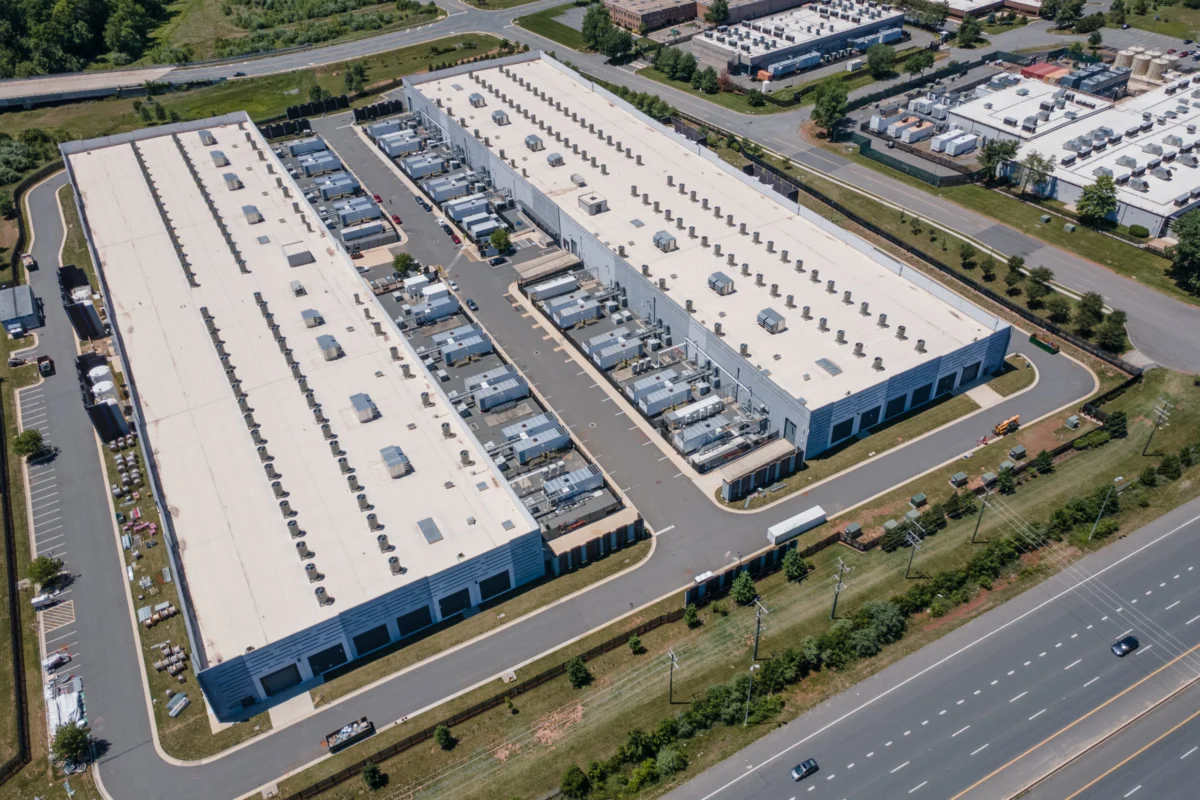
Within the U.S., Northern Virginia, often dubbed "Data Center Alley" and home to a massive concentration of facilities, including Amazon Web Services’ IAD10 data center in Sterling, was identified among the top 10 global markets with acute climate risk. Porter noted that most U.S. hotspots are primarily exposed to wind and flood risk, rather than the chronic heat and drought prevalent in other parts of the world. The image of the Amazon Web Services IAD10 data center, captured on May 31, 2026, serves as a tangible representation of the critical infrastructure under scrutiny. While the U.S. may have lower chronic risk overall, the localized acute risks in key data center hubs still present substantial challenges. Marseille, France, another rapidly expanding data center market serving as a critical internet gateway, also featured on the list of high-risk locations.
Broader Implications and the Path Ahead
The findings of the First Street study are a clarion call for a fundamental re-evaluation of how critical digital infrastructure is developed, operated, and insured. The digital economy, increasingly reliant on the uninterrupted functioning of data centers, cannot afford to ignore these mounting climate risks. The implications extend beyond immediate financial losses, touching upon national security, economic stability, and the continuity of essential services.
Governments and regulatory bodies may need to consider new zoning regulations, building codes, and infrastructure standards that explicitly account for climate change projections. Public-private partnerships could become essential for investing in resilient regional infrastructure, such as upgraded power grids and flood defenses, that protect clusters of data centers. Furthermore, the study underscores the urgency for robust business continuity planning and disaster recovery strategies that go beyond traditional risk assessments, incorporating dynamic climate modeling and predictive analytics.
The accelerating pace of climate change demands a proactive, forward-looking approach from all stakeholders. Investors must integrate climate risk into their due diligence, operators must prioritize resilience in design and operations, and policymakers must create an enabling environment for sustainable and secure digital infrastructure. Failure to adapt could result in a digital future plagued by outages, escalating costs, and a precarious foundation for the global information age. The era of building data centers based on historical climate data is over; the future demands a climate-conscious design for resilience.
