

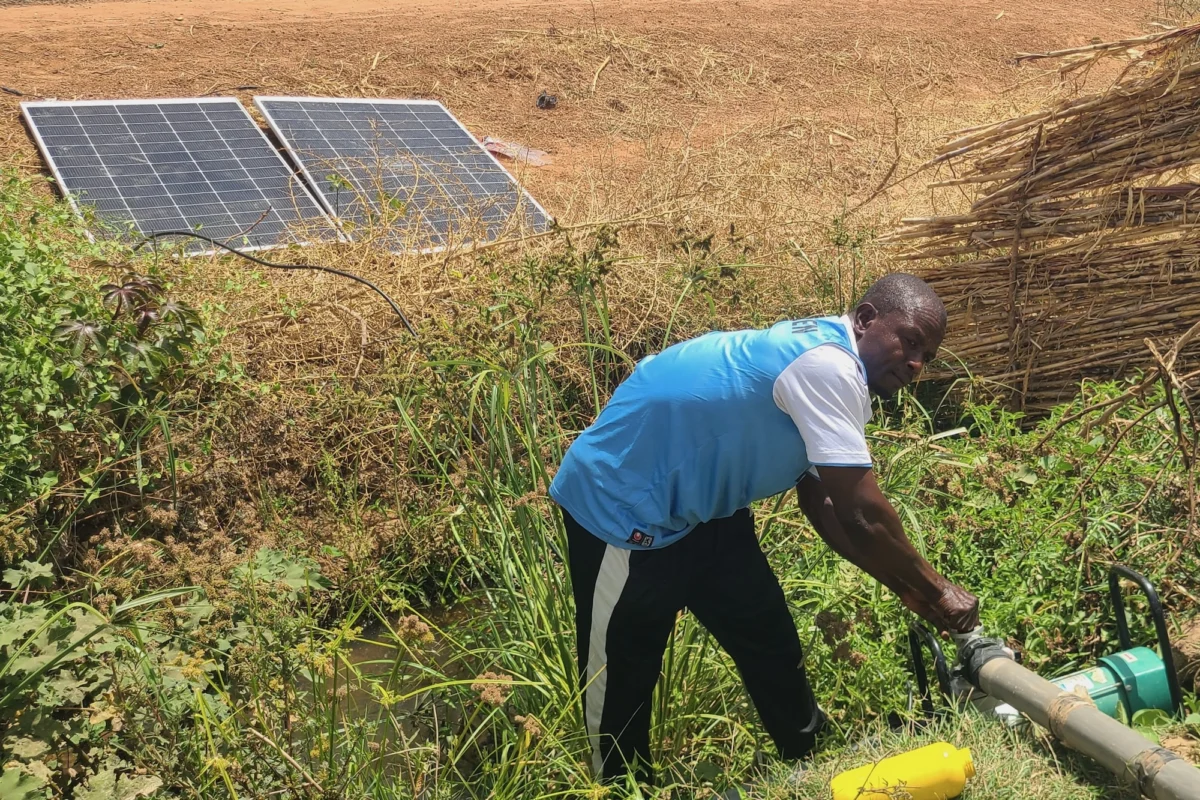
In the sprawling agricultural heartlands of Kano State, northern Nigeria, the rhythmic chugging of petrol-powered water pumps, once a ubiquitous sound of the dry-season farming cycle, is gradually being replaced by the silent, steady flow of solar-driven irrigation. For smallholder farmers like 55-year-old Alhaji Bashir Sule, this technological shift is not merely a matter of environmental preference but a desperate necessity for economic survival. As Nigeria grapples with record-high inflation and the fallout from sweeping fiscal reforms, solar energy has emerged as a critical tool for maintaining food security in a nation where over 60 percent of the population lives below the poverty line.
The transition comes at a pivotal moment for Africa’s most populous nation. Following the federal government’s decision to terminate the national fuel subsidy in May 2023, petrol prices surged by more than 200 percent, sending shockwaves through the agricultural supply chain. For farmers in the Bauje community of Kano, the cost of irrigation—once a manageable overhead—became an insurmountable barrier. Many neighbors of Sule opted to leave their lands fallow during the dry season, unable to justify the exorbitant cost of fuel required to keep crops alive in the scorching Sahelian heat.

The Economic Burden of Fossil Fuel Dependency
Before the subsidy removal, Nigerian farmers relied heavily on subsidized petrol to power small-capacity generators that pumped groundwater into their fields. Sule, who manages a five-hectare farm, noted that by 2023, he was spending approximately ₦12,000 (roughly $8.70) every three days on fuel alone. In a region where many households survive on less than $2 a day, such operational costs are ruinous.
The economic pressure was compounded by the broader "floating" of the Nigerian Naira, which led to a sharp devaluation of the currency and pushed the national inflation rate to a 28-year high of over 30 percent. This fiscal environment meant that while the cost of inputs like fuel and fertilizer skyrocketed, the purchasing power of the average consumer plummeted, leaving farmers in a pincer movement of rising costs and volatile market demand.
By switching to a solar-powered system, Sule has seen his daily irrigation expenditure drop to approximately ₦2,500 ($1.80), representing a cost reduction of over 70 percent. This shift has allowed him to keep his rice farm consistently hydrated, a feat that his petrol-dependent peers have struggled to match.

A Chronology of Change: From Subsidy Removal to Solar Adoption
The movement toward renewable energy in Nigerian agriculture has followed a distinct timeline of necessity and policy intervention:
- May 2023: President Bola Tinubu announces the immediate removal of the fuel subsidy during his inaugural address. Petrol prices jump from approximately ₦190 to over ₦600 per liter overnight.
- Late 2023: Smallholder farmers across the northern "food basket" states report a significant reduction in dry-season cultivation due to fuel costs. The Nigerian government declares a "state of emergency" on food security.
- Early 2024: Research from the Energy Commission of Nigeria and the YELF Climate Trust Foundation begins to highlight the success of solar pilots. In Kebbi State, a study of 10,000 farmers reveals that 70 percent saw increased incomes after adopting solar irrigation.
- Mid-2024: The National Economic Council (NEC) directs the Ministry of Budget and Economic Planning to prioritize the funding and distribution of solar-powered pumps to mitigate the food crisis.
- Current Period: Non-governmental organizations (NGOs) and international partners, such as the Dutch-funded Horti Nigeria, accelerate the deployment of systems to thousands of farmers in Ogun, Oyo, Kaduna, and Kano states.
Supporting Data: Yields and Environmental Impact
The benefits of solar irrigation extend beyond the immediate balance sheet of the farmer. Data from the Energy Commission of Nigeria suggests that solar systems allow farmers to extend their growing seasons significantly, moving from a single annual harvest to two or even three.
In the village of Sauki Dabula, 36-year-old Ibrahim Badamasi reported a tangible increase in crop volume. Previously, his onion farm yielded three to four large sacks per season using intermittent petrol pumping. This year, with the consistent and low-cost water supply provided by solar power, his yield increased to six sacks. Similar stories are echoed by Saidu Abba, a 39-year-old cucumber and maize farmer, who noted that his crops are no longer "stunted" by the forced water rationing he practiced when fuel was too expensive.

From an environmental perspective, the shift is equally significant. Nigeria’s agricultural sector is responsible for nearly 86 million tons of carbon-equivalent emissions annually. This is roughly triple the annual emissions of Lagos, the country’s industrial hub. A study by the International Food Policy Research Institute (IFPRI) indicates that if solar-powered water pumps were adopted across all of Nigeria’s irrigated maize fields, the country could eliminate 4 million tons of carbon emissions every year.
Public Health and Local Air Quality
The transition to solar also addresses a growing public health crisis in rural Nigeria. For decades, the proximity of petrol exhaust to living and working quarters has contributed to respiratory issues. The federal government recently declared a public health emergency regarding diseases linked to greenhouse gas emissions and local air pollution.
Local residents in Kano State have noted a marked improvement in air quality. Haruna Muhammad, a neighbor to Saidu Abba’s farm, recalled that the fumes from the old petrol pumps were "discomforting" and "sickening." Since the replacement of these pumps with solar panels, the "sickening" haze that often hung over the fields during peak irrigation hours has dissipated. Farmers themselves report being able to spend more time tending to their crops without the fatigue and headaches associated with inhaling exhaust fumes for hours on end.

Overcoming the Barrier of Upfront Costs
Despite the clear advantages, the widespread adoption of solar technology faces a significant hurdle: the high initial capital requirement. A standard solar irrigation setup can cost upwards of ₦500,000 (approximately $350), a sum that is far out of reach for the average smallholder farmer whose annual profit might not even match that figure.
To bridge this gap, innovative rental and financing models have emerged. The nonprofit organization Women In Mechanized Agriculture (WIMA) has become a vital player in Kano State. WIMA rents solar equipment to male farmers like Bashir Sule, using the proceeds to fund agricultural programs specifically designed for women. This model is particularly important in northern Nigeria, where cultural norms often restrict women’s direct participation in heavy mechanized farming.
However, experts argue that rental models are only a temporary fix. Muhammad Hamza Abubakar, a sustainable agriculture strategist, emphasizes that for solar to truly transform the Nigerian landscape, the government must implement robust subsidy programs or low-interest credit facilities tailored to the agricultural sector.

Technical Challenges and Security Concerns
The transition to new technology is rarely without friction. Farmers have reported a steep learning curve in maintaining solar panels and DC-powered pumps. Furthermore, the lack of trained technicians in rural areas means that a minor technical fault can lead to weeks of downtime, potentially ruining a crop cycle.
Security has also emerged as a primary concern. Unlike heavy petrol generators, solar panels are lightweight and highly portable, making them prime targets for theft. Bashir Sule recounted an incident where he attempted to transport his panels back to his home every night on a motorcycle to keep them safe. One panel slipped, broke, and required an expensive replacement. He eventually had to hire a local security guard to watch the equipment overnight—an additional cost that many smaller farmers cannot afford.
Broader Implications and Future Outlook
The success of solar-powered irrigation in Nigeria serves as a blueprint for other Sub-Saharan African nations facing the dual threats of energy poverty and climate change. As rainfall patterns become increasingly irregular, with some regions experiencing devastating floods followed by prolonged droughts, the ability to decouple water access from expensive fossil fuels is a cornerstone of climate resilience.

The Nigerian government’s current trajectory suggests an increasing reliance on renewable energy to stabilize food prices. By reducing the "cost of production" at the farm gate, there is a hope that the price of staples like rice, maize, and onions will eventually stabilize for the urban poor.
For the farmers of Kano State, the shift is deeply personal. As Alhaji Bashir Sule walks through his lush, green rice fields, the absence of the petrol pump’s roar is a sign of progress. "It’s my life," he says of his farm. "With solar, we are no longer at the mercy of the fuel station. We are at the mercy of the sun, and in Nigeria, the sun is always there."
As the National Economic Council continues to deliberate on the scale of federal intervention, the resilience of these smallholder farmers remains the backbone of the country. The integration of solar technology is not just an energy transition; it is an essential evolution of the Nigerian agricultural identity in the 21st century.
