

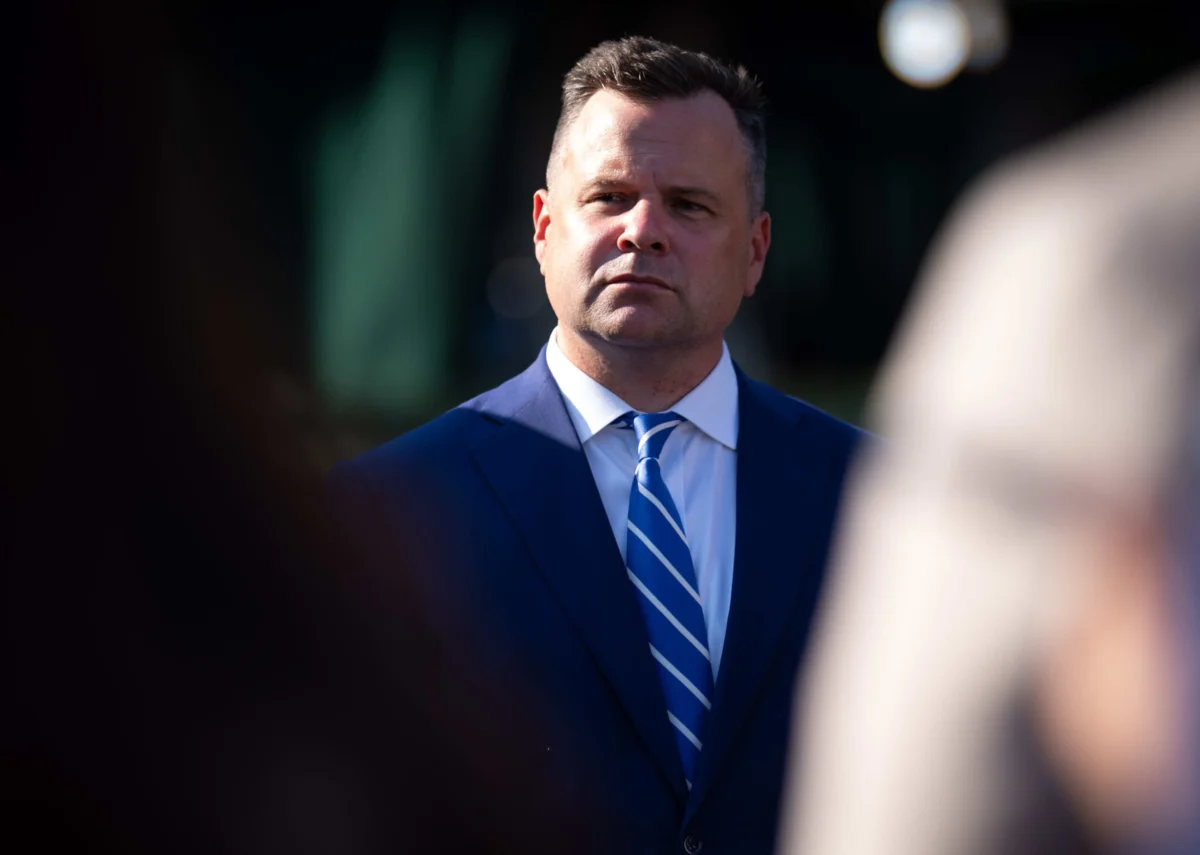
President Donald Trump’s decision to appoint Bill Pulte, the current director of the Federal Housing Finance Agency (FHFA), as the acting Director of National Intelligence (DNI) has ignited a firestorm of criticism, raising profound concerns among intelligence analysts, federal lawmakers, and national security experts. The move, announced on Tuesday, places an individual with no discernible experience in national intelligence at the helm of the U.S.’ sprawling intelligence community, granting him access to the nation’s most sensitive secrets. Critics fear this appointment could severely politicize the critical office, erode public and international trust in U.S. intelligence-gathering, and potentially weaponize its vast capabilities against domestic political opponents.
The Director of National Intelligence: A Post-9/11 Imperative
The Office of the Director of National Intelligence (ODNI) was established by the Intelligence Reform and Terrorism Prevention Act of 2004, a direct response to the intelligence failures that preceded the September 11, 2001, terrorist attacks. Its primary mandate is to serve as the principal intelligence advisor to the President, the National Security Council, and the Homeland Security Council. Crucially, the DNI is tasked with overseeing and integrating the efforts of the 17 distinct organizations that comprise the U.S. Intelligence Community (IC), ensuring seamless information sharing and a unified, objective assessment of threats to national security.
The DNI’s responsibilities are vast and complex, encompassing the development and execution of the National Intelligence Program budget, setting priorities for intelligence collection and analysis, and protecting intelligence sources and methods. The position was created to overcome the historical stovepiping of intelligence information, fostering greater collaboration and a holistic view of global threats. Given this critical role, the statute explicitly stipulates that a DNI appointee "shall have extensive national security experience and management expertise." This requirement underscores the profound importance of professional acumen, impartiality, and a deep understanding of intelligence operations in safeguarding national security. The DNI is not merely a bureaucratic head but a crucial guardian of the nation’s most vital secrets and a linchpin in its defense architecture.
From Housing Finance to Top Secret: Bill Pulte’s Unconventional Path
Bill Pulte’s professional background stands in stark contrast to the traditional profile of a DNI nominee. Prior to his government service, Pulte was an investor and executive at PulteGroup, one of the largest homebuilding companies in the United States. His career trajectory has been firmly rooted in the private sector, specifically in real estate and finance, with no prior public record of engagement in national security, foreign policy, or intelligence operations.
His most recent government role, as director of the Federal Housing Finance Agency (FHFA), overseeing Fannie Mae and Freddie Mac, further highlights this unconventional path. While a significant regulatory position, the FHFA’s mandate is to ensure the stability and liquidity of the housing finance market, a domain entirely separate from the intricate world of global espionage, counterterrorism, and cyber warfare that defines the intelligence community.
However, it is Pulte’s conduct in his FHFA role that has drawn particular scrutiny and fueled fears about his potential tenure as DNI. Critics have characterized him as President Trump’s "housing agency attack dog," alleging that he leveraged his access to sensitive mortgage records to initiate politically motivated investigations and referrals for prosecution against perceived rivals of the administration. For instance, Pulte reportedly referred New York Attorney General Letitia James, a Democrat who had previously pursued legal action against Trump, for bank fraud. While these charges were subsequently dismissed, the incident underscored concerns about the weaponization of government agencies for political ends. Similarly, his criminal referral of Federal Reserve Governor Lisa Cook on analogous allegations prompted President Trump to attempt to fire her, a case that remains pending before the Supreme Court. These incidents, say critics, demonstrate a willingness to exploit official positions and access to information for partisan advantage, a trait deemed profoundly dangerous for the head of the nation’s intelligence apparatus.
Departure of Tulsi Gabbard and the Vacancy’s Context
Pulte’s appointment comes as he replaces the outgoing Director of National Intelligence, Tulsi Gabbard. Gabbard’s tenure itself was not without controversy. In January, she drew concern from members of Congress after appearing at an FBI raid at a Georgia election office, an unusual public involvement for the nation’s top intelligence official. Her resignation, the specifics of which remain somewhat opaque, created the vacancy that President Trump has now filled with Pulte. The context of Gabbard’s departure, combined with the nature of Pulte’s appointment, suggests a continued trend of placing individuals perceived as loyal to the administration in key intelligence roles, rather than prioritizing traditional qualifications and independence.
Alarm Bells Ringing: Concerns Over Politicization and Erosion of Trust
The appointment of Bill Pulte has been met with widespread alarm, with intelligence analysts and former officials voicing profound concerns about its implications for the integrity and effectiveness of U.S. intelligence. Brett Bruen, a former diplomat and National Security Council official under the Obama administration, now running the firm Global Situation Room, starkly characterized the move as "the latest example of some of the amateurish, absurd assignments that Trump has made in the second term." Bruen warned that the appointment "opens up the very real possibility we could see our intelligence structures and systems further eroded, and the role of intelligence used in more inappropriate and even illegal ways." He elaborated that Pulte would transition from receiving "cafeteria-type sensitive information to the crown jewels of our most protected secrets," including highly sensitive intelligence collection efforts, information about human intelligence sources, and advanced surveillance tools.
Larry Pfeiffer, a former senior director of the White House Situation Room and chief of staff to former Central Intelligence Agency Director Michael Hayden, echoed these sentiments. Now director of the Hayden Center for Intelligence at George Mason University, Pfeiffer questioned, "Do we really now want to give this guy access to all of our nation’s deepest, most sensitive national security secrets? I don’t think so." Pfeiffer highlighted that as DNI, Pulte would have access to "any and all intelligence produced by the United States intelligence community," including "the most powerful surveillance tools of any nation in the world." He cautioned that while these tools are intended for national security threats, "there’s nothing technically that stops you from pointing them to American citizens," raising deeply troubling prospects of domestic surveillance for political purposes.
The overarching fear is that Pulte’s lack of intelligence experience combined with his alleged penchant for weaponizing information will lead to a severe politicization of the intelligence community. This politicization could manifest in several ways:
- Distorted Intelligence Assessments: Intelligence analysis, ideally, should be objective and apolitical. A DNI with a partisan agenda could pressure analysts to tailor findings to align with political narratives, rather than presenting unvarnished truth to policymakers. This could lead to flawed decision-making on critical national security issues.
- Erosion of Trust: Both domestically and internationally, trust in the impartiality of U.S. intelligence is paramount. If allies perceive that the DNI is using the office for political retribution, it could damage intelligence-sharing relationships, undermining cooperative efforts against global threats. Domestically, public trust in government institutions could further decline.
- Demoralization of the Workforce: Intelligence professionals are dedicated to serving the nation without partisan bias. An appointed DNI perceived as lacking experience or integrity could severely demoralize the intelligence workforce, leading to reduced morale, talent drain, and a chilling effect on candid analysis.
- Operational Risks: The mishandling or political exploitation of highly sensitive intelligence – including human sources and advanced surveillance technologies – could expose critical assets, compromise ongoing operations, and create grave national security vulnerabilities.
An unnamed former CIA station chief interviewed by CNBC suggested that the appointment of a "lapdog" DNI "is emblematic that he doesn’t have any respect or need for DNI," implying a deliberate strategy to diminish the office’s independent role and influence.
Capitol Hill’s Bipartisan Unease
The concerns are not confined to former intelligence officials; they have resonated strongly on Capitol Hill, crossing partisan lines. While Bill Pulte can serve as acting DNI for a period of 210 days, any full-time appointment would require Senate confirmation, setting the stage for a potentially contentious battle.
Senate Majority Leader John Thune (R-S.D.) offered a notably frosty reaction to Pulte’s nomination. When questioned about concerns regarding Pulte potentially weaponizing intelligence, Thune stated bluntly, "We don’t need a weaponized DNI, we need professionals there." He indicated that he was seeking more information from the White House "about the current state of their thinking about that position" and warned that if the White House intended to nominate Pulte for the full-time role, he would face a "lengthy road ahead of him" for confirmation. Thune’s remarks are particularly significant given his leadership position within the Republican Party, suggesting a lack of automatic endorsement for the President’s choice.
Adding to the Republican skepticism, Senator John Cornyn (R-Texas), who recently lost his Senate primary election after President Trump endorsed his opponent, also questioned the appointment. "I see no evidence of any qualification for the job," Cornyn told reporters, echoing the sentiment that Pulte lacks the necessary expertise for such a critical national security post.
Democrats, predictably, were far more vehement in their condemnation. Senate Intelligence Committee Vice Chairman Mark Warner (D-Va.) issued a scathing statement, asserting that President Trump "has chosen an official who has demonstrated not just willingness but eagerness to use the authorities of government to pursue political retribution." Warner explicitly referenced the statutory requirement for the DNI to possess "extensive national security experience," a mandate established in the wake of 9/11 to prevent future intelligence failures. He articulated the core Democratic concern: "It is that he appears to have been selected precisely because the White House believes he will provide the narrative it wants, not the intelligence we need." This statement directly implies that the appointment is driven by a desire for political loyalty and narrative control rather than an objective assessment of national security needs.
White House Defends Its Choice Amidst Criticism
Despite the chorus of criticism, the White House has staunchly defended President Trump’s selection of Bill Pulte. White House spokesperson Davis Ingle, in an email statement, dismissed concerns about Pulte’s qualifications and the potential for weaponization of the intelligence community. Ingle stated, "The President chooses the best and most talented people to serve in his Cabinet. That is why this Administration has achieved record successes for the American people. Bill Pulte is a great selection and he will do a great job on behalf of the American people."
This defense aligns with a broader pattern of the Trump administration prioritizing loyalty and a perceived willingness to execute the President’s agenda over traditional qualifications or institutional independence. From the administration’s perspective, Pulte’s past actions demonstrate a decisive approach and an alignment with the President’s priorities, which they may view as beneficial for an intelligence community that they have sometimes criticized as being resistant or disloyal. The White House narrative often frames such appointments as bringing fresh perspectives and efficiency to entrenched bureaucracies, implicitly dismissing the value of career expertise and institutional norms in favor of executive prerogative.
The DNI Mandate: Experience and the Rule of Law
The legal framework governing the DNI position presents another layer of complexity. The Intelligence Reform and Terrorism Prevention Act of 2004 clearly states that a replacement for a DNI vacancy "shall have extensive national security experience and management expertise." Furthermore, the law specifies that the principal deputy director, currently Aaron Lukas, "shall act for, and exercise the powers of, the Director of National Intelligence during the absence or disability of the Director of National Intelligence or during a vacancy in the position of Director of National Intelligence." This provision suggests a preference for continuity and experienced leadership during transitional periods.
The question arises whether Pulte’s appointment, given his lack of national security experience, complies with the spirit, if not the letter, of the law, especially when a qualified principal deputy is available. While legal challenges to acting appointments are possible, experts like Larry Pfeiffer caution about their practical effectiveness. Pfeiffer noted that while "somebody take [Trump] to court over this appointment? Possibly," he warned that Pulte’s 210-day acting clock would likely run out before any such case could reach a decisive conclusion, rendering it "not an effective tool." This highlights a potential loophole where an administration can bypass Senate confirmation and statutory requirements for an extended period by relying on acting appointments.
Broader Implications for U.S. Intelligence
The appointment of Bill Pulte as acting DNI carries profound broader implications for U.S. intelligence and national security.
- Diminished Credibility: The perception of a DNI lacking essential qualifications and potentially serving a political agenda can severely diminish the credibility of U.S. intelligence on the global stage. This could make it harder to lead international intelligence coalitions, share sensitive information with allies, and maintain a strong front against adversaries.
- Risk of Misinformation and Disinformation: A politicized intelligence apparatus can become a conduit for misinformation or disinformation, either intentionally or through the selective presentation of facts. This poses a severe threat to democratic processes and informed policy-making.
- Internal Discord and Brain Drain: The intelligence community thrives on its professional, non-partisan ethos. An appointment that undermines this core principle risks fostering internal discord, eroding morale, and potentially leading to an exodus of experienced and talented professionals who feel their work is being compromised.
- Weakened Oversight: If the DNI is perceived as a political operative rather than an independent leader, congressional oversight, particularly from intelligence committees, becomes even more critical but also potentially more challenging. The balance of power and accountability within the intelligence framework could be significantly altered.
- Setting a Dangerous Precedent: Appointing an individual with no intelligence background and a track record of controversial actions to such a vital role could set a dangerous precedent for future administrations, further eroding the professionalism and independence of key national security institutions.
Conclusion: A Crossroads for U.S. Intelligence Leadership
Bill Pulte’s appointment as acting Director of National Intelligence marks a critical juncture for the U.S. intelligence community. It brings to the forefront fundamental questions about the balance between executive prerogative and institutional integrity, the importance of experience versus political loyalty, and the very definition of national security leadership. As the nation grapples with complex global challenges, from geopolitical rivalries to cyber threats and terrorism, the need for an independent, highly competent, and trusted intelligence apparatus has never been more vital. The ongoing debate surrounding Pulte’s leadership will undoubtedly continue to unfold, with significant implications for how the United States gathers, analyzes, and acts upon the intelligence crucial to its security and global standing. The 210-day period will serve as a tense test of the intelligence community’s resilience and the checks and balances designed to protect its impartiality.
