

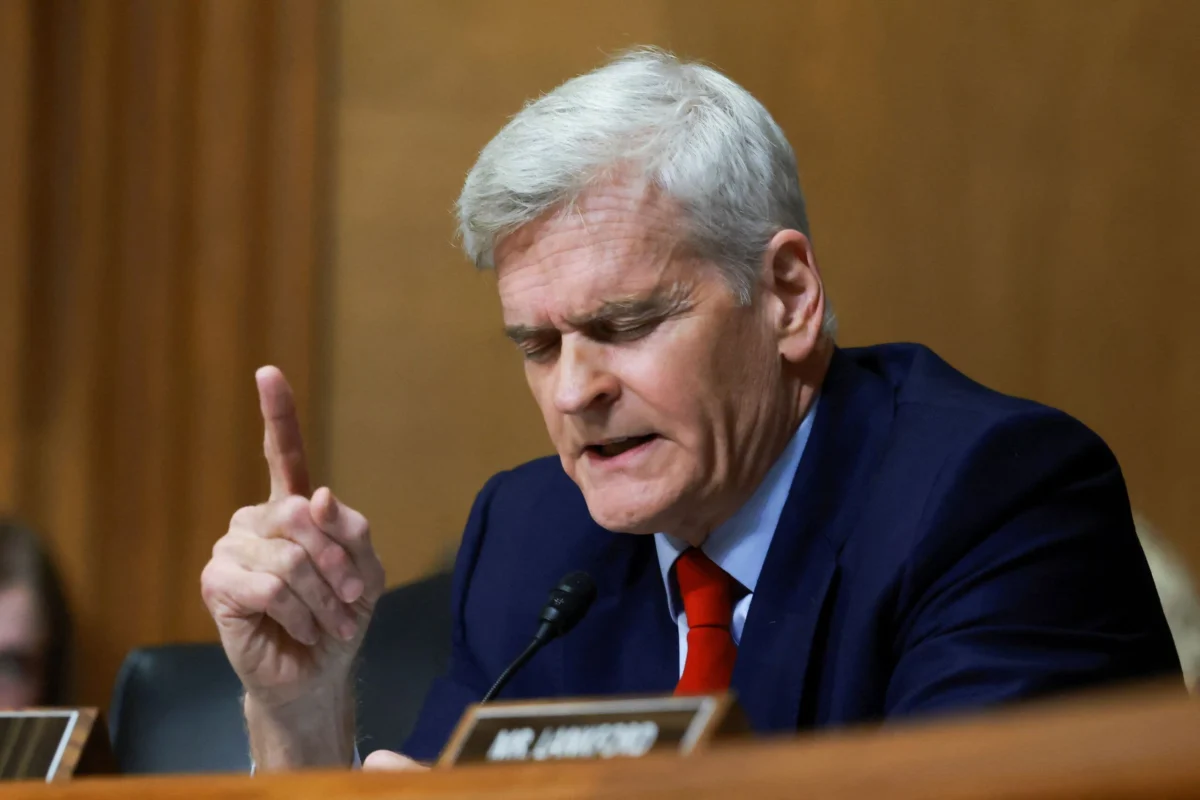
A wave of apprehension has swept through Washington, D.C., following President Donald Trump’s unexpected appointment of Federal Housing Finance Agency (FHFA) chief Bill Pulte as the acting Director of National Intelligence (DNI). The move has drawn sharp criticism from both sides of the political aisle, with outgoing Republican Senator Bill Cassidy of Louisiana unequivocally stating that Pulte does not appear "competent" for the highly sensitive role. Cassidy’s remarks, delivered during an interview at CNBC’s CEO Council Summit, underscore a broader disquiet among lawmakers and intelligence community veterans regarding the suitability of an individual with no discernible background in national security or intelligence to lead the nation’s vast intelligence apparatus.
Senator Cassidy, who recently failed to secure a runoff spot in Louisiana’s Republican primary after President Trump endorsed one of his challengers, Rep. Julia Letlow, R-La, did not mince words when discussing the appointment. He recounted the bewildered reaction among his Senate colleagues upon hearing the news Tuesday morning. "Nothing here suggests he’s competent in the job for which he’s been appointed," Cassidy asserted, adding that the sentiment among his peers was akin to "OMG." The senator’s concerns were amplified by the stark contrast between Pulte’s current role overseeing the housing finance market and the intricate, high-stakes demands of the DNI position. Cassidy highlighted several critical deficiencies: "He has no military background, no intelligence background, he’s going to … keep his other job, and he’s not even sure he has a security clearance." These points collectively paint a picture of an appointment that deviates significantly from traditional qualifications and raises fundamental questions about national security preparedness.
The Critical Mandate of the Director of National Intelligence
The Director of National Intelligence is one of the most pivotal and sensitive positions within the U.S. government, serving as the principal intelligence advisor to the President, the National Security Council, and the Homeland Security Council. Established by the Intelligence Reform and Terrorism Prevention Act of 2004 in the wake of the September 11th attacks, the DNI’s office was created to integrate and coordinate the efforts of the 17 disparate agencies and organizations that comprise the U.S. Intelligence Community (IC). These agencies include powerhouses like the Central Intelligence Agency (CIA), the National Security Agency (NSA), the Defense Intelligence Agency (DIA), and intelligence components of the FBI, Department of State, and various military branches.
The DNI’s responsibilities are vast and complex. They involve overseeing the National Intelligence Program budget, ensuring the timely and accurate sharing of intelligence across agencies, and developing national intelligence strategies. Critically, the DNI is tasked with presenting unbiased intelligence assessments, free from political influence, to policymakers at the highest levels. Given this mandate, the traditional profile for a DNI nominee typically includes extensive experience in intelligence operations, national security policy, military leadership, or foreign affairs. Such individuals often possess decades of service within the IC or related fields, deep institutional knowledge, and a proven track record of managing large, complex organizations under immense pressure. The very creation of the DNI position was to rectify historical failures in intelligence sharing and coordination, making the qualifications of its leader paramount to national security.
A Chronology of Controversy and Dissent
The announcement of Bill Pulte as acting DNI on a Tuesday morning in early June 2026 quickly ignited a firestorm of criticism. While the exact timing of President Trump’s decision was not immediately clear, the ripple effects were felt rapidly across Capitol Hill and within the intelligence community.
- Early June 2026 (Tuesday Morning): President Donald Trump announces Bill Pulte, the current chief of the Federal Housing Finance Agency (FHFA), as the acting Director of National Intelligence. This decision is made without prior consultation with many key lawmakers or the intelligence establishment.
- Early June 2026 (Tuesday – Earlier in the Day): Senator John Cornyn (R-Texas), another prominent Republican who also faced a contested primary last month, publicly expresses his doubts about Pulte’s qualifications, signaling that concerns are not isolated. Cornyn states he does not believe Pulte is qualified for the DNI role.
- Early June 2026 (Tuesday – Later in the Day): Senator Bill Cassidy (R-La) gives an interview at CNBC’s CEO Council Summit, where he delivers his unequivocal assessment of Pulte’s lack of competency. His comments reflect conversations with bewildered Senate colleagues.
- Ongoing Concerns: Reports from intelligence community veterans emerge, warning that Pulte is ill-prepared for the job. These veterans voice fears that such an appointment could severely compromise the quality of U.S. intelligence and potentially lead to the politicization of the DNI’s office, with the perch being used to target "Trump’s domestic foes." These warnings highlight a critical tension between the need for an apolitical intelligence function and the perception of a politically motivated appointment.
The swiftness of the reaction underscores the gravity with which the DNI role is viewed and the deep-seated expectation for its occupant to possess a specific and rigorous set of credentials.
The Appointed Figure: Bill Pulte and His Unconventional Profile
Bill Pulte’s professional background is rooted primarily in the financial and real estate sectors, a far cry from the espionage and national security realms typically associated with the DNI. As the chief of the Federal Housing Finance Agency, Pulte oversees government-sponsored enterprises (GSEs) like Fannie Mae and Freddie Mac, which play a crucial role in the U.S. housing finance system. His experience at FHFA involves regulating these entities, managing mortgage markets, and addressing issues related to housing affordability and stability. While these are significant federal responsibilities, they bear little to no direct relevance to intelligence gathering, analysis, covert operations, or counterterrorism efforts.
The prospect of Pulte attempting to concurrently manage both the FHFA and the DNI’s office is another source of profound concern. The DNI role is a full-time, all-consuming position requiring an individual’s undivided attention, especially during periods of global instability or crisis. To suggest that one could effectively juggle the complexities of the UNI alongside the demands of a major financial regulatory agency is, for many, an untenable proposition that could compromise both critical functions. Furthermore, the question of Pulte’s security clearance is not a trivial matter. Access to the nation’s most sensitive classified information is a prerequisite for the DNI. The process for obtaining such a clearance is rigorous, often taking months or even longer, involving extensive background checks, psychological evaluations, and polygraphs. The idea that an acting DNI might not even possess the necessary clearance upon appointment raises alarming questions about their ability to perform the most basic duties of the office from day one. This lack of foundational security access would severely impede their capacity to receive critical intelligence briefings, participate in top-level national security discussions, and effectively lead the intelligence community.
Congressional Scrutiny and the "Acting" Precedent
The criticism leveled by Senators Cassidy and Cornyn is particularly significant because it emanates from within President Trump’s own party. Their willingness to speak out, especially given Cassidy’s recent primary loss, suggests a deep institutional concern that transcends partisan loyalty. Cassidy’s political independence, stemming from his defeat in a primary where President Trump endorsed his opponent, may have empowered him to offer a more candid assessment without fear of direct political repercussions from the White House.
The issue of "acting" appointments has long been a contentious one in Washington, often viewed as a mechanism to bypass rigorous Senate confirmation processes. While the President has the authority to appoint acting officials for a limited period, this practice can lead to a lack of accountability and stability, particularly in critical roles. Senator Cassidy drew a parallel to Julie Su, who served as acting labor secretary during the Biden administration for an extended period, highlighting how "sometimes people act forever." This observation reflects a broader concern that temporary appointments can become de facto permanent, effectively sidestepping the Senate’s constitutional "advice and consent" role. The Vacancies Reform Act of 1998 sets specific limits on how long an acting official can serve, typically 210 days after a vacancy or a failed nomination, but there are exceptions and interpretations that can extend these periods. The concern is not just about the circumvention of Senate oversight but also about the precedent it sets for future administrations, potentially eroding the checks and balances inherent in the U.S. system of government. For an office as vital as the DNI, which requires trust and confidence from both domestic intelligence agencies and international partners, an acting director operating without full Senate vetting can undermine credibility and effectiveness.
Potential Implications for National Security and Intelligence Operations
The appointment of an unqualified individual to lead the U.S. Intelligence Community carries profound implications for national security. The warnings from intelligence community veterans are not mere political posturing; they reflect genuine fears about the potential degradation of the nation’s intelligence capabilities.
- Risk to Intelligence Quality and Analysis: A DNI without a deep understanding of intelligence tradecraft, methodologies, and the nuances of geopolitical threats could struggle to effectively guide the collection and analysis efforts of 17 agencies. This could lead to flawed intelligence assessments, misinterpretations of adversary intentions, and a failure to anticipate critical threats, thereby jeopardizing the safety and interests of the United States.
- Erosion of Trust and Morale: The intelligence community is built on a foundation of professionalism, expertise, and a commitment to apolitical service. Appointing an individual perceived as unqualified or politically motivated can severely damage morale, foster cynicism, and lead to an exodus of experienced personnel. This internal instability can ripple outward, impacting inter-agency cooperation and the trust essential for effective intelligence sharing.
- Politicization of Intelligence: Perhaps the most alarming concern is the potential for the DNI’s office to be used for political purposes. The warning that Pulte might use the perch to "take aim at Trump’s domestic foes" strikes at the heart of the DNI’s mandate to provide objective intelligence. Politicizing intelligence undermines its credibility, both domestically and internationally, and can lead to dangerous policy decisions based on biased information rather than factual assessments. This would represent a profound departure from democratic norms and the established principles of intelligence ethics.
- Strained International Relations: U.S. intelligence agencies rely heavily on partnerships with allied nations for intelligence sharing and cooperative operations. The appointment of a DNI lacking traditional qualifications or perceived as politically compromised could erode the trust of these international partners, making them hesitant to share sensitive information and potentially isolating the U.S. intelligence community on the global stage.
- Challenges to Congressional Oversight: A DNI who lacks a deep understanding of the intelligence community’s operations or who is seen as politically beholden could complicate congressional oversight. Lawmakers need to be confident that the DNI is providing accurate, unvarnished information and is committed to transparency with oversight committees. Any perceived lack of candor or expertise could hinder Congress’s ability to effectively monitor and guide the intelligence community.
The Broader Political Landscape and Presidential Appointment Style
President Trump’s appointment of Bill Pulte is not an isolated incident but rather fits into a broader pattern observed throughout his presidency: a willingness to challenge established norms, prioritize loyalty and unconventional backgrounds, and frequently rely on "acting" officials. This approach often emphasizes a desire to bring outsiders into government roles, ostensibly to disrupt traditional bureaucracies, but it frequently sparks concerns about experience and institutional knowledge.
For the Republican Party, such appointments present a complex dilemma. While many Republicans remain staunch supporters of President Trump, institutionalists within the party often harbor deep respect for the established processes and the critical nature of national security roles. The public dissent from Senators Cassidy and Cornyn highlights this internal tension, suggesting that for some, the integrity of key government functions outweighs strict party loyalty. Their critiques, coming from seasoned lawmakers, carry significant weight and may embolden others within the party to voice similar reservations, particularly as the implications for national security become clearer.
The political context surrounding Senator Cassidy’s comments is also noteworthy. Having lost his primary bid after President Trump endorsed his opponent, Cassidy is less constrained by the need to maintain favor with the administration. This freedom allows him to speak more openly and critically, providing an unvarnished perspective that might otherwise be muted by political considerations. His willingness to call out the perceived incompetence of a presidential appointee from his own party underscores the severity of the concerns surrounding Pulte.
Legal and Procedural Frameworks for DNI Appointments
The normal process for appointing a permanent Director of National Intelligence involves a presidential nomination, followed by a thorough vetting process by the Senate Intelligence Committee. This typically includes extensive background checks, detailed questionnaires, and public hearings where the nominee faces questions from senators on their qualifications, policy views, and commitment to the DNI’s apolitical mandate. If approved by the committee, the nomination then proceeds to a full Senate vote, requiring a simple majority for confirmation. This process is designed to ensure that the individual selected possesses the necessary expertise, integrity, and independence to lead the intelligence community effectively.
The appointment of an "acting" DNI bypasses this rigorous confirmation process. While the Vacancies Reform Act of 1998 permits such temporary appointments, it also sets limits to prevent presidents from indefinitely sidestepping Senate oversight. An acting official can generally serve for up to 210 days after a vacancy occurs, or longer if a nomination is pending before the Senate. However, interpretations and applications of this act have sometimes led to prolonged acting tenures, prompting legislative debates and legal challenges aimed at reinforcing congressional prerogatives. The fundamental requirement for a security clearance, however, is non-negotiable for anyone in the DNI role, whether acting or confirmed. Without the highest level of clearance, an individual cannot access the classified information essential to perform the duties of the office, rendering their appointment functionally meaningless from an operational standpoint.
Conclusion
The appointment of Bill Pulte as acting Director of National Intelligence has ignited a bipartisan outcry, underscoring deep-seated concerns about his qualifications and the potential ramifications for U.S. national security. From Senator Bill Cassidy’s blunt assessment of incompetence to the warnings from intelligence community veterans about politicization and compromised intelligence quality, the consensus on Capitol Hill is one of profound unease. The DNI role demands an individual with unparalleled experience in intelligence, national security, and military affairs, coupled with an unshakeable commitment to objective analysis. Pulte’s background in housing finance and the unusual intention to hold two demanding federal roles simultaneously, compounded by uncertainty regarding his security clearance, deviate sharply from these critical requirements.
As the nation navigates an increasingly complex global threat landscape, the leadership of its intelligence community is more vital than ever. The ongoing scrutiny of Pulte’s appointment will undoubtedly continue, with lawmakers and national security experts pressing for clarity, accountability, and ultimately, a DNI who commands the full confidence of both the intelligence community and the American public. The episode serves as a stark reminder of the delicate balance between presidential prerogative and the imperative of ensuring that the nation’s most sensitive positions are filled by individuals demonstrably qualified to safeguard its interests.
