

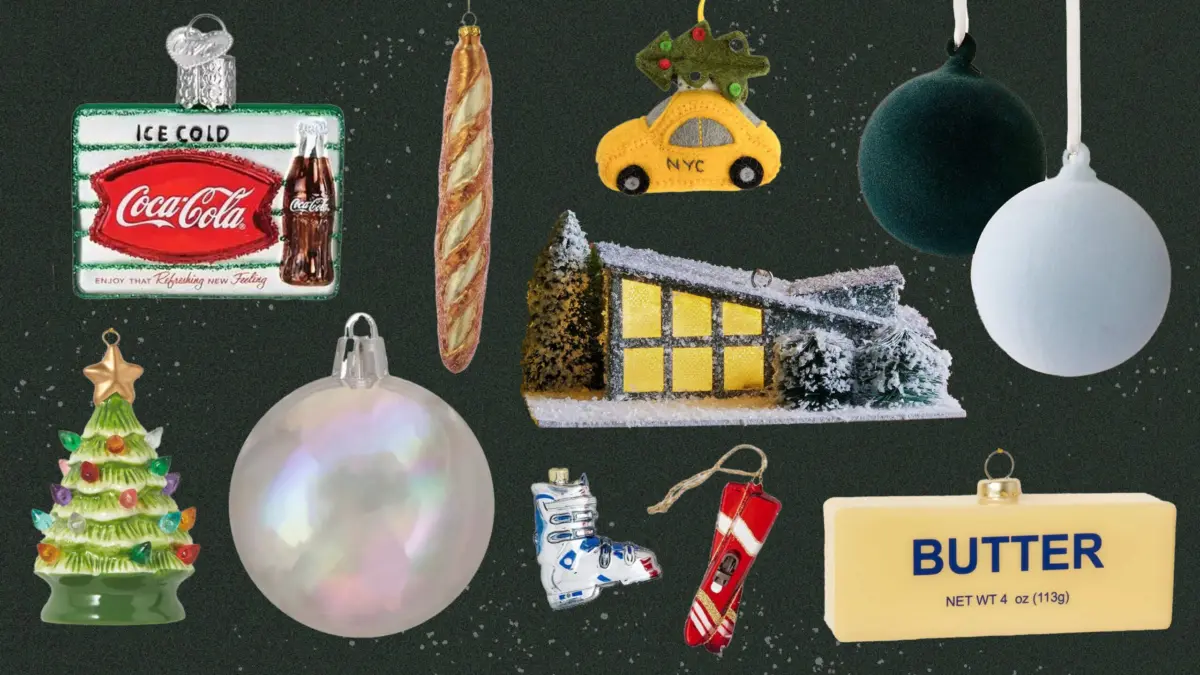
The tradition of decorating a Christmas tree has evolved from a simple 16th-century German custom into a multi-billion-dollar global industry that blends personal history with contemporary design. While historical records suggest the first trees were adorned with edible treats like apples, nuts, and gingerbread, the modern consumer views the Christmas tree as a canvas for self-expression, architectural experimentation, and sentimental storytelling. In the current retail landscape, the "perfectly themed" tree is increasingly being bypassed in favor of a curated, eclectic aesthetic that prioritizes individual memories and artisanal craftsmanship over rigid color coordination.
As the 2024 holiday season approaches, market data from the National Retail Federation (NRF) suggests that holiday spending continues to see incremental growth, with a significant portion of household budgets allocated to seasonal home decor. Consumers are no longer satisfied with mass-produced, plastic baubles; instead, there is a burgeoning demand for "investment ornaments"—pieces that function as miniature works of art and are intended to be passed down through generations. This shift reflects a broader movement in interior design toward "cluttercore" and "dopamine decor," where the goal is to surround oneself with objects that spark joy and narrative rather than adhering to a minimalist or strictly commercial standard.
The Intersection of Technology and Tradition
One of the most significant shifts in the 2024 ornament market is the integration of advanced manufacturing techniques with holiday nostalgia. Leading this trend are the MoMA 3D-Printed Holiday Ornaments, a set of two designed by the Austrian architecture firm Sheyn. These pieces represent a departure from traditional glass-blowing, utilizing 3D-printing technology to create sculptural, complex shapes that would be difficult to achieve through conventional means.
The Sheyn ornaments are notable for their "watermelon" and "grapefruit" hues, a color palette that moves away from the traditional forest green and crimson red. This choice reflects a broader trend in the design world to utilize citrus tones to brighten winter interiors. Architecturally, these ornaments are designed to catch and refract light even when the tree is not illuminated, mimicking the "nostalgic glow" of vintage incandescent bulbs through their physical geometry rather than electrical components.
Artisanal Craftsmanship and Global Sourcing
Parallel to the rise of high-tech ornaments is a renewed focus on global artisanship and sustainable materials. The "Gotas" ornament set from Goodee, handcrafted by Colombian artisans in the Andes, exemplifies this movement. These ornaments are woven from Jipi Japa palm fibers, a technique that requires significant manual dexterity and honors indigenous weaving traditions.
The move toward natural textures—such as the rattan bells offered by Lulu & Georgia—indicates a desire among homeowners to bring organic elements into the home. These materials offer a tactile contrast to the glossy surfaces of traditional glass ornaments. Furthermore, the il Buco Vita Flower Ornament, handblown in Italy from recycled glass, addresses the growing consumer demand for eco-conscious holiday options. Each piece contains subtle irregularities and shifting blue-green hues, ensuring that no two trees are identical. This "perfectly imperfect" aesthetic is a hallmark of the modern luxury market, where the hand of the maker is valued above machine-made precision.
The Midcentury Modern Resurgence
Midcentury Modern (MCM) design continues to exert a powerful influence on holiday aesthetics. This is evident in the popularity of geometric silhouettes and gold detailing, such as those found in the Magnolia Vintage Glass and Gold set. Designers point to the "Eichler home" aesthetic—characterized by clean lines and an integration with nature—as a primary inspiration for these decorations.
The Alessi "Delight" ornaments, designed by Nika Zupanc, further bridge the gap between mid-century whimsy and high-end Italian design. By utilizing "Grinch green" in a sophisticated context with graphic stripes and gold accents, these pieces demonstrate how traditional holiday tropes can be elevated through professional design. Industry analysts suggest that the enduring appeal of MCM holiday decor lies in its ability to feel simultaneously vintage and futuristic, appealing to both Boomers who remember the original era and Millennials who have adopted its aesthetic.
The Rise of "Foodie" and Kitsch Decor
A distinct sub-segment of the 2024 holiday market is the "kitschy" or food-themed ornament. Social media platforms like TikTok and Instagram have popularized "Girl Dinner" and tinned-fish aesthetics, which have now transitioned into the holiday decor space. The West Elm Glass Sardines and the John Derian Platter of Oysters on Ice are prime examples of this trend.
These ornaments serve as conversation starters and allow individuals to showcase their hobbies and culinary preferences on their trees. The Kurt Adler Noble Gems French Baguette, a glass-blown representation of the iconic bread, further illustrates this move toward culinary whimsy. Retail experts note that these items are often purchased as gifts, as they allow for a high degree of personalization. If a friend is an oyster enthusiast or a frequent traveler to France, these ornaments become highly specific tokens of affection that carry more weight than a standard spherical bauble.
Chronology of Holiday Decorating Trends
To understand the current market, it is essential to look at the timeline of how Christmas tree decorating has evolved over the last century:
- 1900s–1920s: Ornaments were largely homemade or imported from Germany (Dresden ornaments). They featured natural materials and early lead tinsel.
- 1940s–1950s: The post-war era saw the rise of mass-produced glass baubles (Shiny Brite) and the introduction of bubble lights. Color palettes were vibrant and metallic.
- 1970s–1980s: The "themed" tree gained popularity in suburban homes, often featuring coordinated ribbons and bows.
- 1990s–2000s: A move toward "designer" trees with monochromatic schemes (e.g., all white or all gold) and the use of oversized floral picks.
- 2010s–Present: The "Curated Eclectic" era. Consumers mix high-end designer pieces with elementary school crafts and travel souvenirs.
Supporting Data and Market Impact
The impact of these high-end and artisanal ornaments on the retail sector is substantial. According to a report by Grand View Research, the global Christmas decor market size was valued at approximately $5.5 billion in 2022 and is expected to expand at a compound annual growth rate (CAGR) of 3.5% through 2030.
A significant portion of this growth is driven by the "luxury ornament" category. Brands like Villeroy & Boch and Lenox have capitalized on this by creating multi-piece sets that encourage "ritualistic" decorating. The Lenox Twelve Days of Christmas 12-Piece Mini Ornament Set, for instance, is marketed not just as decor, but as a countdown tradition similar to an advent calendar. By encouraging consumers to engage with their decor on a daily basis, brands increase the emotional value associated with their products.
Official Responses and Expert Analysis
Interior designers emphasize that the goal of a modern tree is "dimensionality." According to design consultants at West Elm, the secret to a professional-looking tree is the layering of different finishes. "The combination of matte, metallic, and flocked surfaces—like those found in our Neutral Ball sets—creates a sense of depth that a single-finish set cannot achieve," the brand stated in its seasonal guide.
Furthermore, the shift toward non-breakable materials in high-end design is a response to the practical realities of modern households. The Goodee Gotas and Lulu & Georgia rattan pieces are marketed as "pet-friendly" and "toddler-friendly" alternatives to fragile glass. This intersection of high design and practicality is a key driver for modern consumers who want a beautiful home without the constant fear of breakage.
Implications for the Future of Holiday Traditions
The trend toward highly personalized and diverse ornament collections suggests that the Christmas tree is becoming a living archive of a person’s or family’s life. Rather than buying a "tree in a box," consumers are building collections over decades.
This has long-term implications for the secondary market as well. Vintage ornaments from the mid-20th century are already highly collectible, and designers anticipate that 3D-printed or limited-edition artist collaborations (like the Josh Young x Williams Sonoma Ella collection) will be the heirlooms of the future.
As we look toward the final weeks of the year, it is clear that the holiday decor industry has moved beyond mere ornamentation. It is now an industry of storytelling, where a glass sardine, a 3D-printed orb, and a handwoven Colombian drop all have a place on the same branch. The "unfinished" nature of an ornament collection is not a sign of lack, but an invitation to continue adding chapters to a personal holiday narrative. Whether through the sparkle of silver tinsel paired with Pottery Barn’s etched glass or the understated elegance of a McGee & Co. brass frame, the modern Christmas tree remains the most significant and personal design project of the year.
