

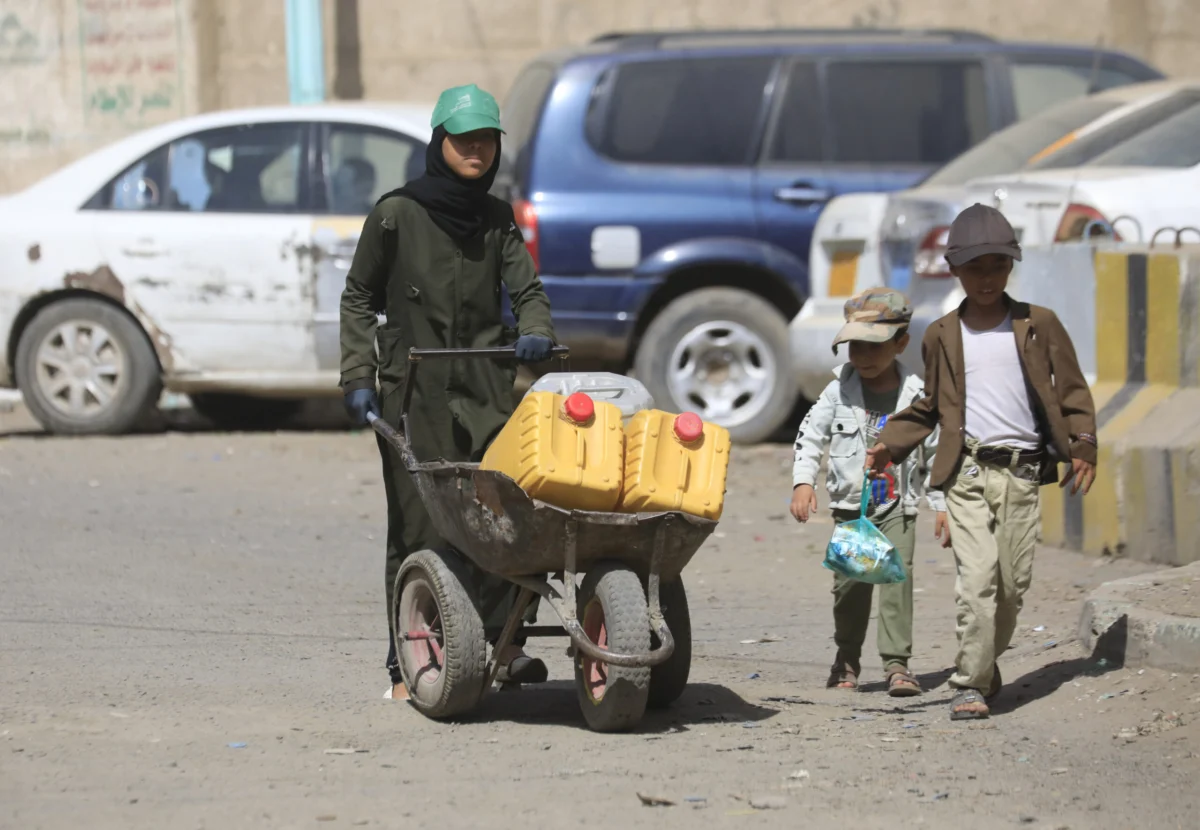
More than 46,000 individuals have been forcibly displaced from their homes across Yemen in the immediate aftermath of a significant escalation in fighting between Houthi rebels and government forces, according to the latest data from the United Nations. The International Organization for Migration (IOM) issued a stark warning on Friday, September 11, 2026, stating that this alarming figure is increasing "by the hour," underscoring the rapid deterioration of an already dire humanitarian situation. The UN agency has urgently called upon all parties involved in the protracted conflict to ensure safe and unimpeded humanitarian access and to rigorously protect civilians, aid workers, and critical humanitarian assets on the ground.
Amy Pope, the head of the IOM, highlighted the tragic reality faced by many Yemenis, noting in her statement, "Families are being forced to flee for the second or third time in this conflict, with almost nothing left." This repeated displacement exacerbates the trauma and destitution experienced by communities already at breaking point, often leaving them without shelter, food, or essential services. The recent surge in displacement has been concentrated along Yemen’s strategically vital Red Sea coast, following a series of swift military advancements by the Iran-allied Houthi rebels.
A Decisive Shift Along the Red Sea Coast
The latest escalation reached a critical juncture on Thursday, September 10, 2026, when Houthi rebels successfully captured the strategically important Red Sea port city of Mocha from the internationally recognized government. Reports indicate that many residents fled Mocha overnight, taking only what they could carry, as the city fell. This capture was swiftly followed by further significant gains on Friday, September 11, 2026, with the Houthis reportedly seizing a strategically located island within the crucial Bab al-Mandeb Strait. These combined actions have effectively given the Houthi rebels control over Yemen’s entire Red Sea coastline, a development with profound implications for both the conflict and global maritime trade.
The strategic importance of Mocha and the Bab al-Mandeb Strait cannot be overstated. Mocha, a historic port city, serves as a gateway for both commercial goods and humanitarian aid into Yemen. Its control offers a crucial logistical advantage. The Bab al-Mandeb Strait, meaning "Gate of Tears" in Arabic, is one of the world’s busiest shipping lanes, connecting the Red Sea to the Gulf of Aden and the Indian Ocean. An estimated 12% of global trade, including a significant portion of the world’s oil supply, passes through this narrow choke point daily. Control over this maritime corridor grants considerable leverage and could potentially disrupt international shipping, adding another layer of complexity to the already multifaceted conflict. The Houthi advances have led to reports of entire villages being abandoned in some of the newly contested areas, with residents seeking refuge in safer zones, often with host communities already struggling with limited resources.
Background to a Protracted Crisis
Yemen has been embroiled in a devastating conflict since late 2014, when Houthi rebels seized the capital, Sanaa, and forced the internationally recognized government into exile. A Saudi Arabia-led coalition intervened in March 2015, aiming to restore the government and counter perceived Iranian influence in the region. The conflict quickly escalated into a full-scale civil war, drawing in regional and international actors and creating what the United Nations has repeatedly described as the world’s worst humanitarian crisis.
Before this latest escalation, Yemen was already grappling with unprecedented levels of suffering. Over 4 million people had been internally displaced since the conflict began, many of whom have faced multiple displacements, mirroring the current tragic trend. Millions more are on the brink of famine, with an estimated 80% of the population requiring humanitarian assistance to survive. The healthcare system has largely collapsed, clean water and sanitation are scarce, and the economy is in ruins. The destruction of infrastructure, including hospitals, schools, and vital supply routes, has crippled the country’s ability to cope.
A fragile truce, brokered in April 2022, had offered a glimmer of hope for a de-escalation, but peace efforts have repeatedly stalled. Despite periods of reduced fighting, the underlying political and military tensions have persisted, often erupting into localized clashes. The recent Houthi offensive along the Red Sea coast marks a significant breach of any implicit understandings and represents a renewed, aggressive push for territorial control, particularly in a region critical for both internal and international dynamics.
The Expanding Humanitarian Footprint
The immediate impact of the recent fighting is a sharp increase in humanitarian needs. The IOM’s warning of figures rising "by the hour" indicates the dynamic and urgent nature of the crisis. These newly displaced families arrive in already overcrowded displacement camps or vulnerable host communities, placing immense strain on already stretched resources. Access to food, water, shelter, and medical care becomes even more precarious. Children, who constitute a significant portion of the displaced population, are particularly vulnerable to malnutrition, disease, and the psychological trauma of conflict. The IOM and other aid organizations are struggling to respond effectively in an environment made increasingly dangerous and inaccessible by the ongoing hostilities.
Moreover, the conflict has systematically eroded the economic fabric of Yemen. Farea Al-Muslimi, a Yemen researcher at the London-based Chatham House think tank, emphasized the cumulative impact, telling Al Jazeera, "Yemen was already going through one of the worst humanitarian crises in the world. It got terribly worse after the Houthis cracked down on aid organisations in northern Yemen. But the war continued despite the fragile truce, and what that meant was the destruction of what remained of the economy, with millions of families left without income." The latest events along the Red Sea coast are poised to deepen this economic despair, particularly as control over maritime routes can directly influence the cost and availability of essential goods, further driving inflation and pushing more families into destitution.
UN Condemnation and Calls for Protection
Beyond the displacement, the United Nations has voiced grave concerns over the Houthis’ seizure of a key humanitarian compound and its assets in Mocha. UN deputy spokesperson Farhan Haq confirmed that the compound, which housed staff from various UN agencies providing humanitarian assistance to vulnerable communities, had been taken over. While all UN personnel working at the compound had safely evacuated before the seizure and were "safe and accounted for," Haq stressed the inviolability of humanitarian operations. "Humanitarian personnel, premises and assets must be respected and protected at all times," Haq stated, reiterating the call for safe and unimpeded humanitarian access to ensure life-saving assistance can continue reaching those in dire need. The seizure of aid facilities not only disrupts critical relief efforts but also sets a dangerous precedent, potentially jeopardizing the safety and operational capacity of humanitarian organizations across the country.
This incident highlights the challenges faced by aid agencies operating in conflict zones, where their neutrality and ability to deliver assistance are often compromised. The protection of humanitarian space is paramount to ensuring that aid can reach those who need it most, regardless of their location or the political control of the area. Without guaranteed access and security, the ability to mitigate the spiraling humanitarian crisis is severely hampered.
Broader Implications and a Looming Double Crisis
The recent Houthi advances and their control over Yemen’s entire Red Sea coast and the Bab al-Mandeb Strait carry significant implications that extend beyond the immediate humanitarian catastrophe. Farea Al-Muslimi warned that this latest escalation "will create two new crises." The first is the further internal displacement, evidenced by the staggering figure of "more than 10,000 families displaced in the last week alone." This influx of displaced persons overwhelms already scarce resources and strains the capacity of host communities and aid organizations.
The second crisis, according to Al-Muslimi, will be rising prices for goods inside Yemen. As the Red Sea corridor is a vital maritime trade route, increased Houthi control and potential for disruption could lead to higher shipping costs, insurance premiums, and ultimately, inflated prices for essential imports like food, fuel, and medicine. This would further exacerbate the economic hardship faced by millions of Yemenis, pushing more families into poverty and food insecurity.
Furthermore, Al-Muslimi articulated a concerning regional dimension, stating, "Since this is [happening in] a maritime [trade] corridor, it will, for sure, drive further violence inside Yemen, but also from outside Yemen." The strategic importance of the Bab al-Mandeb Strait could draw in external actors with vested interests in regional maritime security and trade, potentially escalating the conflict beyond Yemen’s borders or inviting international interventions to secure the shipping lane. The Houthi’s newfound control offers them considerable leverage, both militarily and diplomatically, which could prolong the conflict and complicate any future peace negotiations.
The long-term consequences of this escalation are dire. The humanitarian crisis, already catastrophic, is set to deepen, with more lives at risk due to displacement, lack of food, and disease. The prospects for a political resolution appear more distant, as military gains often embolden parties to the conflict and reduce their willingness to negotiate. The Yemeni population, already bearing the brunt of nearly a decade of war, will continue to suffer disproportionately. "The Yemeni population will continue to suffer, first and foremost, more than anyone else, inside or outside the country," Al-Muslimi concluded, painting a grim picture of the road ahead for a nation teetering on the precipice.
As the international community grapples with the fallout, the urgent call from the IOM and the UN for safe humanitarian access and the protection of civilians, aid workers, and assets remains a critical plea. Without these fundamental protections, the capacity to respond to the escalating crisis will be severely hampered, leaving millions of vulnerable Yemenis with little hope for relief. The world watches as the "Gate of Tears" continues to live up to its name, bearing witness to an unfolding tragedy of immense proportions.
