

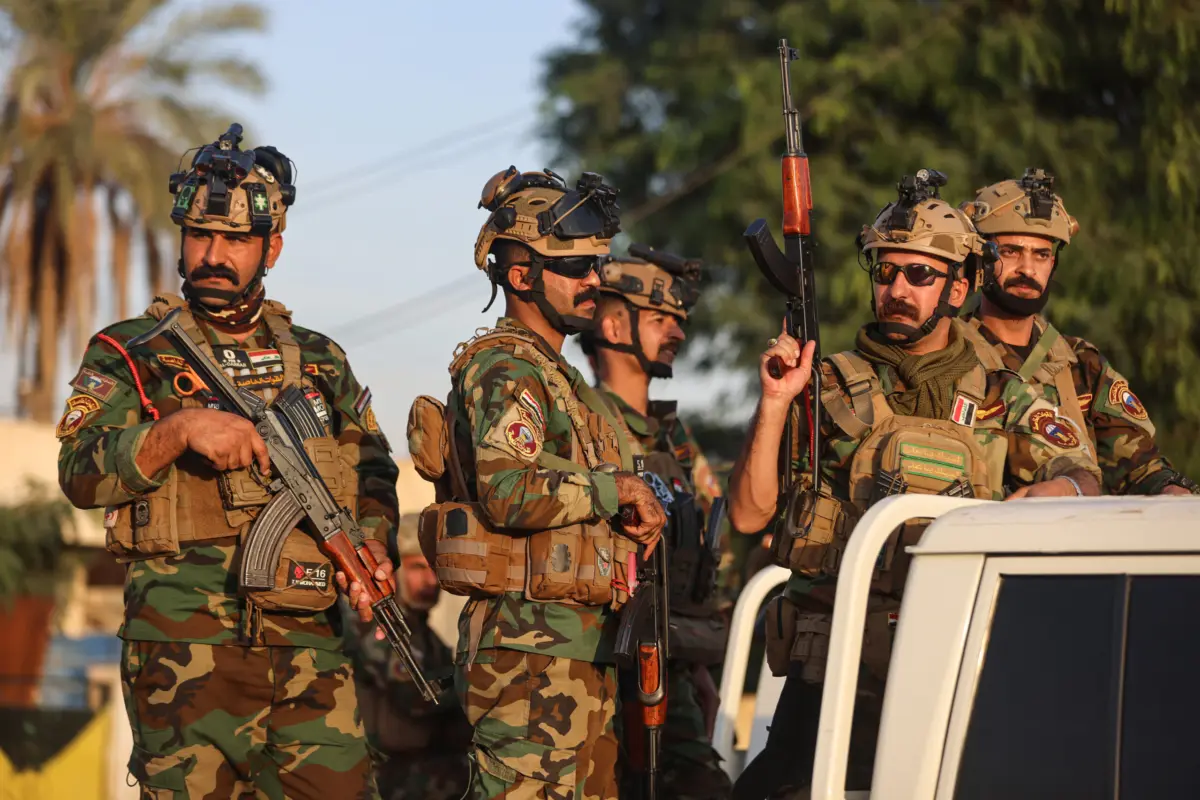
Jurf al-Sakhar, a historical stronghold now synonymous with Iran-linked armed factions in Iraq, has emerged as the epicentre of a comprehensive anticorruption campaign initiated by Prime Minister Ali al-Zaidi’s nascent government. The sweeping crackdown follows grave accusations of extensive oil smuggling, thrusting the strategically critical region into the national spotlight and challenging the established power dynamics within the Iraqi state. The unfolding events represent a pivotal moment for Prime Minister al-Zaidi, testing his administration’s resolve to assert state sovereignty over powerful non-state actors and reclaim control over vital national resources.
The Strategic Significance of Jurf al-Sakhar
Located approximately 60 kilometres (37 miles) southwest of the Iraqi capital, Baghdad, and encompassing an area of roughly 345 square kilometres (133 square miles), Jurf al-Sakhar holds immense strategic importance. Its geographical position is critical, situated along the vital Shia pilgrimage route connecting Baghdad to the revered holy city of Karbala. This corridor is traversed by millions of pilgrims annually, underscoring the area’s religious and logistical significance.
Historically, Jurf al-Sakhar served as a cornerstone of former President Saddam Hussein’s military-industrial complex. Its rugged and expansive terrain provided an ideal environment for the testing, construction, and clandestine concealment of weapons, cementing its reputation as a sensitive military zone. Following the 2003 US-led invasion that toppled Hussein’s regime, the region descended into a period of prolonged instability, becoming a notorious hotspot for armed confrontations and insurgent activities.
The volatile situation escalated dramatically in 2014 when the area fell under the control of the ISIL (ISIS) armed group, a significant strategic loss for the Iraqi state. Later that same year, in a crucial counter-offensive, the Iran-backed Popular Mobilisation Forces (PMF) – an umbrella organisation predominantly comprising Shia armed groups – successfully recaptured the territory from ISIL. The PMF’s intervention was instrumental in stemming ISIL’s advance and played a critical role in the broader war against the extremist group. However, the liberation of Jurf al-Sakhar came with a significant caveat: Kataib Hezbollah, one of the most powerful and influential factions within the PMF, subsequently asserted full control over the area.
Upon establishing its dominance, Kataib Hezbollah unilaterally renamed the area Jurf al-Nasr, or "Valley of Victory," a symbolic act asserting its authority. More significantly, the militia effectively sealed off the town, barring state institutions and personnel from entering and operating within its confines. Citing ongoing security concerns and the purported need to prevent a resurgence of extremist elements, Kataib Hezbollah implemented a de facto blockade, preventing the return of an estimated 140,000 displaced residents to their homes. This prolonged displacement has created a humanitarian crisis and fostered deep resentment among the affected communities, many of whom are Sunni Arabs. The continued closure of Jurf al-Sakhar to official state presence and its original inhabitants has long been a point of contention, symbolising the broader struggle for state authority in areas controlled by powerful non-state actors.
The Unfolding Oil Smuggling Scandal
The current crisis was ignited by a leaked intelligence report that exposed a massive illicit operation. Last week, the document, reportedly prepared by the Iraqi Ministry of Interior, revealed that crude oil worth millions of dollars had been siphoned from two critical state pipelines passing through the closed-off Jurf al-Sakhar area since as early as 2021. The report detailed how the perpetrators allegedly constructed makeshift underground refineries within the restricted zone, designed to process the stolen resources on an industrial scale, facilitating their illegal sale on the black market. Such operations represent a significant drain on Iraq’s national wealth, a country heavily reliant on oil revenues for its state budget and public services.
The explosive information prompted Prime Minister al-Zaidi to swiftly form a high-level investigative committee. Empowered with a mandate to verify the allegations, the committee, backed by military forces, made a rare and significant entry into the previously restricted zone on November 13. This unprecedented move signalled the government’s serious intent to confront the issue head-on. Earlier this week, the committee announced that it had successfully identified several locations linked to smuggling operations within Jurf al-Sakhar, though it refrained from publicly naming the specific individuals or groups allegedly implicated in the illicit activities.
As part of the government’s wider anticorruption crackdown, the repercussions have already been felt across Babil province, where Jurf al-Sakhar is located. Nine senior security and administrative officials, including the provincial police chief and the director of the state-owned Oil Pipelines Company, were summarily dismissed from their posts. These dismissals underscore the systemic nature of the alleged corruption and the prime minister’s determination to hold officials accountable, regardless of their position. Concurrently, the state Iraqi News Agency reported that the government had "ordered the armed forces to enter" Jurf al-Sakhar, issuing a firm deadline for "the armed faction to exit the area." Reports indicated that this critical deadline for withdrawal was set for Friday, setting the stage for a potential direct confrontation.
Kataib Hezbollah’s Defiance and Denials
In response to the escalating pressure, Kataib Hezbollah, the dominant force in Jurf al-Sakhar, vehemently denied the oil-smuggling allegations. In a series of harshly worded public statements, the militia accused Prime Minister al-Zaidi of corruption himself, dismissing the government’s crackdown as a politically motivated extortion campaign. This narrative attempts to discredit the prime minister and deflect attention from the serious accusations levied against the group.
In a dramatic show of force intended to intimidate and assert its continued control, Kataib Hezbollah mobilised approximately 8,000 fighters from various provinces towards Jurf al-Sakhar ahead of the government committee’s arrival. This large-scale deployment served as a clear message of defiance, highlighting the militia’s willingness to resist any attempts to dislodge it from its stronghold.
Iraqi writer and journalist Hamza Mustafa offered insights into the militia’s posture, suggesting that the overt military mobilisation masks underlying vulnerabilities. "What the brigades are doing through field mobilisation is perhaps the last line of defence for them after their position appeared weak regarding the oil-smuggling operations," Mustafa told Al Jazeera. He noted that the traditional narrative used by these groups, that of fighting "terrorism" and providing security where the state could not, no longer held credibility in the face of corruption allegations.

Security expert Saif Raad, a former military officer, echoed this assessment, emphasising the economic drivers behind the militia’s fierce resistance. Raad suggested that allegations of oil smuggling are not the only financial motivation; the restricted zone is also reportedly used to run thousands of illegal fish farms, generating substantial illicit income. "The desperation over this area is not for security reasons but for financial reasons," Raad stated, underscoring the deep financial stakes involved for the armed group.
Prime Minister Al-Zaidi’s Broader Agenda and Challenges
Since assuming office in May, Prime Minister Ali al-Zaidi has made the disarmament and integration of all armed factions in the country, including powerful groups like Kataib Hezbollah, a cornerstone of his government’s agenda. This priority aligns with consistent pressure from the United States, which has long advocated for the decommissioning of Iran-backed fighters in Iraq to strengthen state institutions and reduce external influence. An initial deadline of September 30, 2026, for bringing all weapons under state control, has since been extended to June 2027, reflecting the immense complexities and political sensitivities involved in such an undertaking.
Hamza Mustafa highlighted how the current crisis plays directly into the prime minister’s broader disarmament efforts. "The issue here comes in the context of removing all pretexts from the armed factions after it was revealed that they are smuggling oil," he explained. The accusations of criminal activity undermine the militias’ claims of being legitimate protectors or resistance forces, thereby weakening their political leverage and strengthening the government’s case for asserting state control.
Fadel Abu Ragheef, a prominent Iraqi political analyst, pointed to al-Zaidi’s unique political position as a key factor enabling his unprecedented actions against deeply entrenched interests. "He did not come from a partisan or bloc background, so his decisions are characterised by boldness and daring," Abu Ragheef argued. Unlike many Iraqi leaders who rise through established political parties or blocs tied to armed factions, al-Zaidi’s independent stance grants him a degree of autonomy to challenge powerful groups without being beholden to their political patrons. This political independence is crucial in navigating the intricate web of alliances and rivalries that define Iraqi politics.
Political Divisions and International Mediation
The standoff in Jurf al-Sakhar has profoundly divided Iraq’s ruling Coordination Framework, a coalition of mostly Shia parties that forms the backbone of al-Zaidi’s government. This internal rift underscores the delicate balance of power and the divergent interests within the political establishment. Key leaders within the Framework, including influential figures such as Nouri al-Maliki, Hadi al-Amiri, Qais al-Khazali, and Ammar al-Hakim, have reportedly engaged in frantic behind-the-scenes mediation efforts to avert a direct military confrontation that could destabilise the entire political landscape.
Abu Ragheef suggested that these factions are highly sensitive to discussions around disarmament. "They harden their position if they hear the word disarmament or containment, so the concepts have shifted from disarmament and containment to organisation and management," he observed. This linguistic adjustment, from terms implying state takeover to those suggesting integration and regulation, has provided a crucial negotiating window, allowing for dialogue to continue until the June 2027 deadline for weapon centralisation. It represents a pragmatic approach to a highly sensitive issue, aiming to achieve state control through negotiation rather than outright confrontation, where possible.
With the Friday deadline looming and the risk of escalation palpable, regional powers have also stepped in. Iran, a key patron of many PMF factions, including Kataib Hezbollah, has actively sought to de-escalate the situation. Esmail Qaani, commander of the Quds Force of the Islamic Revolutionary Guard Corps, travelled to Baghdad to mediate the crisis and push for a diplomatic resolution. Qaani and Prime Minister al-Zaidi reportedly held extensive talks until dawn on Tuesday, culminating in a tentative agreement that would see Kataib Hezbollah withdraw "soon" from Jurf al-Sakhar. This intervention highlights Iran’s vested interest in maintaining stability within its sphere of influence and avoiding a direct conflict that could undermine its allies in Iraq.
Implications and Future Outlook
Despite the reported tentative agreement, Hamza Mustafa warned that the crisis is far from fully resolved. "Qaani has not been able to dismantle the scene so far like he used to," he said, alluding to Iran’s historically strong influence in mediating Iraqi internal affairs. Mustafa suggested that Tehran had come to realise the issue was "larger than expected due to al-Zaidi’s insistence," indicating a potential shift in the dynamics of Iranian leverage within Iraq.
Saif Raad echoed this perspective, emphasising Prime Minister al-Zaidi’s unwavering determination to centralise state arms and assert governmental authority. Raad drew a parallel to al-Zaidi’s recent successful pacification of armed groups in the Sinjar district, demonstrating his commitment to extending state control across all Iraqi territories. "The prime minister will not be prevented by Qaani or anyone else from going and restoring the authority of the commander in chief of the armed forces over all Iraqi territories," Raad asserted. "This crisis is a beginning to restore the sovereign decision of the state."
The unfolding events in Jurf al-Sakhar carry profound implications for Iraq’s future. The crackdown represents a direct challenge to the parallel power structures that have emerged since 2003, particularly the influence of armed groups operating outside direct state control. Should Prime Minister al-Zaidi succeed in asserting state authority and dismantling the illicit smuggling networks, it would mark a significant victory for national sovereignty, strengthening the state’s institutions and bolstering its economic stability by reclaiming lost oil revenues. Iraq, the second-largest oil producer in OPEC, relies on crude sales for over 90% of its state budget, making the fight against oil smuggling an economic imperative.
Conversely, a failure to fully resolve the standoff could embolden non-state actors, further entrenching their control over vital regions and resources, and potentially leading to renewed instability or even direct conflict. The humanitarian plight of the 140,000 displaced residents of Jurf al-Sakhar also hangs in the balance, with their return contingent on the restoration of full state authority and the guarantee of security. The coming days and weeks will be critical in determining whether this anticorruption campaign marks a genuine turning point in Iraq’s struggle for state sovereignty or another chapter in the country’s enduring battle against entrenched interests and illicit power.
