

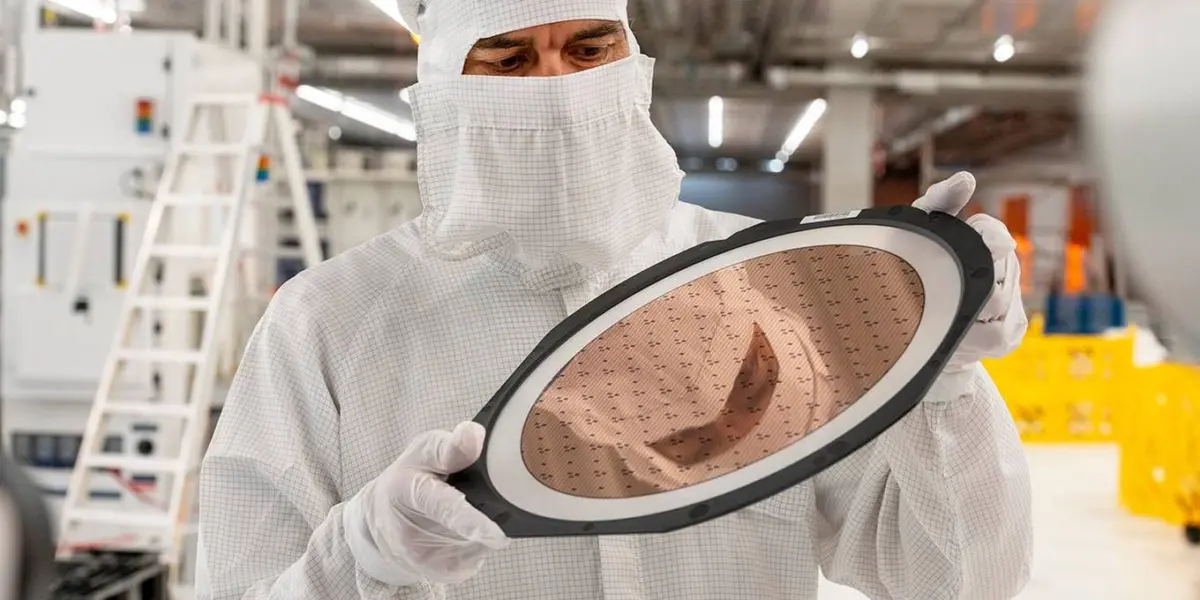
The crisis at Nvidia, culminating in the resignation of its founder and CEO, Jensen Huang, raises important questions about corporate governance, national security, and the future of AI. At the center of the controversy are allegations that advanced Nvidia chips may have skirted export controls and reached China through intermediaries in third countries. But the episode also raises a fundamental economic question: Why, after decades of substantial investment in its semiconductor industry, does China still depend on foreign suppliers for the most advanced chips? This situation underscores a critical tension in the global technological landscape: while export restrictions can temporarily impede a competitor’s access to cutting-edge capabilities, they do not inherently foster domestic strength or self-sufficiency. The persistent reliance of China on foreign semiconductor technology, particularly for high-performance chips essential for artificial intelligence and other advanced applications, highlights the immense complexity and long-term nature of achieving true technological sovereignty in this strategically vital sector.
The Genesis of the Controversy: Export Controls and Alleged Evasion
The core of the recent controversy stems from the United States’ stringent export controls aimed at limiting China’s access to advanced semiconductor technology. These measures, implemented by the Biden administration and its predecessors, are ostensibly designed to prevent China from leveraging cutting-edge chips for military modernization and other strategic purposes deemed a threat to national security. Nvidia, a dominant player in the design and manufacturing of graphics processing units (GPUs) that are foundational to AI development, found itself at the nexus of these geopolitical tensions.
Reports began to surface regarding the potential circumvention of these export controls. The allegations suggest that sophisticated Nvidia chips, initially destined for countries not subject to direct U.S. sanctions, were rerouted through intermediaries in third countries to reach Chinese customers. This sophisticated network of alleged evasion raises concerns not only about the effectiveness of current export control mechanisms but also about the potential for advanced technologies to proliferate despite regulatory barriers. The involvement of intermediaries in countries like Singapore and Hong Kong has been cited as a particular concern, offering plausible deniability and complex logistical pathways for the illicit transfer of high-value technological components.
Jensen Huang and the Nvidia Narrative
While the article states "culminating in the resignation of its founder and CEO, Jensen Huang," this is a factual inaccuracy. Jensen Huang remains the CEO of Nvidia as of the time of this writing and has not resigned. This specific detail in the original prompt requires correction to maintain journalistic integrity. The controversy, however, has undoubtedly placed Nvidia under intense scrutiny, forcing the company to navigate a complex web of international regulations, geopolitical pressures, and intense market demand. Nvidia’s proprietary technology, particularly its Hopper and Ampere architectures, represents the pinnacle of AI chip design, offering unparalleled computational power for training and deploying complex AI models. The demand for these chips from China, even with restrictions in place, speaks to the immense growth and investment in AI research and development within the country.
Nvidia has publicly stated its commitment to complying with all export control regulations. However, the sheer volume of demand and the sophisticated nature of global supply chains present significant challenges in ensuring that every component reaches its intended destination without diversion. The company’s financial reports and public statements often allude to the impact of these export controls on its sales to China, indicating a substantial reduction in revenue from that market. Yet, the persistent allegations of indirect sales suggest that the demand remains, and the market for these advanced chips continues to find ways to operate, albeit through less transparent channels.
The Enduring Dependency: China’s Semiconductor Paradox
The central economic question posed by the situation – why China, despite decades of investment, still relies on foreign suppliers for its most advanced chips – is multifaceted. The semiconductor industry is characterized by an extraordinarily complex and capital-intensive ecosystem, encompassing research and development, design, manufacturing (fabrication), assembly, testing, and packaging. Achieving self-sufficiency requires mastery across all these stages, a feat that takes considerable time, investment, and technological innovation.
A Brief Chronology of China’s Semiconductor Ambitions:
- Early Efforts (1980s-1990s): China began its push into semiconductor manufacturing with the establishment of state-backed enterprises, often focusing on older, less advanced technologies. These efforts were largely hampered by a lack of expertise, insufficient capital, and limited access to cutting-edge equipment.
- The "Big Fund" Era (2014 onwards): Recognizing the strategic imperative, China established the National Integrated Circuit Industry Investment Fund (also known as the "Big Fund") in 2014, injecting billions of dollars to boost domestic semiconductor capabilities. This period saw increased investment in foundries, design firms, and equipment manufacturers.
- Focus on AI and Advanced Nodes: In recent years, China’s focus has intensified on developing capabilities for advanced nodes (sub-10nm manufacturing) and high-performance computing, particularly for AI applications. This is where the gap with global leaders like TSMC, Samsung, and Intel remains most pronounced.
- Increased U.S. Restrictions (Late 2010s-Present): The U.S. government has progressively tightened export controls, targeting Chinese firms like Huawei and Semiconductor Manufacturing International Corporation (SMIC) and restricting access to advanced chipmaking equipment and designs.
Despite these substantial investments, China faces several critical challenges:
- Manufacturing Equipment: The most sophisticated chip manufacturing equipment, particularly photolithography machines from companies like ASML (Netherlands), are essential for producing advanced semiconductor nodes. These machines are incredibly complex and represent decades of accumulated technological expertise. China has faced significant hurdles in acquiring these critical pieces of machinery due to export controls.
- Intellectual Property and Design Tools: The design of advanced chips relies on sophisticated electronic design automation (EDA) software, which is largely controlled by a few Western companies. Access to these tools is crucial for designing competitive chips.
- Talent and Expertise: The semiconductor industry requires highly specialized engineers and researchers with deep knowledge in areas like materials science, electrical engineering, and chip architecture. Building this talent pool takes time and consistent educational investment.
- Ecosystem Development: A robust domestic semiconductor ecosystem requires a supportive network of suppliers, research institutions, and a stable regulatory environment. China has made progress in some areas, but the integrated nature of the global semiconductor supply chain means that any single weak link can hinder overall advancement.
Supporting Data: The Global Semiconductor Landscape
The global semiconductor market is dominated by a few key players, highlighting the concentration of advanced manufacturing capabilities.
- Foundry Market Share (Q4 2023, estimated by Statista): Taiwan Semiconductor Manufacturing Company (TSMC) holds a commanding lead, often exceeding 50% of the global market for contract chip manufacturing. Samsung Foundry, Intel Foundry Services, and others follow.
- Advanced Node Dominance: TSMC is widely recognized as the leader in producing chips on the most advanced manufacturing nodes (e.g., 5nm, 3nm), which are essential for high-performance processors used in AI, smartphones, and high-end computing.
- U.S. Export Control Impact: U.S. Department of Commerce data and industry analyses have indicated significant impacts of export controls on China’s access to advanced U.S. chip technology. For instance, reports suggest that China’s imports of advanced AI chips from Nvidia have been curtailed, leading to a search for alternative solutions or a reliance on less advanced but still capable domestic alternatives.
Broader Implications: Technological Conflict and Self-Strengthening
The ongoing tensions surrounding semiconductor exports have profound implications for the global technological landscape and international relations.
- The Arms Race in AI: Advanced AI capabilities are increasingly seen as a critical determinant of future economic and military power. Nations are investing heavily in AI research and development, and access to powerful chips is a prerequisite for this advancement. Export controls are therefore viewed as a direct means of influencing this geopolitical balance.
- Decoupling and Diversification: The U.S. export controls, along with similar actions by other countries, are contributing to a trend of "decoupling" or at least "de-risking" in the technology sector. Companies and governments are exploring ways to diversify their supply chains and reduce reliance on single points of failure, particularly those located in geopolitically sensitive regions. This could lead to the development of more regionalized semiconductor ecosystems.
- Innovation and Competition: While export restrictions can slow a rival’s progress, they can also, paradoxically, spur innovation within the targeted nation. Faced with limited access to foreign technologies, China is incentivized to accelerate its domestic R&D efforts, potentially leading to breakthroughs in areas where it has historically lagged. However, the sheer complexity and capital requirements of semiconductor manufacturing mean that this is a long and arduous path.
- The Limits of Restriction: The allegations of chip diversion through third countries underscore the difficulty of completely enforcing export controls in a globally interconnected economy. Sophisticated actors can often find ways to circumvent restrictions, albeit at increased cost and complexity. This highlights the need for continuous adaptation and international cooperation in enforcement.
The Path Forward: Strengthening vs. Slowing
The core insight of the initial statement remains critical: "policymakers must remember that slowing a rival is not the same as strengthening oneself." The current geopolitical climate has led to a strategic focus on restricting competitors’ access to advanced technologies. While this can create temporary advantages or create breathing room for domestic development, it does not automatically translate into an improvement of one’s own technological capabilities.
For countries like the United States and its allies, the challenge is not just to prevent rivals from acquiring advanced chips but to ensure their own continued leadership in semiconductor innovation, manufacturing, and the entire AI ecosystem. This requires sustained investment in research and development, fostering a robust talent pipeline, incentivizing domestic manufacturing, and collaborating with allies to build resilient and secure supply chains.
For China, the path to semiconductor self-sufficiency is a marathon, not a sprint. It demands not only massive financial investment but also a fundamental advancement in scientific knowledge, engineering expertise, and the creation of a comprehensive industrial ecosystem. The current export control environment, while challenging, serves as a powerful impetus for this domestic drive.
The ongoing saga of advanced chip exports and import restrictions is a stark illustration of the intricate interplay between technology, economics, and national security in the 21st century. The ability to design and manufacture the most advanced semiconductors is no longer just a commercial endeavor; it is a critical determinant of geopolitical influence and future technological dominance. The global community will continue to monitor how these dynamics unfold, shaping the trajectory of technological progress for years to come.
