

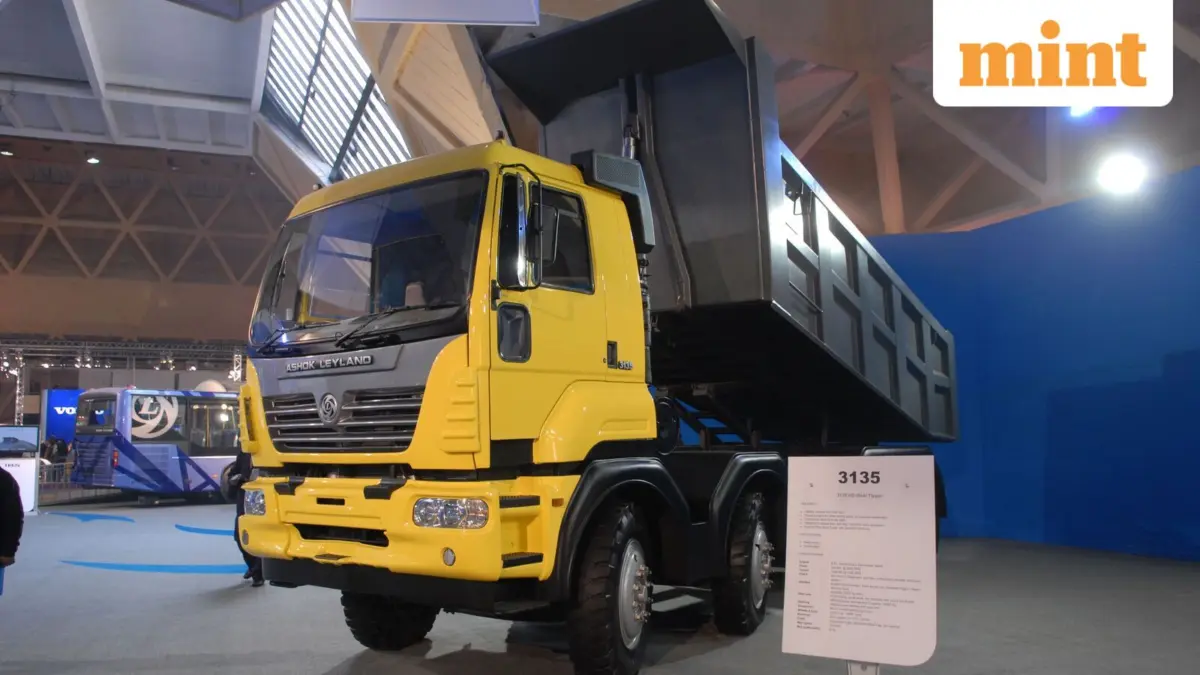
Ashok Leyland, a flagship of the Hinduja Group and a dominant force in the Indian commercial vehicle landscape, reported a complex set of financial results for the second quarter of the 2026-27 fiscal year (Q2FY27). While the company demonstrated significant top-line growth and a resilient market share, its stock price experienced a notable decline of approximately 6% over the past week. This market reaction appears to be a classic case of profit-booking following a sustained period of outperformance, combined with investor caution regarding compressed margins and lingering audit concerns within its financial subsidiary. The quarter’s performance highlights a pivotal moment for the manufacturer as it balances surging demand for heavy trucks with the escalating costs of raw materials and geopolitical disruptions affecting its export markets.
Comprehensive Financial Overview: Revenue Surges Amid Margin Contraction
The standalone financial performance of Ashok Leyland in Q2FY27 was characterized by a sharp increase in revenue, which climbed 39% year-on-year to reach ₹13,364 crore. This growth was largely driven by a robust demand environment for Medium and Heavy Commercial Vehicles (MHCVs), a segment where the company has traditionally held a strong foothold. Earnings Before Interest, Taxes, Depreciation, and Amortization (EBITDA) also saw a positive trajectory, rising 16% to ₹1,350 crore. However, the growth in earnings did not keep pace with the revenue surge, leading to a contraction in profitability ratios.
The EBITDA margin, a key metric for operational efficiency, dipped by 200 basis points year-on-year to 10.1%. This represents the third consecutive quarter of year-on-year margin decline, signaling persistent pressure on the bottom line. The primary culprit behind this squeeze was a 47% year-on-year jump in raw material costs. While the company benefited from favorable operating leverage and a strategic product mix, these factors were only sufficient to keep margins flat on a sequential basis, rather than returning them to previous highs. Despite these pressures, the management has remained optimistic, maintaining its medium-term guidance for mid-teen EBITDA margins, banking on future price hikes and cost-optimization initiatives.
Operational Milestones and Market Share Dynamics
One of the most significant takeaways from the Q2 results is Ashok Leyland’s ability to gain market share in a highly competitive landscape. The company’s share in the MHCV segment rose by 120 basis points year-on-year, reaching 32.1%. This expansion was catalyzed by the successful market reception of new product launches, specifically within the "Hippo" and "Taurus" ranges. These models have catered to the evolving needs of the logistics and construction sectors, which are increasingly prioritizing higher tonnage and fuel efficiency.
The demand for commercial vehicles in India remains resilient, even in the face of macroeconomic challenges. Fleet operators are currently dealing with higher interest rates and rising freight costs; however, several factors continue to incentivize fleet renewal. The ageing of existing fleets, combined with the government’s sustained focus on infrastructure spending, has created a steady stream of replacement demand. Furthermore, the transition to BS6 norms and the subsequent lower total cost of ownership (TCO) for modern trucks have made newer models more attractive to large-scale operators. In October alone, Ashok Leyland reported a 23% growth in volumes, following a stellar 32% volume growth during the July-September quarter.
Strategic Diversification and Non-CV Revenue Streams
While the core commercial vehicle business remains the primary engine of growth, Ashok Leyland is making significant strides in diversifying its revenue base. The company’s defense, aftermarket, and power solutions segments reported impressive growth rates ranging between 33% and 66% during the quarter. This diversification is a strategic move to insulate the company from the cyclical nature of the commercial vehicle industry.
In the defense sector, Ashok Leyland continues to be a preferred supplier for the Indian Armed Forces, providing specialized mobility solutions and logistics vehicles. The aftermarket segment, which includes spare parts and service contracts, provides a high-margin, recurring revenue stream that is less sensitive to economic downturns than new vehicle sales. Additionally, the company’s power solutions business is expanding its footprint in the industrial and marine engine markets, further broadening the brand’s reach.
International Markets and Geopolitical Impact
The export segment of Ashok Leyland faced significant headwinds during Q2FY27, primarily due to the ongoing conflict in West Asia. Volumes in the Gulf Cooperation Council (GCC) region saw a 20% decline as regional instability hampered logistics and dampened investment. However, there are signs of a recovery on the horizon. The management has indicated that its plant in Ras Al-Khaimah, UAE, is returning to near-full capacity, which is expected to bolster export figures starting in the third quarter.

The international strategy remains focused on expanding into emerging markets in Africa and Southeast Asia, where there is a growing demand for cost-effective and durable transport solutions. By localizing production in key regions like the UAE, Ashok Leyland aims to reduce shipping costs and improve turnaround times for its international clientele.
Future Outlook: Expansion and Technological Transformation
Looking ahead, Ashok Leyland is preparing for the next phase of its evolution through significant capital expenditure and technological investments. With its current plants running at approximately 90% utilization, the company is actively pursuing debottlenecking strategies to increase output. Furthermore, plans for greenfield expansions are in the works to ensure the company can meet projected demand over the next decade.
A critical component of the company’s future-proofing strategy is its entry into the green energy space. Investors are closely monitoring the progress of the upcoming 4GWh battery power pack plant. This facility is central to Ashok Leyland’s ambitions in the electric vehicle (EV) sector, particularly for buses and light commercial vehicles (LCVs) under its "Switch Mobility" brand. As the Indian government pushes for the electrification of public transport and last-mile delivery, having an in-house battery manufacturing capability will provide a significant competitive advantage in terms of cost and supply chain security.
Challenges and Governance Concerns
Despite the operational successes, several clouds remain on the horizon. Analysts at Elara Securities (India) have cautioned that the high base set in FY26 and FY27 could lead to a moderation in growth. They expect volume growth to settle into a 3-4% Compound Annual Growth Rate (CAGR) over the FY28-29 period. This potential slowdown suggests that the current "super-cycle" in the CV industry may be reaching a plateau.
Perhaps more concerning for institutional investors is the discrepancy in loan balances flagged by auditors at Hinduja Leyland Finance (HLF), the company’s NBFC arm. An independent review into these discrepancies is currently underway, with results expected in the coming weeks. Any adverse findings could have far-reaching implications, potentially delaying the proposed merger with NDL Ventures and impacting the consolidated financial health of the parent company. Governance and transparency are paramount in maintaining investor confidence, and the resolution of this audit issue will be a key trigger for the stock’s future performance.
Analytical Implications for the Commercial Vehicle Sector
The performance of Ashok Leyland serves as a barometer for the broader Indian economy. The strong demand for heavy trucks suggests that industrial activity and infrastructure projects are continuing at a healthy pace. However, the struggle to maintain margins in the face of inflation is a challenge shared by many in the manufacturing sector.
The company’s strategy of aggressive price hikes—1-1.5% in Q3 with more planned for Q4—is a necessary response to input cost inflation, but it carries the risk of dampening demand if interest rates remain elevated. The success of these hikes will depend on the continued availability of high-yielding freight loads for operators. If freight rates do not rise in tandem with vehicle prices, the TCO calculations for fleet owners could become less favorable, leading to a deferral of purchase decisions.
Conclusion
Ashok Leyland’s Q2FY27 results paint a picture of a company that is operationally robust but financially squeezed by external macro factors. The impressive 39% revenue growth and market share gains in the MHCV segment underscore the brand’s strength and the efficacy of its recent product launches. However, the 200-basis point drop in EBITDA margins and the looming shadow of the HLF audit discrepancy have provided enough reason for the market to take a cautious stance.
As the company moves into the second half of the fiscal year, its ability to navigate the volatile raw material market and resolve internal governance questions will be critical. With a clear focus on diversification into defense and green energy, Ashok Leyland is positioning itself for a multi-polar growth future. Whether it can maintain its momentum as the industry growth rate potentially cools in the coming years remains the primary question for investors and industry observers alike. For now, the focus remains on the upcoming third-quarter results and the outcome of the independent audit review, both of which will dictate the stock’s trajectory in the near term.
