

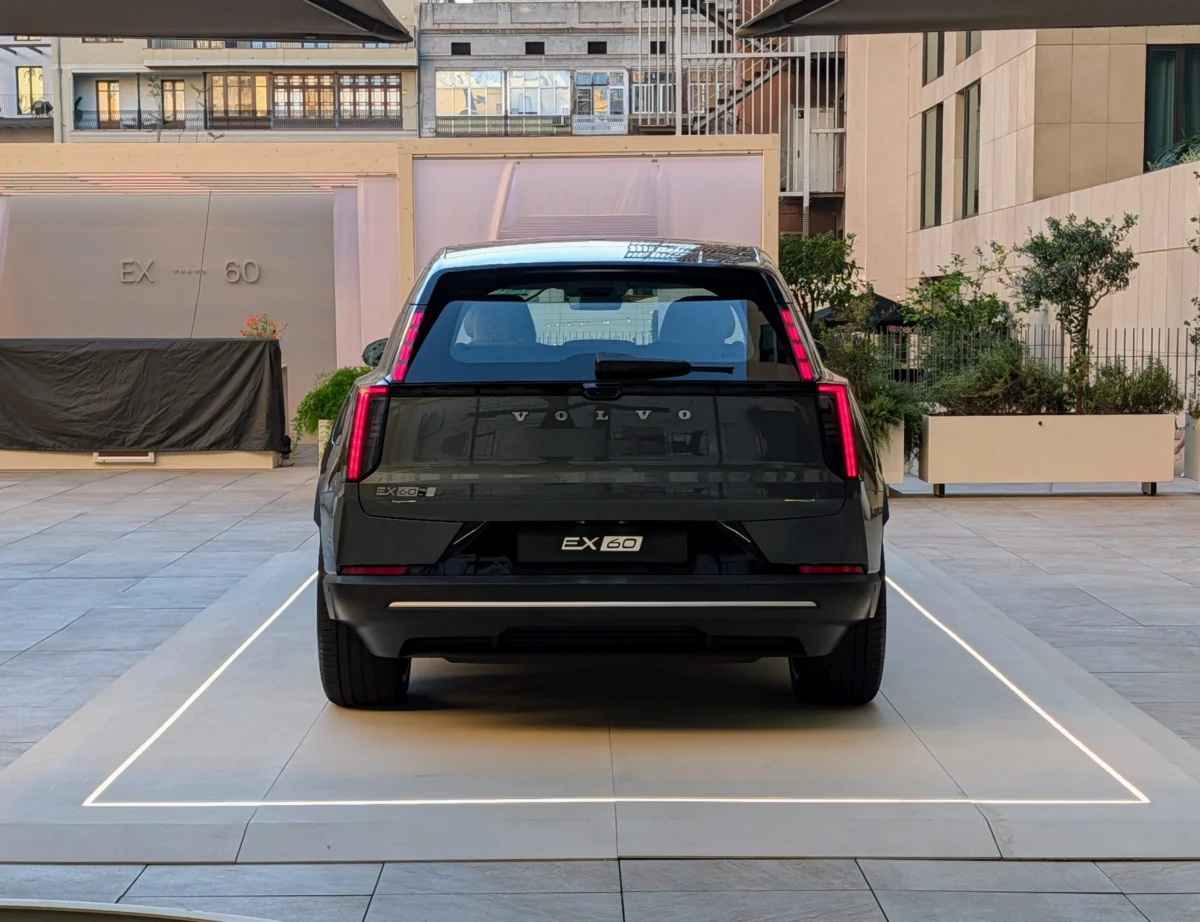
The automotive industry is currently witnessing a pivotal shift as legacy manufacturers transition from internal combustion engines to fully electrified lineups, and Volvo Cars has positioned itself at the vanguard of this movement. With the introduction of the EX60, Volvo is not merely launching another vehicle; it is deploying a strategic centerpiece designed to capture the highest-volume segment of the global automotive market: the midsize SUV. This launch follows the ambitious, albeit technically challenging, release of the flagship EX90, which served as the company’s first "blank sheet" electric vehicle (EV). While the EX90 pushed the boundaries of automotive software and sensor integration, it was initially hampered by software complexities that required a rigorous period of refinement. By late 2023, Volvo successfully addressed these early-stage bugs, clearing the path for the EX60 to debut as a more refined, software-defined vehicle that aims to harmonize high-performance engineering with seamless digital integration.
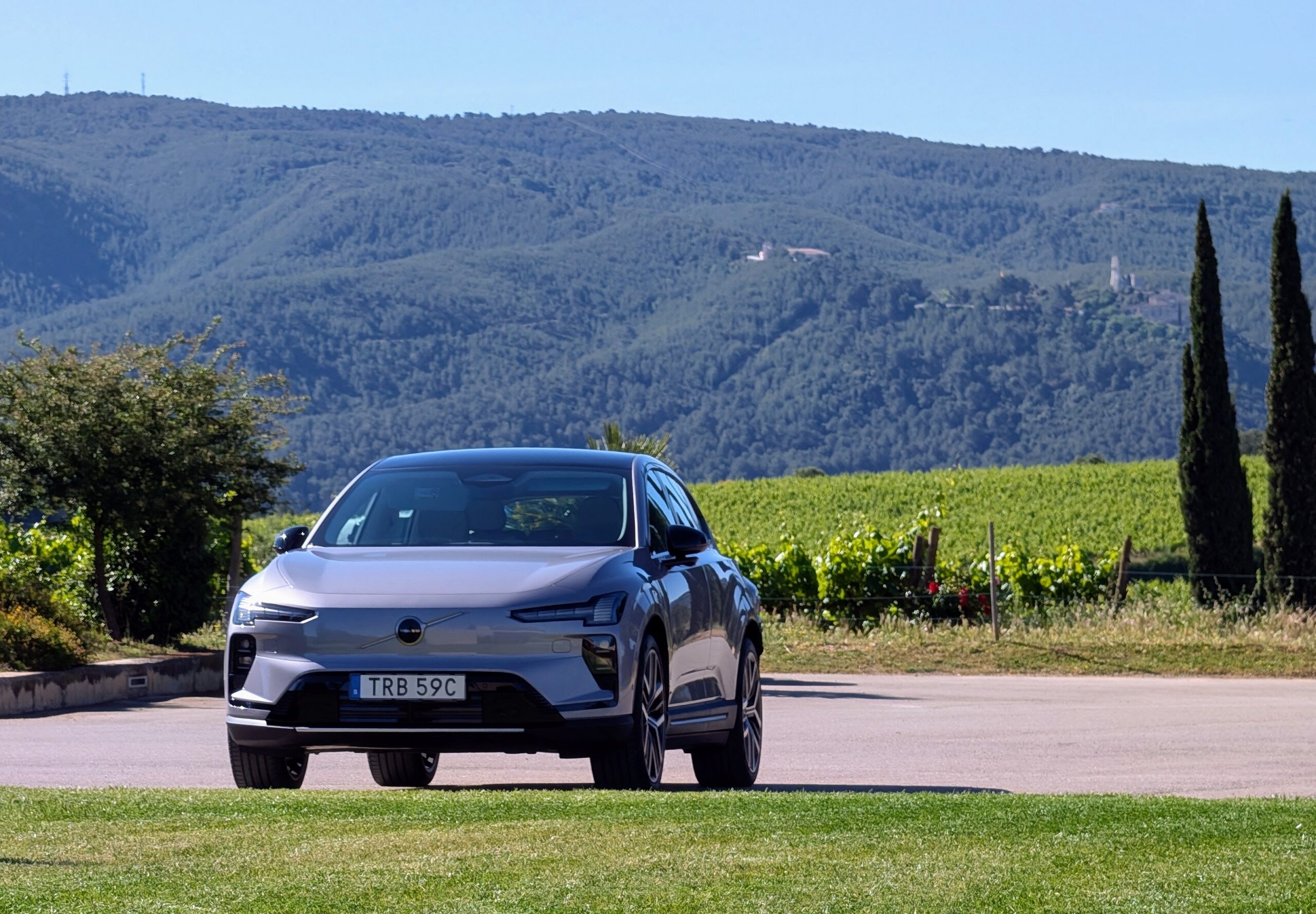
The Strategic Importance of the Midsize SUV Segment
The decision to focus on a midsize SUV for its next major EV release is a calculated move by Volvo’s executive leadership. In the United States and Europe, the midsize SUV category remains the most competitive and profitable sector. By targeting this "sweet spot," Volvo intends for the EX60 to become the primary driver of its mass-market EV adoption. The vehicle is designed to appeal to existing Volvo loyalists—those accustomed to the safety and Scandinavian aesthetics of the XC60—while simultaneously attracting tech-forward consumers who prioritize software capabilities and charging efficiency.
To demonstrate the capabilities of this new platform, Volvo recently hosted an international driving event in Barcelona, Spain. This location was selected for its diverse geography, ranging from congested urban centers to the demanding, winding canyon roads leading toward the Montserrat mountain range. The event provided a comprehensive environment to test the vehicle’s "software-defined" nature, which Volvo claims allows for more precise control over energy management, regenerative braking, and semi-autonomous driving features.

Engineering and Performance: The P6, P10, and P12 Variants
The Volvo EX60 is built on a modular architecture that allows for significant variance in power delivery and range. At launch, the lineup is structured into three primary tiers, catering to different consumer priorities regarding efficiency and raw performance.
The entry-level variant, the EX60 P6, features a single-motor, rear-wheel-drive configuration. Despite being the base model, it delivers a robust 369 horsepower and 354 ft-lb of torque. Power is drawn from an 83 kWh lithium-ion battery pack, of which 80 kWh is usable. On the Environmental Protection Agency (EPA) test cycle, the P6 achieves an estimated 307 miles of range per charge. During testing in the Spanish highlands, the P6 demonstrated a balanced power-to-weight ratio. Although it lacks the sheer acceleration of its dual-motor siblings, its lighter front end contributes to a more nimble handling profile, making it particularly well-suited for urban environments and efficiency-minded commuters.
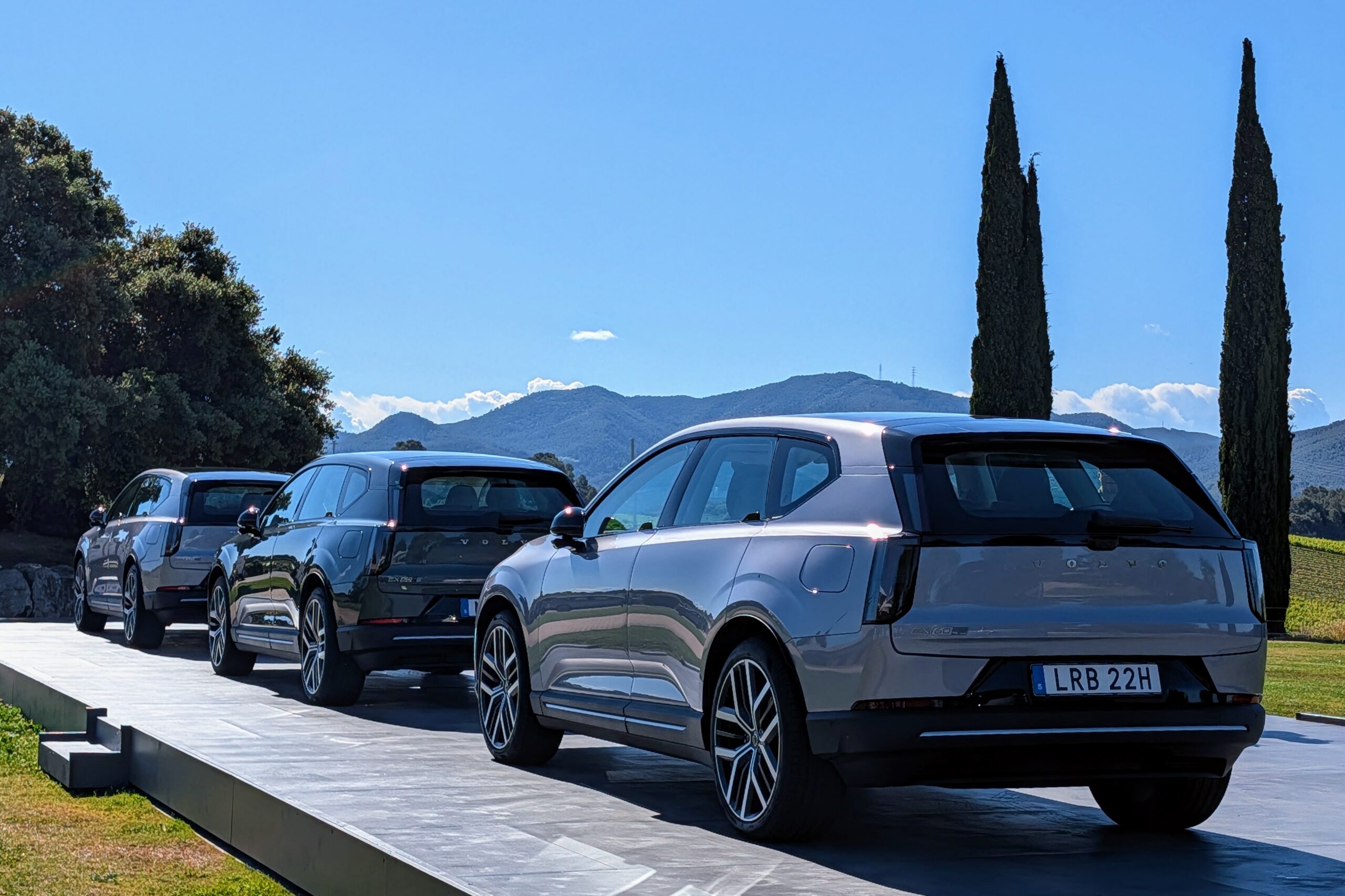
For consumers seeking all-weather capability and increased performance, the EX60 P10 AWD introduces a second motor on the front axle. This configuration bumps the total output to 503 horsepower. The P10 also features an adaptive suspension system, a significant upgrade over the static setup found in the P6. This system utilizes real-time sensor data to adjust damping rates, minimizing body roll during high-speed cornering and reducing "nose-dive" during aggressive braking.
The pinnacle of the lineup is the EX60 P12, a high-performance variant that leverages the same dual-motor architecture but utilizes advanced power electronics to extract 670 horsepower. This model is positioned to compete directly with high-performance electric SUVs from rivals such as BMW’s M division and Mercedes-AMG.

Chronology of Development and Software Integration
The journey to the EX60 began with the lessons learned from the EX90 project. Volvo’s shift toward a centralized computing architecture—where a core processor manages the majority of the vehicle’s functions rather than dozens of independent Electronic Control Units (ECUs)—represented a steep learning curve.
- Early 2022: Volvo announces the EX90, promising a new era of safety and software connectivity.
- 2023: The EX90 experiences delays as engineers struggle with the complexity of integrating LiDAR sensors with the vehicle’s core operating system.
- Late 2023: Volvo completes a series of major "over-the-air" (OTA) updates that stabilize the EX90’s software environment, effectively "squashing the bugs" that plagued early production units.
- January 2026: Volvo officially schedules the global debut of the EX60, utilizing the refined software stack developed during the EX90’s maturation.
- May 2026: Global media are invited to Barcelona for the first real-world evaluations of the EX60 production prototypes.
Volvo’s commitment to the "software-defined vehicle" (SDV) concept is evident in the EX60’s user interface and driving dynamics. The vehicle features a specialized "performance driving mode" in the P10 and P12 variants, which recalibrates the torque vectoring and suspension stiffness via software commands. This allows the car to transform from a comfortable family cruiser into a more aggressive driving machine at the touch of a button.

Driving Dynamics and Regenerative Braking Innovation
A standout feature of the EX60’s engineering is its sophisticated regenerative braking system, often referred to as "One Pedal Driving." Volvo has refined this technology to offer three distinct settings: High, Low, and Auto.
The "High" setting provides maximum energy recuperation, allowing the vehicle to come to a complete stop simply by lifting off the accelerator. The "Auto" setting is perhaps the most innovative, as it utilizes the vehicle’s forward-facing cameras and radar to adjust the level of regen based on traffic conditions and topography. For example, if the car detects a descending grade or a slowing vehicle ahead, it automatically increases regenerative resistance to maintain safety and maximize efficiency.

Furthermore, Volvo has included a "Creep" toggle. This feature mimics the behavior of a traditional automatic transmission, where the vehicle slowly moves forward when the brake is released. By offering these granular adjustments, Volvo aims to ease the transition for drivers moving from internal combustion engines to electric propulsion.
Future Outlook: The EX60 Cross Country
Looking toward the 2028 model year, Volvo has confirmed the addition of an EX60 Cross Country variant. This model will build upon the P10 and P12 platforms but will introduce ruggedized exterior cladding and a specialized air suspension system. This suspension will allow the vehicle to increase its ground clearance for off-road excursions while automatically lowering at highway speeds to optimize aerodynamics and range.

The Cross Country aesthetic remains a staple of Volvo’s brand identity, and the EX60 version is expected to follow the design language established by the smaller EX30 Cross Country. By offering a more rugged option, Volvo is positioning the EX60 to compete with "adventure-ready" EVs like the Rivian R1S and the Audi Q8 e-tron.
Market Implications and Competitive Analysis
The launch of the EX60 comes at a time when the EV market is reaching a point of saturation in the luxury segment but remains underserved in the premium-mainstream midsize category. Volvo’s primary competitors—Tesla with the Model Y, Audi with the Q4 e-tron, and Lexus with the RZ—each offer different value propositions. Volvo’s edge lies in its reputation for safety and its distinct Scandinavian design philosophy, which emphasizes "minimalist luxury" and sustainable materials.
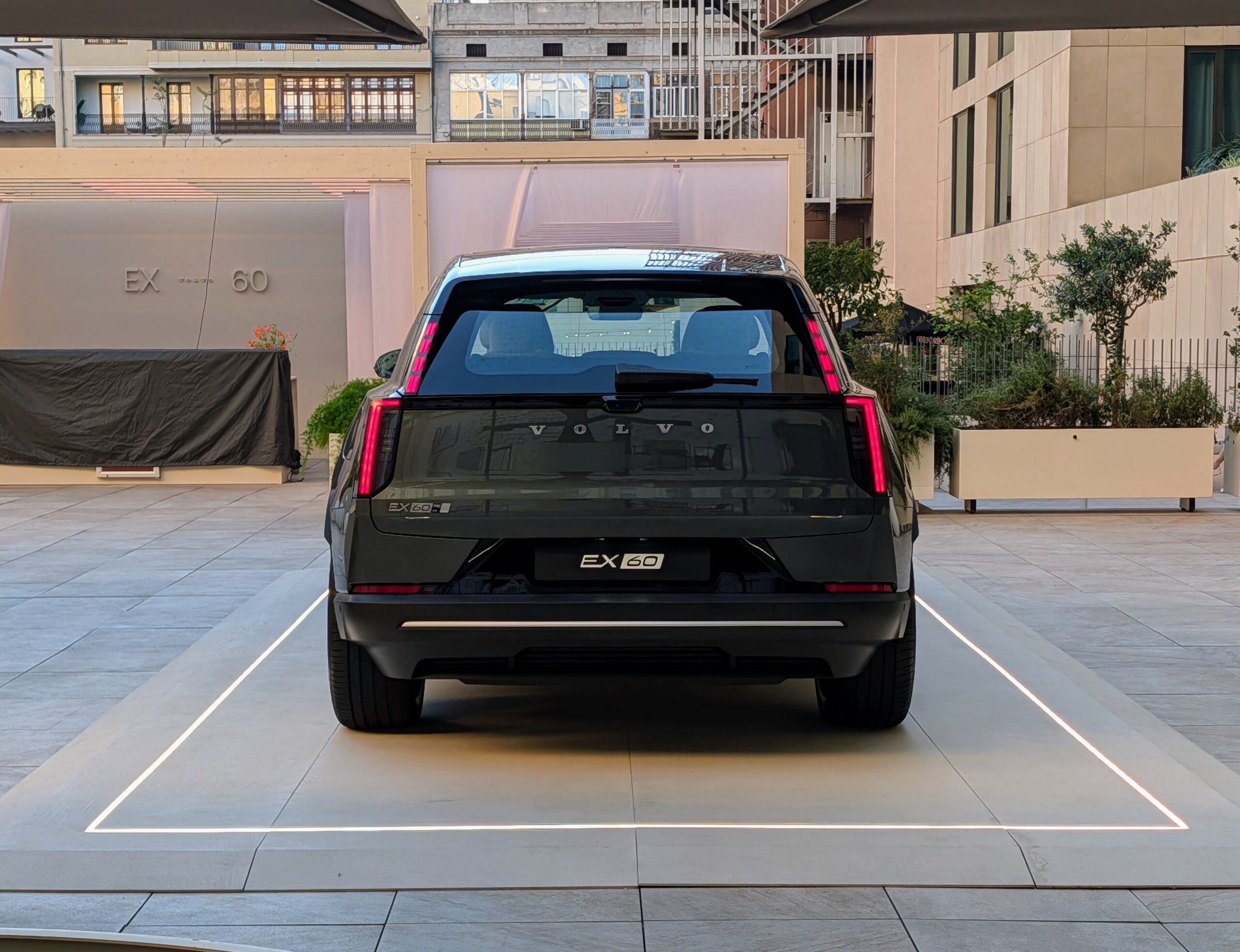
Industry analysts suggest that the success of the EX60 will depend largely on Volvo’s ability to maintain a stable software experience from day one. Having navigated the "software-defined" hurdles of the EX90, the company appears well-positioned to deliver a polished product. The inclusion of the "Thor’s Hammer" LED lighting and the signature "stepped shoulders" in the rear design ensures that the EX60 remains instantly recognizable as a Volvo, maintaining brand continuity in a rapidly changing market.
Conclusion
The Volvo EX60 represents the maturation of Volvo’s electric strategy. By moving from the "blank sheet" experimentation of the EX90 to a high-volume, refined midsize SUV, the Swedish automaker is signaling its readiness to compete at scale. With a range of over 300 miles, horsepower figures reaching up to 670, and a sophisticated software architecture, the EX60 is a formidable contender in the race for EV dominance. As orders open in North America and Europe, the automotive world will be watching closely to see if this "software-defined" SUV can indeed become the de facto leader of Volvo’s mass-market electrification.
