

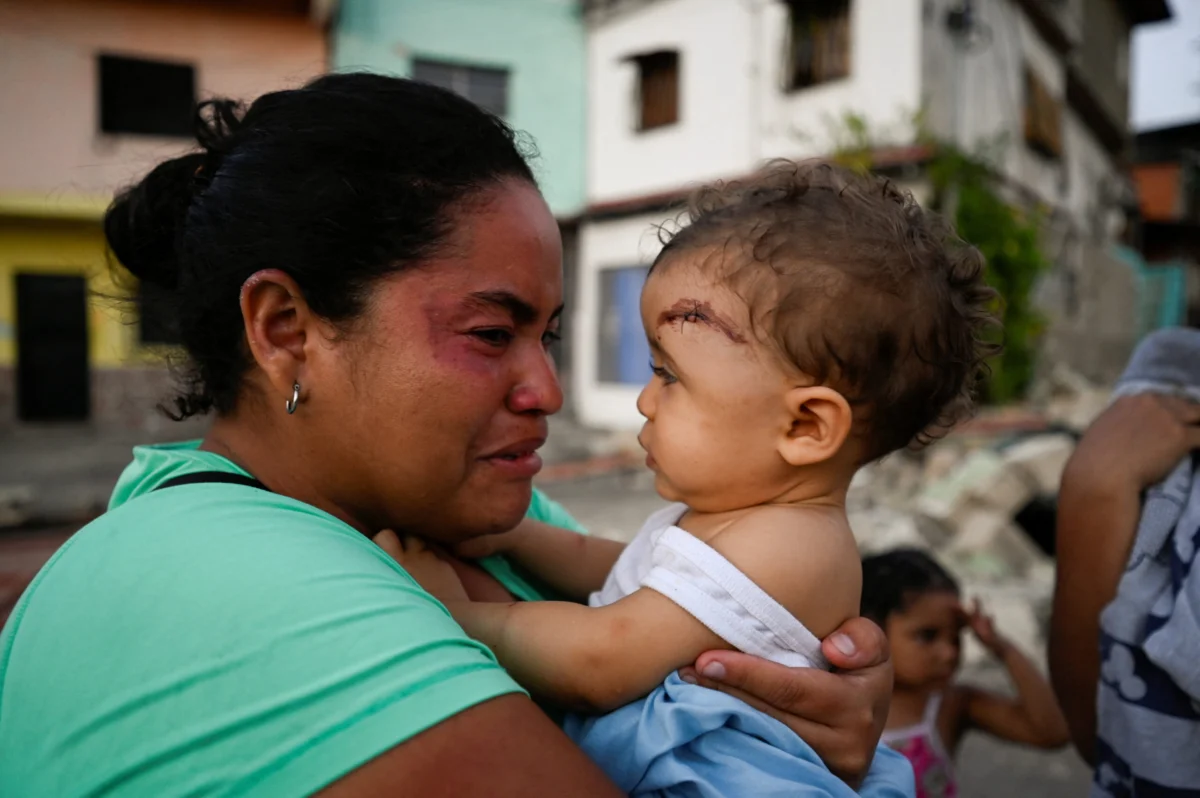
Rescue workers and volunteers have been scrambling tirelessly to reach survivors since back-to-back magnitude 7.2 and 7.5 earthquakes struck northern Venezuela on Wednesday, unleashing devastating destruction across the region. The seismic events have tragically claimed the lives of more than 1,400 people and caused widespread devastation in the capital, Caracas, and the adjoining coastal state of La Guaira, leaving an indelible mark on a nation already grappling with profound political and economic instability. Amidst the overwhelming scale of death and destruction, a few fleeting moments of miraculous survival and profound human solidarity have emerged, offering glimmers of hope to Venezuelans and millions of people around the world.
The Seismic Catastrophe and Immediate Aftermath
The initial tremor, a powerful magnitude 7.2 earthquake, struck at approximately 2:17 PM local time on Wednesday, with its epicenter located just off the coast of La Guaira, a mere 30 kilometers (18 miles) north of Caracas. This was followed less than two hours later by an equally ferocious magnitude 7.5 aftershock, compounding the initial damage and triggering further collapses of already weakened structures. Seismologists at the Venezuelan Foundation for Seismological Research (FUNVISIS) noted that the shallow depth of both quakes, estimated at around 10-15 kilometers, significantly amplified their destructive power across densely populated urban areas. The tremors were felt as far away as neighboring Colombia and Trinidad and Tobago, underscoring the immense energy released along the Caribbean Plate boundary, a region historically prone to significant seismic activity.
Within minutes of the initial quake, reports of collapsed buildings began to flood emergency services. High-rise apartment blocks, many of which predated modern seismic building codes or had suffered from years of deferred maintenance, crumbled into piles of concrete, steel, and dust. The vibrant streets of Caracas, usually bustling with activity, were transformed into scenes of chaos and despair, with panicked residents fleeing damaged buildings and desperate cries echoing from beneath the rubble. La Guaira, a crucial port city and tourist destination, bore the brunt of the devastation, with entire neighborhoods reduced to unrecognizable landscapes of debris and sand. Preliminary assessments indicated that over 774 buildings had completely collapsed, and thousands more suffered severe structural damage, rendering them uninhabitable. The scale of the humanitarian crisis quickly became apparent, necessitating an immediate and coordinated response.
Chronology of a Crisis: From Tremors to Tense Rescues
- Wednesday, June 26:
- 2:17 PM (Local Time): Magnitude 7.2 earthquake strikes northern Venezuela, followed shortly by widespread reports of damage and casualties in Caracas and La Guaira.
- Approximately 4:00 PM: Magnitude 7.5 aftershock hits, exacerbating damage and triggering further building collapses.
- Evening: Local emergency services, police, and military personnel are immediately deployed. Initial efforts focus on rudimentary search and rescue using manual methods. Hospitals in Caracas and La Guaira are overwhelmed with casualties. Interim President Delcy Rodriguez declares a state of emergency and appeals for international assistance.
- Thursday, June 27:
- Morning: The full extent of the devastation begins to emerge as daylight reveals widespread destruction. Death toll rises rapidly. Access roads to La Guaira are severely damaged, hindering the movement of heavy equipment and aid.
- Afternoon: International offers of aid begin to pour in. The International Federation of Red Cross and Red Crescent Societies (IFRC) announces the release of emergency funds. Neighboring countries like Colombia and Brazil begin mobilizing rescue teams.
- Throughout the Day: Civilian volunteers in Caracas and other unaffected areas organize spontaneous collection points for food, water, and medical supplies, demonstrating immense community spirit.
- Friday, June 28:
- Morning: First international search and rescue (SAR) teams, equipped with specialized tools and K9 units, begin arriving, primarily through Simon Bolívar International Airport. Operations are concentrated in the hardest-hit areas of La Guaira.
- Afternoon: The Venezuelan government outlines initial plans for temporary shelters and begins assessing the structural integrity of damaged buildings. Challenges in coordination and logistics become apparent due to damaged infrastructure and the sheer volume of debris.
- Saturday, June 29:
- Throughout the Day: Intensive rescue operations continue. Miraculous rescues, including that of a wailing infant and two 11-year-old boys, provide moments of hope amidst the despair. These events are widely shared on social media, galvanizing global attention.
- Evening: The US Department of State confirms the involvement of US rescue crews in the infant’s rescue, highlighting international collaboration.
- Sunday, June 30:
- Morning: Interim President Delcy Rodriguez holds a press conference, providing updated casualty figures and announcing the formation of a presidential commission to assess building habitability. She confirms classes are suspended for another week and electricity in La Guaira is 75% restored.
- Midday: Pope Leo XIV leads a special prayer for Venezuela during his weekly address in Rome, also announcing initial emergency aid from the Vatican.
- Afternoon: Jorge Rodriguez, President of the National Assembly, updates the official death toll to 1,450, with 3,150 injured and 12,721 displaced, further emphasizing the scale of the human tragedy. Concerns are raised about traffic congestion hindering emergency vehicle access to La Guaira, leading to tightened access controls.
Official Response and Humanitarian Challenges
Interim President Delcy Rodriguez, leading the government since her predecessor Nicolas Maduro was abducted by the US military in January, addressed the nation on Sunday, providing a sobering update on the disaster. Flanked by several of her ministers, Rodriguez announced that rescue and recovery efforts were ongoing, emphasizing that operations would not be suspended as long as there remained a chance to recover survivors. "Today, we have recovered people alive, and therefore, operations are not being suspended. We always maintain hope," she stated, projecting a message of resolve amidst the crisis. She also confirmed the establishment of a presidential commission tasked with determining the habitability of damaged buildings, a crucial step for long-term recovery and housing solutions.
In an effort to manage the immediate aftermath, Rodriguez announced the suspension of school classes for an additional week across affected regions, prioritizing safety and allowing families to focus on recovery. Significant progress was also reported in restoring critical infrastructure, with electricity supply in La Guaira, the hardest-hit state, reaching 75 percent. However, the logistical challenges remained immense. The government, while thanking civilian volunteers ferrying aid to La Guaira, subsequently tightened access to the main road leading to the coastal state. Officials cited severe traffic congestion as a primary impediment to the efficient movement of essential emergency vehicles and heavy machinery, a decision that sparked some public debate but was presented as necessary for operational efficacy.
Jorge Rodriguez, the acting president’s brother and president of the National Assembly, provided the most recent and grim casualty figures. On Sunday, he announced that the death toll had tragically risen by 20 people to reach 1,450. He further detailed that 3,150 people had sustained injuries, ranging from minor scrapes to severe trauma requiring extensive medical care. The displacement figures painted an equally dire picture, with 12,721 individuals now rendered homeless, seeking refuge in temporary shelters or with relatives. These numbers are expected to fluctuate as search operations continue and debris is cleared, particularly in areas where access has been difficult. The immediate humanitarian priorities include providing shelter, food, clean water, and medical attention to the displaced and injured, while simultaneously supporting the exhaustive search for those still trapped beneath the rubble.
A Nation in Peril: Background Context of Venezuela’s Crisis
The catastrophic earthquakes struck a nation already teetering on the brink of collapse due to years of profound political and economic crises. Venezuela has endured hyperinflation, severe shortages of food, medicine, and basic necessities, and a mass exodus of its population, with millions having fled the country in search of better living conditions. The political landscape has been tumultuous, characterized by deep polarization and international isolation. The current interim government, led by Delcy Rodriguez, assumed power following the controversial "abduction" of President Nicolas Maduro by the US military in January, an event that further destabilized the nation and complicated international relations.
This pre-existing fragility significantly exacerbates the challenges of disaster response and recovery. Decades of underinvestment in infrastructure, coupled with rampant corruption and a lack of resources, meant that many buildings were not constructed to modern seismic standards or had deteriorated significantly. Public services, including healthcare, water, and electricity, were already stretched thin before the disaster. The economic downturn has depleted national reserves, limiting the government’s capacity for independent large-scale relief efforts and making the country heavily reliant on international aid. The earthquakes have thus not merely been a natural disaster but a crisis layered upon an already deeply vulnerable state, testing the resilience of its institutions and its people to unprecedented levels.
Global Solidarity: A Beacon of Hope
In the wake of such immense devastation, the international community responded with an outpouring of solidarity and assistance, providing a crucial lifeline to Venezuela. Countries across the Americas and beyond swiftly dispatched search and rescue teams, humanitarian aid, and financial contributions, demonstrating a collective commitment to assist the beleaguered nation.
The United States, despite existing political tensions with the Venezuelan government, announced substantial plans to deploy warships, transport planes, and helicopters, alongside a significant financial aid package of $150 million. This commitment underscored the humanitarian imperative transcending geopolitical differences. Brazil, a regional neighbor, promptly sent specialized firefighters, risk assessment experts, and telecommunications specialists, along with vital medical supplies, highlighting regional cooperation. El Salvador, no stranger to seismic activity, prepared a contingent of 300 paramedics and other rescue workers, accompanied by 50 tonnes of essential equipment, medicines, and basic supplies, showcasing practical solidarity.
The International Federation of Red Cross and Red Crescent Societies (IFRC) quickly mobilized, releasing $2.5 million from its disaster relief fund to support immediate recovery efforts, coordinating its extensive network of volunteers on the ground. Cuba, Mexico, and Colombia, all with significant experience in disaster response, deployed their highly skilled rescue workers, medical personnel, and emergency medical supplies. Further afield, nations including Turkiye, Qatar, France, India, China, the Netherlands, Czech Republic, Switzerland, and Germany were also among the diverse group of countries to send support, reflecting a truly global response to the Venezuelan tragedy. This widespread international assistance has been critical not only for its practical benefits but also for providing psychological comfort to a population feeling isolated and overwhelmed.
Heartwarming Moments: Glimmers of Light Amidst the Gloom
Amidst the harrowing tales of loss and destruction, several incidents have emerged that have brought fleeting moments of cheer and renewed hope to Venezuelans and the world. These acts of courage, resilience, and compassion serve as powerful reminders of the human spirit’s enduring strength.
When the World Came to Help: The sheer volume and speed of international aid were a powerful testament to global solidarity. From the specialized teams meticulously combing through rubble with advanced listening devices and sniffer dogs, to the medical personnel setting up field hospitals, and the logistical experts coordinating aid distribution, the collective effort was immense. The sight of flags from dozens of nations flying alongside Venezuela’s at aid coordination centers symbolized a world united in compassion, offering tangible relief and a sense of not being forgotten to the affected population.
Baby Rescued: On Saturday, a wave of profound relief and joy swept through rescue operations when a wailing infant was miraculously recovered from the rubble in La Guaira. The moment, captured on video and widely shared, showed helmet-clad emergency workers carefully removing the blanket-wrapped child from a precarious void within the collapsed structure. The US Department of State notably hailed the operation by US rescue crews involved in the delicate extraction, posting the video on X (formerly Twitter) and emphasizing the collaborative nature of the rescue. The infant’s cries, a sound of life amidst the silence of death, became a powerful symbol of hope and the unwavering dedication of the rescue teams.
Two 11-Year-Old Boys Found: The story of two 11-year-old boys, Moises and Rodriguez, trapped under meters of debris, captivated the world. Moises, an 11-year-old, was saved by a Colombian rescue team. Trapped under approximately 3 meters (10ft) of debris, his location was identified using advanced acoustic scanners. After a painstaking operation, he was carefully extracted on a stretcher, his arm broken and eyes covered to protect them from the shock of daylight after days in darkness. Tragically, his mother and sister did not survive. Simultaneously, another 11-year-old boy, identified as Rodriguez, was rescued by a team from Mexico from a collapsed building in the town of Caraballeda. A post on X from the Mexican crew late on Saturday showed their members carrying a small figure on a stretcher out of the rubble, another powerful image of life defying the odds. These rescues underscored the critical importance of specialized equipment and the unwavering determination of the international SAR teams.
Students and Volunteers Form Human Chain: In a remarkable display of community spirit and selfless dedication, videos circulated on social media showing hundreds of people, predominantly university students and local volunteers, forming human chains to unload trucks laden with humanitarian supplies. Working tirelessly and nonstop, these individuals manually transferred aid packages – including food, water, medical kits, and clothing – from delivery vehicles to distribution points in affected areas. Their captions and comments accompanying the videos highlighted the spontaneous, organized effort to bypass logistical bottlenecks and ensure aid reached survivors quickly. This grassroots initiative symbolized the Venezuelan people’s resilience and their deep-seated capacity for mutual aid in times of crisis.
Pope Leads a Prayer: On Sunday, Pope Leo XIV provided spiritual solace to millions, telling worshippers gathered in Rome that he wished "to express my closeness to the Venezuelan sisters and brothers affected by the recent earthquakes." His heartfelt prayer offered comfort to a grieving nation and acknowledged the immense suffering. Earlier, the Vatican had announced an "initial" emergency aid contribution of 100,000 euros ($114,000), underscoring the Holy See’s commitment to humanitarian assistance and its global reach in times of need. The Pope’s message resonated deeply, providing a moment of collective reflection and spiritual support for a country facing immense challenges.
Broader Impact and Long-Term Implications
The devastating earthquakes will have profound and lasting implications for Venezuela, further complicating its already precarious trajectory. Economically, the cost of reconstruction is projected to be immense, potentially running into billions of dollars. This financial burden will severely strain a national economy already crippled by hyperinflation, sanctions, and a dramatic decline in oil revenues. The damage to infrastructure, including roads, bridges, and utilities, will disrupt supply chains, commerce, and daily life for months, if not years. The long-term impact on the housing sector is particularly concerning, with thousands now homeless and many more living in structurally compromised buildings, necessitating extensive urban planning and redevelopment efforts.
Politically, the disaster presents both a challenge and a potential opportunity for the interim government. While the immediate crisis demands effective leadership and coordination, it also offers a chance to demonstrate competence and foster national unity. The influx of international aid, particularly from countries with strained diplomatic ties, could potentially open new avenues for dialogue and cooperation, or conversely, could become a point of contention if distribution is perceived as politicized. The existing narrative around the "abduction" of Nicolas Maduro and the legitimacy of the interim government will undoubtedly influence how international aid is channeled and received, adding a layer of complexity to the humanitarian response.
Humanitarian needs will extend far beyond immediate relief. Long-term recovery will require extensive support for mental health, particularly for those who have lost loved ones or witnessed horrific scenes. The risk of disease outbreaks in overcrowded temporary shelters is a serious concern, requiring robust public health interventions. Rebuilding communities, restoring livelihoods, and ensuring access to essential services will be a multi-year endeavor, demanding sustained international commitment and transparent governance. The earthquakes have laid bare Venezuela’s vulnerabilities, underscoring the urgent need for resilient infrastructure, robust disaster preparedness mechanisms, and a stable socioeconomic environment to withstand future shocks. The path to recovery will be arduous, but the extraordinary displays of human solidarity and resilience offer a vital source of strength for the Venezuelan people in their darkest hour.
