

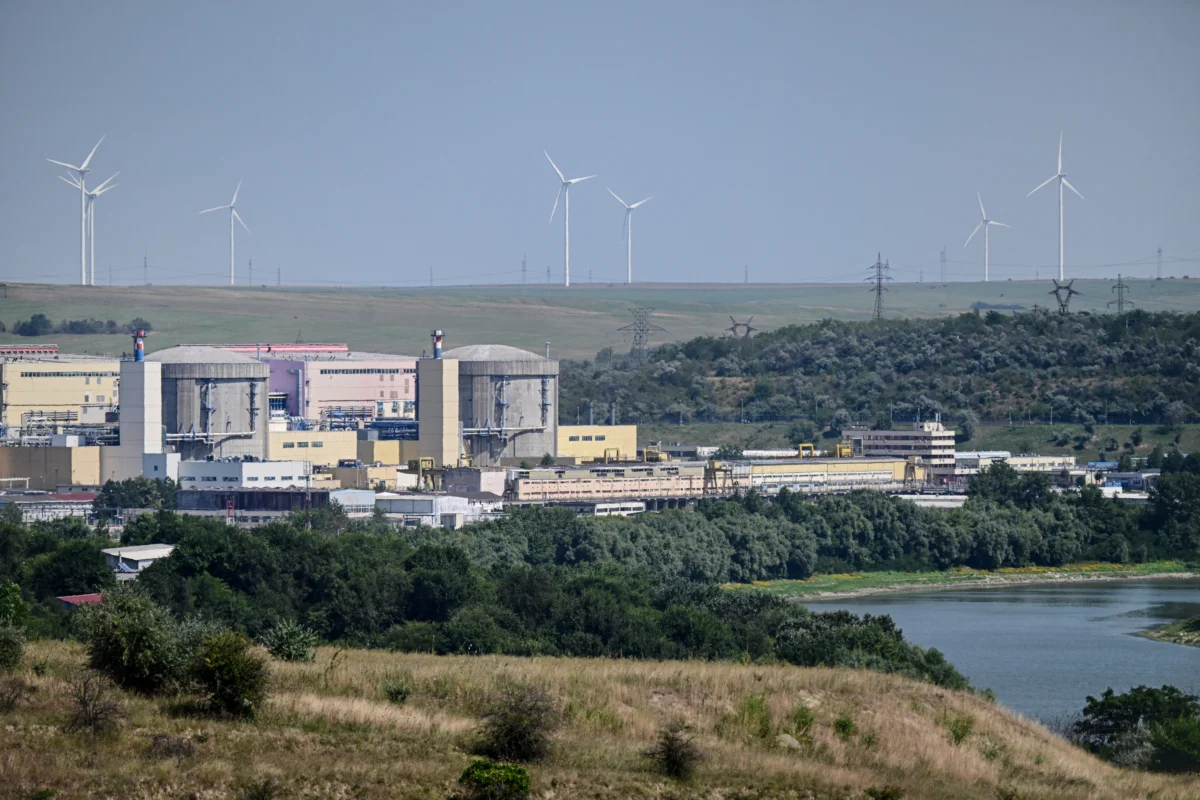
The energy landscape of Southeastern Europe has entered a period of acute crisis as Romania officially suspended operations at its sole nuclear power facility, the Cernavoda Nuclear Power Plant, due to a catastrophic drop in water levels along the Danube River. This unprecedented environmental challenge has forced the national nuclear energy producer, Nuclearelectrica, to initiate an emergency controlled shutdown of its remaining operational reactor, effectively removing a critical pillar of the nation’s power grid. The move comes as a severe and prolonged drought continues to ravage the European continent, reducing one of its most vital waterways to a fraction of its normal volume and threatening the stability of regional energy markets.
The decision to shutter the facility followed weeks of desperate engineering efforts aimed at maintaining the flow of cooling water to the plant’s two reactors. On Thursday, Nuclearelectrica confirmed that the second unit at Cernavoda would be brought offline, following the closure of the first unit late last month. With the Danube’s flow rates hitting their lowest levels in over three decades across nearly two-thirds of the river’s length, the safety protocols governing the plant’s cooling systems reached their mandatory threshold for cessation of operations. The closure marks a significant turning point in Romania’s struggle against the 2026 drought, highlighting the vulnerability of critical infrastructure to shifting climatic patterns.
The Engineering Crisis at Cernavoda
The Cernavoda Nuclear Power Plant, located in the Dobruja region, is the backbone of Romania’s domestic energy production, typically generating approximately 20 percent of the country’s total electricity. The facility utilizes Canadian-designed CANDU (Canada Deuterium Uranium) reactors, which require a consistent and massive volume of water for their cooling circuits. Under normal conditions, the Danube provides an ample supply of water, but the current hydrological deficit has rendered the plant’s intake systems increasingly ineffective.
In the weeks leading up to the total shutdown, the Romanian government and Nuclearelectrica officials engaged in an intensive, high-stakes campaign to keep the reactors running. A budget exceeding 2 million euros ($2.3 million) was allocated for emergency civil engineering works intended to divert the remaining flow of the Danube toward the plant’s intake channels. These measures included the use of explosives to clear a large underwater rock formation that was obstructing the narrowed flow of the river. Furthermore, authorities took the drastic step of sinking four large barges filled with stone into the riverbed to act as makeshift levees, attempting to channel the receding water toward the cooling infrastructure.
Despite these efforts, the natural decline of the river outpaced the engineering interventions. Romeo Urjan, the director of the Cernavoda plant, expressed a somber outlook regarding the facility’s immediate future. Speaking to international news agencies, Urjan indicated that a restart of operations is not anticipated within the next 10 days, as meteorological forecasts show no sign of significant rainfall in the Danube basin. The shutdown represents a "controlled and safety-first approach," according to the director, emphasizing that while the lack of water is a logistical crisis, it must not be allowed to become a safety hazard.
Regional Contagion: The Situation in Hungary
The hydrological crisis is not confined to Romanian borders. Neighboring Hungary is grappling with similar challenges at its Paks Nuclear Power Plant, which also relies on the Danube for cooling. The Paks facility is even more central to its national grid than Cernavoda is to Romania’s, typically providing roughly one-third of Hungary’s total electricity needs.
While Hungary has managed to avoid a total blackout of its nuclear capacity thus far, the situation remains precarious. The Hungarian government has reported that the Paks plant has been operating at reduced capacity since late last month. To prevent a total shutdown, Prime Minister Peter Magyar announced on Wednesday that emergency construction had begun on a submerged weir, or underwater wall, designed to raise water levels specifically at the plant’s intake points.
In a strategy mirroring the Romanian approach, Hungarian authorities have stationed two 80-meter barges at the Paks site, prepared to be scuttled to serve as temporary dams if the river depth falls below the critical threshold. These "last-resort" engineering tactics underscore the desperation of central European governments as they attempt to protect their energy sovereignty in the face of an unrelenting heatwave and drought.
Historical Context and Hydrological Data
The current state of the Danube is being monitored closely by the European climate change observatory, Copernicus. Their recent analysis confirms that the river—Europe’s second-longest, stretching 2,850 kilometers from Germany to the Black Sea—is experiencing a generational low. Flow rates in several sectors have plummeted to levels not seen since the early 1990s.
This drought is part of a broader trend of extreme weather events affecting the European continent. While the 2022 drought was previously considered a benchmark for modern climate impact, the 2026 crisis has surpassed it in terms of duration and the speed of river depletion. The impact on shipping has been equally devastating. Large sections of the Danube have become unnavigable for heavy cargo vessels, disrupting the transport of grain, fuel, and raw materials. This logistical paralysis adds another layer of economic strain to a region already dealing with inflated energy costs.
In Romania, the Ministry of Energy has been forced to recalibrate the national energy balance. With 20 percent of the country’s generation capacity now offline, the reliance on alternative sources has intensified. Historically, Romania has leaned on its hydroelectric dams during the summer, but the same drought that has crippled the nuclear sector has also emptied the country’s reservoirs, significantly reducing hydro-output.
Official Responses and the Call for "Responsible Consumption"
The Romanian Ministry of Energy has moved to reassure the public that total grid failure is not imminent, citing an increase in wind power generation and a surge in electricity imports from neighboring European Union partners. However, officials have been transparent about the fragility of the current supply-demand balance.
On Wednesday, the Ministry issued a stern appeal for "responsible consumption," urging citizens and businesses to minimize non-essential electricity use. The government has warned that if the situation does not improve, mandatory restrictions will be implemented. Under these contingency plans, large industrial consumers—such as aluminum smelters and chemical plants—would face consumption limits during peak evening hours. These "last resort" measures are intended to shield residential consumers from rolling blackouts, but they carry the risk of significant industrial slowdowns and economic contraction.
In Hungary, the tone has been similarly cautious. The government has emphasized that the construction of the submerged weir at Paks is a proactive measure to ensure the cooling of the four reactors. Unlike the Romanian CANDU reactors, the Paks units are of the VVER-440 design (Soviet-era pressurized water reactors), which have slightly different thermal tolerances but are nonetheless entirely dependent on the Danube’s thermal sink capacity.
Broader Implications for European Energy Security
The dual crisis at Cernavoda and Paks highlights a growing concern among energy policy experts: the vulnerability of traditional baseload power to climate change. Nuclear power is often touted as a reliable, carbon-free alternative to fossil fuels, but its heavy reliance on large bodies of water for cooling creates a specific geographic and climatic dependency.
The total shutdown in Romania is expected to drive up wholesale electricity prices across the Balkans and Central Europe. As Romania pivots to the spot market to replace its lost nuclear output, the increased demand is likely to strain the interconnected European grid. This comes at a time when other nations are also struggling with low hydro-reservoirs and high cooling demands driven by the same heatwave.
Furthermore, the disruption of shipping on the Danube has significant implications for the transition to greener energy. The river is a primary corridor for the transport of components for wind turbines and solar panels, as well as the biomass used in renewable heating plants. The inability to move these goods efficiently could delay various green energy projects across the Danube basin, creating a feedback loop where the effects of climate change hinder the efforts to mitigate it.
Chronology of the 2026 Danube Energy Crisis
The descent into the current crisis followed a clear and alarming timeline:
- June 2026: Above-average temperatures across the Alps and the Carpathian Mountains lead to rapid snowmelt, followed by an abrupt cessation of rainfall.
- July 15, 2026: The European climate change observatory Copernicus issues its first "Red Alert" for the Danube basin, noting that soil moisture levels have reached record lows.
- July 28, 2026: Nuclearelectrica announces the controlled shutdown of Cernavoda Reactor 1 as water intake levels hit the "caution" threshold.
- August 2, 2026: Hungary reduces output at the Paks Nuclear Power Plant by 25 percent to manage rising river water temperatures and falling levels.
- August 10, 2026: The Romanian Ministry of Energy authorizes emergency funds for river diversion projects, including the demolition of the Cernavoda rock obstruction.
- August 12, 2026: Record-low water levels expose Nazi-era warship wrecks in the Serbian and Romanian sectors of the Danube, highlighting the severity of the drop.
- August 13, 2026: Nuclearelectrica confirms the total shutdown of Cernavoda as Reactor 2 is taken offline. Hungary begins construction of the submerged weir at Paks.
Looking Ahead: The Path to Recovery
The immediate priority for both Bucharest and Budapest is the stabilization of the regional power grid. In the short term, this will require a delicate orchestration of energy imports and the hope for a break in the weather. Meteorologists suggest that a significant shift in atmospheric pressure is required to bring sustained rainfall to Central Europe, an event that currently remains elusive in the mid-term models.
In the long term, this crisis is likely to spark a re-evaluation of nuclear infrastructure in the region. Proposals for "dry cooling" technologies or the construction of additional cooling towers that do not rely solely on direct river intake may gain political and financial momentum. However, such retrofits are expensive and time-consuming.
For now, the people of Romania and Hungary remain in a state of watchful waiting. The silence of the reactors at Cernavoda serves as a potent reminder of the complex relationship between industrial civilization and the natural environment. As the Danube continues to recede, the focus remains on conservation, engineering ingenuity, and the hope that the rains will return before the "last resort" of industrial rationing becomes a permanent reality.
