

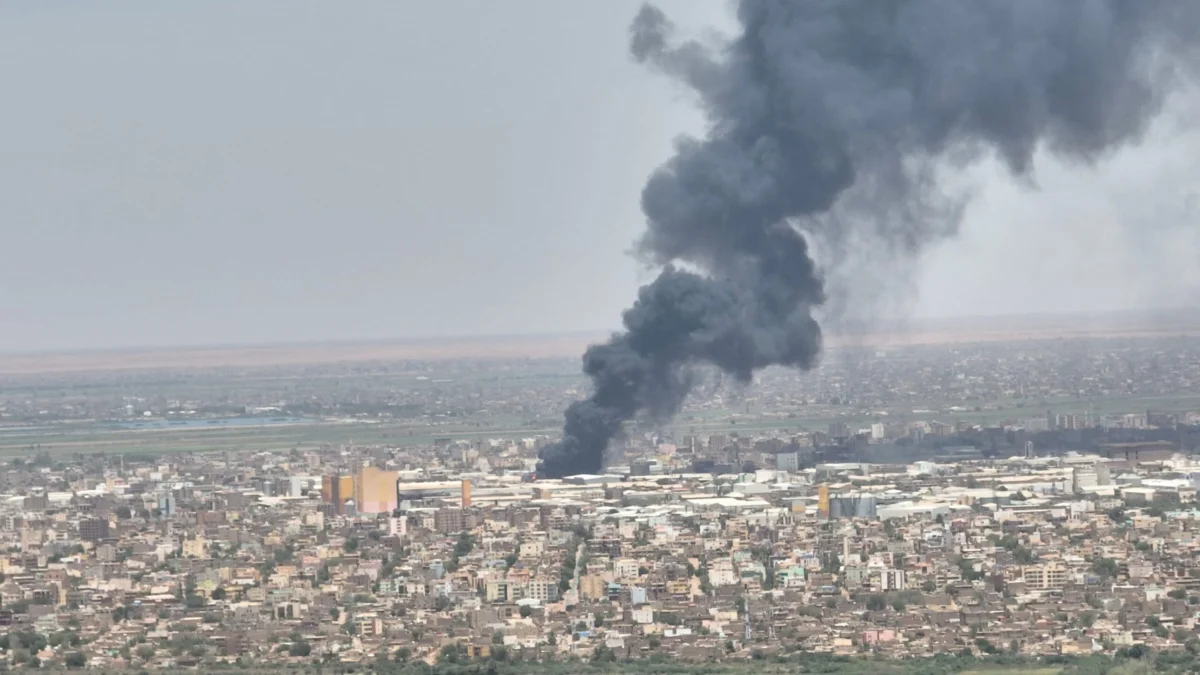
In a pivotal moment for the future of Northeast Africa, representatives from the Sudanese Armed Forces (SAF) and the paramilitary Rapid Support Forces (RSF) have convened in the Saudi Arabian coastal city of Jeddah for their first face-to-face diplomatic engagement since hostilities erupted in mid-April. This United States-Saudi initiative represents the most significant international effort to date to halt a conflict that has rapidly transformed Sudan’s capital, Khartoum, into a fractured battleground, claiming hundreds of lives and triggering a mass exodus of civilians. The talks, described by mediators as "pre-negotiation discussions," aim to secure a lasting humanitarian ceasefire, though both factions have signaled a reluctance to discuss a permanent political settlement at this stage.
The diplomatic push comes as the conflict enters its fourth week, with the city of Bahri and other residential districts in Khartoum witnessing relentless airstrikes and heavy artillery fire. For the international community, the stakes are exceptionally high. Sudan occupies a strategic position at the crossroads of Africa and the Arab world, bordering the Red Sea and several volatile nations in the Sahel. A prolonged civil war in Sudan threatens not only the stability of its neighbors—Egypt, Chad, Ethiopia, and South Sudan—but also the security of vital global trade routes and the broader geopolitical balance in the region.
The Genesis of the Conflict: A Failed Transition to Democracy
To understand the gravity of the talks in Jeddah, one must look at the fractured political landscape that preceded the violence. The current war is the violent culmination of a power struggle between two generals who were once uneasy allies: General Abdel Fattah al-Burhan, the commander of the SAF and the de facto head of state, and General Mohamed Hamdan Dagalo, better known as Hemedti, who leads the RSF.
The two men collaborated in 2019 to oust the long-time authoritarian leader Omar al-Bashir following a massive popular uprising. Subsequently, they shared power with a civilian-led transitional government. However, in October 2021, Burhan and Hemedti joined forces again to execute a military coup, dissolving the civilian government and derailing the democratic transition. This move led to widespread international condemnation and the suspension of billions of dollars in foreign aid.
Tensions between the two military leaders began to simmer over the terms of a new, internationally backed framework agreement intended to return the country to civilian rule. The primary point of contention was the integration of the RSF—a powerful paramilitary group with its roots in the Janjaweed militias of Darfur—into the regular national army. Burhan insisted on a rapid two-year integration timeline, while Hemedti sought a ten-year window, fearing that a quick merger would strip him of his independent power base and political influence. On April 15, 2023, these tensions exploded into open warfare in Khartoum, with both sides accusing the other of attempting a preemptive strike.
A Timeline of Escalation and Failed Truces
The conflict has moved with devastating speed, catching the civilian population and the international community off guard. Below is a chronology of the key events leading to the current diplomatic efforts in Jeddah:
- April 15, 2023: Heavy fighting breaks out in Khartoum, Omdurman, and Bahri. The RSF claims control of the Khartoum International Airport and the presidential palace, while the SAF utilizes its superior air power to strike RSF positions in urban areas.
- April 18–21, 2023: Multiple attempts at a 24-hour ceasefire during the end of Ramadan fail to hold. Residents report being trapped in their homes without water, electricity, or food as street battles rage.
- April 25, 2023: A US-brokered 72-hour ceasefire is announced. While it allows for the evacuation of thousands of foreign diplomats and citizens, fighting continues in several flashpoints, particularly in Darfur and Khartoum.
- April 30, 2023: Saudi Arabia emerges as a primary hub for evacuations, using its navy to ferry thousands of people across the Red Sea from Port Sudan to Jeddah.
- May 5, 2023: The SAF confirms it has sent a delegation to Jeddah, emphasizing that the talks will focus on humanitarian corridors rather than a political deal.
- May 6, 2023: Formal "pre-negotiation" talks begin in Jeddah under the joint sponsorship of the US and Saudi Arabia.
The Humanitarian Toll and Displacement Data
The human cost of the conflict has been catastrophic. According to the World Health Organization (WHO) and various local medical syndicates, the death toll has exceeded 500, with thousands more injured. However, these figures are widely considered to be undercounts, as many bodies remain in the streets of Khartoum, unreachable due to the intensity of the fighting.
The displacement crisis is equally alarming. The United Nations High Commissioner for Refugees (UNHCR) reports that approximately 100,000 people have already fled Sudan to neighboring countries. Egypt has received the largest share of refugees, followed by Chad, South Sudan, and Ethiopia. Internally, hundreds of thousands of people have been displaced from Khartoum to safer states like Al-Jazirah and Port Sudan.
The collapse of the healthcare system is a primary concern for aid agencies. In conflict-affected areas, nearly 70% of hospitals are out of service. Those that remain open are operating with skeleton crews and are facing a critical shortage of blood, oxygen, and trauma kits. The WHO recently managed to deliver a shipment of medical supplies to Port Sudan, but the challenge remains transporting these goods to the capital, where the need is most acute.
The Jeddah Negotiations: Objectives and Obstacles
The talks in Jeddah represent a "narrow" diplomatic window. The United States and Saudi Arabia have been careful to manage expectations, labeling the meetings as "pre-negotiation." The immediate priority is not a comprehensive peace treaty, but a "Declaration of Commitment to Protect Civilians" and a viable mechanism for a temporary ceasefire that would allow for the delivery of humanitarian aid.
The challenges facing the mediators are significant. General Burhan’s special envoy, Dafallah Alhaj, has stated unequivocally that the army will not sit down directly with the RSF delegation, referring to them as "rebellious" forces. This indicates that the talks may take the form of "proximity talks," where mediators move between separate rooms to convey messages.
Furthermore, both sides appear to believe they can still achieve a decisive military victory. The SAF holds the advantage in heavy weaponry and air power, while the RSF excels in urban guerrilla warfare, utilizing its mobility to occupy residential neighborhoods and use civilians as human shields. As long as both commanders believe the battlefield offers a better outcome than the negotiating table, a breakthrough remains elusive.
Regional Interests and Global Implications
The involvement of Saudi Arabia and the United States as mediators highlights the strategic importance of Sudan. For Riyadh, stability in Sudan is a matter of national security. The kingdom has invested billions in Red Sea infrastructure and tourism projects, all of which are threatened by instability on the opposite shore. Furthermore, both Burhan and Hemedti have historically provided troops to the Saudi-led coalition in Yemen, giving Riyadh unique leverage over both men.
The United States, represented in the region by National Security Adviser Jake Sullivan, views Sudan through the lens of regional stability and the prevention of a vacuum that could be filled by extremist groups or rival powers. There are also concerns regarding the presence of the Russian Wagner Group in the region, which has reportedly had ties to Hemedti’s gold mining operations in Darfur.
Neighboring Egypt, which shares a long border and the vital waters of the Nile with Sudan, has expressed deep concern. Cairo has traditionally backed the SAF, viewing a stable, professional military in Khartoum as the best guarantee for its own security and its interests in the Grand Ethiopian Renaissance Dam (GERD) dispute.
Potential Outcomes and the Path Forward
As the Jeddah talks progress, three potential scenarios emerge for the coming weeks:
- A Fragile Humanitarian Truce: This is the most likely positive outcome. A formal agreement on humanitarian corridors could allow aid to reach Khartoum and Darfur, providing a much-needed respite for civilians and allowing for the restoration of basic services.
- Continued War of Attrition: If the talks fail to produce a concrete mechanism for monitoring a ceasefire, the conflict could settle into a prolonged urban war of attrition. This would likely lead to the total collapse of the Sudanese state and the displacement of millions more.
- Regional Spillover: There is a persistent risk that the conflict could draw in neighboring countries or ethnic militias in Darfur, transforming a bilateral power struggle into a complex regional war.
The international community remains focused on the Jeddah process as the best hope for de-escalation. However, as drone footage continues to show plumes of black smoke rising over the Khartoum skyline and residents report the constant thud of explosions, the gap between diplomatic efforts and the reality on the ground remains dangerously wide. The success of the Jeddah talks will ultimately depend on whether the international mediators can provide enough incentives—or exert enough pressure—to convince Burhan and Hemedti that their respective "ambitions" are not worth the total destruction of the Sudanese nation.
