

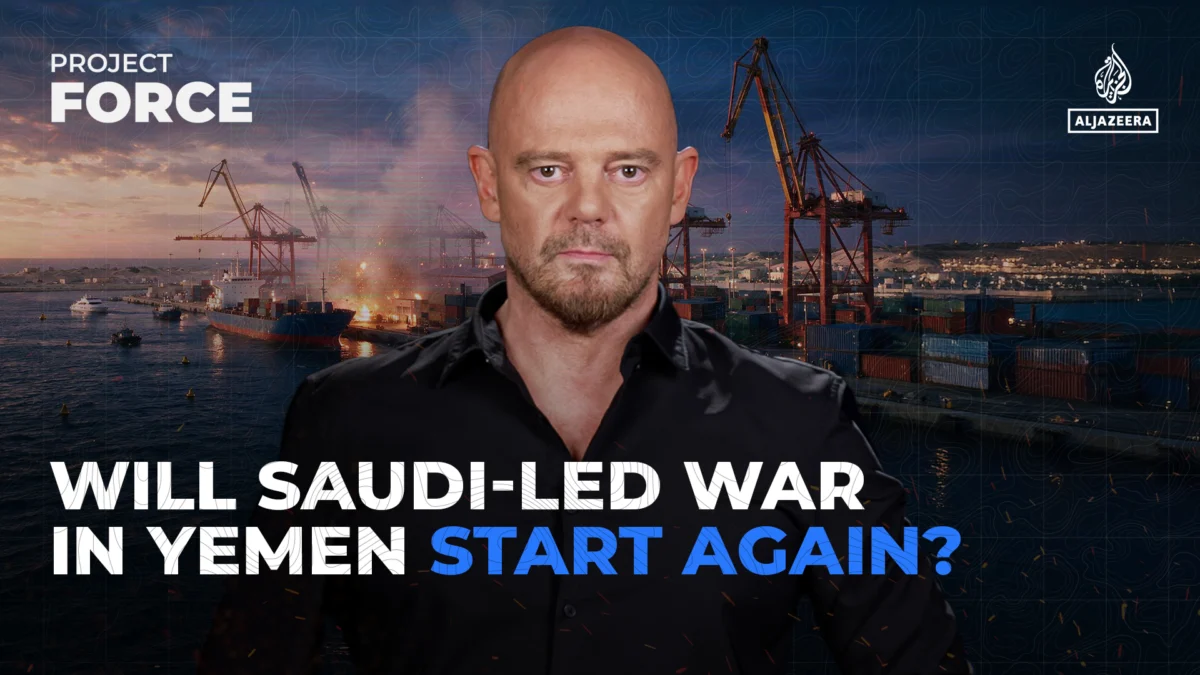
The Current State of Tension: A Fragile Equilibrium
The immediate concern regarding a return to full-scale war stems from the recent breakdown of the "UN-brokered Roadmap for Peace," which had been the primary vehicle for stabilization since late 2023. Throughout 2025, negotiations between the Kingdom of Saudi Arabia and the Ansar Allah movement (commonly known as the Houthis) had largely centered on economic concessions, including the payment of public sector salaries and the lifting of restrictions on Houthi-controlled ports and airports. However, the failure to reach a consensus on the distribution of oil revenues from government-held fields has led to a hardening of positions.
In recent weeks, reports from the Marib and Taiz fronts indicate a significant buildup of military hardware and personnel. Satellite imagery suggests that Houthi forces have repositioned ballistic missile batteries and long-range drone launch sites, while coalition-backed forces have reinforced defensive lines. The rhetoric from Sana’a has grown increasingly bellicose, with Houthi leadership warning that "the period of patience is ending," and threatening to resume strikes on Saudi economic infrastructure—specifically oil processing facilities in the Eastern Province—if their financial demands are not met.
Chronology of the Conflict: From Intervention to Stalemate
To understand the current precipice, it is necessary to examine the evolution of the conflict over the past eleven years. The war has moved through several distinct phases, each redefining the regional security architecture.
- September 2014 – March 2015: The Houthi Takeover. The conflict began when Houthi rebels, aligned with forces loyal to former President Ali Abdullah Saleh, seized the capital, Sana’a, forcing President Abdrabbuh Mansur Hadi into exile.
- March 2015 – 2018: Operation Decisive Storm and Escalation. Saudi Arabia launched a multi-nation coalition to restore the internationally recognized government. This period was marked by intensive aerial campaigns and the emergence of a grueling ground war, particularly in the south and around the port city of Hodeidah.
- December 2018: The Stockholm Agreement. A UN-mediated breakthrough temporarily averted a full-scale assault on Hodeidah but failed to address the broader political divisions of the country.
- 2019 – 2021: Stalemate and Attrition. The war transitioned into a localized conflict with frontlines remaining largely static, while Houthi forces increased their use of cross-border drone and missile attacks against Saudi and Emirati targets.
- April 2022 – 2023: The UN Truce and Normalization. A landmark two-month truce was established in April 2022. While it technically expired in October 2022, the lack of large-scale fighting persisted through 2023, bolstered by the China-mediated rapprochement between Saudi Arabia and Iran in March 2023.
- 2024 – 2025: The Red Sea Crisis. Following the outbreak of regional tensions in late 2023, Houthi attacks on international shipping lanes in the Red Sea complicated peace talks, as Western powers conducted retaliatory strikes and Saudi Arabia attempted to insulate its domestic peace process from the wider regional volatility.
- August 2026: The Present Crisis. The exhaustion of diplomatic channels and the failure of the 2023-2025 "Roadmap" have brought the coalition back to the possibility of renewed military intervention.
Supporting Data: The Cost of a Decade of War
The statistics surrounding the Yemeni conflict provide a somber backdrop to the current military posturing. According to data compiled by the United Nations and various monitoring groups, the toll of the conflict is unparalleled in the region.
- Casualties: Since 2015, an estimated 377,000 people have died due to the conflict, with over 60% of those deaths resulting from indirect causes such as hunger, lack of healthcare, and unsafe water.
- Displacement: Over 4.5 million Yemenis remain internally displaced, with many living in makeshift camps in the Marib governorate, which remains a primary target for Houthi offensives.
- Economic Impact: The Yemeni economy has contracted by more than 50% since the start of the war. The riyal has faced catastrophic devaluation, particularly in government-held areas, leading to hyperinflation of basic food commodities.
- Humanitarian Need: Approximately 21.6 million people—roughly two-thirds of the population—require some form of humanitarian assistance.
- Infrastructure: An estimated 40% of all housing in urban centers has been damaged or destroyed, and only 50% of the country’s health facilities are fully functional.
For Saudi Arabia, the financial burden has also been significant. While official figures are not public, defense analysts estimate that the Kingdom spent between $5 billion and $6 billion per month during the height of the air campaign. In 2026, as Saudi Arabia focuses on its "Vision 2030" economic diversification goals, the prospect of returning to such high military expenditures is viewed as a significant threat to domestic developmental projects.
Official Responses and Diplomatic Deadlock
The international community has responded to the current uptick in tensions with a mixture of alarm and diplomatic fatigue. Hans Grundberg, the UN Special Envoy for Yemen, issued a statement on August 10, 2026, urging all parties to "exercise maximum restraint" and return to the negotiating table without preconditions.
"The gains made over the last four years of relative calm are in jeopardy," Grundberg stated. "A return to full-scale hostilities will not only worsen the humanitarian disaster but will also destabilize the entire Red Sea corridor, with global economic consequences."
From Riyadh, the Saudi Ministry of Foreign Affairs has maintained a stance of "defensive readiness." A senior Saudi official, speaking on condition of anonymity, noted that while the Kingdom remains committed to a political solution, it will not allow its borders or vital infrastructure to be threatened. "Our hand remains extended for peace, but our commitment to the security of the Kingdom and the stability of the region is absolute," the official said.
Conversely, the Houthi Supreme Political Council in Sana’a has accused the coalition of "stalling and deception." Their spokesperson, Mohammed Abdulsalam, recently claimed that the coalition is using the "no-war, no-peace" state to continue an economic blockade. "The siege is an act of war," Abdulsalam said. "If the blockade is not lifted and the wealth of our people is not returned, the language of the battlefield will once again take precedence."
The Maritime Dimension and Global Implications
A significant factor differentiating the 2026 crisis from earlier phases of the war is the increased capability of the Houthi movement to project power into the Red Sea and the Bab al-Mandab Strait. The events of 2024 and 2025 demonstrated that the Houthis could significantly disrupt global trade, forcing major shipping companies to divert vessels around the Cape of Good Hope.
Should the Saudi-led war restart, the maritime theater is expected to be a primary front. This poses a dilemma for the United States and its allies. While Washington has supported Saudi Arabia’s defense, it has also expressed a desire to avoid being drawn into a protracted ground war. The presence of international task forces in the Red Sea adds a layer of complexity; any Houthi strike on a Saudi tanker could trigger a multilateral response, effectively internationalizing the Yemeni civil war to an unprecedented degree.
Furthermore, the impact on global energy markets remains a point of high concern. In 2019, the Abqaiq–Khurais attack temporarily knocked out 5% of global oil production. In 2026, with the global economy still sensitive to energy price fluctuations, any threat to Saudi Aramco facilities would likely lead to an immediate spike in crude prices, affecting inflation rates across Europe and North America.
Broader Impact and Strategic Analysis
The question of whether the war will start again is not merely a matter of military capability but of political will and regional alignment. Since the 2023 normalization of ties between Riyadh and Tehran, Iran has played a more nuanced role in the conflict. However, analysts suggest that Tehran’s influence over the Houthis is not absolute, and the movement often acts based on local Yemeni grievances and its own internal survival logic.
A resumption of war would likely look different than the 2015-2021 period. Saudi Arabia has invested heavily in sophisticated missile defense systems and has sought to shift the burden of ground operations to local Yemeni proxies. However, these proxies—ranging from the Southern Transitional Council (STC) to the forces of Tareq Saleh—often have competing agendas. A return to war could lead to a "war within a war," as various factions vie for control of the south and the strategic coastline.
The most likely scenario, according to regional experts, is a period of "controlled escalation." This would involve limited Houthi strikes on Saudi territory followed by proportional coalition air strikes, intended to improve leverage at the bargaining table rather than to achieve a total military victory. Yet, in the volatile environment of 2026, the risk of miscalculation remains high. A single strike resulting in high civilian or strategic casualties could trigger a cycle of retaliation that neither side can easily exit.
As the August 13 anniversary of the 2026 Project Force report passes, the eyes of the world remain on the borders of Yemen. The path toward a sustainable peace has never been more elusive, and the machinery of war, though currently idling, remains fully fueled and ready for ignition. The coming weeks will determine whether Yemen continues its slow, painful recovery or descends once more into the abyss of total conflict.
