

The Iranian government has formally offered to facilitate diplomatic negotiations between the Kingdom of Saudi Arabia and the Yemeni Houthi movement, following a series of devastating attacks on Saudi infrastructure that have claimed civilian lives and threatened regional stability. This diplomatic overture, delivered by Iranian Foreign Minister Abbas Araghchi during a high-level phone call with his Saudi counterpart, Prince Faisal bin Farhan Al Saud, marks a significant moment in the complex geopolitical landscape of the Middle East. As fighting intensifies across multiple fronts, including Yemen, Lebanon, and the broader Levant, Tehran appears to be positioning itself as a central arbiter in a conflict that has long been characterized as a proxy war between regional powers.
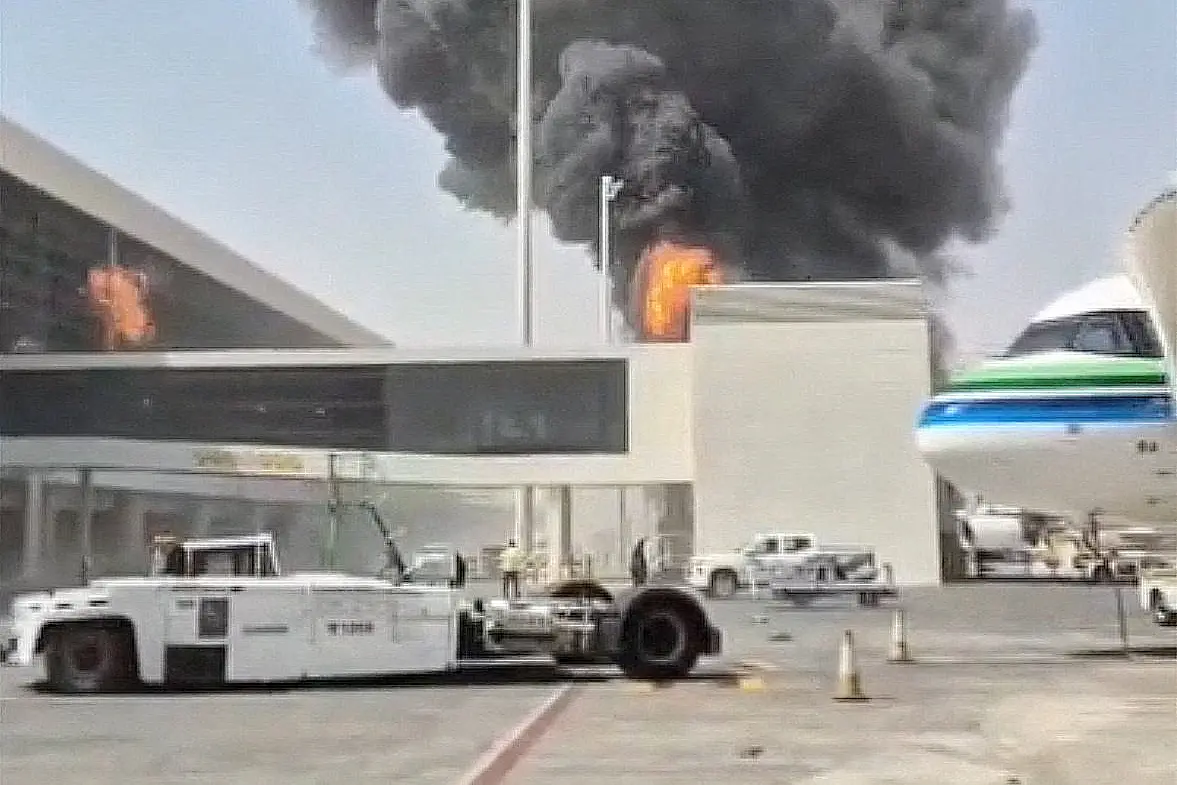
The outreach comes at a time of extreme volatility. Over the past weekend, strikes targeting Riyadh’s King Khalid International Airport resulted in the deaths of 14 people and left hundreds more wounded, according to local reports and emergency services. The casualties included not only Saudi citizens but also foreign nationals from Bangladesh, Pakistan, and Palestine, highlighting the international repercussions of the ongoing hostilities. These attacks occurred as Saudi-backed forces in Yemen continued a major military offensive aimed at reclaiming territory from the Houthis, also known as Ansar Allah.
The Diplomatic Outreach: A Shift in Strategy?
The conversation between Araghchi and Prince Faisal on Sunday represents the first publicly acknowledged contact between the two nations since the Houthis significantly ramped up their drone and missile campaign against the Kingdom. According to statements released by the Saudi state news agency (SPA) and the Iranian Foreign Ministry, the discussions focused on the urgent need for de-escalation.
Araghchi reportedly warned that a purely military approach to the Yemeni conflict would only lead to further complications and humanitarian suffering. "Insisting on a military approach and disregarding a political solution would only further complicate the situation," Araghchi stated, emphasizing that Tehran is ready to use its influence to bring the warring parties to the table. This sentiment was echoed on Monday by Iranian Foreign Ministry spokesman Esmaeil Baghaei, who noted that Iran is "deeply concerned" about the violence in the Arabian Peninsula and views the continuation of war between "two Islamic countries" as a development that ultimately serves the interests of external actors, specifically Israel.
Analysts suggest that Iran’s offer is not merely a humanitarian gesture but a calculated move to enhance its diplomatic leverage. By offering to mediate, Tehran seeks to demonstrate that it is an "indispensable party" to any broader regional settlement. This is particularly relevant as the United States and Israel remain locked in a tense standoff with Iran, with the threat of a wider direct confrontation looming over the region.
Chronology of Recent Escalation: October 2026
To understand the gravity of the current situation, it is necessary to examine the timeline of events that led to this diplomatic flashpoint:
- October 4: The internationally recognized government of Yemen, supported by the Saudi-led coalition, announces "Operation Dawn of Yemen." The military campaign aims to reverse Houthi gains and push toward the capital, Sanaa.
- October 5–8: Intense fighting is reported near the strategic Bab al-Mandeb strait. Government forces claim significant advances, though the Houthis dispute these reports, claiming they have successfully repelled multiple assaults.
- October 10: The Houthi movement issues a formal warning to Riyadh, stating that continued support for the "Dawn of Yemen" offensive would result in direct retaliation against Saudi "economic and military vitals."
- October 11 (Saturday): A drone swarm and ballistic missile strike hit the perimeter of King Khalid International Airport in Riyadh. Initial reports confirm several deaths and significant damage to a passenger terminal.
- October 12 (Sunday): A second wave of attacks hits the airport and nearby energy infrastructure. The combined death toll reaches 14, with over 300 injured. Later that day, Iranian FM Abbas Araghchi calls Saudi FM Prince Faisal.
- October 13 (Monday): Iran’s Foreign Ministry spokesperson reiterates the offer for mediation, while UN Special Envoy Hans Grundberg warns that Yemen has returned to a state of "full-scale war."
The Battlefield Reality: Operation Dawn of Yemen
The recent surge in violence is inextricably linked to the military situation on the ground in Yemen. After years of a relative stalemate and a fragile UN-brokered truce that largely held since 2022, the launch of Operation Dawn of Yemen has shattered hopes for a quick political transition. The offensive is focused on high-stakes geography: the strategic highlands surrounding Sanaa and the coastal corridors near the Bab al-Mandeb strait.
The Bab al-Mandeb is one of the world’s most critical maritime chokepoints, through which an estimated 10 to 15 percent of global trade passes. Any disruption here has immediate effects on global energy prices and supply chains. Saudi-backed forces have reported advances near this waterway, prompting the Houthis to utilize their arsenal of Iranian-designed long-range drones and missiles to strike deep into Saudi territory.
The Houthi response has not been limited to military targets. The strikes on Riyadh’s international airport have caused widespread disruption to commercial aviation, forced the closure of schools, and rattled the confidence of international investors. This "asymmetric" strategy is designed to pressure Riyadh into withdrawing its support for the Yemeni government’s offensive by making the cost of the war unbearable for the Saudi domestic front.
Iran’s Role and the "Axis of Resistance"
Iran’s relationship with the Houthis is a central pillar of its regional strategy. As a key member of the "Axis of Resistance"—a network that includes Hezbollah in Lebanon, various militias in Iraq, and the Syrian government—the Houthis provide Tehran with a strategic foothold on the southern flank of the Arabian Peninsula.

However, the nature of this relationship is often a subject of debate among intelligence communities and academic circles. While Tehran provides technical assistance, weaponry, and political backing, experts like Negar Mortazavi of the Center for International Policy note that Iran does not exercise absolute control over Houthi decision-making. The Houthis have their own domestic agenda, rooted in Zaydi Shia identity and a desire for total political control over Yemen.
By offering to facilitate talks, Iran is attempting to pivot from being viewed solely as a "supplier of instability" to a "facilitator of peace." This shift is aimed at achieving several goals:
- Sanctions Relief and Diplomacy: Improving ties with Riyadh could undermine the U.S.-led "maximum pressure" campaign against Iran.
- Regional Non-Aggression: Tehran is interested in an informal non-aggression pact with its neighbors to ensure that Arab states do not provide their airspace or bases for a potential U.S. or Israeli strike on Iranian nuclear facilities.
- Economic Stabilization: Both Iran and Saudi Arabia have a shared interest in maintaining stable energy exports, despite their political rivalries.
The Saudi Perspective: A Narrowing Path
For Saudi Arabia, the offer from Tehran presents a complex dilemma. Under the leadership of Crown Prince Mohammed bin Salman, the Kingdom has embarked on "Vision 2030," a massive economic diversification project that requires regional stability and foreign investment. A prolonged, high-intensity conflict with the Houthis—especially one that brings missiles into the heart of Riyadh—is a direct threat to this vision.
Furthermore, there is a growing sense of frustration in Riyadh regarding its traditional security partnerships. The United States has been hesitant to re-enter the Yemeni conflict directly, and the UAE has often pursued its own divergent interests in southern Yemen.
"Riyadh is increasingly uncomfortable with its dependence on Washington," says Andreas Krieg, a security analyst at King’s College London. "Iran sees an opportunity to demonstrate that engagement with Tehran can deliver something Saudi Arabia’s traditional security partnerships have struggled to provide: a cessation of Houthi attacks."
Humanitarian and Economic Implications
The return to "full-scale war," as described by the UN, has dire consequences for the Yemeni population. Yemen remains one of the world’s worst humanitarian crises, with millions on the brink of famine and a collapsed healthcare system. The resumption of heavy fighting in densely populated areas like Taiz and the outskirts of Sanaa threatens to displace hundreds of thousands more.
Economically, the conflict’s expansion into the Arabian Peninsula’s commercial hubs could destabilize the global oil market. While the world has become somewhat accustomed to the "shadow war" between Iran and its rivals, the direct killing of civilians at a major international airport marks a dangerous escalation. If the Houthis continue to target energy infrastructure, the "risk premium" on crude oil could spike, affecting global inflation rates and economic recovery.
Conclusion: The Path Forward
The Iranian offer to facilitate talks is currently under review by the Saudi leadership. While skepticism remains high in Riyadh regarding Tehran’s ultimate intentions, the sheer scale of the recent casualties may force a diplomatic opening.
The success of any such mediation would depend on whether the Houthis believe they have gained enough ground to negotiate from a position of strength, and whether Saudi Arabia is willing to accept a political settlement that leaves a pro-Iranian movement in control of its southern border.
As UN Envoy Hans Grundberg continues to push for a renewed ceasefire, the international community watches closely. The coming weeks will determine whether the Middle East moves toward a broader regional settlement or descends further into a multi-front war that could reshape the map of the region for decades to come. For now, the "Yemen asset" remains Iran’s strongest card in a high-stakes game of regional poker, and Riyadh must decide if it is willing to play.
