

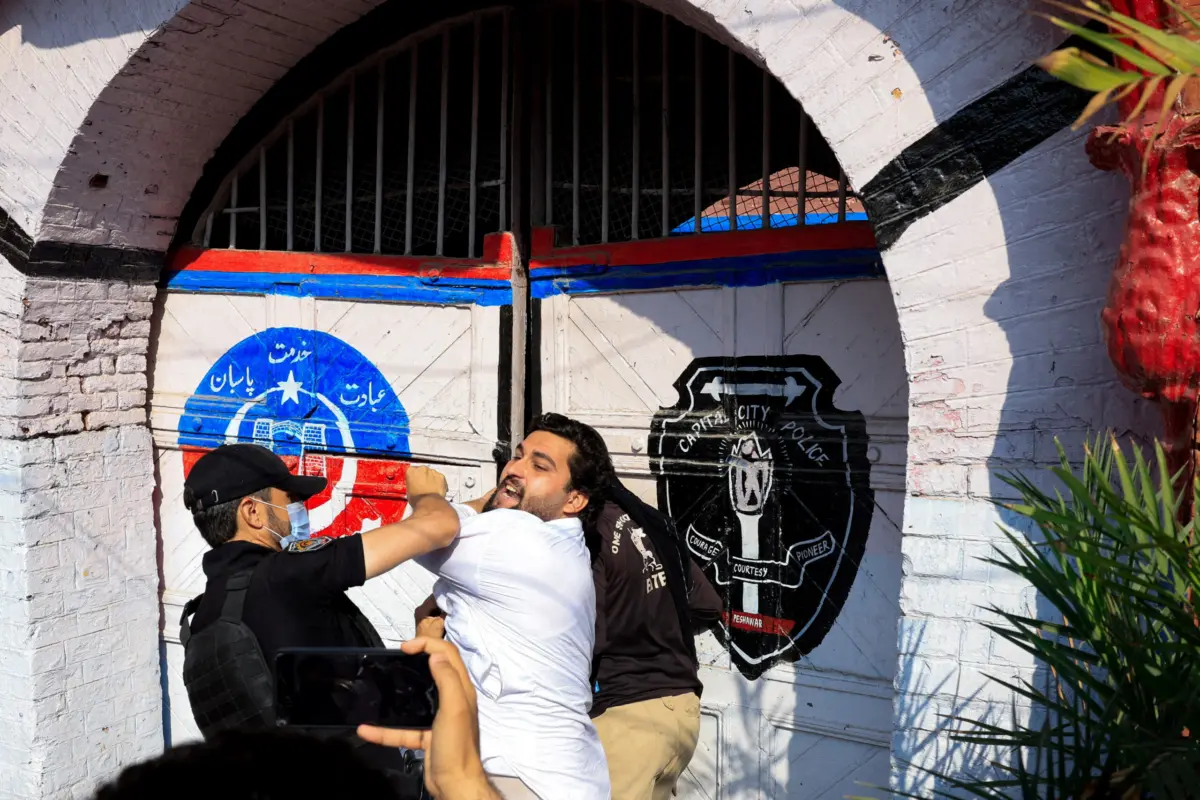
The Pakistan Tehreek-e-Insaf (PTI) party, led by the incarcerated former Prime Minister Imran Khan, has announced its intention to launch a comprehensive legal challenge against the federal government’s sudden imposition of emergency and governor’s rule in the Khyber Pakhtunkhwa (KP) province. The move, executed on Sunday by the federal administration in Islamabad, effectively suspended the PTI-led provincial government, marking a significant escalation in the ongoing power struggle between the ruling coalition and Khan’s populist movement. Sheikh Waqas Akram, the PTI’s central information secretary, confirmed that the party’s legal committee, headed by secretary general Salman Akram Raja, has finalized a petition to be filed in court this Tuesday. While the specific venue—the Supreme Court of Pakistan or the newly formed Federal Constitutional Court—remains to be confirmed, the PTI has characterized the takeover as a direct assault on provincial autonomy and the democratic mandate of the people of Khyber Pakhtunkhwa.
The federal intervention occurred against a backdrop of heightened political tension as the PTI was in the midst of a "long march" toward the capital, Islamabad. The protest aimed to pressure the government into releasing Imran Khan, who has remained behind bars for over three years facing a multitude of legal charges. The suspension of the KP government has added a new layer of volatility to an already fractured political landscape, with both sides trading accusations regarding the state of security and the rule of law in the country’s northwestern frontier.
The Justification for Federal Intervention: Security and Counterterrorism
The federal government’s decision to take control of Khyber Pakhtunkhwa was formally justified through a proclamation signed by President Asif Ali Zardari. According to the document, the provincial administration had "failed to demonstrate the ownership, will and intent to adequately deal with the menace of terrorism." Interior Minister Mohsin Naqvi, speaking from Peshawar on Monday, reiterated this stance, arguing that the provincial leadership’s perceived disengagement from the fight against militancy necessitated federal oversight. Naqvi asserted that the war against armed groups could not be won without a proactive and committed provincial government leading the charge.
To bolster its case, the federal government pointed to a 14-page white paper presented by Ikhtiar Wali Khan, an advisor to Prime Minister Shehbaz Sharif. The document detailed a concerning rise in militant activity, specifically highlighting a surge in police fatalities and critical shortages in equipment and personnel within the provincial counterterrorism department (CTD). Federal Information Minister Attaullah Tarar went further, accusing the suspended PTI government of being "hand in glove" with the Tehreek-e-Taliban Pakistan (TTP) and the Afghan Taliban. While Tarar provided no public evidence for these specific links, the narrative of "provincial negligence" has become the cornerstone of the federal government’s legal and political defense of the takeover.
PTI’s Defense and the Legal Counter-Argument
The PTI has vehemently rejected the federal government’s narrative, describing the takeover as a "constitutional coup." Sheikh Waqas Akram argued that the provincial government had been highly supportive of security efforts, noting that the KP administration had allocated 1.83 billion rupees ($6.6 million) of its own funds to compensate the families of more than 900 security personnel killed in the line of duty. Akram contended that no other province had demonstrated such a high level of financial commitment to the families of "martyrs."

From a legal perspective, many experts have questioned the constitutional validity of the emergency declaration. Hassan Abdullah Niazi, a lawyer and faculty member at the Lahore University of Management Sciences (LUMS), argued that the premise of "anarchy" required for such a move was absent. He noted that Khyber Pakhtunkhwa possessed a functioning legislature and an executive that enjoyed the confidence of the provincial assembly. According to Niazi, the move undermines the 18th Amendment of the Constitution, which was designed to safeguard provincial autonomy and prevent the federal government from arbitrarily dismissing elected regional administrations.
A Timeline of Escalation: From Protests to Proclamations
The current crisis is the culmination of months of friction between the federal government and the PTI-led KP administration. The following timeline outlines the key events leading to the current standoff:
- August – September 2026: PTI intensifies its demand for the release of Imran Khan, citing Supreme Court-ordered medical and visitation rights. Protests begin to gain momentum in Khyber Pakhtunkhwa, the party’s traditional stronghold.
- Late September 2026: Federal officials and PTI representatives engage in tentative negotiations. The government claims the talks focus on security, while the PTI insists they are centered on the treatment of Imran Khan.
- October 5-10, 2026: PTI launches its "long march" toward Islamabad, led by KP Chief Minister Sohail Afridi. The federal government warns of "stern action" if the protest disrupts the capital.
- October 11, 2026 (Sunday): President Zardari signs the proclamation for emergency and governor’s rule in KP. The provincial assembly is suspended, and federal authorities move to take control of the provincial bureaucracy.
- October 12, 2026 (Monday): Minister of State for Interior Talal Chaudhry confirms that Chief Minister Sohail Afridi and several cabinet members have been taken into "preventive custody."
- October 13, 2026 (Tuesday): PTI legal team prepares to file a formal challenge in the superior courts.
Security Metrics and the Regional Context
The federal government’s focus on security is not without empirical foundation, even if the political motivations are disputed. Data from the Centre for Research and Security Studies (CRSS) indicates a sharp uptick in violence across Pakistan’s western provinces. In Khyber Pakhtunkhwa, 556 violence-linked deaths were recorded between July and September 2026, a significant increase from the 475 deaths recorded in the previous quarter. Furthermore, federal records show that 122 police personnel were killed in the province during the first half of 2026, nearly double the 63 deaths recorded during the same period in 2025.
However, analysts point out that the security situation in Balochistan is statistically more dire, with deaths rising by 213 percent to 829 in the same period. This discrepancy has led critics to argue that if security were the sole criterion for federal intervention, Balochistan—governed by a coalition friendly to the federal administration—would have been the primary candidate for emergency rule. This observation has lent weight to the PTI’s claim that the intervention in KP is a targeted political maneuver designed to dismantle the party’s last remaining institutional power base.
Political Implications and the Struggle for Legitimacy
The suspension of the KP government has profound implications for Pakistan’s democratic stability. Since 2013, the PTI has maintained a dominant position in Khyber Pakhtunkhwa, using the province as a platform to challenge the federal establishment. By removing the provincial government, the ruling coalition in Islamabad—comprising the Pakistan Muslim League-Nawaz (PML-N) and the Pakistan Peoples Party (PPP)—is attempting to neutralize the PTI’s ability to mobilize state resources for its protest movements.
Taimur Jhagra, a senior PTI leader and former provincial finance minister, argued that the government is "trying to solve for legitimacy." He suggested that the federal administration, which the PTI claims was formed through a "stolen" election in February 2024, is using administrative force to compensate for its lack of popular support. Conversely, federal ministers argue that the PTI has used the KP government as a "rebel outpost" to destabilize the country and that federal rule is necessary to restore the writ of the state.

The detention of Chief Minister Sohail Afridi is particularly symbolic. As the face of the PTI’s resistance on the ground, his arrest is intended to decapitate the party’s leadership in the province. However, PTI officials maintain that the "long march" will continue, suggesting that the federal crackdown may serve to further radicalize Khan’s support base rather than suppress it.
Economic and Administrative Challenges Ahead
Beyond the political theater, the imposition of governor’s rule brings immediate administrative challenges. Khyber Pakhtunkhwa faces a strained fiscal situation, often at odds with the federal government over the release of funds and "net hydel profit" shares. With the provincial assembly suspended, the responsibility for the province’s budget and development projects falls directly on the federal government.
Observers like Ali Arqam, a journalist specializing in KP affairs, suggest that the federal government will now be judged by the very metrics it used to dismiss the PTI. "Does security actually improve, do basic services get better, and do the promised fiscal resources finally show up?" Arqam asked. If the federal government fails to curb militant attacks in the coming months, the narrative of "provincial negligence" will lose its potency, potentially fueling a backlash among the local Pashtun population who already feel marginalized by the central state’s security policies.
Conclusion: A Nation at a Crossroads
The legal battle scheduled to begin on Tuesday will likely be a landmark case in Pakistani constitutional history. It will test the limits of federal intervention and the resilience of the 18th Amendment. For the PTI, the court’s decision could mean the difference between maintaining a political foothold or being pushed entirely into the periphery of the state. For the federal government, the outcome will determine whether its "security-first" approach to political dissent can withstand judicial scrutiny.
As the legal teams prepare their arguments, the streets of Peshawar and Islamabad remain tense. The intersection of a resurgent militancy, a crippled economy, and a bitter political feud has placed Pakistan in one of its most precarious positions in decades. Whether through the courts or through the continuing protests, the resolution of the "Khyber Pakhtunkhwa crisis" will undoubtedly shape the future of governance and federalism in the country for years to come.
