

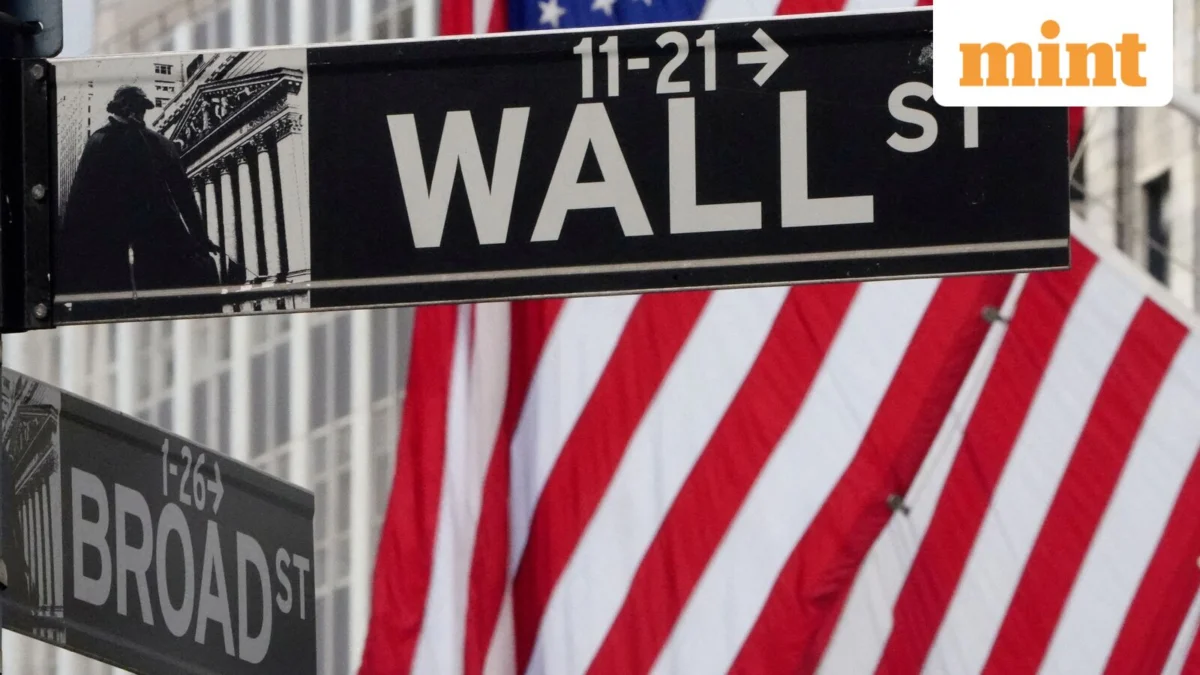
Wall Street entered Wednesday, June 3, with a sense of cautious equilibrium as United States stock futures remained largely unchanged in early premarket trading. This period of consolidation follows a historic session in which all three major indices reached record highs, driven by the persistent momentum of technology and artificial intelligence sectors. However, the optimism surrounding the "AI trade" is currently being tested by a volatile cocktail of geopolitical instability in the Middle East and a resurgence in global energy prices, which has complicated the outlook for the Federal Reserve’s monetary policy.
As of the early morning hours, S&P 500 futures showed negligible movement, while Nasdaq 100 futures—the barometer for high-growth tech stocks—hovered near their previous closing levels. The Dow Jones Industrial Average futures diverged slightly, slipping by 0.3%, reflecting a rotation or perhaps a cooling of sentiment in blue-chip industrials. The backdrop for these movements is a complex interplay between robust corporate earnings and the looming threat of a broader regional conflict in the Middle East that could disrupt the global flow of energy and goods.
Geopolitical Escalation and the Strait of Hormuz
The primary catalyst for the current market anxiety is a sharp escalation in hostilities between the United States, its regional allies, and Iran. According to reports from the U.S. Central Command (CENTCOM), Tehran recently launched a series of ballistic missiles targeting strategic locations in Bahrain and Kuwait. While several of these projectiles were successfully intercepted by regional defense systems or failed to reach their intended targets, the brazen nature of the attack has heightened fears of an all-out regional war.
In a direct response to these provocations, U.S. forces reportedly conducted precision strikes on Qeshm Island, a strategic Iranian territory located in the Strait of Hormuz. This retaliatory action followed what the Pentagon described as "attempted attacks" by Iranian forces against maritime and military assets. The situation is further complicated by reports from semi-official Iranian news agencies suggesting that Tehran has formally halted communication with international mediators. This breakdown in diplomacy concerns the extension of a fragile ceasefire that had previously tempered the conflict involving the U.S., Israel, and Iranian-backed groups.
The strategic significance of this geographic area cannot be overstated. Iran has reiterated threats to completely block the Strait of Hormuz, a narrow waterway through which approximately 20% of the world’s daily oil consumption passes. Furthermore, Iranian officials have suggested the potential closure of the Bab el-Mandeb Strait, another critical chokepoint connecting the Red Sea to the Gulf of Aden. Such actions would effectively cripple global maritime trade, forcing tankers to take longer, more expensive routes around the Cape of Good Hope and sending shipping insurance premiums skyrocketing.
The Crude Oil Surge and Inflationary Pressures
Energy markets have reacted sharply to the deteriorating security situation. Crude oil prices extended their winning streak for a third consecutive session on Wednesday, with Brent crude futures surging by $3 per barrel to reach an intraday high of $98.99. This move brings the week-to-date gains for the international benchmark to approximately 7.75%.
The domestic benchmark, West Texas Intermediate (WTI), saw an even more pronounced rally, advancing by $3.24 per barrel to hit a high of $97. This represents a near 10% gain since the start of the week. This rapid ascent in energy costs follows a two-week period of relative price stability, during which markets had begun to price in a "peace premium" that has now evaporated.
The resurgence of high oil prices has immediate and profound implications for the U.S. economy. Higher energy costs act as a regressive tax on consumers, reducing discretionary spending power and increasing the operational costs for logistics and manufacturing firms. More importantly for investors, the spike in crude prices is reigniting fears of "sticky" inflation.
On Tuesday, Beth Hammack, a prominent voice within the financial landscape, suggested that the Federal Reserve might find itself in a position where it must raise interest rates in 2026 rather than cutting them. Hammack noted that if inflationary pressures—already elevated by domestic demand—are further intensified by an external energy shock, the central bank’s mission to return inflation to its 2% target would be severely compromised. This shift in expectations has caused a repricing in the bond market, as traders move away from the "lower-for-longer" narrative that fueled the equity rally earlier in the year.
Diplomatic Dissonance and the Trump Administration’s Stance
Amidst the military maneuvers and market volatility, a stark contrast has emerged between the rhetoric of the White House and the reality on the ground. U.S. President Donald Trump has maintained an uncharacteristically optimistic tone regarding the potential for a diplomatic resolution. In recent statements, the President suggested that an "interim peace agreement" with Iran could be achieved within the next week.
The administration’s strategy appears to center on a proposed memorandum of understanding (MoU) that would ensure the reopening and continued security of the Strait of Hormuz. However, reports suggest that the President recently returned a draft of the deal with significant revisions, insisting on tougher language regarding Iran’s nuclear program and its regional proxy activities.
While the President’s optimism provides a psychological floor for the markets, many analysts remain skeptical. The disconnect between the administration’s "peace within a week" narrative and the active exchange of missile fire in the Persian Gulf has left traders navigating a fog of geopolitical uncertainty. The lack of direct communication between Tehran and mediators further diminishes the likelihood of a near-term breakthrough.
Corporate Highlights: SpaceX, AI, and Retail Earnings
While macro-level forces dominate the headlines, several high-profile corporate developments are capturing investor attention. Topping the list is the highly anticipated move by SpaceX, Elon Musk’s aerospace and satellite giant. Reuters reported that SpaceX is finalizing the terms for an initial public offering (IPO) that could be among the largest in financial history. The company reportedly aims to sell over 550 million shares at a price of $135 each, which would value the offering at approximately $75 billion. Given SpaceX’s dominant position in the satellite internet (Starlink) and rocket launch markets, the IPO is expected to see massive demand, potentially draining liquidity from other sectors as institutional investors rebalance their portfolios.
In the technology sector, the "AI fever" continues to drive individual stock performances. Marvell Technology saw another surge in premarket trading, following a massive rally in the previous session. The catalyst for this movement was a public endorsement from Nvidia CEO Jensen Huang, who identified Marvell as a potential candidate to become the next trillion-dollar semiconductor company. This endorsement has solidified Marvell’s position as a key beneficiary of the infrastructure build-out required for generative AI.
Investors are also bracing for earnings from Broadcom, scheduled for release later today. Broadcom’s results are viewed as a critical "read-through" for the broader AI spending trend, particularly in networking and custom chip design. Conversely, Palo Alto Networks saw its shares fall by 3% following its fiscal third-quarter results, suggesting that even within the high-growth cybersecurity sector, investors are becoming increasingly discerning about valuation and guidance.
In the retail and finance space, the results were mixed. GameStop shares jumped 9.1% after the company reported a surprise rise in quarterly revenue and announced a $2 billion share buyback program, reigniting interest from retail "meme stock" traders. On the other hand, alternative asset managers like KKR and Blackstone saw declines of 5.8% and 3.9%, respectively, as the prospect of higher-for-longer interest rates weighed on the outlook for private equity exits and deal-making.
Labor Market Data and the Federal Reserve’s Path
As the week progresses, the focus will shift toward domestic economic data to determine if the "higher rates for longer" thesis is justified. Later on Wednesday, the release of private payrolls data will provide an initial look at the health of the labor market. This will be followed by Friday’s nonfarm payrolls report, which remains the most influential data point for the Federal Reserve’s policy outlook.
If the labor market remains resilient despite the high-interest-rate environment, it provides the Fed with the "green light" to maintain or even increase rates to combat energy-driven inflation. Conversely, a significant miss in job growth could spark fears of a stagflationary environment—where economic growth slows while inflation remains high—a scenario that historically bodes poorly for equity markets.
Conclusion and Market Outlook
The current market environment is characterized by a tug-of-war between two powerful forces: the transformative potential of artificial intelligence and the disruptive reality of geopolitical conflict. While the S&P 500 and Nasdaq have shown remarkable resilience by hitting fresh highs, the "cap" on further gains is becoming more visible.
The immediate trajectory of the markets will likely be determined by the developments in the Middle East. Should the conflict escalate to a point where the Strait of Hormuz is effectively closed, the resulting oil price shock would likely trigger a significant correction in global equities. However, if President Trump’s optimistic timeline for an interim peace deal holds true, the market could see a "relief rally" that carries the indices to even higher ground.
For now, investors are adopting a "wait-and-see" approach, closely monitoring the 10-year Treasury yield, the price of Brent crude, and the tone of upcoming earnings reports. In this high-stakes environment, the margin for error for both policymakers and market participants has narrowed significantly. The coming days will be crucial in determining whether the bull market of 2024 can withstand the heat of a burgeoning energy crisis and the uncertainty of a fractured geopolitical landscape.
