

European Union trade chief Maros Sefcovic is scheduled to meet with China’s international trade envoy, Li Chenggang, in Paris this Thursday, marking a critical juncture in the increasingly strained economic relationship between the world’s two largest trading blocs. The high-stakes meeting comes at a time when Brussels and Beijing appear to be on the precipice of a full-scale trade war, fueled by a series of anti-subsidy investigations, retaliatory probes, and a fundamental shift in the EU’s approach to Chinese economic practices. According to EU sources, the primary objective of this summit is to establish a new, streamlined platform for discussing trade and investment issues, even as the European Commission prepares to adopt a more assertive and defensive posture toward what it characterizes as Chinese market distortions and non-market economic practices.
The diplomatic outreach in Paris is part of a broader effort to rationalize a complex and often redundant bilateral architecture. Currently, the EU and China maintain an estimated 60 different working groups covering various aspects of their economic relationship. Brussels has expressed a keen interest in streamlining these dialogues into a more manageable and high-level framework that can produce tangible results. On Saturday, China’s Ministry of Commerce (MOFCOM) confirmed that a "trade and investment consultation mechanism" is currently under discussion, signaling a mutual recognition that the existing channels are insufficient to address the gravity of current disputes.
Following the Paris talks, the diplomatic momentum is expected to shift to Brussels next week. Ling Ji, China’s vice-commerce minister with specific responsibility for European affairs, is slated to visit the EU capital for further consultations. He is expected to meet with Ditte Juul Jørgensen, the newly appointed director general for trade at the European Commission. This sequence of meetings underscores the urgency with which both sides are attempting to manage a relationship that has deteriorated significantly since the EU announced its "de-risking" strategy, aimed at reducing critical dependencies on the Chinese economy.
A Chronology of Escalating Friction
The current state of tension is the result of a multi-year trajectory in which the EU’s perception of China has shifted from a vital economic partner to a "systemic rival" and "economic competitor." The timeline of recent escalations reveals a pattern of action and reaction that has brought bilateral relations to their lowest point in decades.
In September 2023, European Commission President Ursula von der Leyen announced a formal anti-subsidy investigation into Chinese electric vehicles (EVs). This move was predicated on the belief that Chinese state subsidies were artificially depressing the prices of EVs, allowing them to flood the European market and undercut local manufacturers. The investigation marked a turning point, as it was initiated "ex-officio" by the Commission rather than at the request of the industry, signaling a more proactive EU stance.
By early 2024, Beijing responded with its own set of measures. In January, China launched an anti-dumping investigation into brandy imported from the EU, a move widely seen as a direct shot at France, the primary advocate for the EV probe. This was followed by a broader investigation into EU pork imports in June 2024, targeting a sector that is politically sensitive for several EU member states, including Spain, Germany, and the Netherlands.
In recent months, the EU has expanded its scrutiny beyond EVs. Investigations have been launched into Chinese wind turbine suppliers and medical device procurement under the International Procurement Instrument (IPI) and the Foreign Subsidies Regulation (FSR). The cumulative effect of these actions has been the creation of a "tit-for-tat" dynamic that both sides are now ostensibly trying to pause through the proposed Paris and Brussels meetings.
Supporting Data: The Growing Trade Imbalance
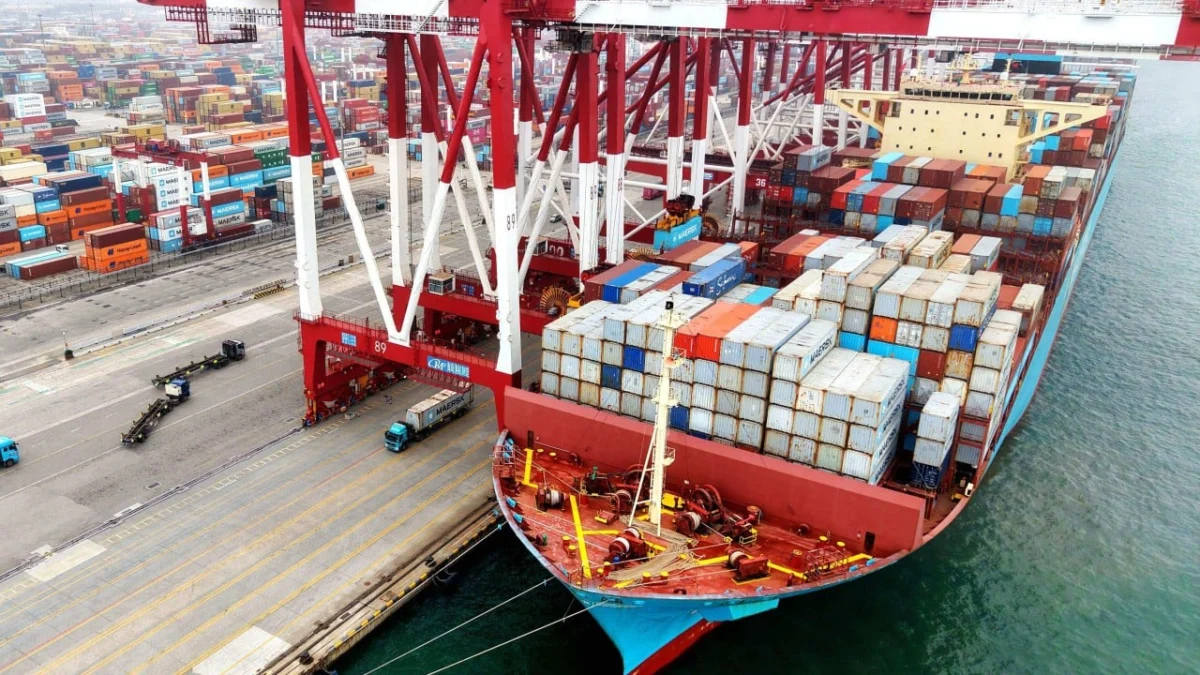
At the heart of the EU’s grievances is a massive and growing trade deficit with China. According to Eurostat data, the EU’s trade deficit with China reached a staggering €396 billion in 2022, though it narrowed slightly to approximately €291 billion in 2023. Despite this slight decrease, Brussels remains concerned that the deficit is not merely a result of market forces but a systemic issue rooted in Chinese industrial policy.
The composition of trade has also shifted. While the EU once exported high-value machinery and luxury goods to China, it now finds itself increasingly reliant on China for the raw materials and components necessary for the green and digital transitions. For example, China accounts for over 90% of the EU’s supply of rare earth elements and a significant portion of its solar panels and battery cells.
In the automotive sector, the stakes are particularly high. The EU’s automotive industry provides roughly 13 million jobs, accounting for about 7% of the bloc’s GDP. The rapid rise of Chinese EV exports—which grew by over 1,000% in value between 2020 and 2023—has raised alarms in Brussels that a repeat of the collapse of the European solar panel industry a decade ago could be imminent if no action is taken.
Official Responses and Strategic Positions
The rhetorical battle between Brussels and Beijing has been as intense as the economic one. EU trade chief Maros Sefcovic has consistently emphasized the need for a "level playing field." In recent statements, Sefcovic has argued that while the EU does not seek to "decouple" from China, it must "de-risk" by addressing the imbalances emanating from the Chinese economy. The EU maintains that its investigations are fact-based and compliant with World Trade Organization (WTO) rules.
On the Chinese side, the Ministry of Commerce and the Ministry of Foreign Affairs have denounced the EU’s actions as "naked protectionism." Li Chenggang and other Chinese officials have argued that China’s competitive advantage in sectors like EVs is the result of innovation and supply chain efficiency rather than state subsidies. Beijing has warned that it will take "all necessary measures" to defend the rights and interests of Chinese companies.
The appointment of Ditte Juul Jørgensen as the new director general for trade is seen as a signal of the EU’s commitment to a more rigorous, data-driven approach to trade defense. Jørgensen, who previously led the EU’s energy department, is expected to bring a strategic focus on energy security and resource dependency to the trade portfolio, areas where China holds significant leverage.
The "Trade and Investment Consultation Mechanism"
The proposal for a new "trade and investment consultation mechanism" represents an attempt to move away from the fragmented approach of the past. By consolidating the 60-plus working groups, the EU hopes to create a more effective "clearinghouse" for disputes. This platform would likely involve senior officials from both sides meeting regularly to address issues before they escalate into formal investigations or retaliatory measures.
However, analysts are skeptical about whether a new mechanism can resolve deep-seated structural differences. The EU wants China to address industrial overcapacity and remove barriers to European companies in the Chinese market. China, conversely, wants the EU to drop its anti-subsidy investigations and provide a more "predictable and non-discriminatory" environment for Chinese investment.
The streamlining of these groups also reflects a desire for administrative efficiency. With limited resources, the European Commission is finding it increasingly difficult to manage dozens of technical dialogues that often result in little more than "talking for the sake of talking." A centralized platform would allow for more political oversight and ensure that trade discussions are aligned with the EU’s broader geopolitical objectives.
Broader Impact and Global Implications
The outcome of the Paris and Brussels meetings will have implications far beyond the bilateral relationship. As the world’s two largest trading entities, any prolonged trade war between the EU and China would significantly disrupt global supply chains and dampen global economic growth.
For the EU, the challenge is maintaining internal unity. Member states are divided on how to handle China. France has generally supported a more protectionist stance, particularly regarding the automotive industry. Germany, conversely, has been more cautious, fearing that Chinese retaliation would devastate its own auto giants—VW, BMW, and Mercedes-Benz—which have significant manufacturing footprints and sales markets in China.
For the global trade order, the EU-China friction represents a test for the WTO. Both sides have invoked WTO rules to justify their actions, yet the WTO’s dispute settlement mechanism remains largely paralyzed. If the EU and China cannot resolve their differences through bilateral dialogue or through the WTO, it may signal a further shift toward a fragmented global economy characterized by regional blocs and industrial policy rivalries.
Furthermore, the EU’s stance on China is being closely watched in Washington. The Biden administration has pushed for a unified Western front against Chinese economic practices. While the EU has adopted much of the "de-risking" rhetoric, it has also sought to maintain a degree of strategic autonomy, avoiding a total alignment with the more aggressive U.S. "decoupling" approach. The success or failure of the Paris talks will indicate whether the EU can successfully chart this middle course.
Analysis of Potential Outcomes
As Maros Sefcovic and Li Chenggang sit down in Paris, the immediate goal is likely "cooling the temperature." A successful meeting would not necessarily result in the withdrawal of the EV probe or the pork investigation, but rather an agreement on a roadmap for negotiations.
One potential outcome is a "price undertaking" agreement for Chinese EVs, where Chinese manufacturers agree to sell their vehicles above a certain price floor in exchange for the EU dropping or reducing tariffs. This was a solution used in previous disputes over solar panels, though its effectiveness was debated.
Another possibility is a broader "grand bargain" involving increased market access for European services and agricultural products in China in exchange for a more lenient EU approach to Chinese green tech investment in Europe. However, given the current geopolitical climate and the EU’s focus on economic security, such a deal seems distant.
The most likely scenario is a prolonged period of managed friction. The establishment of the new consultation mechanism will provide a venue for ongoing dialogue, but the underlying tensions regarding industrial policy, state subsidies, and geopolitical competition are structural and unlikely to be resolved through administrative streamlining alone.
The Paris meeting is thus a tactical pause in a larger strategic confrontation. While both sides are eager to avoid the economic devastation of a full trade war, neither appears ready to make the fundamental concessions necessary for a return to the status quo. As Ling Ji prepares for his trip to Brussels next week, the focus will remain on whether these new diplomatic "platforms" can actually bridge the widening gap between the two economic superpowers.
