

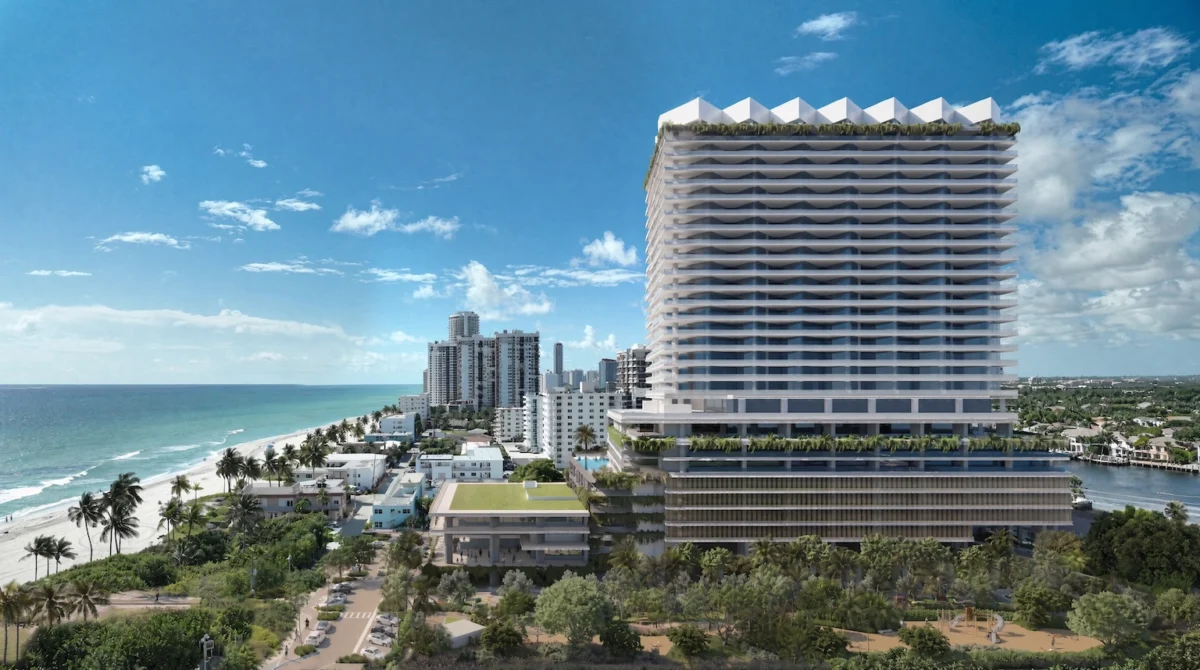
The landscape of Florida’s real estate development is undergoing a seismic shift as the state’s ambitious "Live Local Act" continues to evolve, creating a complex tug-of-war between municipal authorities, county governments, and private developers. In the coastal city of Hollywood, Florida, a long-simmering dispute over a prime beachfront site has become the primary testing ground for the latest iteration of this legislation, known as Live Local 4.0. Although the bill has yet to be formally signed into law by Governor Ron DeSantis, its near-unanimous passage through the Florida Legislature has provided the City of Hollywood with the legal leverage necessary to bypass county-level restrictions and revive a high-density development project that was previously declared dead.
This unfolding situation at 1301 South Ocean Drive represents a landmark moment in Florida’s effort to address its chronic housing shortage. By invoking the forthcoming authority of Live Local 4.0, Hollywood is effectively utilizing state-level preemption to override Broward County’s previous rejection of the project. The move highlights a striking irony: the very legislative tool that many cities and counties initially fought to block—fearing a loss of local control—is now being wielded by a municipality as a weapon against its own county administration to force through a development that promises both luxury units and much-needed workforce housing.
The Legislative Evolution: Understanding Live Local 4.0
To understand the current standoff in Hollywood, one must first look at the trajectory of the Live Local Act. Originally passed in 2023 as Senate Bill 102, the Act was designed to incentivize the creation of affordable and workforce housing by offering developers significant tax breaks and, more controversially, the ability to bypass local zoning regulations regarding height and density. The law mandates that if a developer sets aside at least 40% of a project’s units for "affordable" housing (defined as 120% of the Area Median Income or below) for a period of at least 30 years, local governments must allow the development to proceed at the highest allowed density and height within a certain radius.
Live Local 4.0, the latest refinement passed in March 2024, specifically addresses ambiguities regarding government-owned land and clarifies the "highest allowed" benchmarks for density. The new version of the law strengthens the hand of municipalities that wish to develop their own land for mixed-income purposes, even if those plans conflict with older, more restrictive county-level land-use designations. It is this specific provision that Hollywood has seized upon to move forward with the Related Group, one of Florida’s most prominent development firms.
A Four-Year Battle for 1301 South Ocean Drive
The site at the heart of the controversy is a city-owned parcel located at 1301 South Ocean Drive, currently occupied by a community center. The saga began in 2022 when the Related Group entered into a 99-year land lease agreement with the City of Hollywood. The initial proposal was a relatively modest 111-unit luxury condominium tower. From the city’s perspective, the deal was a financial windfall; projections suggested the lease and subsequent tax revenues would generate approximately $2.7 billion over the 99-year term. Hollywood officials argued these funds were essential to repair the city’s aging infrastructure and maintain public services without drastically raising property taxes on residents.
However, the project faced immediate and fierce opposition. Residents of neighboring high-rise condos and environmental advocates argued that the development would further "canyonize" the beach, block views, and strain local resources. The opposition found a sympathetic ear at the Broward County Commission.
In early 2024, the dispute reached a breaking point. Broward County officials reviewed land-use plans dating back to 1977 and concluded that the 1301 South Ocean Drive site had been designated for "community use" rather than residential density. The county argued that the previous "medium density" designation was a clerical error that had persisted for decades. In February 2024, based on this interpretation, the county effectively blocked the project, seemingly ending the Related Group’s ambitions for the site.
The Live Local Pivot: From Luxury to Mixed-Income
The passage of Live Local 4.0 in the spring of 2024 changed the calculus entirely. Recognizing the power of the new legislation, the Related Group and the City of Hollywood pivoted. Instead of fighting the county’s "community use" ruling in court, they revised the project to qualify under the Live Local Act’s workforce housing provisions.
The new plan is significantly more intensive than the original. The proposal has expanded from 111 units to 210 units. To meet the state’s requirements for preemption, the Related Group added 84 workforce housing units. These units are specifically designated for renters earning up to 120% of the Area Median Income (AMI). In Broward County, where the cost of living has skyrocketed, this demographic often includes the "missing middle"—teachers, police officers, healthcare workers, and young professionals who are increasingly priced out of the coastal communities where they work.
On May 20, 2024, the Hollywood City Commission voted 5-2 to approve the revised plan. The vote was a clear signal that the city intended to use the state’s forthcoming law to override the county’s authority. "We’re going to be happy to build the 210 and give housing opportunities to those on the ocean who may not have had it before," said Keith Poliakoff, the attorney representing the Related Group. He noted that while the opposition had won several tactical battles over the last four years, the state legislature’s intervention had essentially "checkmated" their efforts.
Data and Economic Context: The South Florida Housing Crisis
The urgency behind the Hollywood project is mirrored by broader economic data across the state. Florida has consistently ranked as one of the least affordable states for housing relative to local wages. According to data from the University of Florida’s Shimberg Center for Housing Studies, more than 2.1 million Florida households are "cost-burdened," meaning they spend more than 30% of their income on housing.
In Broward County, the AMI for a family of four is approximately $95,000. At the 120% threshold targeted by the Live Local Act, workforce housing units would be accessible to households earning up to roughly $114,000. While this is higher than traditional "affordable housing" (usually capped at 80% AMI), it addresses a critical gap in the market where market-rate rents for new beachfront developments often exceed $4,000 per month, far out of reach for essential workers.
The economic implications for the City of Hollywood are equally significant. The $2.7 billion in projected revenue over the life of the 99-year lease represents a stable, long-term funding source for a city grappling with rising sea levels and the need for massive investments in stormwater management and sea-wall reinforcement.
Stakeholder Reactions and Political Fallout
The reaction to Hollywood’s maneuver has been a mix of cautious optimism from developers and vocal frustration from county officials and local residents. Broward County Mayor Beam Furr has expressed a "wait and see" approach, noting that the county commission has pushed its final hearing on the matter to August. The delay is seen by many as a strategic move, hoping for a surprise veto from Governor DeSantis, though such a move is considered unlikely given the Governor’s previous support for the Live Local initiative.
"We’re waiting to see what happens," Mayor Furr told The Builder’s Daily, reflecting the uncertainty that still hangs over the project until the Governor’s pen hits the paper—or until the July 1 deadline passes for the bill to become law without his signature.
Residents, meanwhile, remain undeterred. During the May 20 commission meeting, nearly 30 residents spoke out against the project, citing concerns about traffic congestion and the loss of public space. For these residents, the Live Local Act represents an undemocratic intrusion into local affairs, allowing "monstrosities" to be built in neighborhoods that were never designed for such density.
Implications for Florida Municipalities
The Hollywood case is being watched closely by developers and municipal attorneys across Florida. If Hollywood successfully uses Live Local 4.0 to force the 210-unit project through, it will establish a potent precedent. It demonstrates that the law is not just a shield for developers to protect their projects from local interference, but also a sword for cities to use when they want to bypass county-level land-use restrictions.
This shift in power dynamics could lead to a wave of new developments on municipal-owned land. Many Florida cities own underutilized parcels—parking lots, aging community centers, or maintenance yards—that are currently zoned for low-intensity use. Under the logic of Live Local 4.0, these cities could now partner with private developers to transform these sites into high-density, mixed-income housing, regardless of what county master plans might dictate.
Chronology of the 1301 South Ocean Drive Project
- 2022: Related Group and the City of Hollywood sign a 99-year lease for the beachfront site, proposing a 111-unit luxury condo.
- 2023: Florida Legislature passes the original Live Local Act (SB 102), introducing zoning preemption for affordable housing.
- February 2024: Broward County Commission rejects the project, claiming the land-use designation was "community use" and the previous residential designation was an error.
- March 2024: The Florida Legislature passes Live Local 4.0, clarifying rules for government-owned land and density.
- May 20, 2024: Hollywood City Commission votes 5-2 to approve a revised 210-unit plan (including 84 workforce units) under the authority of Live Local 4.0.
- July 1, 2024: Expected date for Live Local 4.0 to take effect.
- August 2024: Scheduled Broward County Commission hearing to address the project’s final status.
Conclusion: A New Era of Urban Development
As the August hearing approaches, the standoff between Hollywood and Broward County serves as a microcosm of the broader tensions inherent in Florida’s growth. The Live Local Act was born out of a desperate need to house a growing population in an increasingly expensive state. However, its implementation is fundamentally altering the relationship between different levels of government.
For the Related Group, the "war" may be won, but the "battles" over specific site plans, environmental permits, and infrastructure tie-ins will likely continue. For the residents of Hollywood, the project represents a permanent change to their coastline. And for the State of Florida, the 1301 South Ocean Drive project stands as the first major test of whether the Live Local Act can truly deliver on its promise of providing housing for the workforce while balancing the complex interests of local communities.
Whether the project becomes a model for future municipal-developer partnerships or remains a point of legal contention for years to come, it has already succeeded in one regard: it has proven that in the new era of Florida real estate, state law now holds the ultimate power over the shape of the skyline.
