

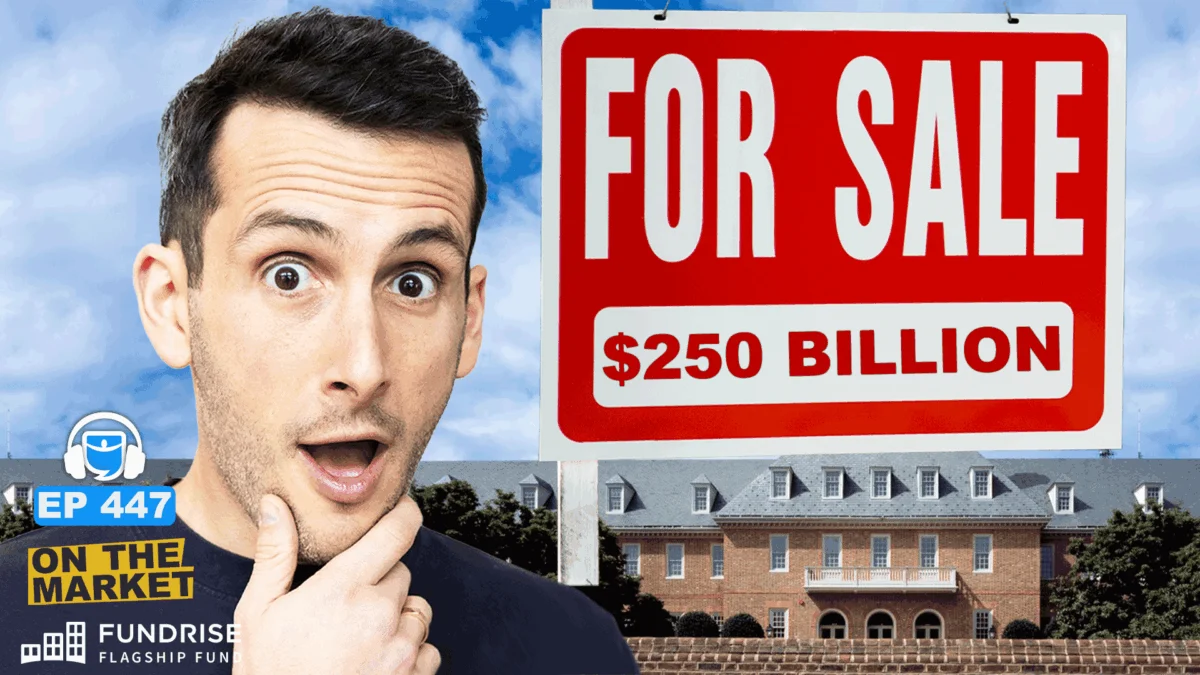
The proposal to transition these Government-Sponsored Enterprises (GSEs) back into private ownership represents one of the most significant shifts in financial regulation in modern history. Proponents argue that privatization would reduce taxpayer risk and return the mortgage market to a state of competitive efficiency, while critics warn of potential spikes in interest rates and a reduction in loan availability for underserved populations. To understand the stakes of this potential IPO, it is necessary to examine the historical evolution of these giants, their current role in the market, and the complex economic trade-offs involved in their release from government control.
The Historical Evolution of U.S. Housing Finance
The origins of the current system date back to the Great Depression. Fannie Mae was established in 1938 as part of the New Deal to provide local banks with federal money to finance home mortgages, thereby increasing the liquidity of the housing market and making homeownership more accessible. In 1968, Fannie Mae was converted into a private, shareholder-owned corporation to remove its debt from the federal budget. Two years later, in 1970, Freddie Mac was created to provide competition and further expand the secondary mortgage market.
For decades, this public-private hybrid model flourished. The GSEs did not lend money directly to consumers; instead, they purchased mortgages from lenders, bundled them into mortgage-backed securities (MBS), and sold those securities to global investors with a guarantee of timely payment of principal and interest. This system allowed banks to move loans off their books quickly, freeing up capital to issue new loans. It also facilitated the creation of the 30-year fixed-rate mortgage—a financial product that is virtually unique to the United States and provides millions of Americans with long-term housing stability.
However, the model faced a catastrophic test during the mid-2000s. Under pressure to expand homeownership and maintain market share against private-label competitors, Fannie Mae and Freddie Mac began purchasing and guaranteeing riskier subprime and Alt-A mortgages. When the housing bubble burst in 2007-2008, the GSEs suffered massive losses as defaults surged. By September 2008, the Federal Housing Finance Agency (FHFA) placed both entities into conservatorship to prevent a total collapse of the U.S. housing market. The U.S. Treasury subsequently injected $187 billion in taxpayer funds to keep the companies solvent, taking an 80% stake in their common stock in return.
The Current Landscape: Conservatorship and the $250 Billion Payday
Since the 2008 bailout, Fannie Mae and Freddie Mac have remained in a state of "temporary" federal control. During this period, they have not only stabilized but have become highly profitable, repaying the Treasury well in excess of the original $187 billion investment. In 2012, the government implemented a "net worth sweep," requiring the GSEs to send nearly all their profits to the Treasury. While this move reimbursed taxpayers, it also prevented the companies from building the capital reserves necessary to operate independently, leading to years of litigation from private shareholders who claimed the government was unfairly expropriating their investments.
The Trump administration’s renewed push for privatization centers on the belief that the government should no longer manage such a massive portion of the private economy. Analysts suggest that a successful IPO of Fannie Mae and Freddie Mac could be the largest in history. The government currently holds warrants for 80% of the companies’ stock; selling these shares on the open market could generate a windfall of up to $250 billion for the U.S. Treasury. This capital could theoretically be used to reduce the national debt or fund other infrastructure and economic priorities.
Market Dominance and the Mechanics of the Secondary Market
The sheer scale of Fannie Mae and Freddie Mac makes any change to their structure a high-stakes endeavor. As of late 2025, the total U.S. residential mortgage market was valued at approximately $15 trillion. Fannie Mae and Freddie Mac combined account for $6.8 trillion of that total—nearly half of all outstanding residential mortgage debt. When Ginnie Mae (which handles FHA and VA loans) is included, government-backed entities oversee 66% of the market. In contrast, "portfolio loans"—mortgages that banks keep on their own books—account for only about 22% of the market.
The GSEs provide three critical functions that sustain the current housing market:
- Liquidity: By purchasing loans from originators, they ensure that lenders always have cash available to provide new mortgages.
- Standardization: The GSEs set the "conforming loan limits" and underwriting standards (such as credit score and debt-to-income requirements) that most lenders follow. This standardization makes it easier to bundle and sell loans to global investors.
- Countercyclical Support: During economic downturns, private investors often flee the mortgage market. Because of their public mission, the GSEs continue to buy loans when others will not, preventing the housing market from seizing up during a recession.
The "Implicit vs. Explicit" Guarantee Dilemma
One of the most contentious aspects of privatization is the nature of the government’s guarantee on mortgage-backed securities. Currently, there is an "implicit guarantee" that the federal government will backstop Fannie and Freddie in a crisis—a belief that was proven true in 2008. This perceived safety allows the GSEs to borrow money at lower rates and enables them to offer lower interest rates to homeowners.
If the companies are privatized, the market must decide if that guarantee remains. Financial analysts at JP Morgan have estimated that if the companies transition to a fully private model without a legally binding "explicit guarantee" from the government, mortgage rates could rise by approximately 45 basis points (0.45%). While this may seem like a small margin, on a $400,000 mortgage, it represents thousands of dollars in additional interest over the life of the loan.
To prevent such a rate hike, some policymakers suggest that the government should provide an explicit, paid-for guarantee, similar to FDIC insurance for bank deposits. However, this raises questions about whether the government would truly be reducing taxpayer exposure if it remains the ultimate insurer of $7 trillion in mortgage debt.
Reactions and Stakeholder Perspectives
The prospect of an IPO has drawn varied reactions from across the financial spectrum. Large-scale investors and hedge fund managers, such as Bill Ackman of Pershing Square, have been vocal advocates for ending the conservatorship. These shareholders stand to gain billions if the companies are returned to private hands and allowed to retain their earnings. Ackman has suggested a "slow rollout" approach, where the government gradually sells its shares over several years to avoid overwhelming the market and to allow credit conditions to adjust.
Conversely, consumer advocacy groups and some affordable housing proponents express concern that a profit-driven Fannie and Freddie might abandon their public mission. Under government control, the GSEs are required to meet specific "housing goals," ensuring that a certain percentage of their business supports low-income borrowers and underserved communities. There are fears that a private entity, answerable to shareholders, would tighten credit standards and reduce participation in programs like "HomeReady" or "Home Possible," making it harder for first-time buyers to enter the market.
The banking industry also views privatization with a mix of anticipation and caution. While large banks might benefit from a more competitive market, they rely on the GSEs for the smooth operation of their mortgage departments. Any volatility in the secondary market during a transition could lead to a temporary contraction in lending.
Chronology of Key Events and Future Outlook
- 1938–1970: Creation of Fannie Mae and Freddie Mac to stabilize housing finance.
- 1968–2008: Fannie Mae operates as a private, shareholder-owned company.
- September 2008: FHFA places GSEs into conservatorship following the subprime mortgage crisis; $187 billion bailout initiated.
- 2012: The "Net Worth Sweep" begins, directing all GSE profits to the U.S. Treasury.
- 2019–2021: The first Trump administration begins laying the groundwork for privatization, but the effort is sidelined by the COVID-19 pandemic.
- August 2025: Trump administration officials meet with major Wall Street banks to discuss a $50 billion preferred share sale.
- 2026–2028: Projected window for a potential IPO, pending market stability and regulatory approvals.
As the federal government weighs these options, the primary challenge remains balancing the desire for a free-market housing system with the need for stability and affordability. The U.S. housing market is currently facing significant headwinds, including high home prices and limited inventory. Introducing a major structural change to the mortgage system could either provide a new influx of private capital to spur growth or, if handled poorly, create a period of uncertainty that further stresses the market.
Ultimately, the privatization of Fannie Mae and Freddie Mac is not merely a financial transaction; it is a fundamental choice about the role of the state in the American Dream. Whether the government can successfully exit its role as the nation’s primary mortgage insurer while maintaining the 30-year fixed-rate mortgage remains the central question for the coming years. For homeowners and investors alike, the evolution of these two "giants" will dictate the cost of borrowing and the health of the U.S. economy for decades to come.
