

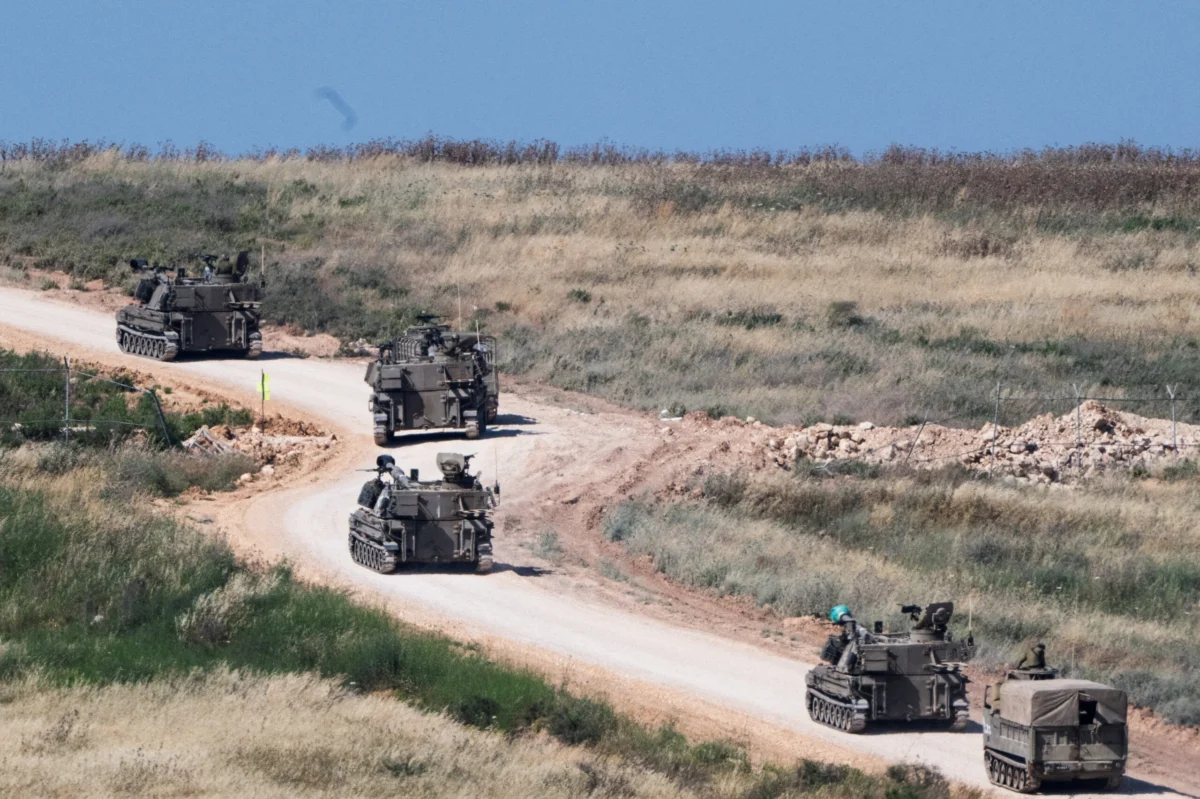
Military delegations from the United States and Lebanon have convened in Beirut to formalize the operational framework for implementing the initial phase of a US-brokered agreement designed to facilitate an Israeli withdrawal from areas of southern Lebanon. Sources close to the discussions, conveyed to Al Jazeera on Saturday, indicated that the primary focus of these high-level talks centered on establishing a precise mechanism for the activation of the first of two designated "pilot zones" outlined in the landmark agreement. This diplomatic push unfolds against a backdrop of persistent humanitarian challenges and intermittent hostilities, underscoring the delicate balance required to navigate the complex geopolitical landscape of the Levant.
The Genesis of the Framework Agreement and Pilot Zones
The US-brokered framework agreement, initially reached on June 26, represents a significant diplomatic endeavor aimed at de-escalating tensions along the volatile Lebanese-Israeli border. Under the terms of this preliminary accord, Israel is expected to gradually withdraw its forces from specific areas within southern Lebanon where they have been engaged in protracted confrontations with Hezbollah. A pivotal component of this agreement involves the establishment of two "pilot zones," small, strategically significant areas intended to serve as initial testing grounds for the broader withdrawal process. Within these zones, the long-undersourced Lebanese Armed Forces (LAF) are slated to assume full control, a move that would represent a crucial step towards asserting Lebanese sovereignty over its southern territories.
The concept of pilot zones is designed to build confidence and test the operational feasibility of a larger disengagement. By focusing on limited areas first, negotiators hope to identify and resolve potential logistical, security, and political challenges before expanding the withdrawal. This incremental approach acknowledges the deep-seated mistrust and complex security concerns that have historically characterized relations between Lebanon and Israel, two nations technically still at war. The success of these initial zones is widely seen as critical for the momentum of the entire framework agreement.
Recent Diplomatic Engagements and Political Stances
The recent meeting in Beirut was preceded by reports in Lebanese media and the Financial Times detailing the arrival of a US delegation for these critical discussions. US Ambassador Michel Issa had informed Lebanese President Joseph Aoun on Thursday that the delegation’s explicit mission was to "determine the mechanism" for the implementation of the deal. This direct engagement highlights the United States’ commitment to fostering stability in the region and its role as a primary mediator in the long-standing conflict.
However, the path to full implementation is fraught with challenges. Hezbollah, a powerful political and military force in Lebanon, has openly rejected the framework agreement. The group has historically preferred to operate under a broader ceasefire understanding between the United States and Iran, which they believe implicitly guarantees a cessation of hostilities in Lebanon. Al Jazeera’s Heidi Pett reported from Lebanon that "Hezbollah has maintained its opposition to those direct talks between Lebanon and Israel, preferring to maintain a ceasefire between the US and Iran which stipulates a ceasefire here in Lebanon." Despite a recent breakdown in the broader US-Iran ceasefire, Hezbollah has, notably, maintained its operational restraint within Lebanon, a fact that introduces a nuanced layer to the current diplomatic efforts.
Adding to the complexity, Israeli officials have publicly vowed that their forces will remain deployed in a "security zone" extending approximately 10 kilometers (six miles) deep into Lebanese territory. This condition is explicitly tied to Hezbollah remaining armed, creating a significant impediment to a complete Israeli withdrawal and challenging Lebanon’s assertion of full sovereignty over its southern border. The agreement, as it currently stands, does not stipulate a definitive timetable for Israel’s withdrawal, leaving room for prolonged negotiations and potential stalemates.
Historical Context of Conflict in Southern Lebanon
The current discussions are deeply rooted in a history of recurrent conflict and military presence in southern Lebanon. Israel first invaded Lebanon in 1978 (Operation Litani) and launched a larger invasion in 1982, occupying southern Lebanon for nearly two decades and establishing a "security zone" in 1985 to protect its northern settlements from cross-border attacks. This occupation, which lasted until May 2000, was met with sustained resistance, primarily from Hezbollah, which emerged as a dominant force during this period. The unilateral Israeli withdrawal in 2000 did not resolve all border disputes, and tensions remained high, culminating in the devastating 2006 Lebanon War.
The unresolved issues of border demarcation, particularly concerning the Shebaa Farms and other contested areas, continue to fuel instability. The presence of armed non-state actors like Hezbollah, coupled with Israel’s security imperatives, creates a complex environment where any agreement on withdrawal must address both national sovereignty and security concerns simultaneously. The "pilot zones" initiative, therefore, represents an attempt to find a practical, albeit limited, solution within this historically charged context, aiming to prevent a relapse into large-scale conflict.
Humanitarian Crisis Amidst Persistent Hostilities
The ongoing conflict, which intensified significantly in early March following the US and Israel’s attacks on Iran, has exacted a severe humanitarian toll on Lebanon. According to the United Nations’ humanitarian agency, OCHA, more than one million people in Lebanon have been displaced since the start of the current hostilities. While there has been a notable trend of returns, with OCHA reporting on Saturday that over 732,000 people had returned home (up from 640,000 a week prior), approximately 430,000 individuals remain displaced. These figures underscore the immense challenges faced by communities attempting to rebuild their lives amidst a fragile security situation and a severe economic crisis.
Despite the diplomatic overtures and the declared ceasefire intentions, Israel has continued its military operations in southern Lebanon. Lebanon’s state-run National News Agency (NNA) reported several Israeli raids on Saturday. These attacks included residential neighborhoods in the town of al-Mansouri in the Tyre district, where seven people sustained injuries. Further reports indicated that Israeli forces utilized three tanks and several bulldozers to advance into the eastern edge of Beit Yahoun. In Houla, also in southern Lebanon, NNA documented Israeli forces igniting fires that damaged homes and olive groves, a critical agricultural resource for many rural communities. Additionally, homes were reportedly blown up in the Nabatieh district. Such actions highlight the persistent danger to civilians and infrastructure, even as diplomatic channels are pursued.
The destruction of homes, agricultural land, and essential infrastructure exacerbates Lebanon’s already dire economic situation. The country has been grappling with a profound financial crisis for several years, characterized by currency devaluation, hyperinflation, and widespread poverty. The additional burden of displacement and reconstruction further strains limited state resources and humanitarian aid efforts, making recovery a long and arduous process for the affected populations.
The Path Ahead: Future Diplomatic Engagements and Implications
Looking forward, diplomatic efforts are slated to continue. The latest round of talks between Lebanon and Israel, which have no formal diplomatic relations but have engaged in five rounds of negotiations since the war’s commencement, is scheduled to take place in Rome next Wednesday and Thursday. Lebanon has explicitly conditioned its participation in these forthcoming discussions on Israel’s commitment to withdrawing from the two aforementioned "pilot zones." This stipulation underscores Lebanon’s resolve to see tangible progress on the ground as a prerequisite for further engagement.
These upcoming talks precede an anticipated visit by Lebanese President Joseph Aoun to Washington later this month, following an invitation from his US counterpart, Donald Trump. President Aoun’s visit to the US capital will undoubtedly serve as a critical opportunity to reinforce Lebanon’s positions, seek further American support for the withdrawal agreement, and discuss broader bilateral relations and economic assistance. The timing of these high-level engagements suggests a concerted effort by the US and its allies to stabilize the region and address the root causes of the conflict.
The implications of these diplomatic maneuvers are far-reaching. The successful implementation of the pilot zones and a broader Israeli withdrawal would be a significant victory for Lebanese sovereignty and could pave the way for a more stable border. However, the inherent challenges, particularly Hezbollah’s rejection of direct talks and Israel’s security zone demands, pose substantial hurdles. The ability of the Lebanese Armed Forces to effectively secure these zones without being perceived as a proxy for either side will be crucial. International support, both financial and logistical, for the LAF’s enhanced role will be vital.
Furthermore, the broader regional context, including the volatile relationship between the US and Iran, will continue to cast a long shadow over the peace process. Any escalation in that wider confrontation could easily derail the fragile progress made on the Lebanese-Israeli front. The humanitarian crisis, meanwhile, demands immediate and sustained attention, regardless of the pace of diplomatic breakthroughs. The ultimate success of the framework agreement hinges on a delicate balance of political will, security guarantees, and a genuine commitment from all parties to prioritize long-term stability over short-term gains, fostering an environment where millions can return home and rebuild their lives free from the specter of conflict.
