

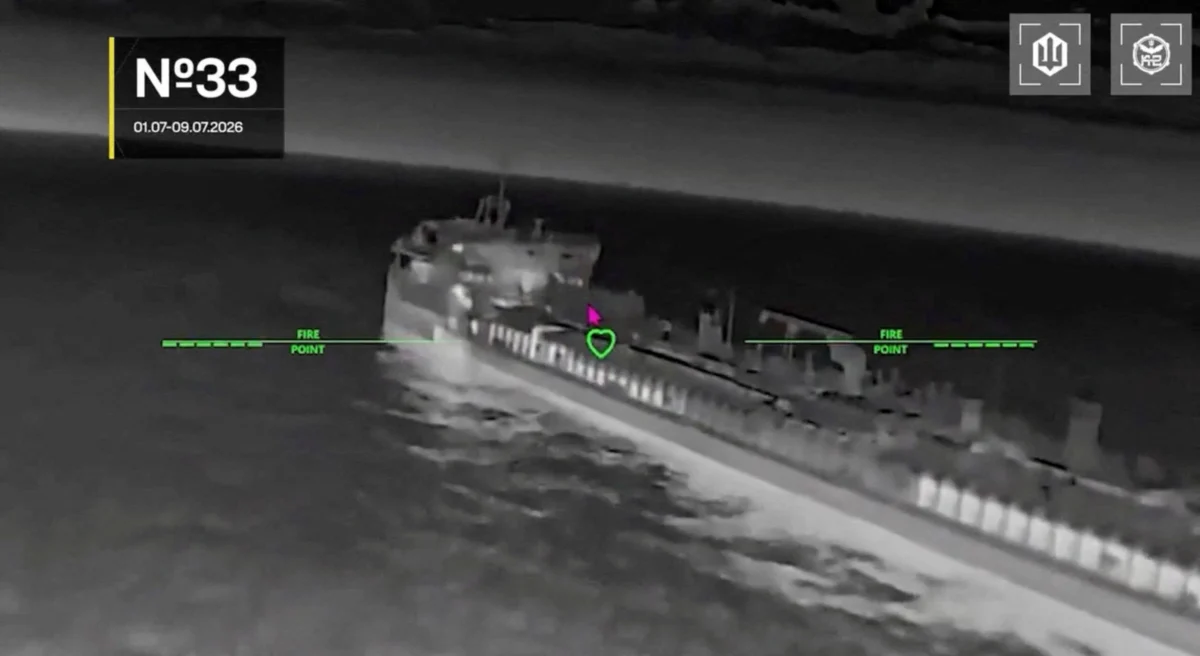
The conflict between Ukraine and Russia has entered a high-intensity phase of maritime and industrial attrition, as Ukrainian forces successfully targeted 11 Russian vessels in the Sea of Azov in a single overnight operation. The strikes, which utilized advanced drone technology, have forced the Russian Ministry of Agriculture to announce emergency measures to reroute grain shipments and seek alternative transport corridors. This latest escalation marks a significant expansion of Ukraine’s "mosquito fleet" tactics, transitioning from the deep waters of the Black Sea into the shallower, strategically sensitive Sea of Azov, which serves as a vital artery for Russian agricultural exports and military logistics.
The overnight operation specifically targeted a diverse array of Russian maritime assets. According to Ukrainian military officials, the strike package successfully neutralized five oil tankers, five dry cargo vessels, and a specialized tugboat. This coordinated assault is part of a broader, sustained campaign against Russian shipping that has seen a dramatic spike in activity over the last fortnight. The loss of these vessels, particularly the tankers and cargo ships, strikes at the heart of Russia’s ability to move bulk commodities through the Kerch Strait and into international markets.
The Assault on Maritime Logistics
Ukrainian military commander Robert Brovdi, providing details via the Telegram messaging app on Tuesday, confirmed the scale of the operation. Brovdi noted that the 11 vessels hit overnight are part of a much larger statistical trend of maritime degradation. According to his report, Ukrainian forces have struck a total of 116 Russian vessels over the past nine days alone. While the severity of the damage to each specific vessel varies—ranging from total loss to significant structural damage requiring dry-dock repairs—the cumulative effect is a substantial reduction in Russia’s operational tonnage in the region.
The Sea of Azov, which is largely controlled by Russian naval forces following the occupation of key coastal cities like Mariupol and Berdyansk, had previously been considered a relatively safe rear area for Russian logistics. However, the introduction of long-range aerial and maritime drones has effectively turned the entire body of water into a combat zone. The targeting of dry cargo ships and tankers suggests a deliberate strategy by Kyiv to disrupt the economic foundations of the Russian war effort, specifically targeting the export of grain and the transport of refined petroleum products.
Russian Response: Rerouting and Resilience
In the wake of the attacks, Moscow has moved quickly to project an image of stability while acknowledging the tactical necessity of changing its logistical routes. Russia’s Ministry of Agriculture issued a statement on Tuesday confirming that it is actively working on "alternative shipping routes" to bypass the areas of highest risk in the Sea of Azov. The ministry suggested that cargo could be redirected to "other modes of transport," likely referring to the heavily burdened rail networks and road corridors connecting the Russian mainland to the occupied territories and southern ports.
Despite the disruption, Russian officials maintained that the domestic food supply remains secure. "The situation in the Azov Sea will not affect the domestic market’s food supply or our country’s export capabilities," the ministry stated. However, industry analysts suggest that rerouting grain from maritime vessels to rail or road significantly increases overhead costs and slows the pace of delivery, potentially affecting global grain prices if the disruption persists.
The Russian Ministry of Defence also reported a massive defensive effort, claiming that its air defense systems intercepted 288 Ukrainian drones across various regions overnight. While Moscow claims a high interception rate, the sheer volume of incoming projectiles appears to have overwhelmed defenses in specific sectors. Local authorities in several Russian villages reported that falling debris from intercepted drones caused injuries to civilians and damaged residential property, illustrating the growing "spillover" effect of the war onto Russian soil.
Escalation in the Energy Sector
The maritime strikes are inextricably linked to a broader Ukrainian campaign targeting Russia’s energy infrastructure. On the same night as the Azov Sea attacks, Ukrainian drones successfully reached the Afipsky oil refinery in the Krasnodar region, sparking a significant fire. Simultaneously, another strike targeted an industrial area in the city of Salavat, located in the republic of Bashkortostan. This refinery had already been hit twice in September 2025, according to regional Governor Radiy Khabirov, highlighting Ukraine’s ability to strike deep into the Russian interior with precision.

These systematic attacks on refineries have precipitated a domestic fuel crisis within Russia. The loss of refining capacity has forced Moscow to implement a ban on certain fuel exports to ensure sufficient supply for the military and domestic consumers. This contraction of Russian energy exports comes at a time of global volatility in energy prices, further complicating the international economic landscape. By targeting the "revenue engines" of the Russian state, Ukraine aims to diminish the financial resources available for Moscow’s ongoing military operations.
Diplomatic Fallout and Rhetorical Warfare
The intensifying conflict at sea has drawn sharp condemnation from senior Russian officials. Foreign Minister Sergei Lavrov characterized the Ukrainian strikes as "acts of terrorism" and "piracy." Speaking to state media, Lavrov argued that the attacks serve no strategic purpose other than intimidation.
"What the Ukrainian regime is doing goes beyond even piracy," Lavrov said. "Pirates, at least, plunder and keep the spoils for themselves. But here, it benefits neither them nor anyone else—the goal is simply to cause damage and intimidate. It is terrorism, pure and simple."
Kyiv, conversely, frames these operations as legitimate defensive measures under international law, arguing that any vessel contributing to the Russian war effort—whether through the transport of fuel, military equipment, or sanctioned goods—is a valid military target. Ukrainian officials have frequently pointed to Russia’s own blockades and attacks on Ukrainian port infrastructure as the catalyst for their maritime offensive.
Retaliatory Strikes and Port Infrastructure
The conflict remains a two-way street, with Russia launching its own waves of strikes against Ukrainian coastal and urban centers. The Russian Ministry of Defence confirmed that it targeted port infrastructure in the Odesa region and fuel storage facilities in the port of Yuzhny. Furthermore, Russian forces conducted strikes on the capital, Kyiv, as part of a wider effort to degrade Ukrainian command and control and logistical hubs.
In a notable development, Ukrainian Navy spokesman Dmytro Pletenchuk reported that a Russian strike hit a civilian vessel near the Black Sea port of Odesa. While no casualties were reported in that specific incident, it underscores the persistent danger to commercial shipping in the Black Sea. Ukrainian military officials stated that their air defense units were able to shoot down seven missiles and 108 drones across the country during the most recent Russian barrage, highlighting the massive scale of the daily aerial duels.
Timeline of Recent Maritime and Industrial Conflict
To understand the current surge in hostilities, it is necessary to look at the chronology of the past ten days:
- Day 1-3: Ukraine begins a concentrated drone campaign against Russian patrol boats and logistics vessels in the Black Sea, testing new long-range drone variants.
- Day 4-6: Strikes expand to include energy infrastructure in southern Russia, specifically targeting oil depots and smaller refining units. Russia announces its first set of export restrictions on refined products.
- Day 7-8: The focus shifts toward the Sea of Azov and the Kerch Strait. Ukrainian forces claim to have disabled over 80 vessels in various skirmishes, primarily using autonomous surface vehicles and kamikaze drones.
- Day 9 (Overnight): The largest single-night maritime strike occurs, with 11 vessels hit in the Azov Sea and multiple refineries struck deep within Russian territory.
Strategic Implications and Future Outlook
The transition of the naval war into the Sea of Azov represents a strategic pivot. For the past two years, the Black Sea was the primary theater of naval engagement. By bringing the fight to the Azov Sea, Ukraine is demonstrating that Russia no longer possesses a "sanctuary" for its shipping. This development has several long-term implications:
- Logistical Strain: Russia’s reliance on the "land bridge" to Crimea and the Southern Front is now more critical than ever. With maritime routes under threat, the pressure on the Kerch Bridge and the rail lines through occupied Zaporizhzhia will intensify, making them even more attractive targets for Ukrainian sabotage and long-range missiles.
- Economic Impact: The disruption of grain and oil exports will likely lead to increased insurance premiums for any commercial vessels still willing to operate in Russian waters. This "de facto blockade" could significantly reduce the profitability of Russian exports.
- Technological Evolution: The success of these strikes confirms the maturity of Ukraine’s drone program. The ability to coordinate strikes on 11 moving targets simultaneously suggests a high level of intelligence, surveillance, and reconnaissance (ISR) capability, likely aided by satellite imagery and advanced signal processing.
- Shift in Naval Doctrine: The traditional naval power dynamic, where large surface combatants dictate control, is being upended by low-cost, high-yield autonomous systems. Russia’s Black Sea Fleet has been forced to relocate many of its primary assets from Sevastopol to Novorossiysk, and even those are no longer entirely safe.
As both nations prepare for a prolonged war of attrition, the battle for the seas has become as critical as the battle for the trenches. The coming weeks will likely see Russia attempting to reinforce its maritime defenses with electronic warfare and increased air patrols, while Ukraine continues to iterate on its drone designs to bypass these obstacles. For the global community, the continued instability in these vital shipping lanes ensures that food and energy security will remain at the forefront of the international agenda.
